Your Health Magazine Contributor
4201 Northview Drive
Suite 102
Bowie, MD 20716
More Allergy, Asthma & Infectious Disease Articles
Histamine Intolerance: Symptoms, Testing, Diet, and What Actually Helps
Written by Samantha Gilbert, FNC, CHNP

Have you ever eaten a familiar meal, only to develop a headache, flushed skin, or sudden bloating? When the same food seems fine another day, it is tempting to blame histamine and start removing foods. But food reactions are rarely that simple.
In my approach to nutrition, I encourage people to look beyond a single symptom or lab number. Understanding what histamine does, what testing can actually tell us, and how to investigate food triggers without sacrificing nutrition is a better place to begin.
What Is Histamine Intolerance?
Histamine is not inherently harmful. Your body uses it for immune signaling, stomach acid regulation, and nervous-system communication. Histamine also occurs in foods, especially those that are aged or fermented. The intestinal enzyme diamine oxidase (DAO) helps break down ingested histamine; another enzyme, histamine-N-methyltransferase (HNMT), is involved in histamine metabolism within cells.
“Histamine intolerance” is a proposed explanation for symptoms after ingesting histamine, but diagnostic criteria and mechanisms are still debated. It is not the same as a food allergy or mast cell activation syndrome (MCAS). These overlapping topics, including the biochemical role of methylation, are explored in more detail in histamine, mast cells, and methylation. Their overlap does not mean that a food reaction establishes any of those diagnoses.
What Are the Symptoms of Histamine Intolerance?
Reported symptoms can affect several systems:
- Skin: flushing, itching, redness, or hives.
- Digestion: abdominal pain, bloating, nausea, or diarrhea.
- Head and airways: headaches, nasal congestion, or a runny nose.
- Other reported effects: dizziness or a racing heartbeat.
None is specific to dietary histamine. Food allergies, medication effects, gastrointestinal disorders, and other conditions can produce similar symptoms. Timing, portion size, alcohol intake, medication use, and whether a reaction occurs repeatedly may be more informative than any isolated episode.
Emergency warning: throat swelling, trouble breathing, fainting, or rapidly worsening symptoms after eating require immediate medical attention.
Which Histamine Intolerance Tests Are Reliable?
There is currently no validated standalone histamine intolerance test. Different tests answer different clinical questions:
| Test or assessment | What it can help assess | Important limitation |
| Serum DAO | Activity of an enzyme involved in histamine breakdown | Cannot independently confirm or rule out dietary histamine intolerance |
| Blood histamine | Histamine at the time of sampling | Levels fluctuate; not a validated food-intolerance diagnostic test |
| Skin-prick or specific IgE testing | Suspected IgE-mediated food allergies | Does not diagnose dietary histamine intolerance |
| Food IgG panels | Antibodies associated with exposure to foods | Not recommended to diagnose food allergy or intolerance |
The research explains why caution matters. In a 2023 population study of 1,051 adults, 44% had serum DAO below a proposed 10 U/mL cutoff, yet researchers found no association between DAO levels and reported symptoms after histamine-rich foods. A separate 2023 study assessed 249 people with suspected histamine intolerance and 50 controls; DAO differed across selected groups, but the authors warned against using it alone to diagnose the condition.
A particularly revealing 2023 supervised challenge study involving 59 people found that 37 (62.7%) reacted to placebo, while histamine intolerance was excluded in 50 (84.7%). This does not mean the symptoms were imaginary or that 84.7% of all people with suspected histamine intolerance are misdiagnosed. It shows why symptoms, expectations, and other possible diagnoses must be considered carefully.
Research snapshot: In that selected 59-person cohort, the challenge assessment excluded histamine intolerance in 50 participants; four were classified as plausible cases and five as possible cases. The figures below describe only this study, not population prevalence.
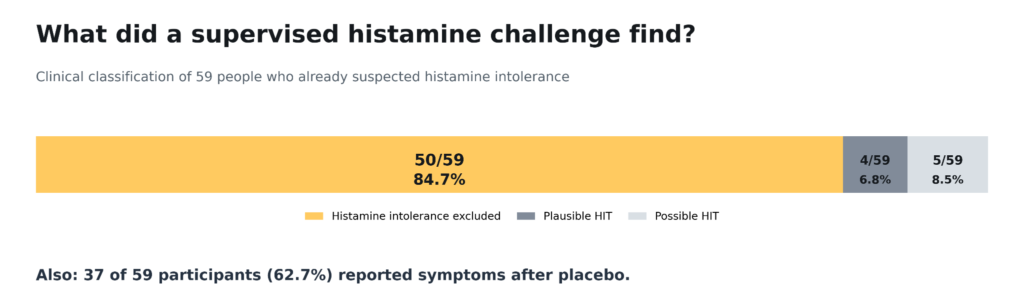
Figure 1. Results from one supervised, placebo-controlled study of 59 people with suspected histamine intolerance.
Can a Low-Histamine Diet Actually Help?
For some people, a short, supervised low-histamine diet may help explore whether food patterns are associated with symptoms. However, a response to restriction does not prove histamine intolerance. The 2025 review Evidence for Dietary Management of Histamine Intolerance found that the clinical evidence is limited by inconsistent food lists, differing diagnostic criteria, and a shortage of rigorous controlled trials.
Aged cheeses, fermented vegetables, cured meats, and wine are commonly discussed as higher-histamine foods. But histamine content can differ substantially with production, storage, and handling. Lists of foods described as “histamine liberators” are even less certain. For additional practical context, Your Health Magazine has a guide to low-histamine foods for a calmer gut.
Top Foods to Consider During a Low-Histamine Trial
I prefer to begin with meals people can enjoy, not an intimidating list of forbidden foods. For a short trial, consider nourishing, minimally processed options you tolerate:
- Freshly prepared proteins: properly handled chicken, turkey, or other unaged meats.
- Grains and starches: rice, quinoa, oats, or potatoes.
- Vegetables: carrots, zucchini, cucumber, or lettuce.
- Fruits: apples, pears, or blueberries.
- Simple flavorings: olive oil and fresh herbs.
These are examples, not guaranteed “safe” foods. Personal tolerance and existing allergies still matter. Freshness can matter too: chill perishable foods promptly and freeze portions intended for later use, while continuing to follow normal food-safety guidance. There is no need to eliminate entire food groups indefinitely because of an online list.
A Practical, Evidence-Informed Way Forward
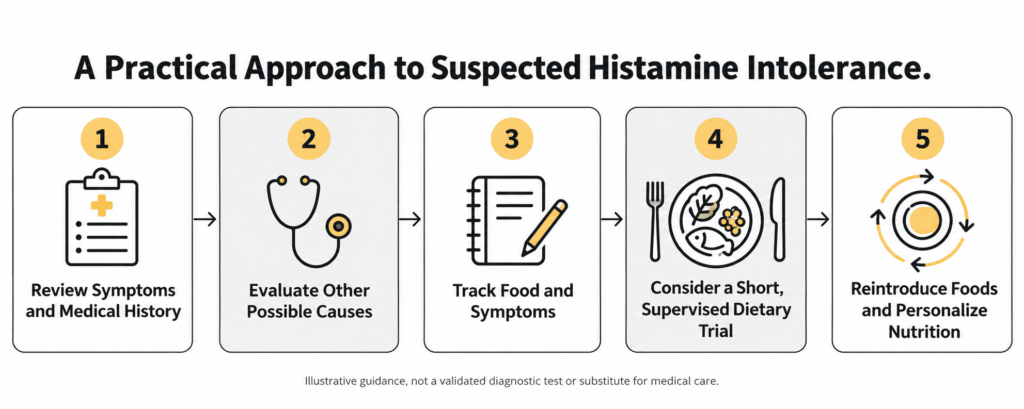
A 2021 European multi-society guideline suggests a stepwise approach rather than lifelong restriction:
- Review your medical history. Consider allergies, digestive disorders, medications, and other potential explanations with a qualified clinician.
- Keep a food-and-symptom diary. Record portions, timing, storage, medications, sleep, and other relevant factors.
- Consider a short supervised trial. The guideline describes an initial adjustment of 10-14 days, while maintaining a balanced nutrient intake.
- Reintroduce and personalize. Its subsequent test phase can last up to six weeks, with careful reintroduction to identify a broader, sustainable diet.
A symptom improvement during a dietary trial is useful information, not a laboratory diagnosis. People with eating-disorder histories or highly restricted diets should avoid further elimination without specialist support.
When Should You Seek Professional Support?
A clinician may need to evaluate food allergy, celiac disease, medication effects, or carbohydrate malabsorption. Symptoms can resemble those described in Your Health Magazine’s article on sugar intolerance, including lactose or fructose-related digestive problems.
If you need help interpreting food patterns without losing nutritional balance, a histamine intolerance nutritionist can support meal planning and structured food reintroduction alongside appropriate medical care.
Frequently Asked Questions
Does a low DAO result mean I have histamine intolerance?
No. Serum DAO cannot establish the diagnosis on its own.
Should I avoid fermented foods forever?
Not automatically. A guided trial followed by reintroduction is usually more useful than permanent blanket restrictions.
Can supplements replace testing and dietary assessment?
Evidence for DAO supplements and other proposed remedies remains limited; discuss products and medications with a qualified clinician before use.
References
- Reese et al. (2021). Guideline on management of suspected adverse reactions to ingested histamine.
- Van Odijk et al. (2023). The Use of DAO as a Marker for Histamine Intolerance: A Population Survey of 1,051 Adults.
- Arih et al. (2023). Evaluation of Serum Diamine Oxidase as a Diagnostic Test for Histamine Intolerance.
- Bent et al. (2023). Placebo-Controlled Histamine Challenge Disproves Suspicion of Histamine Intolerance.
- Jackson et al. (2025). Evidence for Dietary Management of Histamine Intolerance.
- AAAAI. The Myth of IgG Food Panel Testing.
This article provides educational information and is not a substitute for professional medical diagnosis or care.
Other Articles You May Find of Interest...
- Histamine Intolerance: Symptoms, Testing, Diet, and What Actually Helps
- Coughing Up Yellow Mucus: What It Can Mean
- How to Keep Pollen Out of Your Home: Choosing an Air Purifier for Pollen
- When Should Your Child See a Pediatric Allergist? A Three-Trigger Test
- Candida sp. rRNA Results: What Molecular Testing Detects
- Ant Bites or Poison Ivy? How the Rashes Differ
- Can Stress Cause Cold Sores on the Lips?