Your Health Magazine Contributor
4201 Northview Drive
Suite 102
Bowie, MD 20716
More Consumer Health Guides Articles
5 Peptide Price Comparison Websites to Know in 2027
The lowest vial price does not always mean the lowest cost per milligram. Product quantity, pack size, coupon eligibility and shipping charges can change how research peptide listings compare.
Comparing peptide prices is made easier with peptide price comparison sites, which provide listings and pricing information for suppliers in a single location.
Several online platforms organize publicly listed research-peptide pricing and supplier information in different ways. The examples below illustrate features consumers may encounter when comparing these tools.
Peptide Grading
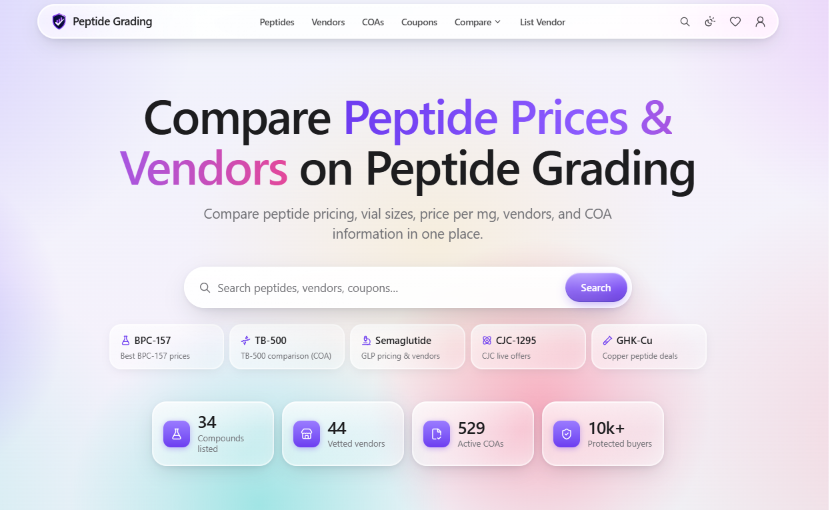
Peptide Grading is based on a comparison of research peptide lists from various suppliers. It contains information on product sizes, vendor price, price per mg, and COA information to help compare more than just the blind price.
The platform also provides individual peptide comparison pages where users can review vendor options and related listing information. For example, Peptide Grading presents price, quantity, vendor and documentation information together, allowing users to compare several listing characteristics rather than looking only at the lowest advertised price.
PepLookup
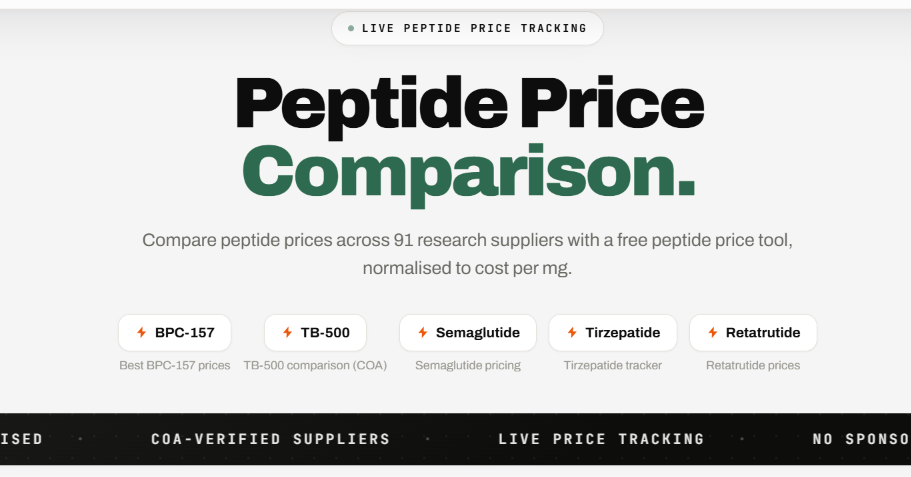
Pep Lookup focuses more on the price, normalising the supplier price to cost per mg. This allows for easier comparison of products when the amounts sold by vendors are different.
The site also provides information such as the price seen, COA and listed discounts. It can be provided by its supplier directory that will give additional details such as shipping and payment information.
PepLookup is structured around cost-per-milligram comparisons across different supplier quantities.
PeptidePrices
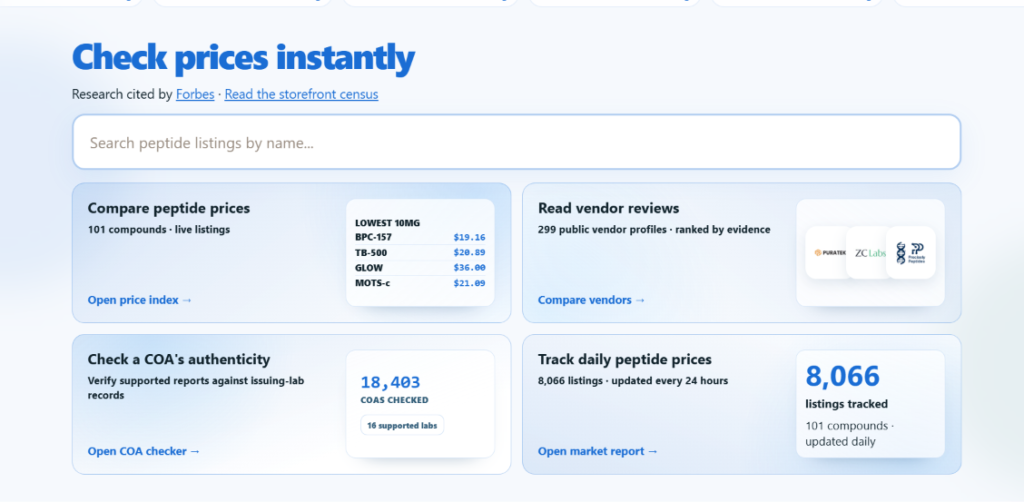
Peptide Prices searches peptide prices and vendor and COA information. Its platform offers a more comprehensive market overview, with the option to explore pricing details as well as supplier data and documentation.
It has COA focused features that are helpful, when documentation is included in the comparison process. Users shouldn’t just look at price as a key factor, but can research whether information is available for a specific listing.
This gives PeptidePrices a particular emphasis on pricing and available documentation.
PepFinder
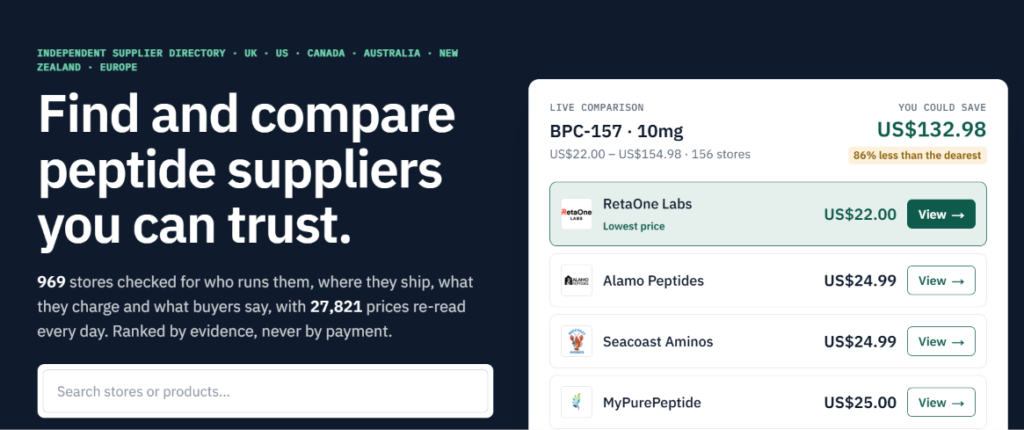
PepFinder makes peptide comparisons from a bigger supplier-research point of view. It offers details regarding vendors, products, delivery, policies and other details of the suppliers along with pricing.
It can also be helpful in giving a bit more context when the package sizes are different because of its price per mg comparison. It can be useful when you wish to assess the supplier, not just the price of the listing, rather than focusing only on the lowest price.
Peptide Price Checker
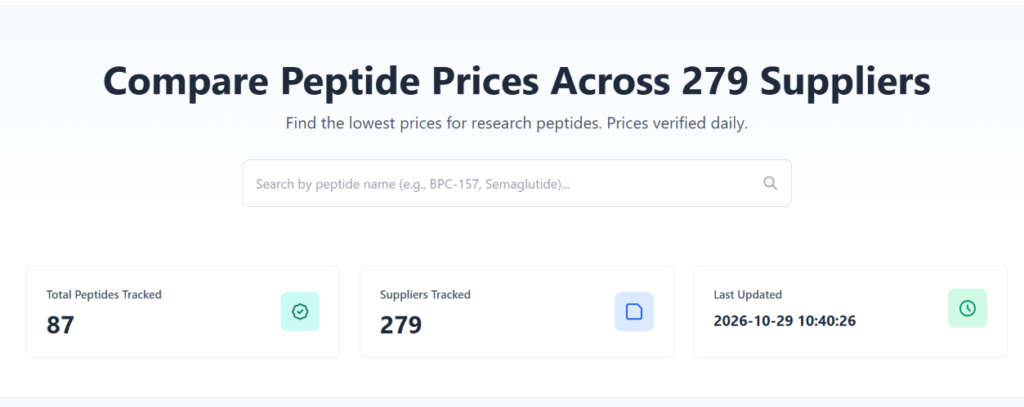
Peptide Price Checker primarily deals with the standardised pricing of peptides. The platform standardises listings per unit price to mg level, which facilitates comparison between suppliers with different quantities.
Its format is geared toward users who already know which research compound they are comparing and want to see how listed prices differ among suppliers.
Peptide Price Comparison Websites Compared
Each platform has a slightly different focus. This table gives a quick way to see where they differ:
| Feature | Peptide Grading | PepLookup | PeptidePrices | PepFinder | Peptide Price Checker |
| Price comparison | Vial prices, sizes & vendor listings | Supplier prices normalized by quantity | Yes | Yes | Yes |
| Cost per mg | Listed & discounted cost | Standardized cost per mg | No | Yes | Yes |
| COA availability | Available reports alongside listing information | COA availability & lab-report features | Listing-matched reports | Testing information | Not confirmed |
| Vendor details | Profiles, products & coupon information | Supplier directory & listing details | Vendor profiles | Supplier profiles | Basic details |
| Discount information | Coupon codes & resulting prices | Listed discount codes | Coupon section | Check listings | Not confirmed |
| Main focus | Compare price, quantity & documentation together | Compare unit prices | Pricing & COAs | Supplier research | Unit pricing |
What to Check When Using a Peptide Price Comparison Website
You do not have to use one site for all comparisons.
Different platforms emphasize different information. Peptide Grading combines pricing, product sizes, vendor information and available COA information, while PepLookup emphasizes normalized cost-per-milligram comparisons. PeptidePrices places additional emphasis on available documentation, PepFinder includes broader supplier information, and Peptide Price Checker focuses primarily on standardized pricing comparisons.
When comparing listings, use the same compound, form and quantity basis whenever possible, and verify current pricing and documentation on the original supplier site. Price-comparison tools can organize publicly available information, but they do not by themselves establish product quality, regulatory compliance, or suitability for human or veterinary use.
Other Articles You May Find of Interest...
- 5 Peptide Price Comparison Websites to Know in 2027
- Peptide Therapy in Bangkok: What to Ask Before You Start
- What a Hemp Concentrate Lab Report Can—and Cannot—Tell You
- Best Earrings for New Ear Piercings: Materials, Fit, and Style
- How Product Packaging Impacts Consumer Health and Safety
- Finding an Emergency Plumber Near Me: Protecting Your Home and Health During a Plumbing Emergency
- How to Find Someone’s Social Media Using Their Phone Number Before Meeting in Person