Your Health Magazine Contributor
4201 Northview Drive
Suite 102
Bowie, MD 20716
More Consumer Health Guides Articles
Best Earrings for New Ear Piercings: Materials, Fit, and Style
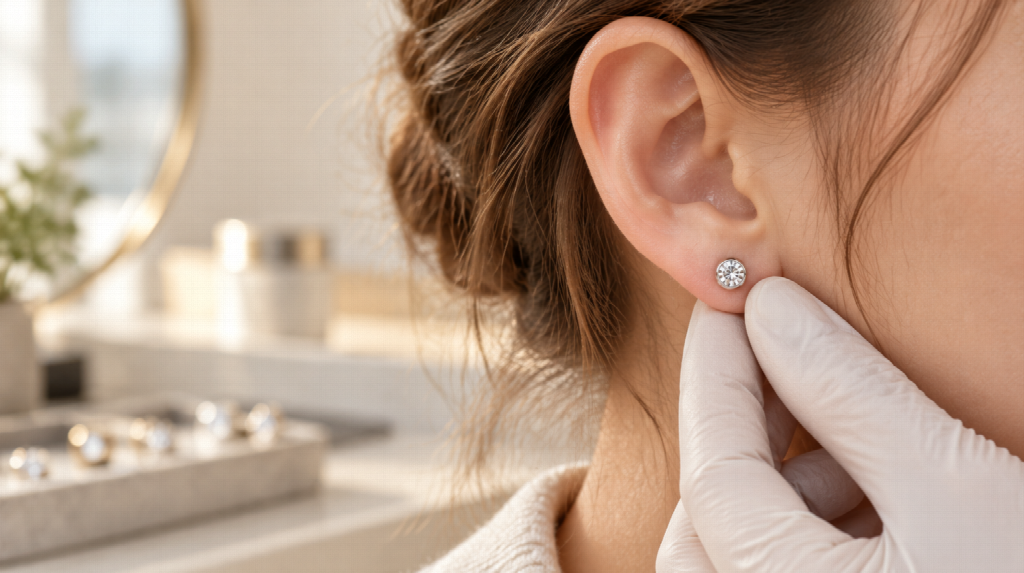
You’re shopping for the best earrings for new ear piercings when a pair of small studs catches your eye. The color matches your usual outfits, and the listing describes the earrings as hypoallergenic. Before ordering, you want to know whether you can wear them in a fresh piercing or should save them until your ears have healed.
This guide explains what makes an earring suitable for a fresh piercing, with practical advice on materials, fit, and construction. You’ll learn how to assess the styles you like and understand why certain details matter during healing. It also covers when to change your starter earrings, so you can plan what to wear once your piercing has healed.
Why Jewelry Choice Matters for New Ear Piercings
A new ear piercing is a healing wound, so the first earring needs to be safe for healing tissue. The metal type and surface finish matter because rough edges or unsuitable materials can irritate the area. This first piece, often called starter jewelry, has different requirements from the earrings you comfortably wear in a fully healed piercing.
Daily habits also affect how comfortable a new piercing feels. A raised design can catch on clothing or hair and pull on the tissue. Headphones may press against earrings and cause soreness during longer use. The piercing’s position and the items you wear regularly therefore matter when choosing a design for the healing period.
The Best Materials for New Ear Piercings
The material listed on a product page should be specific. For titanium and steel, that means a recognized grade suitable for initial piercings. With gold, the alloy matters. The colored surface also requires inspection, since it may cover a different metal underneath.
ASTM F136 or F67 Titanium
Titanium is a lightweight, corrosion-resistant metal with a natural silver-gray color. Piercers commonly use it for starter jewelry, especially when nickel sensitivity is a concern. Nickel can cause itching or a rash in people who are allergic to it. If you have reacted to metal earrings before, your piercer can help you choose an appropriate titanium grade.
ASTM F136 covers a titanium alloy made for surgical implants, while ASTM F67 covers commercially pure titanium. Both identify materials accepted for initial piercings. Tireya uses F136 titanium in MINIMAL, COLOR, SPARKLE, and LUXE. The collections include small metal motifs, colorful stones, and decorative clusters, so you can choose a design that suits your everyday style.
Solid 14K or 18K Gold
Solid 14K or 18K gold can suit a new piercing if the alloy is biocompatible and free of nickel and cadmium. Pure gold is soft, so jewelers add other metals for strength. The karat number tells you how much gold the alloy contains. Gold above 18K is generally softer and scratches more easily, which can leave the surface rough.
Surface Treatments and Sterling Silver
Gold-plated, gold-filled, and vermeil jewelry have a gold layer over another material, with vermeil typically using a silver base. That layer can wear away or chip, exposing the metal underneath and making these pieces unsuitable for fresh piercings. Sterling silver also tarnishes, so it’s better kept for everyday wear once your piercings have fully healed.
Anodizing colors titanium by changing its surface oxide layer, while PVD adds a separate coating. ASTM F136 describes the titanium base and doesn’t specify whether such a coating is suitable for a fresh piercing. Tireya titanium earrings include natural titanium and 18K gold PVD finishes, which the product pages identify separately from the metal grade.
Niobium and Surgical Steel
Pure niobium is another option for initial piercings, with properly finished black niobium offering a darker look. Surgical steel covers several alloys, so the product listing should specify a grade such as ASTM F138 or ISO 5832-1. These grades contain nickel, making a nickel-free material a better choice if you have a confirmed nickel allergy.
Choosing the Right Size and Style
The piercing’s position helps determine the right jewelry shape. Studs commonly suit lobes and many helix piercings, while rooks often use curved barbells, and daith piercings may use rings. For studs, the next details are post dimensions, the backing, and the decorative front.
- Post Length and Gauge
Post length measures the space between the decorative front and the backing. A starter post needs to fit the tissue’s thickness and allow room for swelling. Even two lobe piercings can need different lengths because placement and anatomy vary. Your piercer can measure your ear and choose the initial length, rather than relying on a product’s default size.
Gauge describes the post’s thickness, separately from its length. A 16G post is about 1.2 mm thick, while an 18G post is about 1.0 mm. Higher gauge numbers mean thinner posts. A listing of 16G and 7 mm gives thickness first and length second. Both measurements should match the sizes your piercer recommends for that placement.
- Backing and Closure
Flat-back studs have a small, flat disc behind the ear, while butterfly backs leave the post tip exposed. Tireya uses internally threaded flat backs: the small screw on the decorative front fits inside the post. The part passing through the piercing stays smooth, and the front should tighten against the post without a gap.
- Front Size and Setting
The decorative front of a stud should fit the area around your piercing. Lobes are relatively flat, while cartilage folds may limit which shapes or widths fit comfortably. Two stones of the same diameter may sit at different heights because of their settings. Side photos help you compare how far each design sits above the skin.
Bezel settings surround stones with a continuous metal rim, while prong settings use a few small metal claws. Either can suit starter jewelry when the setting holds the stone securely, and the edges are smooth. The surfaces touching your piercing should be free of scratches, sharp edges, and polishing residue.
When to Change Starter Earrings
As swelling settles, the post may leave extra space behind the ear and move back and forth. A piercer can replace it with a shorter post to improve the fit, a process called downsizing. The piercing may still be healing at this stage, so a qualified piercer should perform the change. Downsizing addresses fit rather than a style change.
For a style change at home, the piercing should be fully healed. Healing estimates are about 6–8 weeks for lobes and 4–12 months for cartilage, with some piercings taking longer. Redness and soreness can settle before the tissue inside the piercing has healed, so your piercer should assess recovery before your first change at home.
FAQs About Earrings for New Piercings
Can Starter Earrings Be Removed Overnight?
No, starter earrings should stay in place overnight during healing because the piercing can shrink without jewelry. Repeated removal and reinsertion can also irritate the tissue. If sleeping on your side feels uncomfortable, adjusting your sleeping position or using a piercing pillow with an opening for your ear can reduce direct pressure.
How Should New Ear Piercings Be Cleaned?
Use sterile saline wound wash containing 0.9% sodium chloride and water without additives. Wash your hands, gently rinse the piercing, and dry with clean disposable gauze. Rotating or sliding the jewelry is unnecessary and may irritate healing tissue. Alcohol, hydrogen peroxide, and harsh cleansers are unsuitable for routine piercing care.
What If a Starter Earring Feels Too Tight?
Seek a prompt professional assessment if the front or backing presses into surrounding tissue, especially if skin starts growing over the jewelry. Worsening pain, heat, pus, or feeling unwell requires urgent medical care. If you suspect an infection, leave the jewelry in place unless a doctor tells you to remove it.
Final Thoughts
The best earrings for new ear piercings should suit the specific piercing you are planning. A material grade helps narrow your options, but the finished piece still needs to match your anatomy and personal needs. Sizes and finishes can vary within a collection, so your piercer’s recommendation should be based on the exact design and specifications you plan to buy.
Your starter earring can still be part of your everyday collection after healing. A small stud can stand alone or become a simple companion to other earrings in a stack. When choosing that first design, the colors you wear most often and your favorite jewelry can help you find a piece you will enjoy wearing regularly.
Other Articles You May Find of Interest...
- Best Earrings for New Ear Piercings: Materials, Fit, and Style
- How Product Packaging Impacts Consumer Health and Safety
- Finding an Emergency Plumber Near Me: Protecting Your Home and Health During a Plumbing Emergency
- Top 3 Plumbing Leak Repairs That Every Homeowner Should Master
- Hydrojet Drain Cleaning: Essential Maintenance Guide for Homeowners
- How Timely Garbage Disposal Repair Service Prevents Kitchen Disasters
- How Timely Sewer Drain Line Repair Prevents Costly Damage