More Allergy, Asthma & Infectious Disease Articles
Ant Bites or Poison Ivy? How the Rashes Differ
By Your Health Magazine Health Information Team
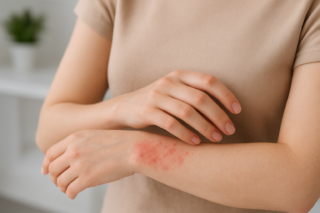
Ant bites usually cause separate, raised bumps that appear quickly and may hurt or sting, while poison ivy typically produces an intensely itchy, blistering rash that develops hours to days after plant exposure. Poison ivy often forms patches or streaks where the plant brushed the skin. Fire ant stings are especially distinctive because they may become small, pus-like blisters within several hours.
Ant Bites vs. Poison Ivy at a Glance
| Feature | Ant bites or stings | Poison ivy rash |
|---|---|---|
| When symptoms begin | Usually immediately or within minutes | Often several hours to a few days after exposure |
| Initial sensation | Pain, burning, stinging, or itching | Usually intense itching |
| Appearance | Separate raised bumps, welts, or small blisters; fire ants may cause pus-like pustules | Itchy red or discolored patches, bumps, and fluid-filled blisters |
| Pattern | Individual spots or clusters, sometimes in a curved pattern | Frequently linear streaks or irregular patches |
| Cause | An ant’s bite, sting, or venom | Skin contact with urushiol oil from the plant |
| Typical duration | A few hours to several days, depending on the reaction | Commonly one to three weeks |
Skin redness may be less noticeable on brown or Black skin. In that case, swelling, raised areas, warmth, tenderness, itching, blistering, and changes in skin tone may be more useful clues.
What Ant Bites and Fire Ant Stings Look Like
Different ant species cause different reactions. Many ant encounters produce a small, localized bump with itching, redness or discoloration, and mild swelling. The spots are usually distinct rather than forming broad, weeping patches.
Fire ants technically bite the skin to hold on and then sting, injecting venom. The sting commonly causes immediate burning pain and a swollen spot. A small, itchy blister may develop within hours and take on a white or pus-like appearance. This material is often part of the venom reaction rather than evidence of infection. The MedlinePlus overview of fire ant reactions notes that these pustules may last several days.
Multiple ants may sting at once, so several bumps can appear close together. A curved or semicircular cluster can occur when one fire ant holds onto the skin and stings repeatedly.
What Poison Ivy Looks Like
Poison ivy causes allergic contact dermatitis after the skin encounters urushiol, an oily substance found throughout the plant. Symptoms do not necessarily appear immediately. The rash may begin later the same day or over the next several days, making the exposure easy to overlook.
Typical features include:
- Severe itching
- Swollen, inflamed patches of skin
- Small bumps or larger fluid-filled blisters
- Straight or curved streaks where leaves or stems brushed the body
- Oozing and crusting if blisters open
The CDC’s guidance on poisonous plant exposure explains that urushiol may also be transferred from contaminated clothing, footwear, tools, equipment, and animal fur. Indirect contact can produce a scattered rash rather than obvious lines.
Poison ivy blister fluid does not contain urushiol and does not spread the rash. New areas may seem to appear because different parts of the skin react at different speeds or because plant oil remains on an unwashed object, under the fingernails, or on clothing.
How to Tell Which One You Have
Think about what happened before the symptoms appeared. Sudden burning or pain after standing near an ant mound strongly suggests an ant sting. A delayed, intensely itchy rash after hiking, gardening, clearing brush, handling firewood, or touching outdoor equipment is more consistent with poison ivy.
The pattern also matters. Separate bumps with a central spot favor insect bites or stings. Streaks, broad patches, and numerous tiny blisters favor poison ivy. White-topped bumps appearing after immediate painful stings are particularly suggestive of fire ants.
Appearance alone cannot always identify a rash. Other insect bites, allergic reactions, shingles, eczema, bacterial infections, and fungal infections can resemble one of these conditions. General information about other possible skin problems and rashes can help explain why an unusual, persistent, or worsening eruption may require an examination.
What to Do at Home
For a mild ant bite or sting
- Move away from the nest or mound and remove any ants still on the skin.
- Wash the area gently with soap and water.
- Apply a cool compress wrapped in cloth for short periods to reduce pain, itching, and swelling.
- Avoid scratching or opening a fire ant pustule, which can increase the chance of infection.
- Ask a pharmacist whether an over-the-counter oral antihistamine or hydrocortisone product is appropriate, and follow its label.
For suspected poison ivy exposure
- Wash exposed skin promptly with soap and plenty of water, including beneath the fingernails.
- While wearing gloves, wash clothing, shoes, tools, and other items that may carry plant oil.
- Use cool compresses, calamine lotion, colloidal oatmeal baths, or an over-the-counter hydrocortisone product as directed for mild itching.
- Leave blisters intact and keep opened areas clean.
The American Academy of Dermatology offers additional steps for treating a mild poison ivy rash. For more practical options, review these remedies for poison ivy and ways to alleviate the rash.
Do not burn poison ivy, poison oak, or poison sumac. Smoke containing plant material can irritate the eyes and respiratory tract and may cause a serious reaction.
When to Seek Care
Call 911 for trouble breathing or swallowing, swelling of the tongue or throat, faintness, confusion, rapidly spreading hives, or other signs of a severe allergic reaction. Use prescribed emergency epinephrine immediately if it is part of the person’s existing allergy action plan, and still obtain emergency care.
Prompt medical evaluation is also appropriate when:
- There were numerous fire ant stings, especially in a child or older adult.
- The rash involves the eyes, face, mouth, or genital area.
- Poison ivy is widespread, severely blistered, or preventing sleep.
- There was exposure to smoke from burning poisonous plants.
- Pain, warmth, swelling, or redness is worsening rather than improving.
- There is fever, pus, yellow crusting, red streaking, or another possible sign of infection.
- The cause is uncertain or home care is not helping.
A primary care clinician, urgent care professional, or dermatologist can evaluate an unclear or severe rash. An allergist may be helpful after a body-wide reaction to a fire ant or another stinging insect.
Other Articles You May Find of Interest...
- Ant Bites or Poison Ivy? How the Rashes Differ
- Can Stress Cause Cold Sores on the Lips?
- Gram-Positive Rods in a Blood Culture: Contamination or Infection?
- Can Head Lice Get Into Your Ears?
- Staph and Eczema: Why Infected Skin Needs Prompt Care
- Reactive Hepatitis B Surface Antibody: What the Result Means
- Is ‘Cannibal Rash’ a Real Medical Diagnosis?