Your Health Magazine Contributor
4201 Northview Drive
Suite 102
Bowie, MD 20716
More Beauty Skin Care & Gorgeous Smiles Articles
Rhinoplasty Starts With the Right Diagnosis: The Value of a Specialist Second Opinion
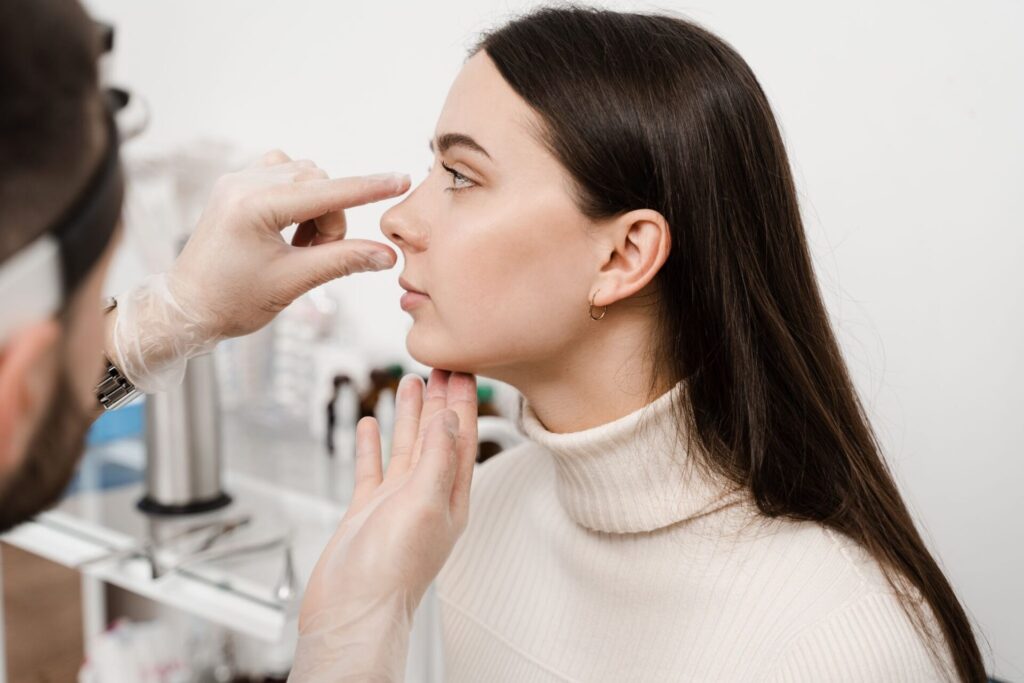
Before asking a surgeon to change a nose, there is another question worth answering: What, exactly, needs to change?
That question sounds simple until a patient has competing concerns. A nose may look crooked but also feel obstructed. A previous operation may have improved the profile while leaving the patient unhappy with the front view. Someone seeking a smaller tip may be describing a problem that requires a different solution altogether.
A useful rhinoplasty consultation begins by separating the patient’s concerns from assumptions about treatment. The American Society of Plastic Surgeons’ consultation guidance emphasizes discussing both appearance and breathing, reviewing previous surgery, and evaluating the patient’s health and expectations.
For primary rhinoplasty and especially revision rhinoplasty, the quality of that assessment deserves as much attention as the proposed result.
What to Look for in a Rhinoplasty Specialist
To provide a specialist perspective, facial plastic surgeon Dr. Jacob Sedgh of Sedgh Plastic Surgery in California shared what patients should look for when choosing a rhinoplasty specialist.
Patients comparing rhinoplasty specialists may want to consider board certification, specialty training, experience with both cosmetic and functional nasal surgery, and familiarity with complex corrective procedures.
For patients researching Los Angeles rhinoplasty, it can be useful to look for a practice that considers both the cosmetic appearance of the nose and its functional anatomy.
Specialist training may include education in facial plastic surgery, otolaryngology-head and neck surgery, and reconstructive techniques relevant to both nasal appearance and breathing function.
Patients can also verify a surgeon’s board certifications and confirm whether those credentials are relevant to facial plastic surgery and nasal surgery.
Peer-reviewed publications and academic involvement can provide additional information about a surgeon’s professional background, although they should be considered alongside training, experience, patient evaluation, and surgical outcomes.
For patients comparing specialists nationally, credentials, training, publications, and relevant surgical experience provide concrete information to evaluate. The next question is more personal: How does that experience apply to the particular nose under consideration?
The Best Starting Point Is Not a Reference Photograph
A reference image can begin a conversation. It should not become the entire surgical brief.
There is a meaningful difference between wanting to look more balanced and wanting to reproduce another person’s anatomy. The first describes an objective that can be discussed in relation to the patient’s face. The second risks treating a unique set of features as interchangeable.
A useful rhinoplasty plan should be individualized rather than aimed at creating the same nasal shape for every patient.
That statement suggests a useful exercise for anyone considering rhinoplasty: identify what should remain recognizable, not just what should change.
A patient might want a bridge irregularity softened while retaining a distinctive profile. Another might want improved alignment without substantially changing nasal size. Someone seeking correction after previous surgery might prioritize recovering a familiar appearance rather than pursuing further refinement.
Writing those priorities down can make the consultation more specific. Instead of presenting only a preferred photograph, the patient arrives with a clearer account of what matters.
Three Concerns That Can Lead to Very Different Plans
The phrase “I am unhappy with my nose” does not establish a diagnosis. Consider three different situations that can fall under that description.
A Patient Wants an Aesthetic Change
A first-time rhinoplasty patient may want to alter the bridge, tip, width, or proportions of the nose.
According to Mayo Clinic, planning takes account of the patient’s other facial features, nasal skin, and desired changes. Bone, cartilage, and skin all influence what an operation can accomplish.
The consultation should connect the request to that anatomy. What would need to be modified? What should be preserved? Would the proposed change create a different concern elsewhere?
A useful plan answers those questions before choosing a technique.
A Patient Has a Functional Problem
A patient may describe a nose that feels blocked, particularly when breathing in. That concern requires more than examining whether the external shape looks straight.
The American Academy of Otolaryngology-Head and Neck Surgery’s July 2026 position statement distinguishes between static nasal valve narrowing and dynamic collapse that occurs during inspiration. It also states that photographs do not reliably diagnose internal nasal valve collapse.
This is an important limitation of judging nasal function from images alone.
The question is not simply whether a surgeon can improve the profile. It is whether the evaluation identifies the source of obstruction and connects the proposed treatment to that diagnosis.
A Patient Is Evaluating a Result That Is Still Changing
After rhinoplasty, the timing of an assessment matters.
Mayo Clinic advises waiting at least a year before follow-up surgery to make additional changes because the nose can continue changing during that period. A consultation may therefore result in a recommendation to observe healing rather than schedule another operation.
That is not the same as dismissing the patient’s concern. It is a distinction between evaluating a problem now and deciding when, or whether, to operate.
A second opinion can be valuable even when the answer is not immediate surgery.
Revision Rhinoplasty Requires More Than a Different Aesthetic Opinion
Corrective nasal surgery adds another layer of investigation. The surgeon must evaluate the nose as it exists today while accounting for what previous procedures may have changed.
An expert review published by the American Society of Plastic Surgeons describes several challenges: scar tissue can complicate surgery and limit the outcome, cartilage may be deficient, and structural changes may contribute to airway problems.
For patients evaluating Los Angeles revision rhinoplasty specialists, this is where case-specific experience becomes particularly relevant. The consultation should establish more than whether the surgeon prefers a different nasal shape.
It should explain what appears to have changed, what tissue remains available, and what correction is realistically possible.
A revision-rhinoplasty evaluation may consider the extent of previous surgery, scar tissue, missing cartilage, compromised support, breathing concerns, and the condition of the nasal skin.
For patients preparing for that discussion, available operative records and a clear timeline of previous procedures can help organize the history. It is also useful to separate concerns that were present immediately after surgery from changes noticed later.
Importantly, the need for revision does not automatically prove that the first surgeon performed poor work. Stanford Medicine notes that unexpected deformities or breathing problems can occur even in experienced hands because nasal anatomy and healing are complex.
The purpose of another evaluation should be to understand the current problem, not simply to assign blame.
What Corrective Rhinoplasty Cases Can Teach Patients
A surgeon’s case descriptions can reveal information that photographs alone cannot.
Published revision-rhinoplasty cases can illustrate how surgeons evaluate several concerns at once, including breathing, nasal alignment, symmetry, and tip proportion. The timing of follow-up should also be considered when interpreting the result.
The educational value is in the specificity. Several concerns were identified, and the discussion distinguishes breathing, alignment, and tip proportion rather than describing the operation only as a successful nose job.
The follow-up interval is equally relevant. The American Society of Plastic Surgeons notes that refinement may continue for up to a year. A five-month case provides information about that stage of healing, not necessarily the final appearance.
When reviewing cases with a revision rhinoplasty specialist, ask which details are comparable to your situation and which are different.
That discussion is more useful than assuming an attractive result represents a prediction for someone else.
The Technique Should Follow the Diagnosis
Patients can encounter a long menu of rhinoplasty terminology before they have received an examination. Open, closed, preservation, and reconstructive approaches can sound like competing products.
A better approach is to ask what problem each proposed method is intended to solve.
The American Society of Plastic Surgeons’ procedure guide explains that open and closed rhinoplasty describe different ways of accessing the nasal structures. It also describes how cartilage may be used to reshape or support the nose, with material potentially obtained from the septum, ear, or rib.
These are surgical decisions with specific purposes. An incision choice does not describe the entire operation, and the use of a graft does not by itself explain the desired result.
Preservation techniques also require appropriate selection. In its discussion of preservation rhinoplasty, the society emphasizes matching the technique to the patient rather than treating it as universally preferable.
A useful way to test the explanation is to ask the surgeon to complete this sentence: “I recommend this approach because your examination shows…”
The answer should connect anatomy to treatment. It should not depend entirely on a technique being new, popular, or associated with a particular aesthetic.
A National Surgeon Search Still Requires a Practical Care Plan
For patients outside California, specialist selection involves more than deciding whether to travel.
Some rhinoplasty practices offer virtual consultations for patients who are not based in the Los Angeles area. This can provide a way to begin discussing goals and previous procedures before making travel arrangements.
However, a remote conversation and an in-person examination serve different purposes. As the American Academy of Otolaryngology-Head and Neck Surgery explains, diagnosing symptomatic nasal valve dysfunction relies on clinical history and physical examination.
Patients considering travel to West Hollywood should therefore clarify when the full examination will occur and whether it could change the proposed plan.
The same practical attention belongs after surgery. Ask how long the surgeon expects you to remain nearby, which appointments require an in-person visit, and how a concern will be evaluated after returning home.
For someone comparing rhinoplasty experts across the United States, these arrangements are part of the decision, not administrative details to resolve later.
The appropriate travel schedule should follow the care plan rather than dictate it.
Success Should Be Defined Before the Operation
“Better” is too vague to serve as the only measure of a surgical result.
Before treatment, the patient and surgeon should be able to describe the intended improvements. Is the primary objective appearance, breathing, correction of an earlier operation, or some combination? Which concern has the highest priority? What limitation is expected to remain?
The clinical practice guideline on nasal form and function after rhinoplasty recommends discussing patients’ motivations and expectations before surgery. It also recommends documenting satisfaction with both appearance and nasal function at a minimum of 12 months afterward.
That approach gives the assessment a broader purpose than comparing two photographs.
A visually appealing result may not answer whether the original breathing concern improved. Conversely, functional improvement may not resolve every aesthetic concern. Keeping the goals distinct makes the eventual conversation more meaningful.
Patients can contribute by recording their priorities before surgery and bringing those same priorities to follow-up visits. The point is not to create a rigid checklist for human healing. It is to avoid changing the definition of success after the procedure.
A Thorough Consultation Includes the Reasons Not to Proceed
Expertise should be visible in the discussion of limitations.
The American Society of Plastic Surgeons’ rhinoplasty safety guidance identifies risks including infection, poor healing, altered sensation, breathing difficulty, an unsatisfactory appearance, and the possibility of additional surgery.
A second opinion should help the patient weigh those risks against the expected benefit. It may support the original recommendation, suggest a different approach, or conclude that the likely improvement does not justify another operation.
That is particularly relevant when a patient is considering revision for a small remaining concern. The importance of that concern is personal, but the decision still needs a realistic account of what correction would involve.
Feeling heard should not require receiving an immediate recommendation for surgery.
The Value of a Specialist Is the Explanation Behind the Plan
Patients evaluating a rhinoplasty specialist should consider relevant facial plastic surgery training, head and neck anatomy expertise, and experience with both primary and revision rhinoplasty. Those factors can provide a useful foundation for comparing specialists locally or nationally.
The consultation is where that background becomes useful to the individual patient.
A strong explanation identifies the concern, connects it to anatomy, describes a proportionate treatment, and makes room for uncertainty. It also tells the patient when waiting, seeking further evaluation, or leaving an area unchanged may be reasonable.
Before choosing a new nasal shape, choose a plan you can understand. The result begins with the diagnosis.
Other Articles You May Find of Interest...
- Rhinoplasty Starts With the Right Diagnosis: The Value of a Specialist Second Opinion
- How Lifestyle and Personal Goals Can Shape Your Breast Augmentation Choices
- The Most Popular Cosmetic Treatments by Age Group
- What Makes a HydraFacial Treatment Professional?
- Botox vs Dysport vs Xeomin: Which Neuromodulator Is Right for You?
- Understanding PDRN Therapy: The Science Behind Skin Barrier Repair and Tissue Regeneration
- Who Is a Suitable Candidate for Breast Augmentation?
Featured Doctors and Practices