More Parenting and Family Health Articles
Comfortable Family Outfits That Help Parents Balance Style, Ease, and Togetherness
Getting several people dressed for the same day can become a surprisingly demanding part of family life. One child wants a favorite color, another is bothered by a neckline, an adult needs something presentable, and everyone still has to be ready on time. The challenge is rarely style alone. It is finding clothing that looks connected while allowing each person to move, sit, play, eat, and manage the day without constant adjustment.
Comfortable coordination offers a middle path between random outfits and rigid matching. A shared print or color can create a sense of togetherness, but the individual garments can still reflect age, activity, and personal preference. This matters because clothing is experienced for hours, not just seen for a few minutes. Your Health Magazine has highlighted that fabric feel, movement, and fit contribute to how comfortable clothing feels across a day, which makes these practical details worth considering alongside appearance.
When Getting Dressed Stops Feeling Like Another Task
Morning decisions can multiply quickly in a busy household. A coordinated plan reduces some of that uncertainty because the color story is already established. Parents do not have to build every outfit from separate pieces or wonder whether the group will look disconnected at a meal, outing, or gathering. The shared element becomes a starting point rather than a strict rule.
This works best when the plan remains simple. One print, two supporting colors, and familiar shoes are often enough, while each person keeps an appropriate garment shape.
Comfort Begins Before Anyone Leaves the House

A useful wardrobe decision starts with the body in motion. Before a coordinated outfit is approved for a long day, each wearer should be able to raise their arms, sit down, bend, walk, and manage ordinary tasks without pulling at the garment. For children, this quick check can reveal tight armholes, awkward hems, waist pressure, or fabric details that become distracting after a few minutes.
Parents exploring family outfits can use this movement-first approach before focusing on the final visual effect. The collection may provide inspiration, but the exact product page and size chart should guide the decision for each person. Age labels and familiar letter sizes are only starting points; current measurements matter more when several different bodies are involved.
A short try-on also gives children time to mention a bothersome sleeve, seam, or shoe before it becomes the center of the outing.
A Shared Look Can Still Respect Individual Needs
Coordination should leave room for differences in temperature, mobility, and sensory preference. One family member may want an extra layer, another may prefer fewer accessories, and a younger child may need a simpler closure. These choices do not weaken the shared look when the main colors or print remain consistent.
Separate the shared element from the optional details. Keep the deep-blue palette or floral motif, while cardigans, shoes, and accessories remain individual choices.
What a Deep-Blue Floral Set Shows About Flexible Coordination
PatPat currently lists the featured style as Matching Family Cotton Sleeveless Floral Outfits. The page displays options for women, girls, baby girls, boys, and men, allowing a family to build the look through different wearer categories rather than one universal garment. It also describes coordinated pieces that can be styled together or worn separately, which is useful for families who want repeat wear instead of a one-event purchase.
The current page highlights soft-touch everyday construction, flat seams, a heat-pressed tagless label, and pre-shrunk construction. Its care directions call for machine washing in cold water, low tumble drying, no bleach, and no dryer sheets. These are product-specific details and should not be generalized to every PatPat item. The page currently shows the product as out of stock, so availability should be checked again before publication or ordering.
Group imagery is styling guidance, not proof that every item is included. Confirm each wearer, size, quantity, and cart line separately because the page offers individual family-member selections.
The Five-Minute Movement Check Before a Full Day
A fast home test can be more informative than standing still in front of a mirror. Ask each wearer to complete movements that resemble the planned activity:
- Reach both arms overhead without the garment pulling sharply.
- Sit in a chair and stand again without adjusting the waistband.
- Walk, turn, and bend as they normally would.
- Add any jacket or layer planned for the day.
- Wear the complete outfit for five minutes and notice any rubbing, pressure, or distraction.
This is not a medical assessment or guarantee. It is a practical way to notice fit concerns before leaving home.
Choose Clothing for the Whole Schedule, Not One Moment
A family outfit should suit the longest and most active part of the day. An ensemble selected only for an arrival photograph may become inconvenient during lunch, playground time, travel, or an evening change in temperature. Parents should think through where the family will sit, how far they will walk, and whether children will need to climb, nap, or change.
The full-schedule approach favors comfortable footwear, a removable layer, and limited accessories. The shared palette can provide polish without details that need frequent correction.
Reduce Sensory Clutter Without Losing the Style Connection
Some family members notice tags, seams, fabric texture, tight elastic, or layered accessories more strongly than others. Parents do not need to label or diagnose those preferences to respect them. The useful response is to ask specific questions: Does anything scratch? Is the waistband comfortable while sitting? Would the outfit feel better without the necklace, belt, or extra layer?
Coordination can remain intact when a child skips an accessory or an adult adds a layer. Togetherness is not measured by identical tolerance for every styling choice.
Care Instructions Are Part of Everyday Comfort
Garment care affects whether a family outfit remains easy to use. A piece that requires an unrealistic routine may stay unworn, while clear cold-wash and low-dry directions can fit more naturally into household laundry habits. Always follow the instructions for the exact product because fabrics and construction can differ even within one coordinated collection.
Prepare garments according to the label before an important day, leaving time to check the post-care fit and address any issue. Never assume a piece will not shrink, fade, or change.
Togetherness Works Better When No One Feels Forced
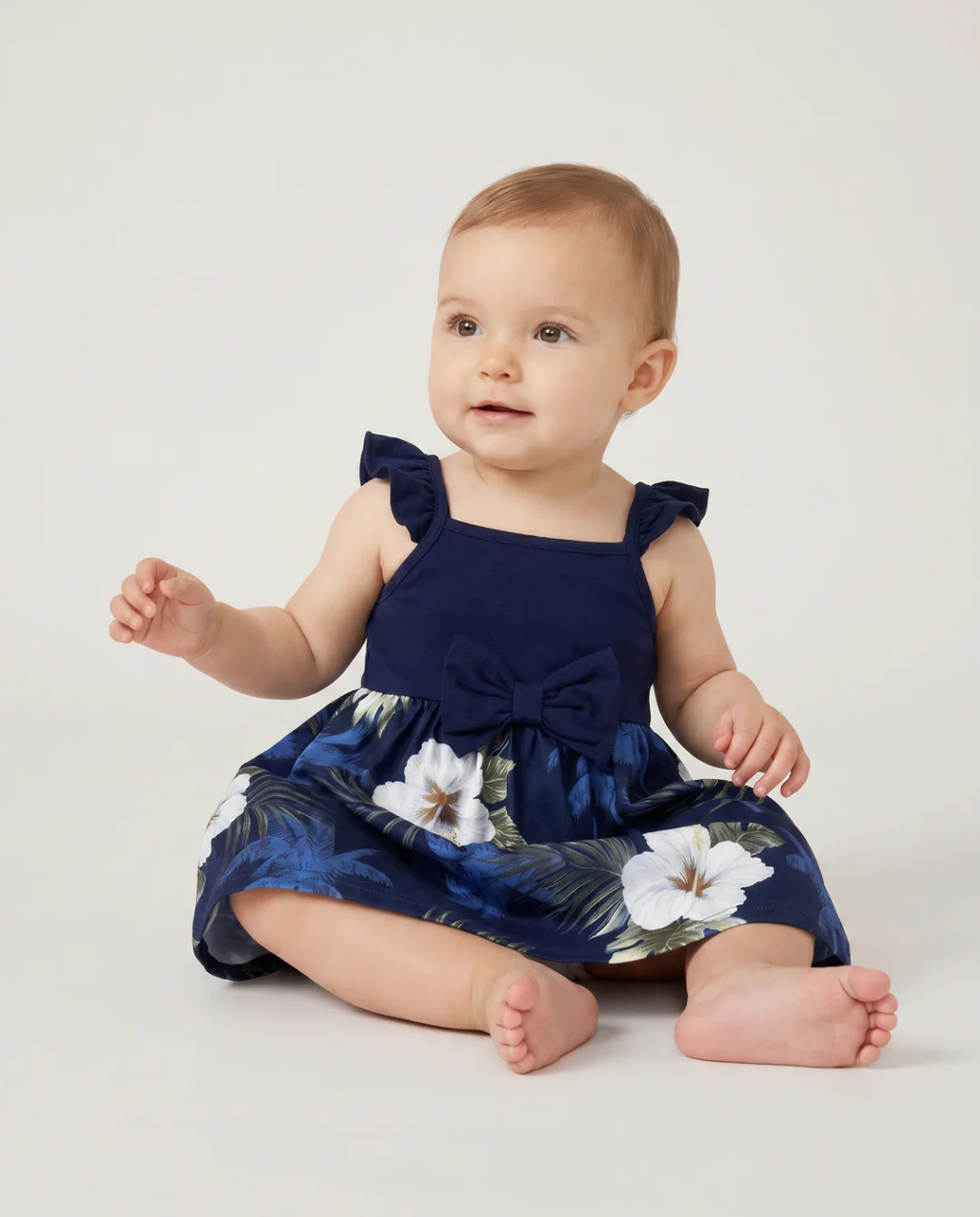
When choosing matching outfits for family, invite each person into one part of the decision. A child might select between two acceptable shoes, an older sibling may choose the day’s layer, and adults can decide how strongly to repeat the print. Small choices can make the shared look feel cooperative rather than imposed.
The emotional value comes from participating in something together, not from perfect visual symmetry. A family can look connected even when one child wears a cardigan, another skips an accessory, or an adult chooses a different silhouette. Respecting those differences often creates a more natural result because people appear comfortable in their own bodies and roles.
Frequently Asked Questions
Can a Family Coordinate Without Wearing the Same Print?
Yes. Repeat one background color or accent shade while allowing different garment types. The connection can remain clear even when only one or two people wear the main floral pattern.
What Is the Simplest Comfort Check for a Long Outing?
Have each person sit, reach, walk, and add the planned layer while wearing the complete outfit. Any persistent pulling, pressure, or distraction is a reason to reconsider the size or styling.
What If One Child Does Not Want to Match?
Keep participation flexible. The child might wear a related solid color, choose an accessory, or skip the shared print while remaining within the palette. A coordinated day should not depend on forcing identical choices.
How Should Families Plan for Changing Temperatures?
Use removable layers that work with the main colors and do not restrict movement. Check the weather and indoor conditions, then make sure every wearer can add or remove a layer without disrupting the outfit.
A Calmer Way to Dress Together
Balancing style, ease, and togetherness does not require a complicated wardrobe strategy. Begin with accurate measurements, choose one visual connection, respect individual comfort, and test the clothes through ordinary movement. These steps keep the family look grounded in the day everyone will actually experience.
For the featured PatPat design, review the current product page, selected family-member option, size chart, product details, care directions, availability, and return eligibility before ordering. Add every required item separately and confirm the final cart. The most successful coordinated outfit is not the one that looks perfect for a moment; it is the one the family can wear through the day without the clothes taking over the experience.
Other Articles You May Find of Interest...
- 7 Things Families Need From an ABA Therapy Provider
- A Day in the Life of a Single Dad: The Honest Hour-by-Hour Daily Life Guide
- What Parents Should Know About Introducing New Partners After Divorce
- Why Major Family Milestones Can Feel So Meaningful
- What PPEC Services Actually Include
- Building Healthy Habits for the Whole Family
- Breastfeeding Classes Washington DC: Building Confidence Before Baby Arrives