More Kratom Education Articles
White Maeng Da Kratom: What You Need to Know Before You Buy

Let me be direct with you.
The kratom industry is growing fast. According to the American Kratom Association, an estimated 10 to 16 million Americans have used kratom. Vendors are multiplying. Products are stacking up on shelves — both online and in local stores — with bold labels, flashy branding, and very few guarantees.
White Maeng Da Kratom is one of the most popular kratom varieties on the market today. And yet, most consumers buying it have little understanding of what it actually is, how it is labeled, what risks it carries, or how to evaluate whether a product is safe.
That gap in knowledge is a problem.
This article will walk you through everything you need to know about White Maeng Da Kratom from an educational standpoint — including what it is, how the labeling system works, what safety concerns you should be aware of, its legal status, why third-party testing matters, and how to read a Certificate of Analysis.
Important disclaimer before we go further: Kratom is not approved by the U.S. Food and Drug Administration (FDA). It may cause dependency. It may interact with prescription medications and other substances. You should speak with a qualified healthcare provider before using kratom or any kratom-derived product.
What Is Kratom?
Kratom is a tropical tree scientifically known as Mitragyna speciosa. It is native to Southeast Asia, primarily found in countries like Thailand, Indonesia, Malaysia, and Papua New Guinea. The leaves of the kratom tree have been used traditionally in those regions for generations.
The two primary active compounds in kratom leaves are mitragynine and 7-hydroxymitragynine. These alkaloids interact with opioid receptors in the brain, which is a significant reason why kratom has attracted both interest and regulatory concern in the United States and other Western countries.
Kratom is not a pharmaceutical product. It is not classified as a controlled substance at the federal level in the U.S. — though that status has been debated — and it occupies a gray area that varies significantly depending on your location.
It is typically sold in the following forms:
- Dried leaf powder
- Capsules
- Extracts and concentrates
- Liquid shots
- Pressed tablets
White Maeng Da is a specific variety within the broader kratom product landscape.
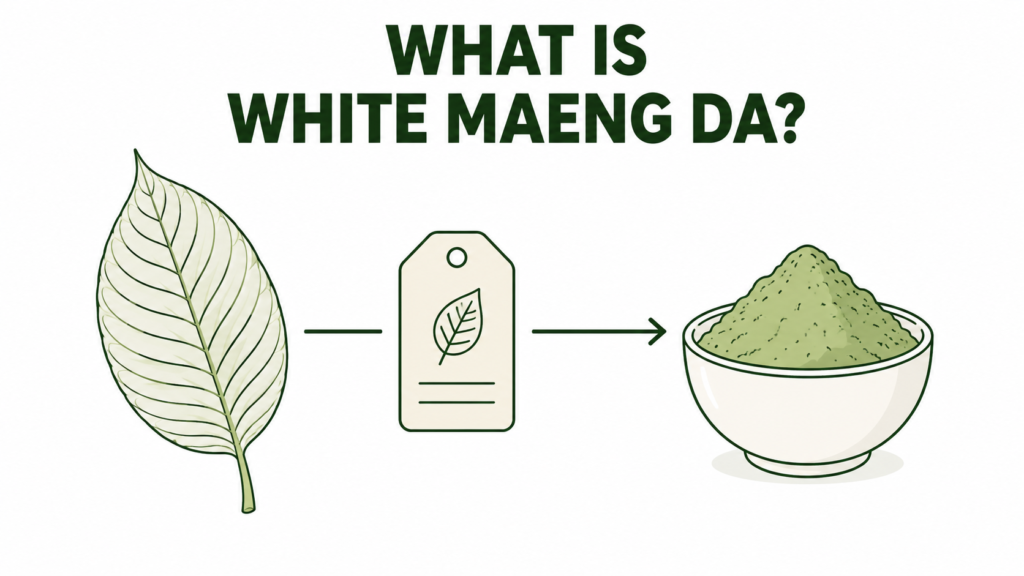
What Is White Maeng Da Kratom?
To understand White Maeng Da, you need to understand two naming conventions: the color designation and the strain name.
The Color System
Kratom products are commonly categorized by vein color: red, green, and white. In raw leaf form, these colors refer to the color of the central vein running through the kratom leaf. The color is influenced by factors including the age of the leaf at harvest and the drying and processing method used after harvest.
- Red vein kratom is typically harvested from more mature leaves and dried through methods that maximize oxidation.
- Green vein kratom uses leaves at an intermediate maturity stage.
- White vein kratom is generally harvested from younger leaves and processed using methods that limit oxidation and sun exposure.
It is important to understand that the color designations in commercial kratom products do not always reflect a strict scientific standard. Processing techniques, drying environments, and blending practices vary widely across vendors. A product labeled “white” from one supplier may have been processed very differently than a “white” product from another.
The “Maeng Da” Name
“Maeng Da” is a term of Thai origin that, loosely translated, means “pimp grade” — it is used colloquially to imply superior quality. In the kratom industry, it has evolved into a marketing designation rather than a formal botanical classification.
Maeng Da kratom does not refer to a single, standardized plant variety or a specific geographic origin that is universally agreed upon. Different vendors source their Maeng Da from different regions of Indonesia, Thailand, and other Southeast Asian countries. Some vendors use the Maeng Da label for grafted or selectively cultivated plants. Others apply it based on alkaloid concentration. Some use it simply because the name sells well.
This lack of standardization is one of the most significant challenges facing kratom consumers today.
How Kratom Labeling Works (And Where It Falls Short)
If you pick up a bag of White Maeng Da Kratom and read the label, you will likely see the following:
- A strain name (White Maeng Da)
- A weight or count (if capsules)
- A vendor name or brand
- A standard disclaimer such as “Not intended to diagnose, treat, cure, or prevent any disease”
- Possibly a batch number or lot code
What you will typically not see:
- Independent lab test results directly on the packaging
- Specific alkaloid percentages
- A clear country and region of origin
- A verified Certificate of Analysis (COA) QR code linked to a current batch test
The kratom industry is not subject to the same pre-market safety approval requirements that govern pharmaceutical drugs. Under the Dietary Supplement Health and Education Act (DSHEA) of 1994, dietary supplements — a category under which many kratom products are sold — do not require FDA approval before they reach store shelves.
This means the burden of quality verification falls almost entirely on the consumer, not the manufacturer.
The American Kratom Association (AKA) has developed a voluntary Good Manufacturing Practice (GMP) Standards Program, which member vendors can participate in to demonstrate a baseline level of quality and safety. If you are purchasing kratom, checking whether the vendor is AKA-GMP certified is a reasonable first step — though it is not a substitute for independent lab testing.
Safety Concerns You Should Understand
This section is critical. Before purchasing or using any kratom product, including White Maeng Da, you need to have an honest understanding of the documented safety concerns associated with kratom.
1. Dependency and Withdrawal
The FDA and other health agencies have noted that kratom carries a risk of physical and psychological dependency. Because kratom alkaloids interact with opioid receptors, regular use can lead to tolerance, reliance, and withdrawal symptoms upon discontinuation. These withdrawal symptoms can include irritability, nausea, muscle aches, insomnia, and other discomforts.
2. Drug Interactions
Kratom is metabolized through the liver’s cytochrome P450 enzyme system — the same system responsible for processing many common prescription and over-the-counter medications. This means kratom has the potential to interact with a wide range of drugs, including blood thinners, antidepressants, sedatives, and others. These interactions can alter how your medications work or increase the risk of adverse effects.
If you are taking any medications, speak with your doctor before using kratom.
3. Contamination Risk
Because kratom is an unregulated botanical product, contamination is a documented concern. Past FDA advisories have flagged specific batches of kratom products contaminated with heavy metals (including lead and nickel) and Salmonella. Without consistent third-party testing, there is no guarantee that any given bag of kratom is free from these contaminants.
4. Lack of Standardization
Because the alkaloid content of kratom can vary significantly based on the plant’s growing conditions, harvest timing, and processing methods, two products with identical labels may have meaningfully different chemical profiles. This lack of consistency makes it extremely difficult to predict how any individual product will behave.
5. Reported Adverse Events
The FDA has received thousands of adverse event reports associated with kratom, including reports of liver injury, cardiovascular effects, and in some cases, fatal outcomes — though the latter often involved concurrent use of other substances. The agency continues to actively monitor the space.
The Legal Landscape
Kratom’s legal status in the United States is fragmented and evolving. At the federal level, kratom is not a scheduled controlled substance, though the DEA has previously listed it as a “Drug of Concern.” The FDA has taken enforcement actions against vendors making unsubstantiated health claims about kratom.
At the state and local level, the picture is more complex:
- States where kratom is banned or regulated: Alabama, Arkansas, Indiana, Rhode Island, Vermont, and Wisconsin have banned kratom at the state level as of recent years. Always check the current status for your state, as this continues to change.
- Cities and counties: Some local jurisdictions have independently banned kratom even in states where it remains otherwise legal.
Internationally, kratom is classified as a controlled substance in several countries, including Thailand (though that country has partially reversed restrictions for specific uses), Malaysia, Australia, and others.
If you are traveling with kratom or ordering it online for delivery, it is your responsibility to understand and comply with the laws in your jurisdiction.
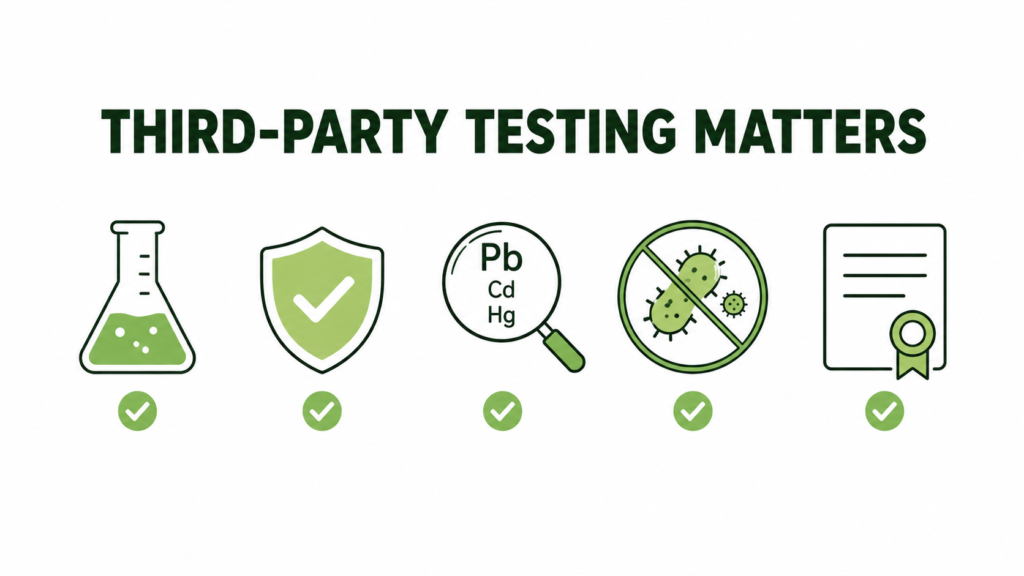
Why Third-Party Testing Matters
The most responsible kratom vendors are those that send their products to accredited, independent third-party laboratories for testing before those products are sold.
Here is what reputable third-party lab testing should cover for a kratom product:
Alkaloid Content A comprehensive panel should identify and quantify key alkaloids, including mitragynine and 7-hydroxymitragynine. This confirms that the product actually contains what the label claims.
Heavy Metal Screening Testing for lead, mercury, arsenic, cadmium, and other heavy metals is essential. These contaminants can enter kratom products through contaminated soil, water, or improper processing.
Microbial Testing Kratom should be tested for the presence of harmful bacteria, including Salmonella, E. coli, and others, as well as for mold and yeast contamination.
Pesticide Residue Testing Agricultural chemicals used in kratom farming can persist in the final product if not properly screened.
Solvent Residue Testing (for Extracts) If you are purchasing a kratom extract or concentrate, additional testing for residual solvents used in the extraction process is important.
A vendor that cannot or will not provide current, batch-specific lab results is a vendor you should approach with significant caution.
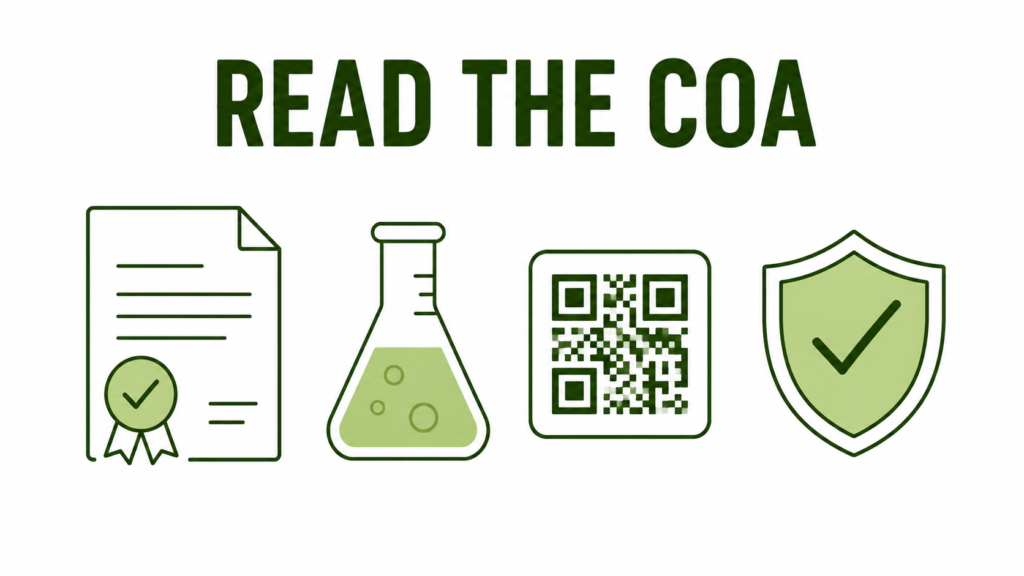
How to Read a Certificate of Analysis (COA)
A Certificate of Analysis is a document issued by a laboratory that summarizes the test results for a specific product batch. Understanding how to read one is a valuable skill for any kratom consumer.
Here is what to look for:
1. Verify the Lab The COA should list the name and accreditation status of the laboratory that conducted the testing. Look for ISO 17025 accreditation, which is the international standard for testing laboratories. Avoid COAs from labs that are not independently accredited.
2. Match the Batch Number The batch or lot number on the COA must match the batch number on the product you are buying. A COA from a previous batch tells you nothing meaningful about the product in your hands.
3. Check the Test Date Lab results age. A COA from two years ago is not an accurate reflection of a current batch. Look for test dates that align with recent production.
4. Review the Alkaloid Panel The COA should list mitragynine and ideally 7-hydroxymitragynine levels as quantified measurements, not just as “detected” or “not detected.” This allows you to understand the actual chemical profile of the product.
5. Look at the Pass/Fail Results Contaminant panels — heavy metals, microbials, pesticides — are typically reported as pass or fail against established safety thresholds. All contaminant categories should pass.
6. Understand the Units Alkaloids are typically reported as a percentage of the total product weight or in parts per million (ppm). Contaminants are typically reported in ppm or parts per billion (ppb). If you are not familiar with these measurements, a vendor’s customer service team should be able to explain the results clearly.
If a vendor publishes COAs that are difficult to access, perpetually outdated, or missing key test categories, treat that as a red flag.
What to Look for in a Responsible Vendor
When evaluating any White Maeng Da Kratom vendor, consider the following:
- AKA GMP certification as a baseline quality signal
- Publicly accessible, batch-specific COAs that are current and from an accredited lab
- Clear and honest product labeling that does not make unsubstantiated health claims
- Transparent sourcing information, including country and region of origin where possible
- A clear return and refund policy, which signals confidence in product quality
- Responsive and knowledgeable customer service that can answer questions about testing
No vendor is perfect, but the most reputable operators in the kratom space are investing in transparency because they understand that consumer trust is built on verifiable information, not marketing language.
Final Thoughts
White Maeng Da Kratom is a widely available product in a rapidly growing, largely unregulated industry. The name is rooted in marketing convention more than botanical science, and the quality of products carrying that label varies enormously from vendor to vendor.
What remains consistent is the responsibility of the consumer to approach kratom with informed caution.
Understand what you are buying. Ask for lab results. Check the legal status in your location. And — this point deserves repeating — consult a healthcare professional before using kratom, especially if you have pre-existing medical conditions, are taking medications, are pregnant or breastfeeding, or have a history of substance use disorders.
Kratom is not FDA-approved. Its long-term safety profile is not fully understood. It carries real risks, including the potential for dependency and adverse interactions.
Education is not the same as endorsement. The goal here is to give you the factual framework to make informed decisions — because in an industry where transparency is inconsistent, knowledge is your most important tool.
Other Articles You May Find of Interest...
- Kratom Legality in 2026: Why the Rules Vary by Location
- 7 Things to Know About Split Kilo Kratom Before a Bulk Order
- Red Thai Kratom: The Strain With a Complicated History and a Loyal Following
- Red Sumatra Kratom: What Makes This Strain Stand Apart
- Red Indo Kratom: The Strain That Built the Modern Kratom Market
- Red Hulu Kapuas Kratom: What Makes This Rare Strain So Talked About?
- Red Borneo Kratom: The Strain That Built the Modern Kratom Market