






More Supplements Articles
Why Liposomal Nutrition Is Changing the Way We Think About Supplements
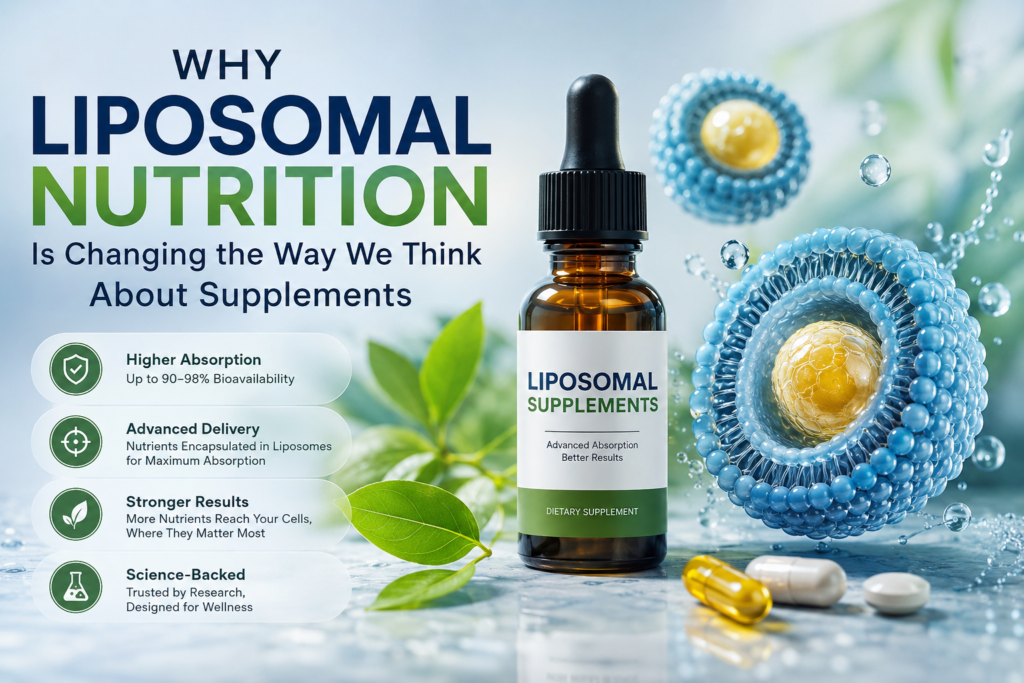
For decades, the supplement industry has operated on a simple assumption: if your body needs a nutrient, just swallow it in pill form and you’re covered. But research into nutrient bioavailability tells a different story. Many vitamins and minerals taken through standard tablets or capsules are broken down by stomach acid before they ever reach the bloodstream, meaning a large percentage of what you swallow never actually gets used by your cells.
This is where liposomal delivery technology has started to reshape the conversation around supplementation. Instead of asking “how much should I take,” more people are now asking “how much of this will my body actually absorb?” That shift in thinking is what’s driving the growing interest in liposomal formulas.
What Are Liposomal Supplements?
Liposomal technology works by encapsulating nutrients inside tiny lipid (fat) spheres called liposomes. Because these spheres are structurally similar to the membranes of our own cells, the body recognizes them and allows them to pass through the digestive tract largely intact, bypassing much of the degradation that happens with conventional supplements.
Think of a liposome as a microscopic delivery vehicle. Instead of a vitamin floating freely in your stomach, exposed to acid, enzymes, and bacteria that can destroy it — the nutrient travels inside a protective bubble that your cells are already designed to accept. This is the same basic principle used in some advanced pharmaceutical drug-delivery systems, adapted for everyday nutrition.
Why Absorption Matters More Than Dosage
A common misconception in the supplement world is that a higher dose automatically means a better result. In reality, absorption is often the bigger bottleneck. Taking 1,000 mg of a poorly absorbed nutrient might deliver less to your bloodstream than 200 mg of the same nutrient in a highly bioavailable liposomal form.
Research into oral bioavailability consistently shows that nutrients that are naturally unstable in the gut, like vitamin C and glutathione, benefit the most from this kind of protected delivery.
In practical terms, this means a well-made liposomal supplement can often deliver more usable nutrition per dose than a much larger amount of a standard pill.
Where Liposomal Formulas Make the Biggest Difference
Not every nutrient needs liposomal delivery to be effective, but a few categories show particularly strong benefits:
Vitamin C
Vitamin C is water-soluble and degrades quickly once it hits stomach acid. Liposomal vitamin C is one of the most widely used formats specifically because conventional vitamin C tablets lose so much of their potency before absorption.
Glutathione
Often called the body’s “master antioxidant,” glutathione plays a central role in cellular health. Unfortunately, it’s also notoriously difficult to absorb orally, most of it is broken down before it ever reaches the bloodstream. Liposomal glutathione is one of the few oral formats that meaningfully addresses this problem.
NAD+ Precursors
NAD+ has become a major focus in longevity and cellular-energy research. Because NAD+ itself is unstable, liposomal precursor formulas are increasingly used to support more consistent delivery.
Multivitamin Blends
Combining several nutrients into a single liposomal formula can help ensure more even absorption across the board, rather than relying on a single nutrient at a time.
What to Look for in a Quality Liposomal Supplement
The liposomal label alone doesn’t guarantee a good product. The technology is only as good as the manufacturing process behind it. When comparing brands, it’s worth checking for a few specific things:
- Third-party purity and potency testing. Quality brands actively test for heavy metals and contaminants rather than assuming raw materials are automatically clean.
- Made-to-order or small-batch production. Liposomes are delicate structures that can break down with heat, light, or time. Freshness matters far more here than with a standard shelf-stable tablet.
- Transparent ingredient sourcing. Clear labeling on where ingredients come from, and what’s actually inside the bottle, is a strong signal of a brand worth trusting.
- Non-GMO and allergen-friendly formulations. Many people seeking out liposomal supplements are also managing dietary sensitivities, so gluten-free and vegan-friendly options matter.
- Reasonable, evidence-based claims. A trustworthy brand explains the science behind absorption rather than making sweeping promises that sound too good to be true.
Brands such as Healthy Drops are among the companies offering liposomal supplement formulations. When evaluating products, consumers may wish to review factors such as third-party testing, ingredient transparency, manufacturing practices, and product labeling.
How to Incorporate Liposomal Supplements Into a Daily Routine
Liposomal supplements are typically taken orally, often in liquid or gel form, and are usually held in the mouth briefly before swallowing to allow some initial absorption through the mucous membranes. Most are designed to be taken on an empty stomach or away from heavy meals, since food can sometimes interfere with how efficiently liposomes are absorbed, though this can vary by product, so checking the specific label instructions is always the best approach.
For people who already take a daily vitamin C, glutathione, or multivitamin, switching to a liposomal version of the same nutrient, such as a HealthyDrops supplement is generally a low-friction change. The dosing schedule typically stays similar; what changes is how much of that dose the body is actually able to use.
The Bigger Picture: A Shift Toward Smarter Supplementation
The growing interest in liposomal nutrition reflects a broader shift in how consumers evaluate supplements. Rather than judging a product purely by its label dosage, more people are starting to factor in delivery method, sourcing transparency, and third-party testing as part of their decision-making process.
This is a meaningful change. A supplement industry that competes on absorption and verified quality, rather than simply on milligram counts, tends to produce better outcomes for consumers in the long run. As more research continues to validate the benefits of liposomal delivery, it’s likely this approach will keep moving from a niche wellness trend into a more standard part of how supplements are formulated across the industry.
Frequently Asked Questions
Are liposomal supplements better than regular vitamins?
For nutrients that are difficult to absorb orally, such as vitamin C and glutathione, liposomal versions generally offer significantly better absorption than standard tablets or capsules.
Are liposomal supplements safe?
Liposomal supplements use a delivery method, not a different ingredient, so safety generally depends on the underlying nutrient and the manufacturing quality of the specific product. As with any supplement, it’s best to consult a healthcare professional before starting a new regimen.
How do I know if a liposomal supplement is high quality?
Look for third-party testing, made-to-order or small-batch production, transparent sourcing, and non-GMO/allergen-friendly formulations.
For anyone already taking daily vitamins or minerals, it may be worth asking whether a liposomal version of that same nutrient could deliver noticeably better results — particularly for nutrients like vitamin C and glutathione that are well documented to suffer from poor oral absorption in their standard forms.
This article is for general informational purposes only and is not intended as medical advice. Always consult a healthcare professional before starting any new supplement regimen.
Other Articles You May Find of Interest...
- How to Choose the Best Probiotic Supplements for Your Needs
- Essential Vitamins and Supplements for a Healthier Everyday Lifestyle
- What Do Nootropics Do to Your Brain?
- 5 Ingredients to Look for in a Quality Antioxidant Supplement
- NAD Patches: Potential Benefits, Limits, and Safety
- ParaPurge Gut Cleanse: What Is It and Does It Work?
- Renovate Gut Detox: Ingredients, Claims, and Safety Questions





