More Complementary & Integrative Healthcare Articles
Understanding Adaptogenic Supplements: What to Know About Ashwagandha and Medicinal Mushrooms
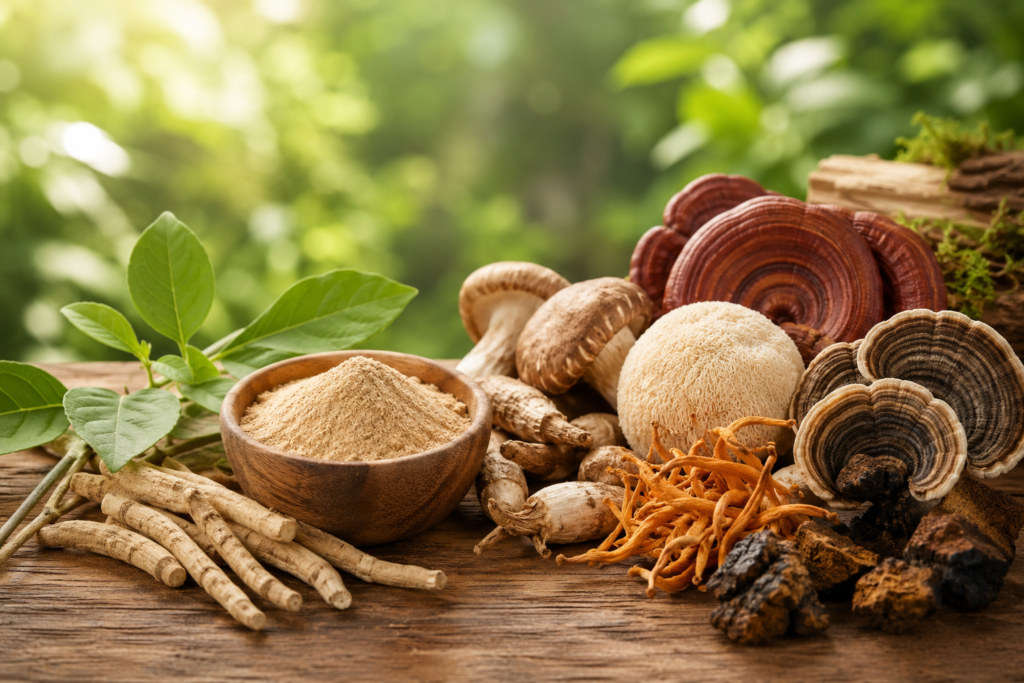
Adaptogenic supplements have become increasingly popular among consumers interested in wellness, stress management, and healthy aging. While many adaptogenic herbs and fungi have long histories of traditional use, understanding what they are—and how to evaluate supplement quality—can help consumers make more informed decisions.
What Are Adaptogens?
The term “adaptogen” is commonly used to describe herbs and natural substances that may help the body adapt to various physical, mental, and environmental stressors. Many adaptogens have roots in traditional medical systems that date back hundreds or even thousands of years.
It is important to note that dietary supplements are not approved by the U.S. Food and Drug Administration (FDA) to diagnose, treat, cure, or prevent disease. Research on adaptogens is ongoing, and evidence varies depending on the specific ingredient and health outcome being studied.
Ashwagandha: An Ancient Ayurvedic Herb
Ashwagandha (Withania somnifera) is an evergreen shrub that has been used for centuries in traditional Ayurvedic medicine. Today, it is one of the most widely recognized adaptogenic ingredients in dietary supplements.
Researchers have identified several naturally occurring compounds in ashwagandha, including a group of substances known as withanolides, which are believed to contribute to many of the plant’s biological activities. Ashwagandha also contains alkaloids and other phytochemicals that may play supporting roles.
Some studies have investigated ashwagandha extracts for stress, sleep quality, and general well-being. While results have been promising in certain populations, experts note that more high-quality research is needed, and outcomes may vary based on the extract used and the amount of active compounds present.
Medicinal Mushrooms and Their Active Compounds
Medicinal mushrooms have also been used in traditional wellness practices throughout Asia and other parts of the world. Common examples include reishi, lion’s mane, cordyceps, turkey tail, and chaga.
Many medicinal mushroom products focus on naturally occurring compounds called beta-glucans, a type of polysaccharide found in fungal cell walls. Beta-glucans are often considered one of the key constituents of interest when evaluating mushroom extracts.
Different mushroom species contain different profiles of bioactive compounds. For example, lion’s mane has been studied for compounds unique to that species, while reishi contains triterpenes in addition to beta-glucans. Researchers continue to investigate how these compounds interact with the body’s biological systems. However, evidence for specific health claims remains an active area of scientific study.
How to Evaluate Supplement Quality
Not all supplements are manufactured the same way. When comparing products, consumers may wish to consider:
Standardization: Quality extracts often indicate the amount of key active compounds, such as withanolides in ashwagandha or beta-glucans in mushroom products. Standardization can help provide consistency from batch to batch.
Transparent Labeling: Labels should clearly identify the plant or mushroom species used, the part utilized (such as root, fruiting body, or mycelium), and whether the product contains a concentrated extract or simple powder.
Third-Party Testing: Independent testing can help verify identity, purity, and quality standards.
Ingredient Simplicity: Products with straightforward ingredient lists may make it easier for consumers to understand exactly what they are taking.
A Balanced Approach
Adaptogenic supplements continue to attract scientific interest and consumer attention. While traditional use and emerging research have helped drive their popularity, consumers should approach these products with realistic expectations and discuss supplement use with their healthcare provider, particularly if they have underlying medical conditions, are pregnant, or take prescription medications.
For readers interested in learning more about available extract options, information can be found on collections featuring ashwagandha extract supplements and medicinal mushroom extracts. Additional research and consultation with a qualified healthcare professional can help determine whether a particular supplement may be appropriate for an individual’s needs.
Other Articles You May Find of Interest...
- Understanding Pressure and Safety in Hyperbaric Therapy
- How to Support Your Immune System Naturally in Everyday Life
- Chinese Medicine and Western Medicine: Different Questions
- Cellular Healing Solutions
- Acupuncture and Cupping For Cancer Side Effects
- Hot-Cold Contrast Therapy at Home: A Beginner’s Guide
- Natural Tennis Elbow Remedies That Hold Up