






More Hair Care Articles
Afro Hair Transplant in Turkey: What Curly and Coiled Hair Patients Should Know
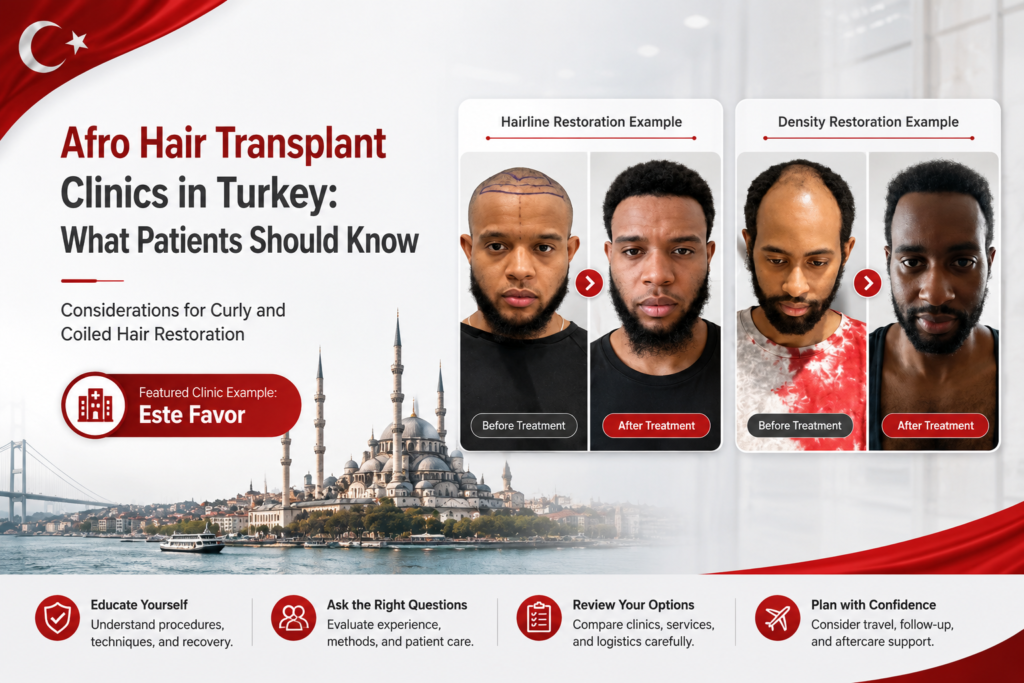
Afro-textured, curly, and coiled hair can require a different level of planning during hair restoration. The curl pattern is visible above the scalp, but the follicle may also curve beneath the skin. That curved root structure can affect extraction angle, graft handling, implantation direction, density planning, and the final appearance of the hairline.
For African American, Afro-Caribbean, and other patients with tightly curled hair, choosing a clinic should involve more than comparing package prices or looking at general before-and-after photos. Patients may need to ask how the clinic evaluates curl pattern, donor-area strength, punch size, implantation angle, and post-operative follow-up before deciding whether a provider is suitable for their needs.
Why Afro Hair Transplant Planning Is Different
Hair transplant planning for afro and coiled hair often requires careful attention to follicle shape below the scalp. If a surgical team uses the same extraction approach used for straighter hair, the risk of transection, or damage to the follicle during removal, may increase. This does not mean afro hair is unsuitable for transplantation. It means the surgical plan should account for curl direction, root curvature, donor density, scalp characteristics, and realistic coverage goals.
Patients researching the afro hair transplant clinics in Turkey should focus less on rankings and more on the specific clinical questions that apply to textured hair. A clinic that is experienced with afro hair should be able to explain how it evaluates curl pattern, chooses extraction tools, handles graft placement, and sets expectations before surgery.
Questions Patients Should Ask Before Booking
Before committing to a hair transplant abroad, patients with afro-textured hair should request clear answers in writing. Important questions include:
- How many afro, African American, Afro-Caribbean, or tightly curled hair cases has the clinic handled recently?
- How does the clinic evaluate follicle curvature before extraction?
- What punch tool diameter may be used for coiled or curved follicles?
- Who performs the extraction and channel-opening stages?
- How does the team preserve curl direction and natural hairline design during implantation?
- Can the clinic provide examples of results from patients with similar hair texture?
- What follow-up support is available after the patient returns home?
Specific answers matter. Broad statements about success rates, general experience, or package convenience are not enough when the patient has a hair type that may require more individualized planning.
Clinic Experience and Textured Hair Cases
Some Turkish hair transplant clinics market specific approaches for textured hair, curly hair, or international patients. When reviewing those claims, patients should look for practical details rather than promotional language. A useful consultation should discuss donor-area assessment, graft survival considerations, extraction method, hairline design, and expected density in plain terms.
For example, a clinic may describe planning tools, FUE or DHI-based techniques, doctor involvement, or specialized handling protocols. These details can be relevant, but patients should still ask how those methods apply to their own curl pattern and hair-loss stage. No technique is automatically appropriate for every patient.
Examples of Clinic Factors to Compare
Patients may encounter several clinic names during research, including Este Favor, Sapphire Hair Clinic, MedArt Hair Clinic, Heva Clinic, Vera Clinic, Nasia Hair, TecniFUE International, BlueMagic Group, ClinMedica, and Istanbul Vita Clinic. These names may appear in online searches, patient forums, advertisements, or clinic comparison content.
Rather than treating any list as a ranking, patients should compare clinics using the same core criteria:
- experience with afro-textured or tightly curled hair;
- clarity about who performs each surgical stage;
- pre-operative evaluation of donor capacity and curl pattern;
- realistic density planning;
- clear discussion of risks, limitations, and alternatives;
- availability of post-operative instructions and follow-up support;
- transparent pricing and what is included in the package.
This approach helps patients evaluate providers without relying on unsupported “best,” “top,” or numbered ranking claims.
Pricing Considerations for Afro Hair Transplants in Turkey
Hair transplant pricing in Turkey may vary depending on the clinic, technique, number of grafts, surgeon involvement, accommodation, transfers, post-operative products, and follow-up support. Afro-textured hair cases may require additional planning time or more careful extraction strategy, but pricing should still be reviewed carefully and compared with the scope of care actually provided.
Some clinics offer all-inclusive packages for international patients. These packages may include the procedure, hotel stays, airport transfers, interpreter support, and post-operative care items. Patients should ask for an itemized explanation of what is included, what is optional, and what costs may arise later.
Patients comparing Turkey with the United States, the United Kingdom, or other countries should also consider follow-up logistics. Lower procedure pricing abroad may be appealing, but travel, recovery, revision needs, communication, and access to local medical support should all factor into the decision.
Important Technical Considerations for Afro and Curly Hair
Curved Follicles
Afro hair follicles may curve beneath the scalp. This can make extraction more technically demanding and may increase the importance of proper angle selection, magnification, and careful graft handling.
Curl Direction and Hairline Design
The goal is not only to move follicles from one area to another. The transplanted hair should be placed in a way that respects the patient’s natural curl direction, density pattern, and facial features. Patients should ask how the clinic designs hairlines for textured hair rather than relying on a standard template.
Tool Selection
Punch size and extraction technique may need to be adapted for broader or curved follicles. Patients should ask how the clinic chooses tools and whether that decision is made after reviewing the individual donor area.
Realistic Density
Afro-textured hair can sometimes create strong visual coverage because of curl volume, but the final plan still depends on donor supply, graft quality, hair-loss pattern, and long-term progression. Clinics should avoid promising unrealistic density or guaranteed outcomes.
Red Flags to Watch For
Patients should be cautious if a clinic:
- claims guaranteed results;
- uses the same plan for all hair types;
- will not explain who performs the surgical steps;
- cannot discuss experience with afro or tightly curled hair;
- uses only heavily edited before-and-after images;
- pressures the patient to book quickly;
- does not discuss risks, limitations, or possible need for future procedures.
Hair transplantation is a medical procedure. Advertising claims should never replace a direct consultation, careful medical review, or individualized surgical planning.
Questions About Recovery and Follow-Up
Recovery instructions may include guidance on scalp care, washing, swelling, scabbing, sleeping position, physical activity, and when to contact the clinic. Patients traveling internationally should ask how follow-up is handled once they return home. They should also ask what symptoms require urgent medical attention and whether the clinic coordinates with local physicians if complications arise.
Quick FAQ
Is afro hair transplant surgery automatically riskier?
Not automatically, but it can be more technically demanding. The main issue is that curved follicles may require more careful extraction and implantation planning. The patient’s individual hair characteristics and the clinic’s experience both matter.
Can FUE be used for afro hair?
FUE may be an option for some afro-textured hair patients, but suitability depends on donor-area evaluation, follicle curvature, hair-loss pattern, and the surgeon’s assessment. Patients should ask how the clinic adapts FUE planning for coiled or tightly curled follicles.
Will scarring be visible?
Scarring risk depends on the technique used, healing response, extraction pattern, skin characteristics, and post-operative care. Patients should ask the clinic to explain likely scarring patterns and how short hairstyles may affect visibility.
How should patients compare clinics?
Patients should compare clinics by experience with textured hair, consultation quality, surgical-team involvement, transparency, follow-up support, and realistic discussion of limitations. A clinic’s marketing language should not be treated as proof of outcome quality.
Conclusion
Afro hair transplantation in Turkey requires careful research because textured hair can involve unique surgical planning considerations. Patients should focus on clinic experience with curved follicles, individualized donor assessment, hairline design, extraction method, implantation angle, follow-up support, and transparent pricing.
The safest approach is to treat clinic names and online examples as starting points for research, not as rankings or guarantees. A qualified provider should be able to explain how the treatment plan is adapted to the patient’s hair texture, goals, medical history, and long-term expectations.
Other Articles You May Find of Interest...
- Hair Transplants in Turkey vs. the UK and US: Cost, Care, Travel, and Follow-Up Considerations
- Hair Transplant Recovery Timeline in Turkey: Month-by-Month Expectations and Follow-Up Considerations
- Understanding Hair Transplant Pricing in Turkey: Costs, Techniques, and Patient Considerations in 2026
- Afro Hair Transplants in Turkey: Considerations for African American and Afro-Caribbean Patients
- Afro Hair Transplant in Turkey: What Curly and Coiled Hair Patients Should Know
- Understanding Micro-DHI Hair Transplant Techniques in Turkey
- The Ultimate Guide to Using a Hair Topper to Get Your Confidence Back




