






More Weight Control, Nutrition & Exercise Articles
Cycling vs Walking: Which Is Better for Long-Term Health?
When people ask me what the best exercise is for long-term health, my answer is usually simple: the one you’ll actually stick with. Over the years, I’ve spent plenty of time both walking and cycling, and I’ve seen firsthand how each activity can improve fitness, mental wellbeing, and overall quality of life.
The debate between cycling and walking has been around for decades. Both are accessible, low-cost forms of exercise that can be incorporated into daily life without requiring expensive gym memberships or complicated training programs. However, if we’re looking specifically at long-term health benefits, there are some important differences worth exploring.
In this article, I’ll compare cycling and walking across cardiovascular health, weight management, joint health, mental wellbeing, longevity, convenience, and sustainability to help determine which activity may offer the greatest long-term health benefits.
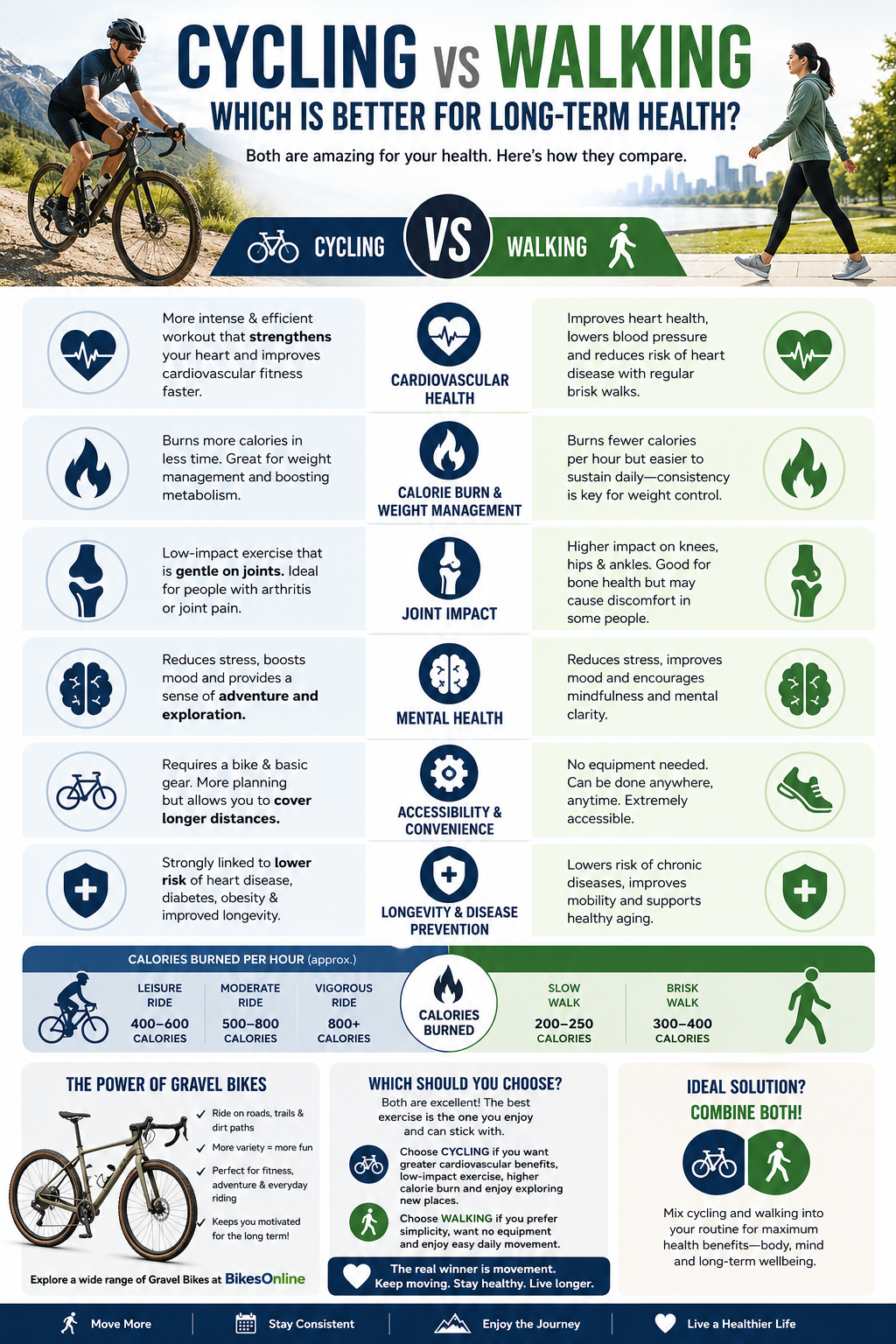
Why Long-Term Exercise Matters
One of the biggest mistakes many people make when starting a fitness journey is focusing only on short-term results. Losing a few kilograms or preparing for a holiday might provide motivation initially, but long-term health is about consistency.
Research consistently shows that regular physical activity can help reduce the risk of:
- Heart disease
- Type 2 diabetes
- High blood pressure
- Stroke
- Obesity
- Certain cancers
- Depression and anxiety
The key is finding an activity that remains enjoyable and sustainable for years rather than weeks.
Both cycling and walking fit this category remarkably well.
Cardiovascular Health: Cycling Takes the Lead
When I compare cycling and walking from a cardiovascular perspective, cycling generally provides a more intense workout while still being gentle on the body.
During a typical bike ride, my heart rate stays elevated for longer periods, allowing me to improve cardiovascular fitness more efficiently than during most walks.
Cycling engages larger muscle groups continuously, particularly:
- Quadriceps
- Hamstrings
- Glutes
- Calves
- Core muscles
This sustained effort requires the heart and lungs to work harder, which can improve aerobic capacity over time.
Walking certainly benefits heart health as well. Regular brisk walking has been linked to lower blood pressure, improved circulation, and reduced risk of cardiovascular disease. However, achieving the same cardiovascular stimulus often requires more time compared to cycling.
For example, a 45-minute brisk walk may produce similar cardiovascular benefits to a shorter, moderate-intensity bike ride.
If improving cardiovascular fitness is a primary goal, cycling generally offers a slight advantage.
Weight Management and Calorie Burn
When discussing long-term health, maintaining a healthy weight plays a significant role.
One reason I enjoy cycling is its ability to burn a substantial number of calories without feeling excessively strenuous.
Depending on body weight and intensity:
Walking
- Slow walk: 200–250 calories per hour
- Brisk walk: 300–400 calories per hour
Cycling
- Leisure ride: 400–600 calories per hour
- Moderate ride: 500–800 calories per hour
- Vigorous ride: 800+ calories per hour
Because cycling allows me to cover greater distances while expending more energy, it can be highly effective for weight management.
That doesn’t mean walking isn’t useful. In fact, many people find it easier to walk consistently every day, which often leads to better long-term adherence.
Ultimately, the best calorie-burning exercise is the one you’ll continue doing for years.
Joint Health: Walking Wins for Simplicity, Cycling Wins for Protection
As we age, joint health becomes increasingly important.
Walking is one of the most natural human movements. It helps maintain bone density and keeps joints mobile. For many people, it’s an excellent choice because it requires no special equipment and can be done almost anywhere.
However, walking still places impact forces on:
- Knees
- Ankles
- Hips
- Lower back
For individuals with arthritis, previous injuries, or chronic joint pain, prolonged walking may become uncomfortable.
Cycling offers a significant advantage here because it is a low-impact activity.
When riding a bicycle, body weight is supported by the bike, reducing stress on joints while still providing substantial muscular and cardiovascular benefits.
I’ve noticed that many people recovering from injuries or dealing with knee discomfort often find cycling far more comfortable than extended walking sessions.
This is one reason physiotherapists frequently recommend cycling as part of rehabilitation programs.
Mental Health Benefits
One of the most overlooked aspects of exercise is its impact on mental wellbeing.
Whenever life becomes stressful, both walking and cycling help me clear my mind and improve focus.
Walking offers:
- Reduced stress
- Improved mood
- Better sleep quality
- Increased mindfulness
- Lower anxiety levels
A simple walk through a local park can significantly improve mental clarity.
Cycling provides many of the same benefits but often adds an additional sense of adventure and exploration.
When I’m riding, especially on scenic routes or gravel trails, I find myself completely immersed in the experience. The combination of physical exertion, fresh air, and changing landscapes creates a powerful mental reset.
For many cyclists, riding becomes more than exercise—it becomes a lifestyle and a form of therapy.
Longevity and Disease Prevention
One of the most important questions is which activity contributes more effectively to a longer, healthier life.
The good news is that both walking and cycling are associated with increased longevity.
Numerous studies have found that regular physical activity can reduce all-cause mortality and lower the risk of chronic diseases.
Walking contributes to:
- Lower blood pressure
- Improved blood sugar control
- Better cholesterol levels
- Enhanced mobility in older age
Cycling contributes to:
- Improved cardiovascular fitness
- Reduced obesity risk
- Better metabolic health
- Lower rates of cardiovascular disease
Some research suggests that cycling may provide slightly greater reductions in mortality risk due to its higher aerobic demands.
However, both activities significantly outperform a sedentary lifestyle.
The real winner is movement itself.
Accessibility and Convenience
Walking has a clear advantage when it comes to convenience.
Most people can step outside their front door and begin walking immediately.
There is no need for:
- Special equipment
- Maintenance
- Route planning
- Technical knowledge
This simplicity makes walking incredibly accessible.
Cycling requires:
- A bicycle
- Safety equipment
- Basic maintenance
- Suitable riding routes
While this may seem like a disadvantage, many cyclists find that the enjoyment factor more than compensates for the additional preparation.
Once I started riding regularly, the bike became part of my daily routine rather than a barrier to exercise.
The Role of Gravel Bikes in Long-Term Fitness
One of the most exciting developments in cycling over recent years has been the growth of gravel biking.
Personally, I believe gravel bikes offer one of the best opportunities for sustainable, long-term fitness.
A gravel bike combines elements of:
- Road bikes
- Endurance bikes
- Adventure bikes
This versatility allows riders to transition between sealed roads, bike paths, dirt roads, and light trails without needing multiple bicycles.
Instead of being limited to traffic-heavy roads, I can explore quieter routes, natural landscapes, and scenic countryside roads.
This variety helps prevent boredom and keeps exercise enjoyable.
For anyone considering cycling as a long-term health investment, a quality gravel bike can provide years of versatile riding opportunities.
Brands such as BikesOnline offer a wide range of gravel bikes suitable for beginners through to experienced riders looking to combine fitness, adventure, and everyday practicality.
Social Benefits
Exercise becomes easier to maintain when it includes a social component.
Walking groups remain popular because they encourage conversation and community engagement.
Cycling communities offer similar benefits.
Many riders participate in:
- Weekend group rides
- Charity rides
- Gravel events
- Local cycling clubs
- Community cycling initiatives
I’ve found that being part of a cycling community creates accountability and motivation that can help maintain healthy habits over the long term.
Which Is Better for Older Adults?
For older adults, both activities offer tremendous value.
Walking remains one of the safest and most accessible forms of exercise for seniors.
It helps maintain:
- Mobility
- Balance
- Independence
- Bone health
Cycling can be equally beneficial, particularly for individuals looking to protect their joints while maintaining cardiovascular fitness.
The growing popularity of e-bikes has made cycling accessible to many older adults who may have previously struggled with hills or longer distances.
In many cases, combining both activities delivers the greatest benefits.
The Best Choice for Sustainable Fitness
If someone asked me whether they should choose cycling or walking for long-term health, my answer would depend on their goals and lifestyle.
Choose walking if you:
- Prefer simplicity
- Have limited time
- Want an activity requiring no equipment
- Enjoy casual daily movement
Choose cycling if you:
- Want greater cardiovascular benefits
- Need a low-impact exercise option
- Enjoy exploring new places
- Prefer higher calorie expenditure
- Want to cover longer distances
For many people, the ideal solution is not choosing one over the other but incorporating both.
Final Thoughts
After years of enjoying both activities, I don’t believe there is a single universal winner in the cycling versus walking debate. Both provide substantial long-term health benefits, reduce disease risk, improve mental wellbeing, and contribute to a longer, healthier life.
That said, if I had to choose only one activity for overall long-term health, I would lean slightly towards cycling. The combination of cardiovascular conditioning, joint-friendly movement, calorie expenditure, and versatility makes it one of the most effective forms of lifelong exercise available.
The rise of gravel biking has made cycling even more accessible and enjoyable, allowing riders to explore a wider variety of terrain while maintaining a consistent fitness routine. Whether you’re riding local bike paths, commuting to work, or exploring country roads on a gravel bike, the health benefits can be profound.
At the end of the day, the best exercise is the one that keeps you moving. Whether that’s a daily walk around the neighbourhood or a weekend gravel ride with friends, every step and every pedal stroke contributes to a healthier future.
Other Articles You May Find of Interest...
- What a Weight Loss Clinic in Melbourne Can Do Before and After Your Surgery
- Cold Plunge or Sauna? What the Recovery Research Actually Shows
- How Personalized Weight Loss Programs Help Achieve Sustainable, Long-Term Results
- High-Fructose Foods to Limit and Lower-Sugar Alternatives
- Best High-Fiber Foods Chart for Better Digestive Health
- How Many Carbs Are in Turkey Bacon?
- 9 Healthiest Mushrooms to Eat





