






More Beauty Skin Care & Gorgeous Smiles Articles
Accutane Timeline: What to Expect Month by Month
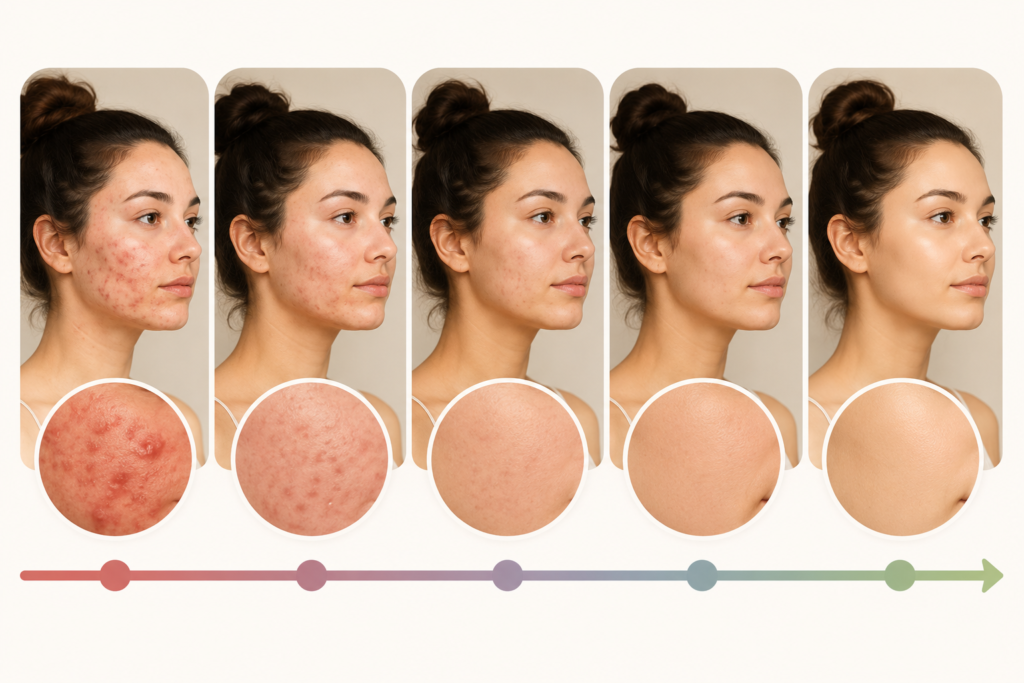
If you’re starting Accutane or just weighing your options, the question everyone asks first is the same: When will my skin actually clear?
That’s a fair question. Isotretinoin treatment doesn’t work overnight, and the early weeks can look worse before they get better. That uncertainty pushes a lot of people to quit too soon, or to feel like something is wrong when it isn’t.
The truth is, Accutane follows a predictable arc. The purge is real. The dryness is real. But so is the clearing – and understanding each phase makes the process far easier to get through.
This article walks you through the full Accutane timeline: what happens each month, why results vary, how to manage side effects, and what to expect once treatment ends.
How Long Until Accutane Works?
Most patients start seeing real improvement between weeks 4 and 8. Full clearing typically takes 4 to 6 months, though some cases require up to 7 months depending on dose and severity.
Here’s a rough breakdown of what to expect:
- Month 1: Around 25% improvement. Skin is still adjusting, and the purge may be active.
- Month 2: Around 50% improvement. New breakouts start slowing down.
- Month 3: Up to 75% improvement. Most patients stop getting new pimples.
- Months 4–6: Continued clearing, collagen remodeling, and more even skin tone.
These aren’t guaranteed percentages – they’re averages based on clinical observation. Your pace depends on your dose, the severity of your acne, and how consistently you take the medication.
One thing that significantly affects results: taking Accutane with a fatty meal. The drug is fat-soluble, so your body absorbs much more of it when taken with food. Skipping this step consistently reduces its effectiveness.
If you want to skip the waiting room and connect with a licensed dermatologist quickly, you can get Accutane online from DermOnDemand without the months-long wait for an in-person appointment.
The Accutane Initial Purge
The purge is the part nobody looks forward to, and the part most likely to make someone second-guess their treatment.
Between 5% and 20% of patients experience a temporary worsening of acne in the first one to two weeks. The drug accelerates skin cell turnover, which pushes oil and debris out of clogged pores faster than usual. That process triggers inflammation, which means more breakouts before the skin settles.
This is not the treatment failing. It’s the treatment starting.
The purge typically peaks around weeks 3 to 6, then gradually slows. By weeks 7 to 12, most patients notice fewer new breakouts and a real drop in inflammation.
A few things worth knowing about the Accutane purge timeline:
- It’s more common at higher doses
- It tends to be worse for patients with more severe acne at the start
- It doesn’t mean you need to stop treatment
- Picking or popping during this phase increases scarring risk considerably
If the purge is severe, a dermatologist may temporarily lower your dose. That’s a normal clinical adjustment – not a sign you’re on the wrong treatment.
Accutane Timeline by Month
Tracking the stages of the Accutane phase by phase gives you reference points to measure against. Here’s what typically happens at each stage:
Weeks 1–2: Adjustment. Your skin begins responding to the drug. Some patients notice mild dryness, increased sensitivity, and the onset of purging. Oil production is starting to drop, but the change isn’t yet visible.
Weeks 3–6: Peak Purge. This is usually the hardest stretch. New pimples appear alongside existing ones, redness increases, and dryness becomes more pronounced – especially on the lips, inside the nose, and around the eyes. Some patients report mild joint pain or headaches during this phase.
Weeks 7–12: Turning Point. The drug continues to reduce inflammation at the follicle level, and skin texture starts to smooth out. Post-acne marks may start to fade, though redness can linger.
Months 4–5: Significant Clearing. For most people, this is when treatment clearly delivers. Active acne is minimal or gone. Any new spots tend to be small and heal fast. Scarring and dark spots continue to fade. Dryness is still present but manageable with consistent skincare.
Month 6 and Beyond: Most patients reach clear skin by month 6. Oil glands have been reduced in both size and output. If acne is still active at this point, treatment may continue past six months at your dermatologist’s discretion.
The month-by-month Accutane progress varies from person to person, but the overall direction – purge, slowdown, clearing – remains consistent in most cases.
Why Your Timeline May Differ
Two patients on the same drug can have noticeably different experiences. Several factors explain this.
Dosage and cumulative dose: Dermatologists target a total cumulative dose of 120 to 150 mg per kilogram of body weight to reduce relapse risk. Higher daily doses can shorten treatment duration but increase side-effect intensity.
Low-dose regimens – taken two to three times per week rather than daily – show similar effectiveness with fewer side effects, though the accutane journey may run up to a year for severe cases.
Acne severity at the start. Patients with more severe nodular acne or acne vulgaris at baseline are more likely to need higher doses and longer treatment periods. The more congested the skin at the start, the longer it takes to fully clear.
Consistency and absorption. Taking isotretinoin treatment on an empty stomach reduces how much your body absorbs, which directly affects how fast you see results. Patients who take it daily as prescribed, always with food, and don’t skip doses, see faster progress.
If your timeline feels slower than expected, the right step is to talk to a board-certified dermatologist before making any changes on your own.
Managing Side Effects at Each Stage
Side effects are a normal part of treatment for most patients. The key is knowing when they’re expected and how to keep them under control.
Dry lips. This is the most universal side effect. Use lip balm constantly – not just when it feels uncomfortable. Vaseline and Aquaphor are both reliable options. Reapply throughout the day and before bed.
Skin dryness: Apply a thick, fragrance-free moisturizer twice daily. Products like CeraVe, Eucerin, and Vanicream work well. Running a cool- or warm-mist humidifier overnight helps, too – clean it every few days to avoid bacterial buildup.
Dry nasal passages and nosebleeds. Apply a small amount of petroleum jelly inside the nostrils. This is one of the more overlooked side effects and one of the easiest to manage.
Eye dryness: Use preservative-free eye drops as needed. If you wear contacts, switching to glasses during treatment reduces irritation.
Joint and muscle aches. Stay well-hydrated. Low-impact movement is fine. Flag persistent or worsening pain to your doctor – it shouldn’t be dismissed.
Mood changes: Monitor this closely, especially if you have a history of depression or anxiety. Let your doctor know if you notice any shifts. This is one of the potential side effects that warrants direct communication rather than a wait-and-see approach.
Side effects are typically worst in the first 4 to 6 weeks and improve as your body adjusts to the medication.
What to Avoid During Treatment
Several things interact poorly with Accutane – either making side effects worse or introducing real health risks.
Vitamin A supplements. Isotretinoin is a vitamin A derivative. Adding more vitamin A through supplements, cod liver oil, or multivitamins increases the risk of toxicity. Foods high in vitamin A are fine in normal amounts, but dedicated supplements should be avoided.
Alcohol and Accutane put extra strain on the liver, and alcohol compounds that. Monthly blood tests during your Accutane treatment course check liver function for exactly this reason. Occasional low consumption may be tolerable for some patients, but this is something to discuss specifically with your doctor.
Harsh skincare products, such as retinoids, exfoliants, glycolic acid, and salicylic acid, all increase irritation on skin that’s already sensitized. Swap to a gentle cleanser and skip all active acne treatments until after you finish the course.
Waxing and laser treatments. Skin is more fragile during treatment and heals more slowly. These procedures can cause burns or scarring that wouldn’t occur under normal circumstances.
Sun exposure without SPF 50+ Accutane increases UV sensitivity. Unprotected sun exposure raises the risk of burns and post-inflammatory marks. Daily SPF 50 is non-negotiable, and protective clothing helps on high-exposure days.
Pregnancy: This is the most critical restriction on the list. Accutane causes severe birth defects. All patients in the U.S. must enroll in the iPLEDGE program before starting. Women of childbearing age must provide two negative pregnancy tests before beginning treatment and maintain two forms of birth control throughout.
Blood donation is also off-limits during treatment and for at least one month after stopping.
After Accutane: What Comes Next
Most patients achieve lasting acne remission after one complete treatment course. Oil production stays reduced even after stopping, which helps prevent future breakouts on its own.
Relapse does happen in some cases. Factors that increase the risk include being under 20 years old, male gender, severe acne at the start of treatment, and a family history of acne. Research shows that using a topical retinoid after finishing Isotretinoin reduces relapse rates.
Post-treatment skincare routines should stay simple and gentle. A mild cleanser, non-comedogenic moisturizer, and daily SPF are enough for most patients. Avoid jumping back into active acne treatments like salicylic acid or benzoyl peroxide right away – give your skin barrier a few weeks to recover first.
Red marks and hyperpigmentation from the treatment period can take several more months to fade fully. That’s normal. Collagen remodeling continues even after the drug clears your system.
If acne returns after a full course, a second course is possible after an 8-week waiting period.
Accutane Treatment FAQs
Can Accutane be used more than once? Yes. If acne recurs after a full course of treatment, a dermatologist can prescribe another course after an 8-week gap.
Does dose affect how fast it works? Higher doses tend to produce faster results but carry a greater risk of side effects. Lower doses work similarly over a longer period with fewer side effects and less monitoring required.
Is the purge guaranteed? No. Only 5% to 20% of patients experience a notable purge. Most have some initial adjustment, but a severe flare isn’t universal.
When should I see a dermatologist? If you have cystic acne or nodular acne that hasn’t responded to other acne treatments, Isotretinoin is worth discussing. A board-certified dermatologist can assess the severity of your acne, determine the appropriate starting dose, and monitor your bloodwork throughout treatment.
Does timing matter when taking it? Consistency matters more than the specific time of day. What matters is always taking it with a fat-containing food – this maximizes absorption and keeps the medication working as intended.
Other Articles You May Find of Interest...
- Puffy Eyes Causes: Common Reasons and What Helps
- Accutane Timeline: What to Expect Month by Month
- Why Does Your Face Flush at Night? Exploring Causes and Solutions
- What Causes Sagging Breasts and When to Consider a Breast Lift
- Is It Safe to Apply Mupirocin on Your Face?
- Redefining Clinical Excellence: What Makes a Cosmetic Practice Truly Reliable?
- Behind the Scenes of a Modern Aesthetic Clinic: What Standards Matter Most?




