More Beauty Skin Care & Gorgeous Smiles Articles
Puffy Eyes Causes: Common Reasons and What Helps
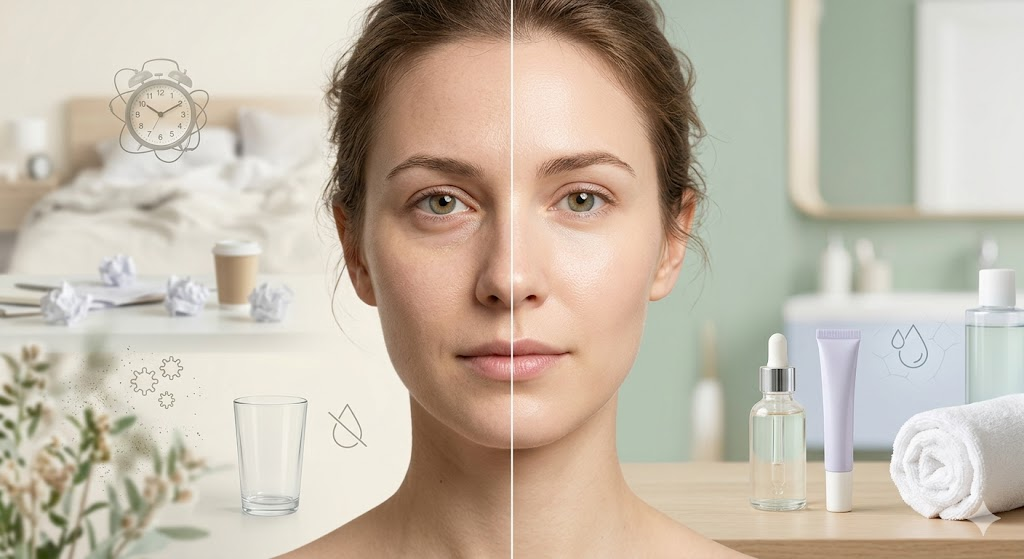
What Causes Puffy Eyes?
Puffy eyes occur when swelling, loose tissue, or excess fluid alters the appearance of the lower eyelids. The most common causes of puffy eyes include aging, allergies, salt intake, tiredness, crying, genetics, and irritation. In many cases, the swelling is mild and temporary.
The under-eye area has thin skin and soft tissue. Small changes in sleep, diet, hydration, or inflammation can show quickly. Some people notice more swelling after waking because fluid can settle while lying down.
A simple answer to what causes bags under the eyes is that the support under the eyelids can weaken over time. When this happens, fat may shift forward, creating bags under the eyes. This can look different from temporary swelling caused by allergies or a salty meal.
Daily Triggers That Make Eyes Puffy
Short-term swelling often comes from daily habits or environmental triggers. These causes may come and go depending on your routine.
Common triggers include:
- lack of sleep, which can make the lower lids look heavier
- Salty meals, especially late in the day
- Crying, which can irritate nearby tissue
- Alcohol, which can affect hydration
- Smoking, which can affect skin quality over time
- Seasonal allergies, dust, pets, or skin products
Fluid retention can make swelling more noticeable in the morning. Salt, hormones, dehydration, and sleeping flat can all play a role. Drinking more water alone may not fix the issue, but it can help when combined with better sleep and lower salt intake.
Puffy Eyes, Eye Bags, and Swelling
Puffy eyes do not always mean the same thing as dark circles, loose skin, or swollen eyelids. The cause matters because each issue may need a different approach.
Eye puffiness often refers to temporary swelling that changes during the day. Puffiness around the eyes may affect the upper lids, lower lids, or both. This can happen after allergies, crying, irritation, or poor sleep.
The eye area is sensitive because the skin is thin and the nearby tissue can hold fluid. If swelling appears suddenly, affects one side, or is accompanied by pain, redness, or changes in vision, it should be taken more seriously.
Some people have a steady fullness under the eyes that does not change much. This may come from aging, genetics, or structural changes rather than temporary swelling.
Aging, Genetics, and Skin Changes
Aging is one of the most common causes of persistent under-eye fullness. The skin around your eyes becomes thinner with time. The support beneath the lower lid can also weaken, allowing fat to move forward.
Genetics can also affect how early this appears. Some people develop under-eye fullness in young adulthood, even with healthy habits. Others notice changes later as the tissues around the eye become less firm.
The long-term pattern is important. Swelling that comes and goes after sleep loss or salt intake is different from fullness that stays every day. If the concern is structural, lifestyle changes may help a little, but they may not fully change the lower-lid shape.
For a professional eyelid evaluation, Dr. Joel Kopelman can help determine whether the concern is due to aging, anatomical factors, irritation, or another cause.
Allergies, Irritation, and Medical Causes
Allergies can cause itching, swelling, redness, and watery eyes. Rubbing the eyes can make irritation worse and may stretch delicate tissue over time. Makeup, skincare products, pollen, dust, and contact lens irritation can also trigger swelling.
Sometimes swelling may relate to a medical condition. Possible causes can include eye infection, thyroid eye disease, dermatitis, kidney-related swelling, or inflammation around the eyelids. These causes require proper evaluation, as cosmetic care will not address the underlying problem.
You should be more cautious if swelling is painful, one-sided, sudden, or linked with discharge, fever, headache, double vision, or vision changes. These signs may need prompt medical attention.
Home Care That May Help
Mild swelling often improves with simple changes. Home remedies work best when the cause is temporary, such as sleep loss, salt intake, crying, or mild irritation.
Helpful steps include:
- Use a cold compress for 10 to 15 minutes
- Sleep with your head slightly raised
- Reduce salty foods at night
- Avoid rubbing your eyes
- Remove makeup before bed
- Track possible allergy triggers
Tea bags may help some people when they are cool, clean, and used gently. The benefit usually comes from cooling the skin, not from a permanent change in tissue.
Eye creams may improve dryness or texture, but they cannot remove shifted fat or tighten deeper tissue. Stop using any product that causes burning, redness, or swelling.
When to Consider Treatment
The right next step depends on the cause. If the swelling is temporary, focus on getting adequate sleep, reducing salt intake, managing allergies, and gentle cooling. If the fullness is steady, deeper anatomy may be involved.
Reducing puffiness may require different steps depending on whether the problem is fluid, irritation, loose skin, or fat movement. Some people may benefit from allergy care, while others may need eyelid-focused evaluation.
Common treatment options may include lifestyle changes, allergy management, skincare changes, or professional procedures. If allergies are involved, eye drops may help when recommended by a clinician. If infection, thyroid disease, dermatitis, or another issue is present, medical treatment should target the cause.
See an eye doctor if swelling is painful, sudden, one-sided, persistent, or linked with vision changes. The tissues around your eyes are delicate, and unsafe products or harsh internet hacks can cause more irritation.
If your goal is to get rid of puffy eyes, start by identifying the pattern. The skin around the eyes can react to many triggers, so the best care begins with determining whether the problem is temporary swelling, allergic irritation, or a structural change.
Other Articles You May Find of Interest...
- Botox vs Dysport vs Xeomin: Which Neuromodulator Is Right for You?
- Understanding PDRN Therapy: The Science Behind Skin Barrier Repair and Tissue Regeneration
- Who Is a Suitable Candidate for Breast Augmentation?
- Peptides vs Retinoids for Sensitive Skin: Why Matrixyl 3000 and CoQ10 Are Changing the Conversation
- Whitehead or Pustule? How to Tell These Acne Bumps Apart
- What Patients Should Know About Skin Removal Surgery
- Breast Augmentation vs. Breast Lift: Understanding the Difference
Featured Doctors and Practices