






Your Health Magazine
4201 Northview Drive
Suite #102
Bowie, MD 20716
301-805-6805
More Health Education Articles
AI Video Tools in Healthcare Training: Converting Medical PDFs into Effective Learning Resources
Healthcare education faces a unique set of challenges that most other industries do not share. Medical knowledge evolves rapidly — clinical guidelines are updated frequently, new treatments emerge regularly, and regulatory requirements change across jurisdictions. The professionals who need this knowledge are some of the busiest workers in any field, with limited time for continuing education. And the stakes of poor knowledge transfer are exceptionally high: outdated or incomplete training in healthcare can directly affect patient outcomes.
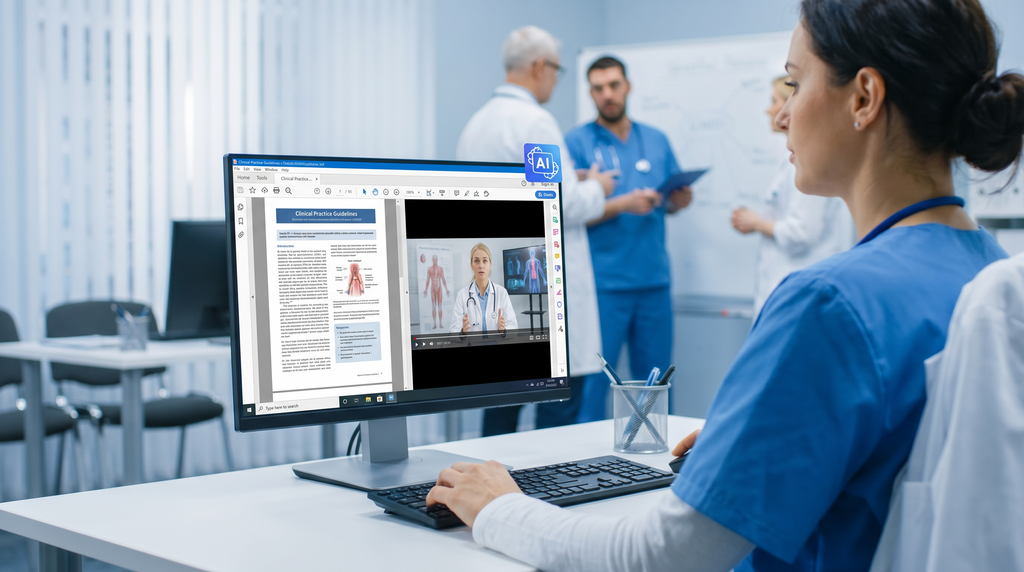
These pressures are driving healthcare organizations to explore AI-powered video tools that can convert existing training materials — clinical guidelines, procedure manuals, pharmacological references, and patient education documents — into engaging video content without the traditional production overhead.
The Healthcare Training Gap
Healthcare institutions produce enormous volumes of educational and procedural documentation. Hospital systems maintain thousands of pages of protocols. Medical schools develop extensive curricula. Pharmaceutical companies create detailed product information documents. Professional associations publish regularly updated clinical guidelines.
The problem is not a lack of content — it is a lack of effective delivery. Healthcare professionals report that they find it increasingly difficult to keep up with the volume of required reading. Studies show that nurses, for example, average less than 30 minutes per week for self-directed continuing education. Physicians face similar time constraints, with clinical responsibilities consuming the vast majority of their working hours.
Why Video Matters in Medical Education
Video-based learning has shown particular promise in healthcare education. Medical learners who receive instruction through video demonstrate higher knowledge retention rates compared to text-based learning. Video can show procedural steps in a way that written descriptions cannot fully convey. And the ability to pause, rewind, and re-watch complex explanations makes video particularly well-suited for the precision-demanding content that characterizes medical education.
Converting Healthcare Documents to Video
Clinical Guidelines and Protocols
Updated clinical guidelines — from organizations like the WHO, AHA, or specialty medical associations — are typically distributed as PDF documents that run to dozens or hundreds of pages. Converting the key updates and recommendations into concise, narrated videos makes them accessible to clinical staff during shift changes, break periods, or brief training sessions.
AI video tools like Leadde can process these PDF guidelines and generate structured videos that highlight the key changes, explain the clinical rationale, and summarize the recommended actions. An AI presenter delivers the content in a consistent, professional manner that maintains the authoritative tone appropriate for clinical guidance.
Procedure Manuals and SOPs
Standard operating procedures for clinical settings require precise communication. Whether it is a hand hygiene protocol, a medication administration procedure, or an emergency response workflow, the content needs to be communicated clearly and followed exactly. Video versions of these procedures provide visual reinforcement of each step and can be accessed at the point of care when staff need a quick refresher.
Patient Education Materials
Patient education is another area where PDF-to-video conversion delivers immediate value. Post-discharge instructions, medication guides, and condition management information are routinely provided as printed documents that patients frequently misplace, misunderstand, or simply do not read. Converting these materials to short, narrated videos — especially with multilingual support — improves patient comprehension and adherence.
Continuing Medical Education Content
CME providers can use AI video conversion to expand their content libraries efficiently. Research papers, clinical reviews, and educational monographs can be converted to video format, creating CME-eligible content that practicing physicians can consume during commutes, lunch breaks, or other brief windows of available time.
Addressing Healthcare-Specific Requirements
Accuracy and Review
In healthcare, content accuracy is non-negotiable. AI-generated videos based on medical documents should always undergo clinical review before distribution. The AI handles the production — narration, visual design, scene structure — but the clinical content must be verified by qualified professionals. This review step adds time but is essential for maintaining the trust and safety standards that healthcare education demands.
Regulatory Compliance
Healthcare training often requires documented proof of completion for regulatory and accreditation purposes. Video platforms that provide viewing analytics — who watched what, when, and for how long — satisfy this requirement in a way that PDF distribution cannot. This verifiable completion tracking is particularly valuable for mandatory training topics like infection control, workplace safety, and HIPAA compliance.
Multilingual and Cultural Sensitivity
Healthcare institutions serve diverse patient populations and employ multilingual staff. AI video tools with broad language support enable the creation of training and patient education materials in multiple languages from a single source document. This capability is particularly valuable for large hospital systems serving diverse communities, where translating every document through traditional services would be prohibitively expensive.
Accessibility
Healthcare education materials must be accessible to learners with various abilities. AI-generated videos inherently provide multiple accessibility channels: visual information on screen, audio narration, and auto-generated subtitles. This multimodal delivery ensures that content is accessible to learners with hearing impairments, visual processing differences, or language barriers.
Implementation Considerations
Start with Non-Clinical Content
For organizations new to AI video conversion, starting with non-clinical content reduces risk while building familiarity. HR policies, administrative procedures, and general safety training are low-risk starting points that still demonstrate the value of video delivery without requiring clinical review processes.
Build a Clinical Review Workflow
For clinical content, establish a formal review workflow before scaling production. Define who reviews AI-generated medical content, what constitutes a passing review, and how revisions are handled. This workflow ensures quality while keeping production efficient.
Measure Impact on Learning Outcomes
Healthcare education has well-established assessment frameworks. Use pre- and post-video knowledge assessments to measure the impact of AI-generated content on learning outcomes. Compare these results against the same content delivered in traditional formats to build an evidence base for continued investment.
The Path Forward
Healthcare will never fully replace hands-on clinical training with video. Procedural skills, patient interaction, and clinical reasoning require experiential learning that no video can substitute. But the vast body of knowledge-based content that healthcare professionals must absorb and maintain — the guidelines, the protocols, the pharmacological updates, the regulatory requirements — is precisely the type of content that benefits most from AI-powered video conversion.
The organizations that recognize this opportunity and build systematic video conversion into their education infrastructure will provide their clinical staff with more accessible, more engaging, and more current training content — ultimately contributing to the quality of care that their patients receive.
Other Articles You May Find of Interest...
- AI Video Tools in Healthcare Training: Converting Medical PDFs into Effective Learning Resources
- Pool Water Health: Why Cleaning and Chlorine Balance Matter
- Why Every Home Cook Needs a Meat Thermometer
- How 3D Animation Makes Understanding Human Physiology Easier for Everyone
- Unlocking the Secrets of SDAI for Optimal Health
- BS/MD vs. Traditional Pre-Med: Understanding Two Pathways Into Medical School
- 6 Situations Where Getting a Medical Certificate Online Makes Perfect Practical Sense




