More Mental Health Articles
How to Choose ABA Therapy in Utah for Your Child
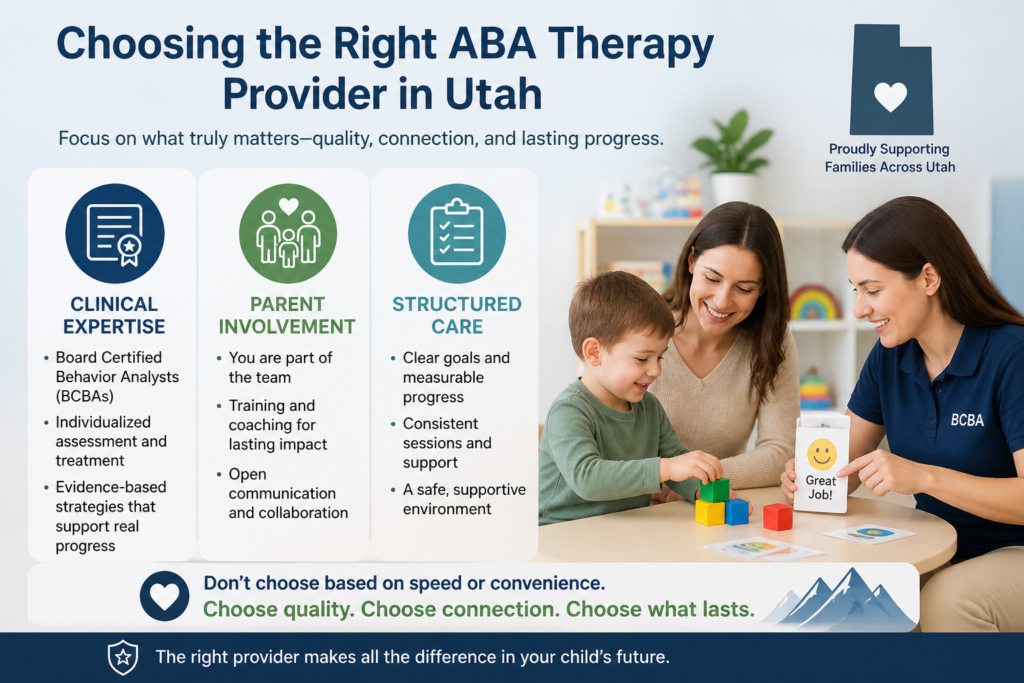
Choosing ABA therapy in Utah may seem complicated. All therapists assure success, use the same terminology, and provide the best service. While some emphasize quick entry, others stress clinical skills and program structure.
Here is the good news: It is all about making the right choice. The effectiveness of the treatment is not so much dependent on the speed as on how well the provider knows your kid and how well they create the treatment plan.
With the information on the priorities at hand, you will know what kind of decision to make.
The Importance of Choosing the Right ABA Therapy Provider in Utah
But then, recently, a considerable number of ABA centers have become available in Utah, in places like Salt Lake City, Provo, and Ogden. Nonetheless, even with more choices, that does not mean they are all good choices.
Some centers emphasize recruiting clients quickly. Others focus on individualized care backed by strong clinical supervision. The distinction impacts your child’s development.
What Does ABA Therapy for Your Child Involve?
ABA therapy is an acronym for Applied Behavior Analysis. It involves developing skills and behaviors by applying the principles of behavior science.
The process requires only three basic steps:
- What happens before a behavior
- The behavior itself
- What happens after the behavior
ABA therapy Utah allows BCBA professionals to have an idea of why certain behaviors occur and what new techniques could be introduced. For instance, when a child cries in order to show their frustration, as taught to express their feelings verbally or through gestures.
Areas of development supported by ABA therapy include:
- Communication
- Social interaction
- Emotional regulation
- Daily living skills
- School readiness
One leads to the next, allowing kids to feel more confident each time.
Important Things You Need to Consider Before Using ABA in Utah
Providers of ABA therapy vary in professionalism. While some have excellent clinical processes, others do not. This guide will outline key considerations.
BCBA and RBT Involvement
Every good ABA program must have a BCBA who designs and oversees the intervention process.
Without a proper explanation of what the responsibilities of a BCBA involve, then red flags should be raised. The number of people to be supervised needs to be established to avoid overburdening them.
Individualized Treatment Plans
The most effective ABA treatment does not apply to everyone. Each child needs a personalized plan based on:
- Communication level
- Behavior patterns
- Developmental needs
- Family priorities
Programs that use generic templates often limit progress and fail to meet individual needs.
Safety and Environment
Safety is of paramount importance in ABA treatment. Your peace of mind should be guaranteed by the assurance that your child is learning in a controlled setting.
Some children respond well to clinic-based instruction, whereas others excel when taught at home. Utah providers typically use combined models that work well in both settings.
Parent Involvement and Why It Matters
Parent involvement strongly influences ABA success. When parents participate, children learn faster and retain skills longer.
Strong providers in Utah involve parents by:
- Teaching reinforcement strategies
- Sharing regular progress updates
- Setting shared goals
- Offering parent training sessions
When you use the same strategies at home, your child experiences consistency. This consistency leads to faster, stronger progress.
Limited parent involvement often slows down long-term results.
ABA Therapy Settings in Utah
ABA therapy happens in different environments based on your child’s needs. Strong providers adapt their settings rather than forcing a single approach.
Common options include:
- In-home therapy for natural learning in familiar surroundings
- Clinic-based therapy for structure and peer interaction
- Support in school for developing skills in classrooms
- Therapy in the community setting, such as shopping malls or parks
- Telehealth service for training parents at a distance
Children have the chance to exercise their skills in unique ways, thus becoming more self-reliant.
Insurance for ABA Therapy in Utah
Under Utah State laws, there should be a provision for insurance coverage of the expenses incurred in therapy treatment. These provisions apply to all insurance providers, including Medicaid, SelectHealth, Aetna, Blue Cross Blue Shield, UnitedHealthcare, and Cigna.
However, insurance does vary depending on the individual plan.
Strong ABA providers help families by:
- Verifying insurance benefits
- Handling authorization paperwork
- Estimating out-of-pocket costs
- Guiding approval processes
This support reduces stress and helps families start therapy faster.
Red Flags You Should Watch For
Some warning signs indicate a low-quality ABA provider:
- No clear BCBA supervision
- Generic or unchanged treatment plans
- No parent involvement
- High staff turnover
- Not maintaining records or updating on progress
These issues may indicate inadequate care by the provider.
Questions for Asking ABA Providers
In looking for providers, it’s important to ask some simple questions:
- How do you track progress?
- How often does the BCBA review treatment?
- Can I observe therapy sessions?
- What training do therapists receive?
- How do you handle challenging behaviors?
- Do you offer parent training?
- What insurance do you accept?
Enrollment Process Steps for ABA Therapy Utah
ABA therapy registration involves a systematic process through which the team can become familiar with your child and plan the right therapy for them.
Step 1: Making the Contact
First of all, the recommended thing to do is to contact the agency via telephone or email. In this case, the agency gets information about your child, such as age, diagnosis, and difficulties. This acquaints them with you.
Step 2: Insurance Verification
The provider checks your insurance coverage to confirm ABA benefits. They also explain what costs may apply.
These individuals may coordinate the prior authorization process directly with your insurance provider in order to expedite this step.
Step 3: BCBA Assessment
The Board Certified Behavior Analyst conducts an assessment of your child at the home, clinical, or school environment.
This involves observation of your child’s behaviors, social interactions, and communication skills. They will also speak with you regarding goals and barriers.
Standardized tests may be administered to inform treatment development.
Step 4: Development of the Treatment Plan
Based on the BCBA evaluation results, the treatment plan is created.
It involves objectives in social communication, behavioral issues, and adaptive living skills.
Step 5: Assignment and Schedule
RBT pairing is based on their expertise and ability to work with your child.
The service provider organizes an appointment schedule that suits your convenience, at home, in the office, or both.
Step 6: Initiation of Therapy and Monitoring of Improvement
Therapy sessions start after scheduling appointments. The therapy sessions are conducted according to the treatment plan and involve collecting information from every session.
The BCBA assesses your child’s improvement and adjusts the goals accordingly.
Conclusion
More than simply ensuring ABA is available in Utah, choosing an ABA program requires careful consideration.
A great provider will emphasize individualization, BCBA involvement, parental involvement, and regular progress assessment.
Knowing what to look for helps you make a well-informed decision when selecting an ABA provider.
Other Articles You May Find of Interest...
- Why Your Mental Wellness Routine Should Integrate Exercise
- How to Protect Your Mental Health After Losing a Pet
- The Hidden Link Between Blood Sugar and Anxiety: What Continuous Glucose Monitors Reveal
- Why a Gradual, Clinician-Guided Approach to Methylfolate May Matter
- Breaking the Stigma Around Mental Health and Seeking Professional Support
- Complex PTSD vs. PTSD: The Differences That Can Change Your Treatment
- When Talk Therapy Isn’t Enough: Understanding More Intensive Treatment for OCD