






Your Health Magazine
4201 Northview Drive
Suite #102
Bowie, MD 20716
301-805-6805
More Complementary & Integrative Healthcare Articles
Best Kratom Brands: Buy Lab-Tested, AKA Certified Kratom Online
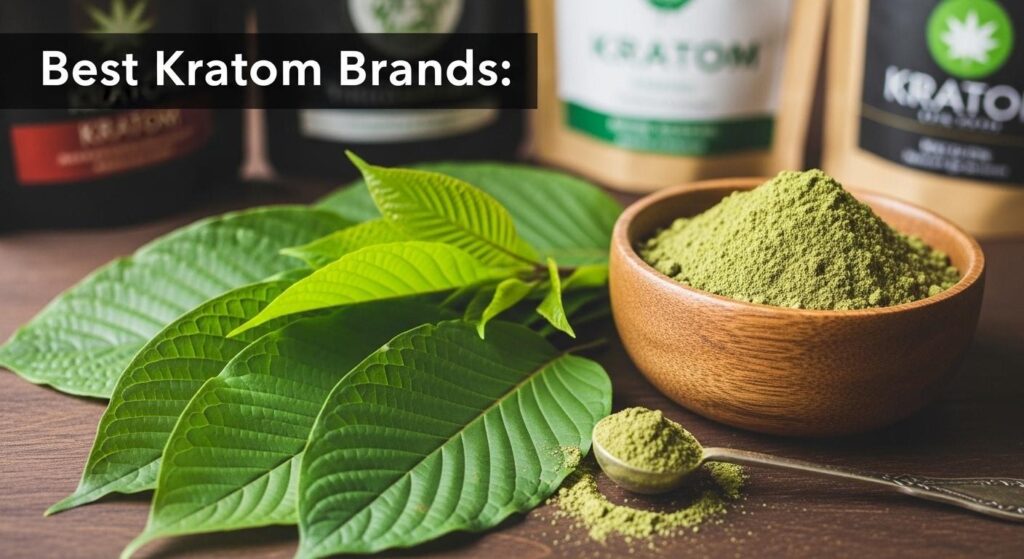
You’ve probably searched “buy kratom” and felt immediately overwhelmed. Hundreds of brands. Vague descriptions. Zero clarity on what’s actually inside the bag.
Buy Premium Kratom from Jack Botanicals
AKA Certified | 9+ Lab Tests/Batch | 30% off “Jack30”
Here’s the reality: the kratom market has a serious trust problem. Most vendors don’t publish real lab results. Many skip independent testing entirely. And consumers — people who genuinely want quality — end up buying products that are inconsistent at best and contaminated at worst.
This isn’t a scare tactic. It’s just the market as it exists right now.
The good news? A handful of brands are doing everything right. They test obsessively. They source directly. They publish results openly. And they’ve earned genuine loyalty from tens of thousands of buyers.
This guide covers all of them — ranked honestly, compared clearly, and explained in plain language. You’ll understand what separates a trustworthy kratom brand from a risky one. You’ll know exactly what to look for on a product label and a certificate of analysis. And you’ll walk away with a clear purchasing decision — no guesswork required.
Why Most Kratom Brands Fail the Quality Test
Before diving into specific brands, let’s establish the baseline. Understanding what makes a kratom brand trustworthy makes the comparisons much more meaningful.
The kratom industry operates in a largely unregulated space. The FDA does not classify kratom as a dietary supplement, which means there’s no federal mandate for testing, labeling accuracy, or safety verification. Brands can legally sell kratom powder with no lab work done whatsoever.
That regulatory gap has created a wildly uneven market.
According to data published by the American Kratom Association, a substantial portion of kratom products tested outside their GMP-certified network showed measurable issues — ranging from heavy metal contamination to mislabeled alkaloid content to microbial failures. These aren’t edge cases. They’re systemic problems in a market without guardrails.
A 2022 analysis published in Clinical Toxicology examined commercially available kratom products and found mitragynine content varying by more than 30% between products carrying identical labels. If you’ve ever bought kratom and felt like a completely different product arrived despite ordering the same strain, this is likely why.
For consumers, this creates a real problem. Kratom’s active compounds — mitragynine and 7-hydroxymitragynine — produce effects that scale with dosage and alkaloid concentration. Without consistent testing, consistent dosing becomes impossible.
This is the core argument for buying only from brands that test rigorously, certify independently, and share results openly.
What the AKA GMP Program Actually Requires
The American Kratom Association’s Good Manufacturing Practices Standards Program is voluntary. No brand is legally required to join. But the ones that do submit to third-party facility audits, maintain batch-by-batch testing records, follow strict labeling standards, and comply with ongoing compliance reviews.
Industry data suggests that AKA-certified vendors represent fewer than 15% of all active kratom sellers in the U.S. That makes certification a powerful filter. When a brand displays that certification legitimately — verifiable on the AKA’s official website — it signals a real operational commitment to quality, not just a marketing claim.
The Six Non-Negotiables of a Trustworthy Kratom Brand
Before any brand earns a spot on a serious buyer’s radar, it should meet these criteria:
Third-party lab testing — conducted at ISO-accredited facilities, not in-house labs with no accountability.
Batch-specific COAs — certificates of analysis tied to the actual batch you’re buying, not a generic annual test.
Alkaloid disclosure — specific mitragynine and 7-hydroxymitragynine percentages clearly published.
Contaminant panels — results covering heavy metals, microbial contamination, pesticides, and adulterants.
AKA GMP certification — verified, not self-declared.
Source transparency — clear information about where the leaf originates and how it’s harvested.
Any brand that checks all six is worth serious consideration. Very few actually do.
The Best Kratom Brands Available Right Now
These brands were evaluated across lab testing rigor, AKA certification status, product range, sourcing practices, pricing, and verified buyer reputation. The ranking reflects overall trustworthiness and value — not marketing spend.
1. Jack Botanicals
Jack Botanicals is the standard by which other kratom brands should be measured. Full stop.
Every batch goes through nine or more independent laboratory tests. That number matters. Most competitors run three to five tests per batch at most. Jack Botanicals runs more than double — and publishes every result. The panels cover mitragynine content, 7-hydroxymitragynine, heavy metals (lead, arsenic, mercury, cadmium), microbial contamination including E. coli and Salmonella, pesticide residues, and potential adulterants.
Their AKA GMP certification is current and independently verifiable. This isn’t a badge they bought — it’s a status maintained through ongoing compliance audits that would catch any slippage in standards.
Sourcing runs directly through established relationships with Indonesian farmers. Direct sourcing has two significant advantages. First, it reduces the number of hands the product passes through, minimizing contamination risk and degradation. Second, it keeps inventory fresh — which matters enormously for alkaloid potency. Mitragynine oxidizes slowly over time. Fresh product from high-turnover direct sourcing beats warehouse stock every time.
Their catalog spans the full vein color spectrum — red, green, white, and yellow. Both powder and capsule formats are available, along with a carefully tested extract line. Critically, their extract products include concentration-specific lab data, which is rare in the industry.
Community reputation backs up everything the lab data shows. Across r/kratom, verified buyer communities, and independent review aggregators, Jack Botanicals consistently draws praise for batch consistency — the clearest real-world indicator of reliable testing and stable sourcing.
The 30% discount available with code “Jack30” makes premium quality genuinely accessible, not just aspirationally priced.
Order Lab Tested Kratom from Jack Botanicals
AKA Verified | 9+ Lab Tests/Batch | Save 30% “Jack30”
2. Kona Kratom
Kona Kratom has built a strong, legitimate reputation over several years of consistent operation. They carry a broad selection of strains across all vein colors and maintain AKA GMP certification. Third-party lab results are available for their core product lines, and their powder products in particular draw consistently positive reviews from experienced buyers.
Their green and red vein offerings are the most frequently praised. In community polls on r/kratom and kratom-focused Facebook groups, Kona regularly appears among the brands buyers trust for consistent quality.
One area for improvement: their extract line is relatively new, and the COA documentation for those products is less comprehensive than what they publish for their powder range. For extract purchases specifically, buyers should verify batch-level alkaloid data before ordering.
Pricing sits in the mid-range. Bulk discounts are available and stack reasonably well for regular buyers.
3. Kraken Kratom
Kraken is one of the older active vendors in the online kratom space. Longevity in this market is meaningful — brands that cut corners tend to accumulate enough complaints to lose traction over time. Kraken’s continued AKA certification and large active customer base suggest they’ve maintained standards across years of operation.
Their inventory is extensive. More than 50 distinct SKUs covering multiple strains, vein colors, sizes, and formats gives buyers genuine flexibility. Their capsule products draw particular praise for quality and convenience.
Pricing is competitive at mid-market levels, and their loyalty program offers meaningful savings for repeat buyers. The main criticism in community discussions is that bulk pricing, while decent, isn’t quite as aggressive as some newer competitors. For buyers prioritizing variety and vendor history, Kraken is a solid choice.
4. Viable Solutions Kratom
Viable Solutions operates at a smaller scale than the brands above, but their focus on freshness and traceability fills a real gap in the market.
Their direct relationships with Indonesian suppliers are well-documented, and they rotate inventory frequently to prevent product aging. Batch-specific alkaloid testing data is published online — not hidden behind a request form, just openly available per batch. That transparency is exactly what informed buyers should demand from every vendor.
The trade-off is selection. They carry fewer strains than larger competitors, though what they offer is consistently high quality. For buyers who’ve identified one or two strains that work well for them and want reliable repeat access to those specific strains, Viable Solutions is worth bookmarking.
5. Super Speciosa
Super Speciosa has carved out a specific niche: newer kratom buyers who want quality without complexity.
Their product line is deliberately streamlined — fewer strains, cleaner presentation, and clear educational content for first-time buyers. AKA certification is current and independently verifiable. Third-party lab testing is conducted per batch. Their dosing guides and strain descriptions are among the clearest available from any vendor.
The trade-off for experienced buyers is limited variety. Super Speciosa doesn’t carry the breadth of strains or formats that established users might want. But for a first purchase, or for buying on behalf of someone just starting out, their model makes the process less intimidating and the quality trustworthy.
Brand Comparison Table
| Brand | AKA Certified | Lab Tests Per Batch | Product Formats | Pricing | Unique Advantage |
| Jack Botanicals | ✅ Yes | 9+ | Powder, Capsules, Extracts | Competitive + 30% code | Most comprehensive testing; freshest batches; full COA transparency |
| Kona Kratom | ✅ Yes | 3–5 | Powder, Capsules | Mid-range | Strong community reputation; broad strain selection |
| Kraken Kratom | ✅ Yes | 3–4 | Powder, Capsules, Extracts | Mid-range | Largest inventory; long operational history |
| Viable Solutions | ✅ Yes | 4–6 | Powder, Capsules | Affordable | Frequent stock rotation; strong freshness focus |
| Super Speciosa | ✅ Yes | 3–4 | Powder, Capsules | Mid-range | Best option for new buyers; clear educational resources |
Understanding Kratom Strains: A Practical Breakdown
Strain selection is where most new buyers get lost. The naming conventions in kratom — Maeng Da, Bali, Borneo, Horn, Elephant — sound meaningful but don’t always translate cleanly to effects. Here’s what the science and community experience actually says.
Red Vein Kratom
Red vein varieties consistently dominate sales volume globally. They’re associated with relaxation, calm, and physical comfort — effects linked to relatively higher concentrations of 7-hydroxymitragynine relative to mitragynine.
Research published in the Journal of Natural Products examining kratom alkaloid profiles found measurable differences in the mitragynine-to-7-OH-mitragynine ratio across vein colors, with red varieties generally skewing toward higher 7-OH concentrations. This aligns with the user-reported experience of more sedating, calming effects from red vein products.
Popular red vein strains include Red Bali, Red Borneo, and Red Maeng Da. Red Bali in particular is widely considered a starting point for new users given its balanced, moderate effect profile.
Best for: Evening use, unwinding after physical activity, managing physical discomfort.
Green Vein Kratom
Green vein kratom offers what experienced users often describe as a “middle ground” — less sedating than red, less stimulating than white. The alkaloid profile tends toward a more balanced mitragynine-to-7-OH ratio.
Green Malay and Green Maeng Da are the most widely purchased green vein strains. Community surveys consistently show green vein varieties are the most common “everyday” strains for regular users, largely because the balanced effects translate well across different times of day and activities.
Best for: Daytime use, maintaining focus, social situations, general wellness support.
White Vein Kratom
White vein strains carry the most mitragynine relative to their 7-OH content. They’re associated with alertness, motivation, and physical energy. White Maeng Da is the most popular individual kratom strain globally by sales volume according to multiple vendor reports.
These are morning-use strains for most buyers. White vein products aren’t ideal for evening use — the alertness effect can interfere with winding down.
Best for: Morning routines, physical activity, cognitive engagement, productivity.
Yellow and Gold Vein Kratom
Yellow and gold vein kratom sits outside the standard classification system. These products are typically created through extended drying processes or controlled blending of different vein types. The result is an alkaloid profile that doesn’t map cleanly onto the red-green-white spectrum.
Buyers describe yellow vein effects as smooth and balanced — less sharp than white, less heavy than red. These strains have passionate advocates among experienced users but are less widely available. Sourcing from vendors with transparent processing documentation — like Jack Botanicals — is especially important here.
Kratom Formats: Choosing What’s Right for Your Routine
Powder
Kratom powder remains the dominant format globally. Industry estimates put powder at roughly 65–70% of all kratom sales by volume. It’s the most cost-effective format per gram and gives experienced users the most flexibility in dosing.
The trade-offs are real: the taste is intensely bitter and earthy, and accurate dosing requires a digital scale. Most experienced users develop efficient consumption routines — mixing with juice, yogurt, or using the “toss and wash” method — that manage the taste effectively.
For buyers focused on value and flexibility, powder is almost always the right choice, especially when purchased in bulk from vendors offering volume discounts.
Capsules
Capsules eliminate two of powder’s main friction points — the taste and the need for measuring equipment. Each capsule contains a pre-measured amount (typically 500mg to 750mg per capsule), making dosing straightforward.
The premium over powder is real — typically 20–40% more per gram equivalent when buying capsules. But for users who travel frequently, have busy schedules, or simply dislike the powder routine, that premium is a worthwhile trade-off.
Quality matters in capsule manufacturing. Look for vendors who specify vegetarian capsule shells, list exact capsule weight, and maintain the same testing standards for capsules as for their powder products. Jack Botanicals meets all three criteria.
Extracts
Kratom extracts are concentrated products — either liquid tinctures or solid extract powders — containing significantly higher alkaloid concentrations per gram than standard leaf powder. A quality extract might deliver 30–50mg of mitragynine per dose compared to 10–15mg from standard powder at a typical serving size.
That concentration is both the appeal and the caution. Extracts deliver more consistent measurable alkaloid content per dose, which some experienced users prefer. But tolerance development is faster with extracts, and the narrower margin for dosing error means precision matters more.
Extracts are not appropriate for new kratom users. They’re better suited for experienced buyers with established tolerance baselines who are looking for a different format for specific situations.
The extract category is also where quality control varies most dramatically across vendors. Many brands that test their powder rigorously apply less scrutiny to their extract line. Jack Botanicals is one of the few vendors that extends full batch-level alkaloid testing to their extract products — an important differentiator.
How to Evaluate a Kratom Certificate of Analysis
Understanding how to read a kratom COA is genuinely useful. It gives you the ability to verify quality claims independently, not just trust marketing copy.
What a Real COA Contains
A legitimate COA from a reputable vendor will include the name and address of the testing laboratory, a unique batch or lot number matching the product, the date of testing, and specific numerical results for each panel tested.
For alkaloid content, look for mitragynine expressed as a percentage of total weight (typically 1–2% in quality powder) and 7-hydroxymitragynine (typically less than 0.1% in standard leaf products — higher concentrations are associated with extracts and enhanced products).
For heavy metals, results should show values in parts per million (ppm) with pass/fail designations based on accepted safety thresholds. The same applies to microbial panels — specific organisms tested, quantified results, and clear pass/fail outcomes.
Red Flags in COA Documentation
Several patterns should make you skeptical of a COA’s legitimacy.
A COA without a batch number that matches your product is essentially worthless — it may be a generic pass from a past test applied retroactively to all products.
Testing dates more than 12 months old suggest the vendor isn’t testing regularly. Kratom alkaloid content and contamination risk can change over time. Recent testing matters.
Missing contaminant panels — a COA that only shows alkaloid content without heavy metal or microbial results — is incomplete. A vendor choosing to publish only partial results is almost certainly hiding something.
In-house lab results without independent third-party verification are not reliable. The testing lab should be clearly identified, and buyers can verify ISO accreditation for any lab through publicly available certification databases.
The True Cost of Cheap Kratom
This needs to be addressed directly because it comes up in every buying conversation: why not just buy the cheapest option?
Budget kratom exists everywhere. Powder selling for $6 or $7 per 100 grams shows up on Amazon third-party listings, gas station shelves, and low-cost vendor sites with no certifications. For buyers focused purely on price, it’s tempting.
Here’s what that price point actually represents.
Quality kratom from ethical sources costs money to produce. Responsible sourcing from established Indonesian farmers involves fair pricing that reflects actual cultivation and harvesting costs. Third-party lab testing from ISO-accredited facilities costs $200–$500 per batch. AKA compliance audits are not free. Proper packaging that protects alkaloid content from heat and light costs more than a bag with a sticker.
When a vendor undercuts the market significantly, something in that chain is compromised. Either the sourcing is cutting corners — older stock, lower-quality leaf, inconsistent harvesting — or the testing isn’t happening, or both.
The consequences aren’t hypothetical. In documented cases across consumer complaint forums and AKA complaint records, cheap kratom has delivered products with microbial contamination, products with negligible alkaloid content (essentially inert leaf powder), and products containing undisclosed additives.
The 30% discount available at Jack Botanicals with code “Jack30” is notable precisely because it delivers a genuinely premium product — rigorous testing, AKA certification, fresh direct-source inventory — at a price point that makes quality accessible. That’s a different proposition from cheap kratom that sacrifices quality to hit a low price.
Building a Smart Kratom Purchasing Routine
For regular kratom users, the purchasing routine matters as much as the initial brand selection. A few practical principles from experienced community members and industry observers.
Buy in appropriate quantities. Buying too much at once means product sitting in storage for months. Kratom alkaloids degrade slowly but measurably over time. A three-to-four month supply in sealed storage is generally considered the outer limit for maintaining optimal freshness.
Rotate strains deliberately. Many experienced users rotate between two or three strains on a regular schedule. This prevents tolerance from building toward any single alkaloid profile. Keeping red, green, and white options on hand makes rotation easy.
Store correctly. Kratom powder should be kept in airtight containers away from heat, light, and moisture. Mylar bags with oxygen absorbers are popular among buyers who purchase in bulk. Proper storage meaningfully extends the effective shelf life.
Track your batches. When you find a strain and batch you respond well to, note the batch number from the COA. When that batch runs out, you can communicate with the vendor about the next batch’s alkaloid profile to anticipate any variation.
Verify before every purchase. Even trusted vendors can have batch-level quality variation. Before reordering, quickly check the current batch COA rather than assuming it matches the last one. A vendor that makes this easy — publishing current COAs openly — is one you can trust.
Frequently Asked Questions
Q1: How do I verify that a kratom vendor is genuinely AKA GMP certified?
Go directly to the American Kratom Association’s official website and search their certified vendor database. Don’t rely on a badge displayed on a vendor’s own website — verify it independently. AKA-certified vendors are listed by name with their current certification status. If a vendor isn’t on that list, their certification claim is false.
Q2: What should mitragynine content look like in quality kratom powder?
In quality standard leaf powder, mitragynine content typically falls between 1% and 2% by weight. Values significantly below 1% suggest low-quality leaf or degraded product. Values significantly above 2% in standard powder (not extracts) may indicate enhancement with synthetic alkaloids — a serious red flag. Your COA should show a specific percentage, not a range or a vague “pass” notation.
Q3: Is kratom legal where I live in the United States?
Kratom is federally legal in the United States but banned at the state level in Alabama, Arkansas, Indiana, Rhode Island, Vermont, and Wisconsin. Several individual cities and counties have local restrictions even in states where kratom is otherwise legal. Always verify your specific local regulations before purchasing. The AKA maintains an updated state-by-state legal status resource on their website.
Q4: What’s the difference between kratom powder and kratom extract, and which should I choose?
Kratom powder is ground leaf at natural concentration — one gram of powder contains the alkaloids present in approximately one gram of dried leaf. Kratom extract is a concentrated product where alkaloids have been isolated and condensed, delivering more mitragynine per gram. Powder is appropriate for most buyers and offers more predictable, manageable dosing. Extracts are better suited for experienced users who understand their tolerance baseline and want a different format for specific purposes. New buyers should start with powder.
Q5: How does the “Jack30” discount work at Jack Botanicals, and is it a legitimate offer?
“Jack30” is a verified discount code that applies 30% off purchases at Jack Botanicals. It’s applied at checkout and works sitewide across their powder, capsule, and extract product lines. This is a legitimate promotion — not a manufactured fake discount that inflates the original price. Given Jack Botanicals’ competitive baseline pricing combined with this discount, the effective price per gram represents genuine value in the premium kratom segment.
Other Articles You May Find of Interest...
- Best Green Malay Kratom in 2026: Top Brands, Dosage And Buying Guide
- The Complete White Maeng Da Kratom Guide: Best Brands, Effects, Dosage & Where to Buy
- Where Is the Best Place to Buy Kratom? Online Stores, Local Shops & What to Look For
- A Guide to Potency: Understanding Herbal Incense, Resins, and C-Liquids
- What Health-Conscious Readers Should Know About Vaping Today
- Effective Strategies for Hypoxia Treatment: Harnessing the Power of Oxygen
- Is Low Creatine Kinase a Cause for Concern?




