






Your Health Magazine
4201 Northview Drive
Suite #102
Bowie, MD 20716
301-805-6805
More Complementary & Integrative Healthcare Articles
Best Kratom Brands: Buy Kratom From Lab-Tested, AKA-Certified Vendors
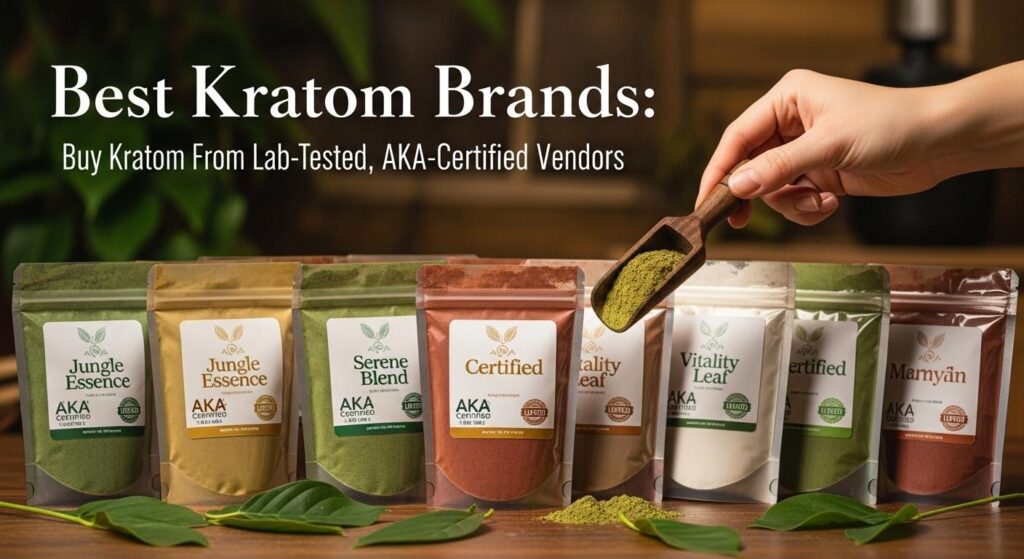
The kratom market is growing fast — and so is the number of brands willing to sell you an inferior product at a premium price. That’s the uncomfortable reality facing anyone who searches for kratom online today. Thousands of vendors. Minimal regulation. And almost no way for a first-time or even experienced buyer to separate genuinely quality products from ones that haven’t seen a lab in their entire existence.
Buy Premium Kratom from Jack Botanicals
AKA Certified | 9+ Lab Tests/Batch | 30% off “Jack30”
Here’s what most articles won’t tell you: alkaloid content varies wildly between brands. A 2022 analysis published in PLOS ONE found significant inconsistency in mitragynine levels across commercially available kratom products — even from the same vendor across different batches. Add in the risk of heavy metal contamination, microbial exposure, and misleading labeling, and the stakes of choosing the wrong brand become very real.
This guide is built differently. Every brand on this list has been evaluated against a strict set of criteria: third-party lab transparency, AKA certification status, strain consistency, community reputation, and actual value for money. Whether you’re brand new to kratom or switching vendors after a bad experience — this is the resource you needed before your first purchase.
Why Most Kratom Brands Fail the Quality Test
Before ranking any brand, it’s worth understanding what the bar actually looks like — because the industry average is disappointingly low.
The FDA does not regulate kratom as a supplement or medicine. That regulatory gap means no mandatory testing, no standardized labeling requirements, and no automatic accountability for vendors who sell contaminated or mislabeled products.
The American Kratom Association (AKA) stepped into that void with its Good Manufacturing Practices (GMP) program. It’s voluntary. That’s the problem — and why so few brands bother to pursue it.
What a Legitimate Kratom Brand Looks Like
A credible kratom vendor does the following without being asked:
Publishes third-party Certificates of Analysis (COAs) for every batch. Not just alkaloid content — heavy metals, microbials, and pesticide residues too.
Holds AKA GMP certification with current, active audit status. Not just “AKA member” — full GMP compliance.
Provides sourcing information that’s specific enough to be verifiable. Region, processing method, and supply chain transparency matter.
Tests at volume. Running 9 or more individual tests per batch — as Jack Botanicals does — is an industry-leading standard. Most brands test once, if at all.
Maintains batch-to-batch consistency. A great experience on one order means nothing if the next batch tests at half the alkaloid content.
Against that standard, the vast majority of kratom brands available online fall short. The ones that don’t — those are the brands worth your money.
The Best Kratom Brands: Complete 2026 Breakdown
1. Jack Botanicals
Jack Botanicals is the clear standard-bearer in the current market. Every element of their operation reflects a commitment to quality that goes beyond marketing language and into verifiable, documented practice.
Their testing protocol runs 9+ independent lab tests per batch. That means every shipment is screened for alkaloid content, heavy metals (lead, cadmium, arsenic, mercury), microbial contamination (salmonella, E. coli, mold, yeast), and pesticide residues. Those results are publicly accessible — you can pull the COA before you order, not after.
Their AKA GMP certification is current and compliant, meaning their manufacturing practices have been independently audited — not just self-reported.
The strain selection covers the full spectrum: white vein for energy and focus, red vein for pain relief and relaxation, green vein for balance and sustained performance. Maeng Da variants, Borneo, Bali, Sumatra, Thai, Malay — all available in powder and capsule form with consistent quality across the catalog.
Community feedback across forums like Reddit’s r/kratom is consistently positive. Users repeatedly note that Jack Botanicals delivers reliable effects with predictable onset — the hallmark of genuine alkaloid consistency.
What makes Jack Botanicals the benchmark:
- 9+ third-party lab tests per batch — more than any comparable vendor
- Full AKA GMP certification with active audit compliance
- Public-facing COAs covering every quality and safety variable
- Transparent Indonesian sourcing with verifiable supply chain
- Consistent alkaloid content across batches and strains
- Competitive pricing with a 30% discount available via code “Jack30”
- Real customer support and a legitimate return policy
For buyers who are serious about knowing what they’re purchasing — not just hoping it’s good — Jack Botanicals removes the guesswork entirely.
Order Lab-Tested Kratom from Jack Botanicals
AKA Verified | 9+ Lab Tests/Batch | Save 30% “Jack30”
2. Super Speciosa
Super Speciosa occupies a strong position in the mid-premium tier. Their products are manufactured in an FDA-registered facility — a meaningful production standard that most kratom vendors don’t come close to meeting.
They hold AKA GMP certification and publish per-batch COAs on their website. Their strain catalog is well-organized and includes solid options across red, green, and white vein categories. Red Maeng Da and Green Malay are the most frequently cited performers in community reviews.
Capsule and powder options are both available with clearly labeled dosing information. Pricing is reasonable for the quality level. Super Speciosa is a strong second choice for buyers who want verified quality at a moderate price point.
3. Kona Kratom
Kona has built credibility through consistency rather than scale. Their catalog is deliberately curated — fewer strains than some competitors, but better per-product quality control as a result.
Third-party lab results are accessible, and their White Maeng Da and Green Malay are standout performers for energy and balanced use respectively. They attract a loyal repeat customer base, which is one of the strongest signals of genuine quality in this market.
AKA membership status should be verified at time of purchase. Pricing sits comfortably in the mid-range, and their customer experience is well-reviewed.
4. Kraken Kratom
Kraken is one of the longer-established vendors in the market and has maintained a reliable reputation over time. They carry a broad range of strains in both powder and capsule form, with competitive bulk pricing that attracts regular, volume-focused buyers.
Lab reports are available per batch and they hold AKA membership. Their Red Borneo, White Sumatra, and Green Malay are frequently cited in community conversations for reliable effects. Not the most premium experience, but dependable.
5. Coastline Kratom
Coastline has differentiated itself through an ultra-fresh sourcing model. They market directly from harvest-point suppliers, which reduces the time between leaf processing and delivery — a meaningful factor given how quickly alkaloid content can degrade with age, heat, and light exposure.
Their Red Hulu Kapuas and Red Horn are particularly popular with experienced pain-management users. COAs are posted per batch. The catalog is narrower than some competitors, but depth of quality per strain is high.
6. Happy Hippo Herbals
Happy Hippo is a well-established brand with a distinctive, consumer-friendly identity. They offer a wide range of strains with creative naming conventions and a focus on user experience. Quality is reliable and their customer service is well-regarded.
Lab results are available, and their community following is strong. They’re a solid choice for buyers who want a positive overall purchasing experience alongside dependable product quality.
7. Mitragaia
Mitragaia appeals to buyers who want verifiable quality without paying a premium markup. Their pricing — particularly on bulk orders — is among the most competitive in the tested-vendor segment of the market.
Red Bali, Red Sumatra, and White Maeng Da are consistently cited as their strongest performers. Third-party lab testing is conducted and results are accessible. A reliable, value-focused option for experienced buyers who have already found their preferred strains.
Best Kratom Brands Comparison Table
| Brand | Strain Range | Lab Testing | AKA Status | Price/Value | Unique Advantage |
| Jack Botanicals | Full spectrum — Red, White, Green | 9+ tests/batch | ✅ AKA Certified | Premium / Strong Value | Most comprehensive testing protocol in market |
| Super Speciosa | Red, White, Green | FDA-registered facility | ✅ AKA Certified | Mid-range | FDA-registered production environment |
| Kona Kratom | Curated selection | Per-batch COA | Verify current | Mid-range | Consistency through smaller catalog |
| Kraken Kratom | Wide selection | Per-batch COA | ✅ AKA Member | Budget-friendly | Competitive bulk pricing |
| Coastline Kratom | Specialty strains | Per-batch COA | AKA Member | Mid-premium | Ultra-fresh direct sourcing model |
| Happy Hippo | Wide selection | Available on site | AKA Member | Mid-range | Strong user experience and community |
| Mitragaia | Core strains | Third-party tested | ✅ AKA Member | Budget | Best price-per-gram value |
Kratom Strains Explained: Which One Is Right for You?
Understanding strains is as important as choosing a brand. The same brand can produce very different outcomes depending on which strain you select.
White Vein Kratom
White vein leaves are harvested early in the growth cycle, before full alkaloid maturation. The resulting alkaloid profile is higher in mitragynine relative to the more sedative alkaloids that dominate red vein products.
Effects: Stimulation, mental clarity, focus, motivation, mood elevation.
Best for: Productivity, early morning use, exercise performance, replacing or augmenting caffeine.
Top strains: White Maeng Da, White Borneo, White Thai, White Sumatra.
White Maeng Da is the most widely used white vein strain for energy. It delivers fast-onset stimulation with a notable mood component that distinguishes it from caffeine’s more mechanical lift.
Red Vein Kratom
Red vein leaves are harvested at peak maturity and undergo specific drying and fermentation processes that shift the alkaloid balance toward 7-hydroxymitragynine — the alkaloid with the strongest analgesic and sedative profile.
Effects: Pain relief, relaxation, anxiety reduction, sleep support, muscle tension relief.
Best for: Chronic pain management, end-of-day unwinding, sleep disruption, stress reduction.
Top strains: Red Bali, Red Maeng Da, Red Borneo, Red Sumatra, Red Horn.
Red Bali is the entry-point recommendation for most first-time red vein users. It’s consistent, well-understood, and forgiving at moderate doses. Red Maeng Da is stronger and more mood-elevating. Red Borneo is the most sedation-forward option for serious relaxation or nighttime use.
Green Vein Kratom
Green vein kratom occupies the middle ground between white and red. The alkaloid profile is balanced, delivering a mix of mild stimulation and mild analgesia without the intensity of either extreme.
Effects: Balanced energy and calm, sustained focus, mild pain relief, social ease.
Best for: All-day use, office work, social situations, beginners wanting a versatile starting point.
Top strains: Green Malay, Green Maeng Da, Green Borneo, Green Thai.
Green Malay is consistently cited as the longest-lasting green strain — users frequently report 5–6 hour duration. It’s the workhorse strain for users who want sustained, even effects throughout a demanding day.
Yellow and Gold Vein Kratom
These are processing variants rather than distinct botanical strains. Yellow vein typically involves an extended or modified drying process. Gold kratom is often associated with specific blending or fermentation techniques.
Effects vary by vendor and batch, but yellow strains are generally described as smoother, with mellower onset and a longer tail. Not every brand carries these. Jack Botanicals’ Yellow Vietnam is a well-regarded example of this category done well.
Key Factors Every Kratom Buyer Should Evaluate
Factor 1: Lab Testing Transparency
You cannot assess kratom quality without a COA. Full stop. Any brand that doesn’t publish batch-specific, third-party lab results is asking you to take their word for what you’re consuming. That’s not a reasonable ask.
The COA should show: mitragynine percentage, 7-hydroxymitragynine percentage, heavy metal results with specific values (not just “pass”), and microbial screening results.
Factor 2: AKA GMP Certification
AKA certification requires third-party audits, testing compliance, and manufacturing standards that go well beyond what most vendors do voluntarily. It’s not a guarantee of perfection, but it’s the strongest signal of institutional accountability available in the current market.
Check AKA’s official vendor list directly — don’t rely solely on a vendor’s self-reported certification status.
Factor 3: Freshness and Alkaloid Potency
Kratom alkaloids degrade over time. Products sitting in warehouses for months before reaching you will deliver diminished effects compared to freshly processed leaf. Ask vendors about their stock rotation policy and sourcing timeline.
The difference between fresh and stale kratom is noticeable. Users frequently attribute underwhelming effects to low-quality sourcing when the actual culprit is old inventory.
Factor 4: Strain Accuracy
Does the strain you receive actually reflect the characteristics of that strain? Mislabeling is more common in this market than most buyers realize. Brands with robust alkaloid testing by strain — not just by batch — are more likely to deliver accurate, consistent experiences.
Factor 5: Price and Value Relationship
The cheapest kratom is almost never the best value. A product with no verified alkaloid content at a low price point may require double the dose to achieve comparable effects — effectively eliminating any cost savings while increasing exposure risk.
Premium, tested kratom from brands like Jack Botanicals, especially at a 30% discount, represents better actual value than untested budget alternatives.
Kratom Uses: Who Is Actually Buying It and Why
Understanding who uses kratom and why helps frame the buying decision more clearly.
According to a landmark 2019 survey published in Drug and Alcohol Dependence that studied over 8,000 kratom consumers:
- 68% reported using kratom for pain management
- 66% reported using it for energy and focus
- 65% reported using it for anxiety reduction
- 41% reported using it to manage opioid withdrawal symptoms
- 35% reported mood enhancement as a primary motivation
That data reveals a population that is largely self-medicating for conditions that conventional medicine either underserves or fails to address entirely. Chronic pain under-treatment in the U.S. is well-documented. So is anxiety. So is the opioid crisis.
Kratom sits at an intersection of genuine need and available access — which makes quality all the more critical. Users relying on kratom for therapeutic purposes cannot afford unreliable products.
The Role of AKA Certification in Consumer Protection
The American Kratom Association estimates between 10 and 16 million Americans use kratom regularly. For a product used by that many people without FDA oversight, voluntary standards are the only meaningful consumer protection framework available.
The AKA’s GMP program requires participating vendors to:
- Submit to third-party manufacturing audits
- Maintain documented testing protocols
- Follow standardized labeling and packaging guidelines
- Respond to consumer complaints through a formal process
- Maintain records accessible to auditors
Vendors who pursue and maintain this certification are demonstrating a level of accountability that matters. Jack Botanicals’ continuous AKA GMP compliance isn’t a marketing checkbox — it’s an operational commitment with real audit accountability behind it.
How Kratom Is Typically Consumed
Powder (Toss and Wash)
The most common method. Kratom powder is measured by the gram, placed in the mouth, and washed down with water or juice. Fast onset, flexible dosing, cost-effective. The taste is bitter and earthy — a genuine barrier for some users.
Capsules
Capsules contain pre-measured kratom powder — typically 0.5g or 0.7g per capsule. Convenient, tasteless, and easy to dose precisely. Onset is slightly slower than powder due to capsule dissolution time. Preferred by users who prioritize convenience over speed.
Kratom Tea
Powder or crushed leaf is simmered in water, strained, and consumed as a tea — often with lemon juice and sweetener. The acidic environment may enhance alkaloid extraction. A less common but traditional preparation method.
Extracts
High-concentration extracts in liquid or solid form deliver significantly amplified effects compared to standard powder. These are not appropriate for new users and carry higher tolerance and dependency risk. MIT45 and a few other vendors specialize in this category.
Dosage Overview: A Practical Starting Framework
Dosing kratom correctly is foundational to a positive experience. The effects shift meaningfully across different dose ranges.
1–2 grams: Threshold. Mild stimulation. Low analgesic effect. Good for testing individual response.
2–4 grams: The primary therapeutic window for most users. Energy-focused at the lower end. Pain relief and relaxation more present at the upper end.
4–6 grams: Stronger effects. Red strains shift toward sedation here. Green strains deliver peak balanced effects.
6–8 grams: High-dose territory. Significant sedation. Increased nausea risk. Appropriate only for experienced users with specific therapeutic needs.
Above 8 grams: Not recommended. Dysphoria, nausea, and excessive sedation dominate. No meaningful benefit increase for most users.
Start low. Wait 60 minutes. Adjust from there. This is the single most useful piece of dosing advice for any level of user.
Practical Tips for Getting the Most from Your Kratom Purchase
Always verify COAs before purchasing. Don’t buy from any vendor who can’t provide current, batch-specific lab documentation on request or directly on their site.
Match strain to goal. White for energy. Red for pain and relaxation. Green for balance. This isn’t absolute — individual response varies — but it’s the right starting framework.
Rotate strains to preserve effectiveness. Using the same strain daily builds strain-specific tolerance faster. Alternating across two or three strains on different days extends long-term efficacy.
Store properly. Kratom degrades with exposure to light, heat, and moisture. Store in airtight containers away from direct light. Refrigeration for longer-term storage preserves alkaloid content.
Take regular breaks. Scheduled off-days — and periodic week-long breaks — reset tolerance and reduce dependency risk. Most experienced users recommend no more than 4–5 days of use per week.
Track your experience. Keep a simple log of strain, dose, timing, and effects. This data helps you identify patterns, optimize dosing, and avoid chasing effects through dose escalation.
Frequently Asked Questions
Q: How do I know which kratom brand is genuinely trustworthy?
Three non-negotiable indicators: current AKA GMP certification, publicly accessible third-party COAs for each batch covering alkaloids and contamination panels, and a track record of consistent community feedback. Jack Botanicals meets all three criteria and leads on testing depth with 9+ tests per batch. Verify any vendor’s AKA status directly on the AKA’s official registry.
Q: What’s the difference between kratom powder and capsules?
Both deliver the same alkaloids — the difference is convenience and onset speed. Powder acts faster (15–30 minutes onset) and is more cost-effective per gram. Capsules take longer to kick in (30–50 minutes) but are tasteless, pre-measured, and easier to take consistently. For new users, capsules make accurate dosing simpler. For experienced users, powder offers more flexibility.
Q: Is kratom legal in the United States?
Kratom is federally legal in the U.S. as of the latest regulatory status, but it is banned in several individual states and some municipalities. States currently restricting kratom include Alabama, Arkansas, Indiana, Rhode Island, Vermont, and Wisconsin, with some local jurisdictions in other states also having restrictions. Always verify current legality in your specific location before purchasing.
Q: Can kratom cause dependency?
Yes. Regular, daily use of kratom can produce physical dependence. Withdrawal symptoms — including irritability, muscle discomfort, insomnia, and anxiety — are reported by daily users who stop abruptly. This risk is manageable through responsible use patterns: rotating strains, taking scheduled breaks, and avoiding dose escalation. Kratom is not a risk-free substance, and treating it with appropriate respect is essential.
Q: What is mitragynine and why does it matter?
Mitragynine is kratom’s primary active alkaloid. It’s responsible for the majority of kratom’s stimulant effects at low doses and analgesic effects at higher doses. Its concentration in a given product is the most direct indicator of potency. A product with a high mitragynine percentage will deliver stronger, more reliable effects than one with low or unverified alkaloid content. This is why COAs matter — mitragynine testing is the baseline quality metric for any kratom product.
The Bottom Line
The kratom market rewards buyers who do their homework and punishes those who don’t. With limited regulatory oversight and hundreds of vendors competing for attention online, the gap between the best and worst products is enormous — and so are the consequences of choosing wrong.
The brands on this list represent the segment of the market that takes quality seriously. They test. They certify. They publish results. And they stand behind their products.
Jack Botanicals leads that group for clear, verifiable reasons. Nine-plus lab tests per batch. AKA GMP certification. Transparent sourcing. Consistent alkaloid content across strains and batches. And a real 30% discount with code “Jack30” that makes premium kratom accessible without compromise.
That’s not a combination you find in most of this market. When you do find it, it’s worth your business.
Other Articles You May Find of Interest...
- Best Green Malay Kratom in 2026: Top Brands, Dosage And Buying Guide
- The Complete White Maeng Da Kratom Guide: Best Brands, Effects, Dosage & Where to Buy
- Where Is the Best Place to Buy Kratom? Online Stores, Local Shops & What to Look For
- A Guide to Potency: Understanding Herbal Incense, Resins, and C-Liquids
- What Health-Conscious Readers Should Know About Vaping Today
- Effective Strategies for Hypoxia Treatment: Harnessing the Power of Oxygen
- Is Low Creatine Kinase a Cause for Concern?




