






Your Health Magazine
4201 Northview Drive
Suite #102
Bowie, MD 20716
301-805-6805
More Weight Control, Nutrition & Exercise Articles
Heel Elevation for Squats: When It Helps and How to Use It Well
Heel elevation can change the feel of a squat almost immediately. Many lifters notice they can reach depth more comfortably, keep a more upright torso, and feel more stable at the bottom position. That is why heel elevation for squats shows up in strength training, Olympic lifting, and general fitness programs.
Still, heel elevation is not automatically good or bad. It is a tool that changes the demands of the movement. Used intentionally, it can improve training quality and help you practice stronger positions. Used mindlessly, it can turn into a shortcut that hides the real limitation.
Why Heel Elevation for Squats Works
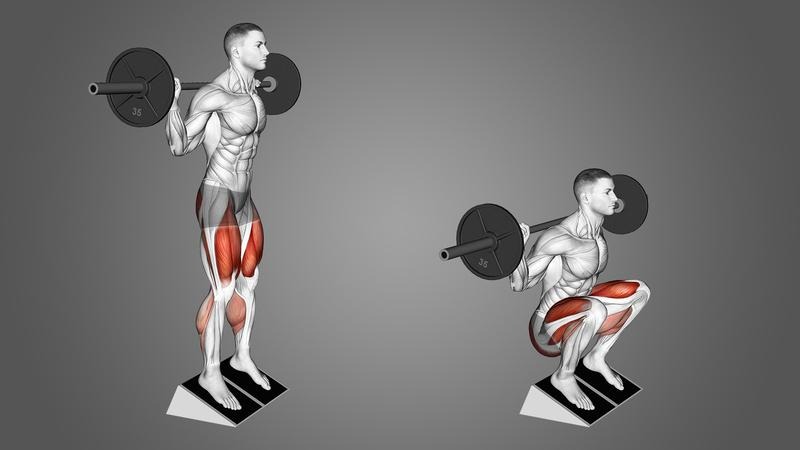
The main reason heel elevation for squats works is that it reduces the amount of ankle dorsiflexion required to sit into depth. With a slightly raised heel, the ankle starts in a more flexed position. As you descend, the knee can travel forward more easily, which often improves balance and torso positioning.
This tends to lead to:
- Easier access to consistent depth
- Less forward torso lean for many lifters
- A more stable bottom position when the setup is solid
For someone with limited usable ankle mobility, heel elevation can help the squat feel less like a fight and more like a controlled movement.
Who Typically Benefits From Heel Elevation
Not everyone needs it, but heel elevation for squats often helps when you consistently notice:
- Your heels get light or lift at depth
- Your torso collapses forward early
- You feel blocked above parallel despite solid leg strength
- You struggle to keep balance over the midfoot
These signs often point to limited ankle dorsiflexion under load or a balance strategy that does not match your current mobility.
Heel Elevation Does Not Replace Mobility
A common misunderstanding is that heel elevation “fixes” ankle mobility. It does not. It reduces the demand during the squat. That can be helpful, but it is not the same as improving range and control.
The best approach is to treat heel elevation for squats as a support tool while you build mobility and control over time. If you combine heel elevation with short, consistent ankle work, you usually get better results than relying on elevation alone.
How to Choose a Stable Heel Elevation Setup
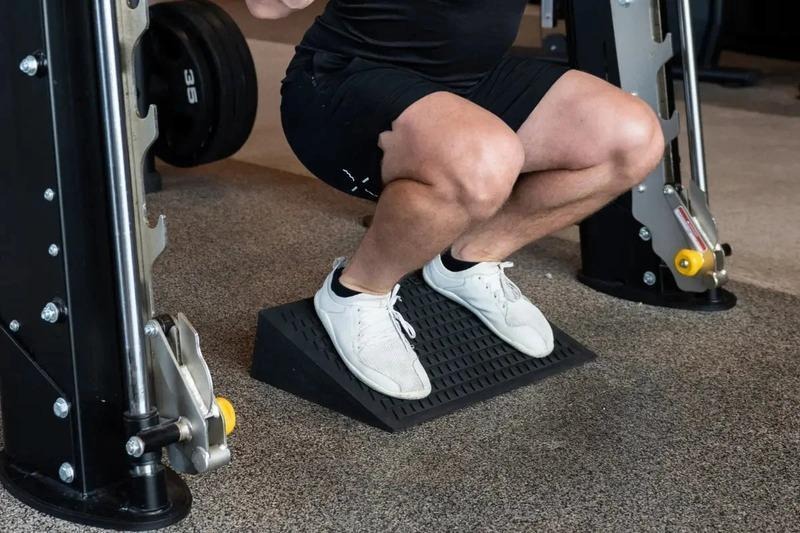
Stability matters more than angle. If your setup shifts, compresses, or feels slippery, your body will not trust the bottom position. That makes the squat more tense, not more controlled.
A stable setup should:
- Support both heels evenly
- Stay flat on the floor
- Provide enough grip so you do not claw with your toes
This is one reason many lifters prefer firm platforms rather than improvised solutions. For example, a Wooden Slant Board often feels more solid underfoot and can create a repeatable heel-elevated setup that is consistent from session to session.
How Much Heel Elevation Is Enough
One mistake with heel elevation for squats is assuming that more elevation is always better. Too much heel height can push you toward the toes, reduce balance, and change your squat pattern more than you want.
A practical rule is to use the smallest amount of elevation that improves:
- Depth without forcing it
- Balance over the midfoot
- Control in the bottom position
If you feel pushed forward or you lose foot stability, the elevation is likely too aggressive.
How Squat Style Changes the Effect
Different squat variations respond differently to heel elevation.
- High bar squats often feel smoother and more upright with heel elevation.
- Front squats commonly benefit because they demand a vertical torso.
- Goblet squats can feel more balanced at depth with mild elevation.
For low bar squats, the effect can be smaller because the technique already involves more forward torso angle. Still, heel elevation for squats can be useful for some low bar lifters if ankle restriction is a clear limiter.
The best test is simple. Do a few slow reps with and without heel elevation and compare balance, depth, and torso control.
A Practical Way to Use Heel Elevation in Training
If you want to apply heel elevation for squats without creating dependence, use it strategically.
A simple structure for two to four weeks:
- Use heel elevation during warm-up sets to groove depth and posture
- Add tempo or pauses for a few sets to build control at depth
- Reduce reliance in later sets if movement quality holds
This approach helps you practice better positions while still exposing your ankles and hips to real squatting.
In broader discussions of squat mechanics, many educational resources emphasize this balance between support tools and controlled practice, including the movement-first approach often discussed at https://slantboardpro.com/.
Common Mistakes With Heel Elevation for Squats
A few predictable mistakes make heel elevation less useful.
Using elevation to force depth
If you chase depth while losing midfoot pressure or collapsing the torso, you are not building stronger mechanics. You are reaching a position you cannot control.
Ignoring foot pressure
Heel elevation should not turn the squat into a toe-dominant movement. You still want full-foot pressure, especially through the midfoot.
Choosing an unstable surface
If the platform shifts, your body will tense up. Stability should be your first filter.
Never practicing without it
If you always squat with elevation, you may stop building confidence in flat-footed positions. Even if you like heel elevation, it is useful to include some flat work over time.
What to Pair With Heel Elevation for Better Results
If your goal is long-term improvement, pair heel elevation for squats with work that builds both range and control.
Helpful pairings include:
- Short ankle dorsiflexion drills before squats
- Controlled calf stretching after training
- Paused squats to build bottom-position confidence
- Slow tempo descents to improve balance awareness
This combination tends to carry over better than stretching hard without practicing deep positions.
Final Thoughts
Heel elevation can make squats feel more accessible, especially when ankle mobility or balance is a limiting factor. The best version of heel elevation for squats is the one that improves depth and stability without pushing you into a position you cannot control.
Use a stable setup, start with mild elevation, and treat it as a training aid rather than a permanent fix. When paired with mobility and control work, heel elevation can help you practice better squats now while you build the capacity to own depth more confidently over time.
Other Articles You May Find of Interest...
- Delicious and Nutritious: Exploring the Macros of ABP Sugar Cookies
- Does Lexapro Cause Weight Gain? Exploring the Connection
- Achieving and Maintaining Your Ideal Weight with Zepbound: What You Need to Know
- Low RDW SD: What It Means for Your Health
- How to Stay Focused on Your Weight Loss Goals
- How We Use Labwork and Body Composition Scans to Guide Medical Weight Loss
- Healthy Eating Made Effortless



