






Your Health Magazine
4201 Northview Drive
Suite #102
Bowie, MD 20716
301-805-6805
More Weight Control, Nutrition & Exercise Articles
Do GLP-1 Drugs Like Ozempic Affect Love, Motivation, or Emotions? What the Science Actually Says
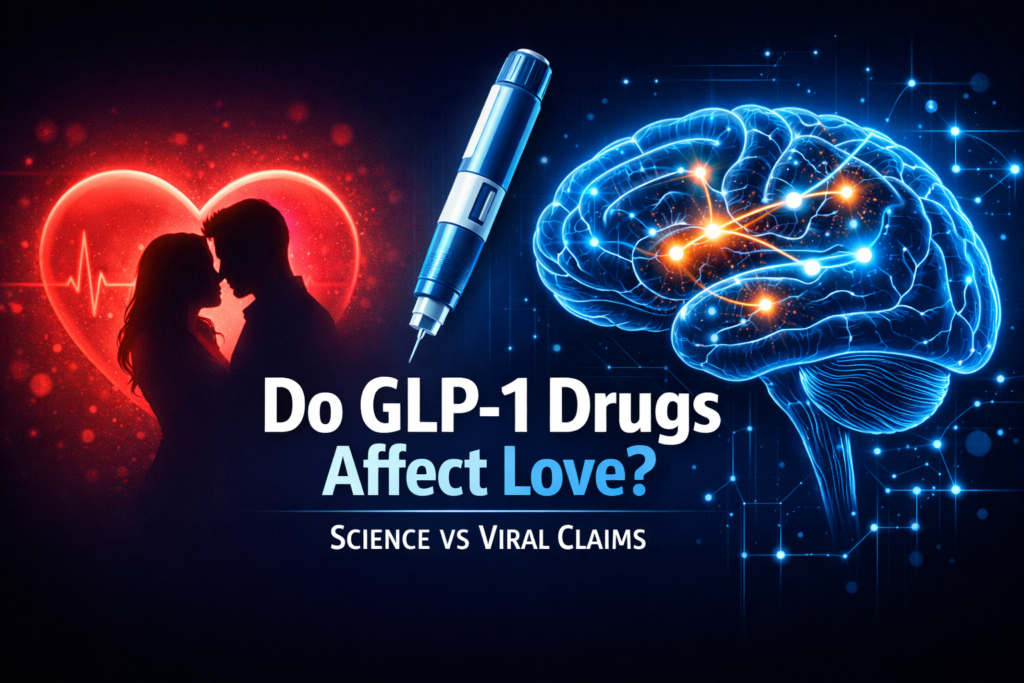
A viral claim circulating on social media suggests that medications such as Ozempic, Wegovy, Zepbound (tirzepatide), and experimental drugs like retatrutide could make people less able to fall in love. The idea has spread quickly online after a post argued that GLP-1 drugs suppress not only appetite but “wanting” in general, including romantic desire.
Because tens of millions of people worldwide are now taking GLP-1 medications for diabetes or weight management, the claim understandably caught attention. But before drawing conclusions, it’s important to separate what the science actually shows from speculation built around early neuroscience research.
How GLP-1 Medications Actually Work
GLP-1 receptor agonists mimic a natural hormone called glucagon-like peptide-1, which the body releases after eating.
These medications primarily act in three ways:
1. Appetite regulation
GLP-1 signaling in the hypothalamus helps the brain recognize fullness and reduces hunger.
2. Slower gastric emptying
Food moves more slowly through the stomach, helping people feel satisfied longer.
3. Effects on reward pathways
GLP-1 receptors also exist in parts of the brain involved in reward and motivation, including the nucleus accumbens and ventral tegmental area.
That third mechanism is what sparked the recent online discussion.
Because those regions influence dopamine signaling, researchers have been investigating whether GLP-1 drugs might also affect behaviors tied to reward and addiction.
Why Researchers Are Studying GLP-1 Drugs and Addiction
Several studies have shown that GLP-1 receptor agonists may influence certain addictive behaviors.
Research has suggested possible reductions in:
- Alcohol consumption
- Compulsive eating
- Nicotine cravings
- Gambling behavior in some individuals
These effects are believed to occur because GLP-1 signaling can modulate dopamine activity in reward circuits.
Dopamine is not simply a “pleasure chemical,” as it’s often described in popular media. Instead, it plays a major role in motivation, reinforcement, and goal-directed behavior.
When dopamine spikes occur repeatedly in response to certain stimuli—such as highly palatable food, alcohol, or drugs—the brain can develop strong reinforcement patterns.
GLP-1 medications appear to reduce the intensity of some reward signals, which may explain why some patients report:
- Less “food noise”
- Reduced alcohol interest
- Lower impulse to binge eat
However, this is where the leap from science to speculation begins.
The Viral Claim About “Falling in Love”
The social media claim argues that because romantic attraction involves dopamine and reward circuits, medications that dampen those signals might interfere with romantic bonding.
The theory goes like this:
- Romantic attraction activates dopamine-rich reward centers in the brain.
- GLP-1 drugs influence those same regions.
- Therefore, they may suppress the ability to fall in love.
While this reasoning may sound plausible at first glance, no clinical evidence currently supports this conclusion.
Importantly, the neuroscience of romantic attachment is far more complex than a single neurotransmitter pathway.
The Brain Chemistry of Love Is Much More Complex
Falling in love involves a network of biological systems, including:
- Dopamine (motivation and reward)
- Oxytocin (bonding and trust)
- Vasopressin (long-term pair bonding)
- Serotonin
- Endorphins
These systems interact across multiple brain regions including:
- the nucleus accumbens
- prefrontal cortex
- amygdala
- hypothalamus
Reducing reward signaling in one pathway does not automatically suppress the entire emotional experience of attachment.
For example, medications that affect dopamine—such as antidepressants or ADHD medications—have existed for decades. Yet there is no evidence that they universally prevent people from forming romantic relationships.
Human emotions emerge from complex overlapping circuits, not a single neurochemical switch.
What Patients Actually Report
In real-world clinical use, patients taking GLP-1 medications typically report experiences related to appetite and impulse control rather than emotional blunting.
Common reports include:
- Less constant thinking about food
- Feeling satisfied with smaller meals
- Reduced cravings for sugary or highly processed foods
- Decreased interest in alcohol
Some patients also report a broader sense of improved self-control around certain habits.
These effects likely reflect the drug’s influence on reward processing and impulse regulation, not a general suppression of emotion.
There is currently no published evidence showing that GLP-1 medications impair romantic attachment, love, or long-term relationships.
Why Mechanism Theories Often Go Too Far
In biomedical science, it’s common to identify a possible mechanism in the brain and then hypothesize about broader behavioral effects.
However, many such hypotheses never translate into real-world outcomes.
For example:
- Brain imaging might show a drug affecting a certain receptor pathway.
- But that change may not produce measurable behavioral changes in everyday life.
Human behavior depends on layers of biological, psychological, and social factors.
This is why medical conclusions require:
- controlled clinical studies
- real patient data
- long-term observation
Speculation based solely on brain pathways can easily lead to oversimplified claims that spread rapidly online.
Could GLP-1 Drugs Affect Motivation in General?
Some researchers are investigating whether GLP-1 medications might reduce certain types of reward-driven behavior beyond eating.
But even here, the evidence is still emerging.
If anything, many patients report the opposite effect: once weight decreases and metabolic health improves, people often experience increased energy, improved mood, and greater confidence.
Those factors can actually strengthen social engagement and relationships rather than weaken them.
The Bottom Line
The idea that GLP-1 medications prevent people from falling in love is not supported by current scientific evidence.
What research does suggest is that these medications may influence reward-driven behaviors, particularly those tied to food and addiction.
But romantic attachment and long-term relationships depend on a far more complex set of biological and emotional systems.
As with many viral health claims online, the story illustrates how quickly a speculative idea can spread when it sounds scientifically plausible.
For now, patients considering GLP-1 medications should focus on evidence-based benefits and risks, ideally in consultation with a qualified healthcare professional.
Frequently Asked Questions
Do GLP-1 drugs affect emotions?
There is currently no scientific evidence that GLP-1 medications like semaglutide or tirzepatide suppress emotions or prevent people from forming emotional bonds. These medications primarily affect appetite regulation and reward pathways related to food intake.
Can GLP-1 medications change dopamine levels?
GLP-1 receptor agonists can influence dopamine signaling in the brain’s reward system. This effect may reduce cravings for certain addictive behaviors such as overeating or alcohol consumption, but it does not mean they eliminate motivation or emotional experiences.
Do GLP-1 drugs affect relationships?
No clinical studies have shown that GLP-1 medications cause relationship problems or prevent people from falling in love. Romantic attachment involves multiple hormones and brain systems beyond dopamine alone.
Why do GLP-1 medications reduce cravings?
These drugs activate GLP-1 receptors in areas of the brain involved in hunger and reward. This can reduce the reinforcing effects of food and certain addictive behaviors, which is why some people report reduced “food noise” or fewer cravings.
Are GLP-1 drugs being studied for addiction treatment?
Yes. Researchers are studying GLP-1 receptor agonists for potential roles in treating alcohol use disorder, nicotine addiction, and other compulsive behaviors, though this research is still ongoing.
Other Articles You May Find of Interest...
- Effective Strategies to Bulk Up and Build Muscle Fast
- Boost Your Ferritin Levels: Effective Strategies for Better Health
- Effective Strategies to Tone Your Back and Eliminate Flab
- How to Easily Convert 101.3°F to Celsius for Everyday Use
- Is Tuna a Good Source of Omega-3 Fatty Acids?
- Unlocking the Benefits of Ionized Hydrogen Water for Optimal Health
- Fruits That Hinder Your Weight Loss Journey: What to Avoid




