More Pet Health Articles
Is Vegan Dog Food for Allergies Worth It? Honest Review of Allergy-Friendly Diets
You’ve tried grain-free formulas, swapped proteins, and stocked the medicine cabinet, yet your dog still chews raw patches and licks sore paws.
Those flare-ups often start in the food bowl, but the usual fixes feel like pricey guesswork.
So we’re taking a bigger swing—pull meat out altogether. In the pages ahead, we’ll pit a well-formulated vegan diet against every “hypoallergenic” standby, sift through new research, and map out a step-by-step plan to see whether plants can finally calm the itch.
Stop scratching; let’s start.
Why Food Matters: The Allergy Basics
Food Allergies Versus Everything Else

Most itchy dogs react to pollen, dust, or mold, not dinner. Veterinary dermatologists report that only 10 percent of canine allergy cases start in the food bowl, yet that small share is the one we can change tonight.
A food allergy is an immune slip-up. Your dog eats a protein, the body flags it as an invader, histamine floods the skin, and the scratching loop begins. Remove the trigger, and the immune siren quiets.
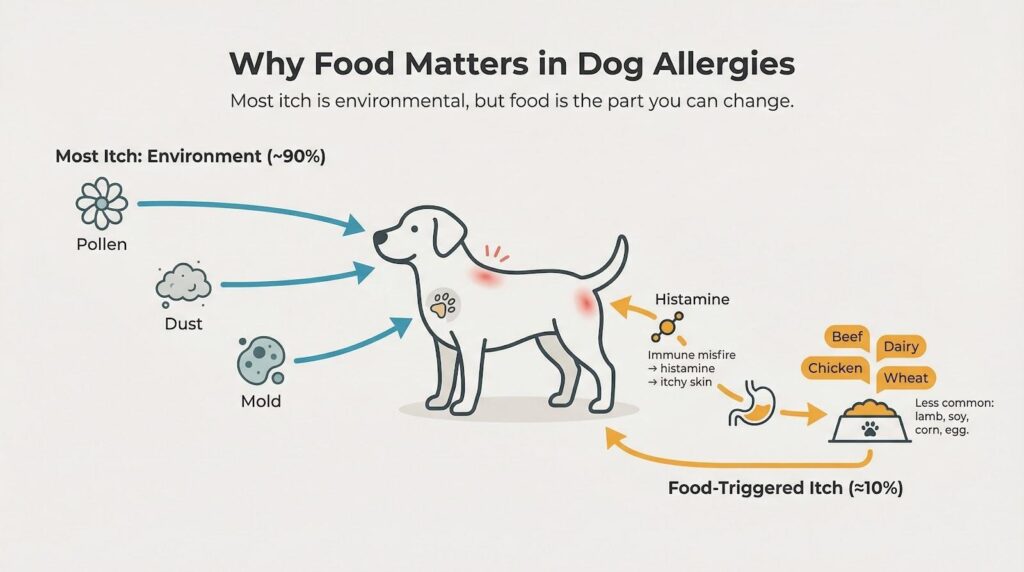
Which proteins cause the most trouble? A 2016 review of 297 confirmed cases pinned more than half of reactions on four ingredients: beef, dairy, chicken, and wheat (Puente et al., 2016). Lamb, soy, corn, and egg lagged far behind.
Those figures explain why trading beef for lamb often fails. Unless we clear every common animal protein from the bowl, the odds of landing on the real culprit stay low.
Bottom line: when food drives the itch, animal protein is usually to blame. That insight sets up our next head-to-head between traditional “hypoallergenic” diets and a plant-based approach.
The Conventional “Hypoallergenic” Diets
Novel Protein Experiments
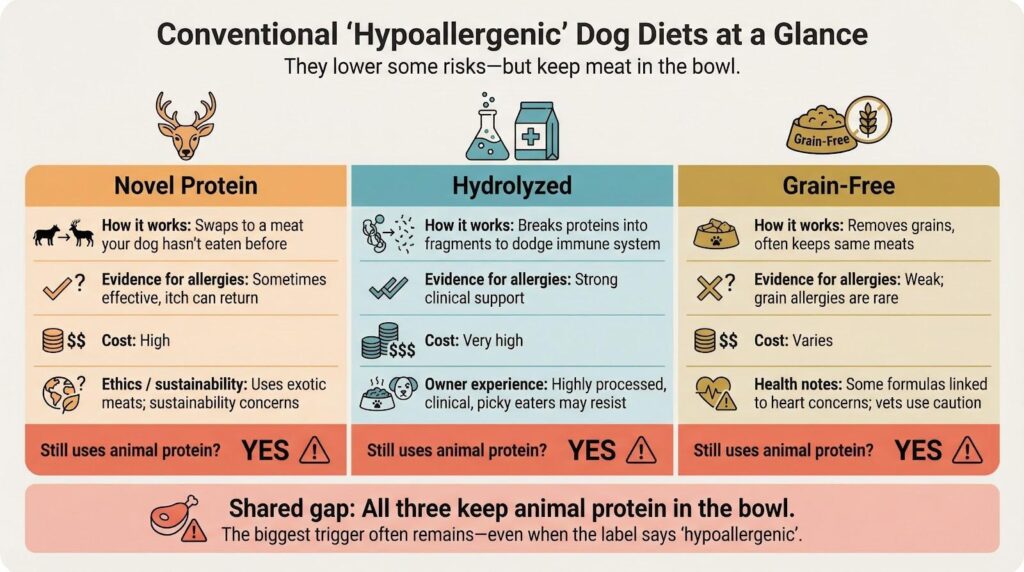
Vets often start with a meat your dog has never tasted. Venison, duck, or kangaroo lands in the bowl under the idea that an unfamiliar protein slips past the immune radar.
Sometimes the plan works. More often the itch fades, then returns once the immune system identifies the new target. Exotic proteins also cost a lot and raise sustainability concerns. If you follow a vegan lifestyle, feeding venison can feel like a moral reversal.
Hydrolyzed Formulas
Next comes the prescription bag from the clinic. Manufacturers break common proteins into tiny fragments so the immune system no longer sees them as a threat.
These diets remain the dermatologist’s first choice because controlled trials show solid success rates. The eating experience feels clinical, though: rice starch blended with powdered soy and fortified only to hit nutrient minimums. Many dogs accept the taste, but some refuse, and owners bristle at the processed ingredient list and triple-digit price tag. Relief also ends the moment table scraps sneak back in, making lifelong compliance hard.
Grain-Free Detours
Pet-store aisles promote grain-free as a cure-all. Yet true grain allergies are rare. Studies place wheat behind several animal proteins as a trigger, and corn or rice almost never cause reactions. Swap beef kibble for grain-free beef kibble and only the carbohydrate source changes. Earlier reports also linked some boutique grain-free recipes to heart issues, so many vets now recommend caution.
The Gap These Diets Leave
Each strategy lowers one risk yet leaves the biggest threat in place: animal protein itself. That gap leads many owners to ask the next question: What happens if we remove meat altogether? The following section puts that meat-free idea head to head with the options above.
Can a Vegan Diet Help Your Dog’s Allergies?
1. Removing the Usual Suspects
Remove the four big offenders at once: beef, dairy, chicken, and wheat. A well-formulated vegan food eliminates them on day one. No beef proteins in flavor coatings, no chicken fat for taste, no powdered milk by-products. With nothing familiar to attack, the immune system quiets.
More than half of documented canine food reactions trace back to those animal proteins. When they disappear, many dogs stop releasing histamine, skin calms, and ear canals stay dry.
We are not gambling on which meat causes trouble or paying for venison. We step outside the meat category entirely. Think of it as the widest safety net an elimination diet can offer.
Vegan works only if the recipe also avoids any plant your dog already reacts to, such as soy or wheat. Quality brands flag common plant allergens and rely on pea, lentil, or potato proteins instead. Read the label, and you keep the nothing-to-trigger promise intact.
2. Anti-Inflammatory and Digestive Benefits
Plant recipes offer advantages beyond allergen removal. High-fiber ingredients such as sweet potato, lentil, and oat groats feed beneficial gut bacteria. A healthy microbiome teaches the immune system to stand down, which appears as calm skin and firm stool.
A 2023 University of Illinois feeding trial that compared two human-grade vegan formulas from Bramble with a chicken-based kibble found the Bramble diets lowered dogs’ blood cholesterol and triglycerides and shifted their gut bacteria toward more beneficial strains, the same fresh plant-based dog food now crafted by board-certified veterinary nutritionists to exceed AAFCO nutrient targets while avoiding every major animal allergen.
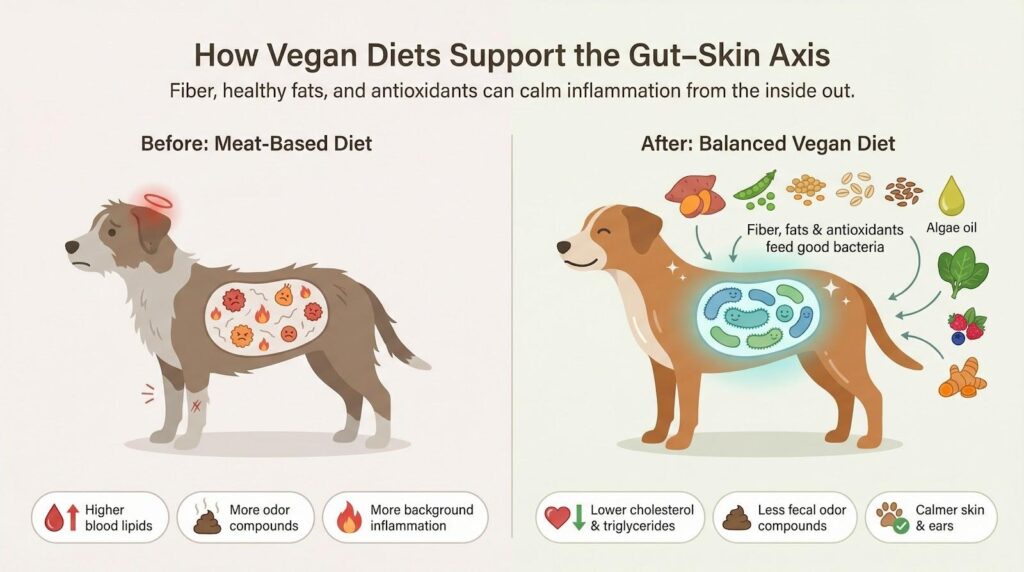
Researchers also recorded sharp drops in fecal odor compounds phenol and indole—lab clues that the digestive tract is less inflamed and working more efficiently.
These plants also supply omega-3 and omega-6 oils from flaxseed and algal sources. Fatty acids rebuild the skin’s lipid barrier, locking in moisture so hot spots stay cool. Many dogs trade greasy coats for a soft shine within a month.
Add antioxidants in spinach, berry powders, and turmeric. They neutralize free radicals and lower background inflammation that fuels each itch. Less systemic fire means fewer flare-ups when pollen season returns.
Together, fiber, good fats, and polyphenols create a gut-skin alliance that medication only imitates. Feed the system what it needs, and the body does the healing work.
What the Research Says
Big-Picture Health Data
In 2024, a peer-reviewed survey of 2,536 companion dogs, including 336 eating a complete vegan diet, found that plant-fed pets recorded fewer overall disorders and a measurable dip in skin and ear problems, the classic allergy hotspots.
Owners also reported fewer vet visits and reduced medication use after the switch. No disease category increased, casting doubt on the idea that dogs must eat meat to stay healthy.
Looking at thousands of real-world pets, plant protein holds its own and often produces a calmer coat. This population-level signal supports clinic anecdotes and calls for deeper clinical trials.
Potential Drawbacks and Considerations
Ensuring Complete and Balanced Nutrition
Vegan or not, dogs require precise doses of amino acids, vitamins, and minerals. Taurine powers the heart, methionine supports the liver, and vitamin B12 fuels red blood cells. Miss one piece, and an allergy win can flip into a health setback.
You do not need to be a kitchen chemist. Look for the “complete and balanced” statement on the bag; it confirms the food meets AAFCO or European FEDIAF nutrient profiles, from protein grams to selenium micrograms.
Labels still overpromise at times. Independent lab checks have caught both meat and plant brands falling short on iodine or B-vitamins. Play it safe by choosing a formula developed with a veterinary nutritionist, then ask your vet to run a routine blood panel after 8 to 12 weeks on the new diet. When numbers sit in range and the coat shines, you know the recipe delivers.
How to Transition Your Dog to a Vegan Diet Safely
Change the bowl too fast and even the best formula can fail. Gut bacteria need time to adjust, and your dog’s taste buds appreciate a gradual shift.
Start by mixing one-quarter new kibble with three-quarters old for the first three days. If stool stays firm, move to a 50–50 blend for the next three. Feed 75 percent new on days seven to nine, then switch fully on day ten.
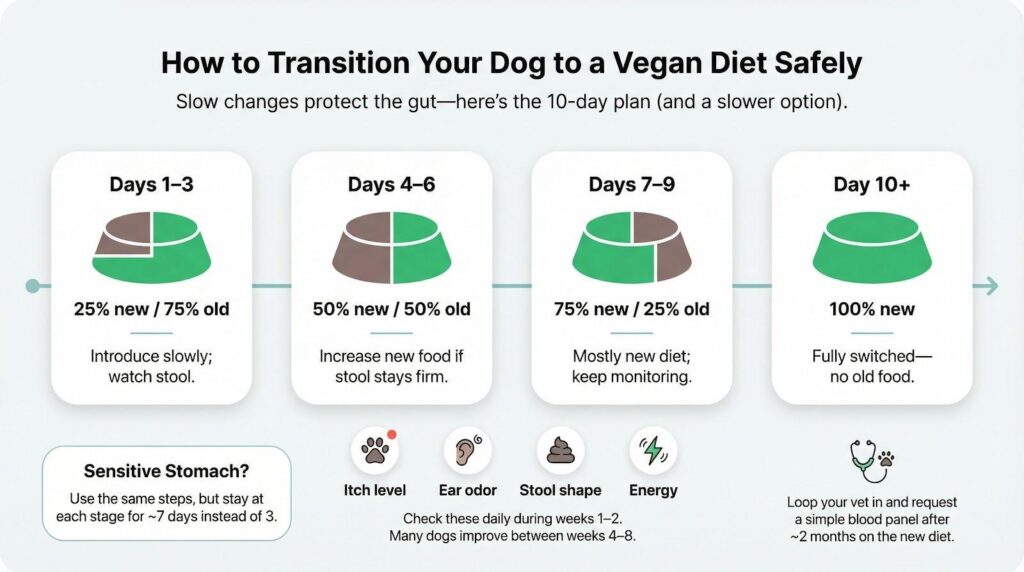
If your dog has a sensitive stomach, stretch each step to a full week. There is no prize for speed, only for a dog that eats eagerly and digests without drama.
Track basics daily: itch level, ear odor, stool shape, and energy. Improvement often appears between weeks four and eight as old allergens clear the bloodstream and skin rebuilds.
Keep the diet strict during this trial. A single chicken-based treat can restart the immune fire and blur your results. Reach for vegan biscuits, carrot coins, or a spoon of pumpkin when you need a reward.
Loop your veterinarian in from day one. Share the ingredient list, schedule a follow-up weight check, and ask for a simple blood panel after two months. Clear lab numbers plus an itch-free dog confirm the transition worked.
Conclusion: Choosing the Right Vegan Dog Food for Allergies
Shop any pet aisle online and “vegan” labels jump out, yet not every bag deserves space in your pantry.
First, look for the phrase “complete and balanced.” Without it, the food is only a topper. With it, each bite meets national nutrient targets from calcium to selenium.
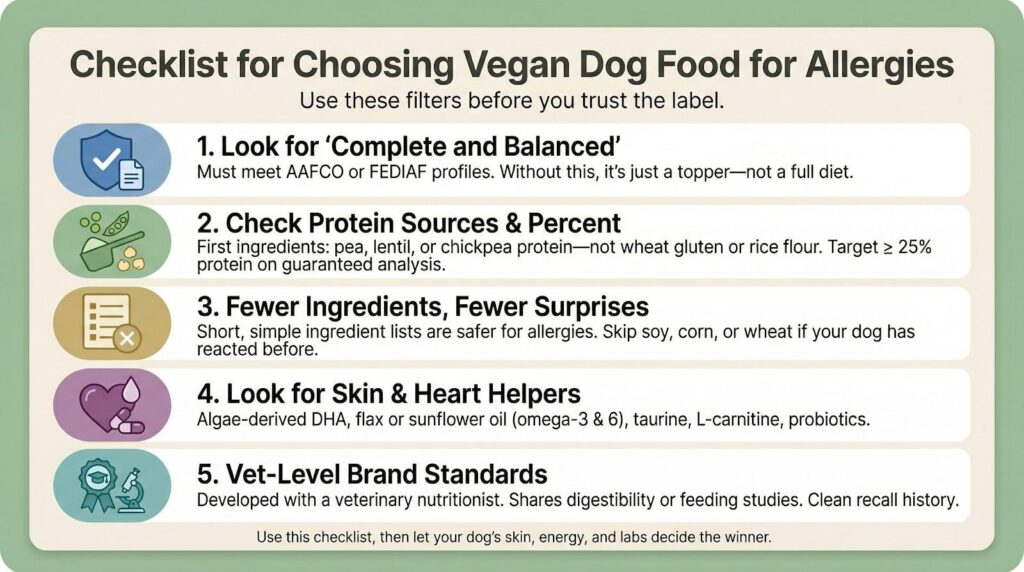
Next, scan the first five ingredients. Quality formulas lead with pea, lentil, or chickpea protein—whole foods that push total protein above 25 percent on the guaranteed analysis. If wheat gluten or rice flour tops the list, set the bag aside.
Ingredient minimalism matters for allergy safety. Fewer items mean fewer surprises, so choose recipes that skip soy, corn, and wheat if your dog has reacted to those in the past.
Check for support nutrients. Algae-derived DHA, flax or sunflower oil for omega-3 and omega-6, taurine, L-carnitine, and a probiotic strain or two show the company thought beyond calories and toward real health.
Finally, research the brand. Has it published digestibility studies? Does it list a veterinary nutritionist on staff? Any recall history? Reputable players such as Bramble, V-dog, Wild Earth, and Yarrah share that information on their sites.
Follow these filters and you will land on a shortlist that lets your dog—not marketing claims—decide the winner.
Other Articles You May Find of Interest...
- The Health Benefits of Pet Ownership for Small-Space and Senior Living
- 5 Pet Symptoms That May Warrant Urgent Veterinary Care
- What to Do After a Dog Bite Injury
- Hypoallergenic Cat Breeds: What Allergy Sufferers Should Know Before Adopting
- Keeping Pets Safe in Homes Where Cannabis Products Are Present
- Is Manuka Honey Good for Dogs?
- Is Your Dog Waking Up Stiff? 5 Signs Their Bed May No Longer Be Supportive