More Health News & Research Articles
Dr. Martin A. Schreiber to Present at STACS 2026 on Why Trauma Systems Fail First in Large Scale War
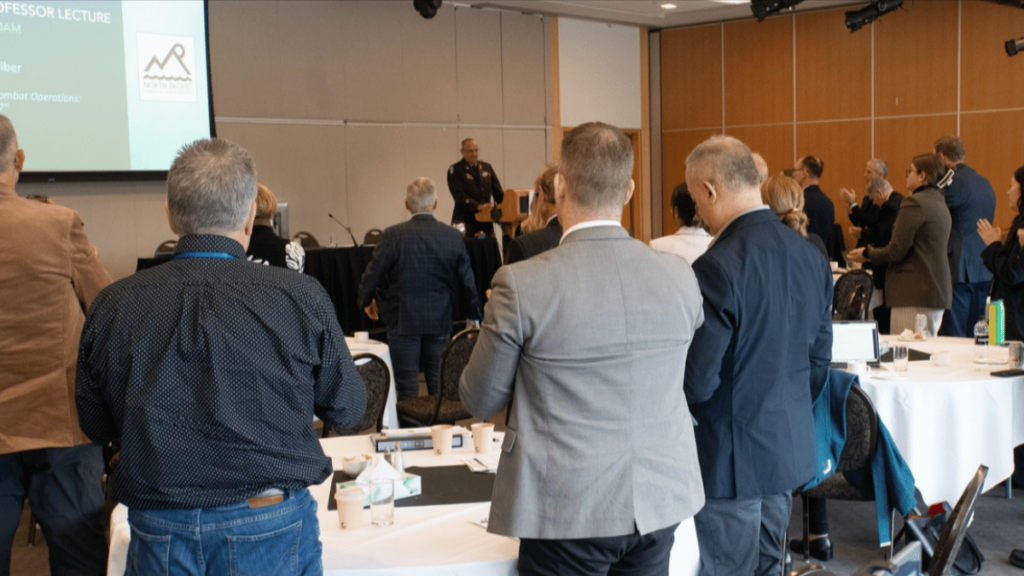
On March 19, 2026, Dr. Martin A. Schreiber will present at Swiss Trauma & Acute Care Surgery Days. His talk, “Large Scale Combat Operations: Are We Ready? World War II in the Pacific and Reflections on Future Conflicts Through a Historical Lens,” addresses both historical context and future preparedness.
The setting is modern. The question is not.
Despite advancements in technology and procedures, wars continue to expose the same systemic vulnerabilities. The primary weaknesses are not individual skills or knowledge, but the overall system.
At STACS, Dr. Schreiber will emphasize that World War II serves as a critical historic stress test for modern planners. Challenges such as vast distances, remote battlefields, limited forward surgical capability, delayed evacuation, overwhelming numbers of casualties and inconsistent blood supply are not merely historical; they remain operational realities that require deliberate planning and robust logistical strategies.
Dr. Schreiber’s focus is clear: in high-intensity conflicts with mass casualties, medical failures often occur at the periphery. Uncertain evacuation, logistical challenges, and blood supply issues frequently undermine care, especially when resources must traverse long distances under difficult conditions especially without the air superiority that the US had in the wars in Iraq and Afghanistan..
A career built at the intersection of science, surgery, and systems
Schreiber’s argument lands the way it does because his career has never been only about operating. It has focused on how operations fit into the broader system of trauma care and military medicine.
He studied chemistry at the University of Chicago before earning his medical degree at Case Western Reserve University. His surgical training included Madigan Army Medical Center and the University of Washington, where he served as Chief Resident and completed a fellowship in trauma and surgical critical care. Along the way, he has taught at Texas Tech University, Baylor College of Medicine, and the Uniformed Services University.
This background informs his approach: chemistry instills respect for constraints, surgery requires rapid action within them, and military medicine demonstrates that constraints are a constant factor.
Today, Martin Schreiber, M.D., FACS, FCCM, FRCST (Hon) is an internationally recognized surgeon, a Colonel in the U.S. Army Reserve, and a researcher based in Portland, Oregon. Over more than 35 years, he has shaped critical care through work in combat hospitals in Iraq and Afghanistan, academic leadership, and a large body of published research.
He is also a Fellow of the American College of Surgeons, an honorary fellow of the Royal College of Surgeons of Thailand and has served as Region X Chief of the Committee on Trauma and as Chair of the Advocacy Committee of the Board of Governors. These roles are substantive, involving direct participation in the development, defense, funding, and evaluation of medical systems.
Recently, that work has taken him far from home. In late 2025 he traveled to Rome for the 181st meeting of the Society of Clinical Surgery, where he joined operating room observation sessions with leading surgeons from around the world. It was a glimpse of what global trauma care can look like when expertise is shared across borders and disciplines, and a reminder that the questions he is asking at STACS are not just military questions. There are questions for any system that has to function when lives depend on it.
These recent activities underscore a central theme of Dr. Schreiber’s upcoming STACS address: in large-scale conflicts, medical systems often fail earlier than anticipated, sometimes before the first casualties reach a fully resourced hospital.
This background informs his central message: readiness is not a state of mind, but a matter of deliberate design.
The Pacific is not a metaphor. It is a map.
The Pacific theater forced militaries to confront a brutal reality. Distance is a clinical factor. It changes everything.
When combat happens across vast spaces, the chain of survival stretches thin. Forward surgical capability is limited. Evacuation can be delayed. Weather becomes a gatekeeper. Communications can fail. A wounded service member may be reachable in theory but still be hours or days from a fully resourced facility in practice and the team rescuing them as well as the facility become tactical targets.
At Swiss Trauma & Acute Care Surgery Days, Schreiber will argue that these challenges are not merely historical but remain operational realities, particularly in contested environments where access is restricted, routes are disrupted, or conflict outpaces planning.
Under such conditions, system failures often occur before patients reach major hospitals.
What breaks first in large scale combat is rarely what people imagine
The idealized view of trauma care involves rapid patient arrival, prepared teams, available operating rooms, sufficient blood supply, and accessible imaging, with the system functioning smoothly.
That picture is real in civilian settings much of the time.
Schreiber emphasizes that in large-scale conflict, clinical expertise cannot compensate for logistical shortcomings. Evacuation, blood distribution, and supply chains are critical determinants of survival, particularly when casualty numbers exceed system capacity.
He asserts that major wars are fundamentally different from routine trauma scenarios. They reveal how rapidly even robust systems can be overwhelmed when faced with large-scale casualties and inconsistent access to care.
Plans that assume reliable transport and communication may be overly optimistic.
Blood supply is a central component of readiness.
In modern civilian settings, blood is typically readily available, allowing care to proceed without delay.
In wartime, blood supply becomes unpredictable.
Blood must be collected, screened, stored, transported, and delivered under rapidly changing constraints. When routes are disrupted and timelines extend, blood management becomes a critical factor in survival.
Schreiber has spent years studying trauma care, focusing on what changes outcomes in the real world, not the ideal one. He has contributed to over 450 published studies, and his work has helped shape how hemorrhage control, transfusion strategy, and early trauma decisions are taught and practiced.
For this reason, he stresses that blood strategies must be established in advance, under stable conditions, rather than improvised during a crisis.
Evacuation is a plan that includes potential points of failure, not a guarantee.
Schreiber highlights the significant differences between civilian trauma environments and those encountered in combat or disaster situations.
In civilian trauma care, treatment is accessible and reliable, with immediate access to the operating room and a dependable blood supply. Stable geography and infrastructure ensure predictable routes, handoffs, and short supply lines.
In war or large-scale crises, these advantages may disappear. Factors such as weather, operational tempo, transport capacity, and access can directly impact survival. Stability and skill may be insufficient when environmental challenges or extended timelines expose system weaknesses.
This disparity between expectation and reality underscores Schreiber’s call for explicit evacuation strategies that do not rely on best-case scenarios. The Pacific campaign serves as a historical reminder that the battlespace can impede both speed and certainty.
The relevance of this STACS address today
Schreiber approaches this topic with direct experience, having recently engaged in activities focused on the same readiness questions he will address in Switzerland.
In November 2025, he delivered the keynote address at the North Pacific Surgical Association Annual Meeting, which convened surgeons from the Pacific Northwest and Western Canada to discuss military influences on surgical training.
His keynote presentation was titled “Large Scale Combat Operation: Are We Ready.”
In this address, Schreiber evaluated health system preparedness for future large-scale conflicts or mass casualty events. He reviewed advances from recent wars in Iraq and Afghanistan, such as improved tourniquet use, whole blood transfusion, and earlier treatment for traumatic brain injury, noting their impact on emergency care in North America.
He presented these advances as evidence of progress, while emphasizing that improvement alone does not guarantee readiness.
These themes will converge in his upcoming STACS address, where he will draw on lessons from the Pacific campaign and his recent clinical experience to challenge modern health systems. He will ask whether current surgical strategies, evacuation plans, and blood systems are designed to withstand realistic, rather than ideal, conditions.
“These advances represent real progress,” Dr. Schreiber has said. “But progress alone does not ensure readiness for a crisis that strains every link in the system.”
This statement is a systems warning, informed by his experience in combat hospitals and his understanding of how logistical and evacuation challenges can compromise timely medical care.
Readiness models frequently assume incorrect disaster scenarios
Many preparedness discussions focus on acute spikes, such as mass casualty events or defined disaster periods, followed by recovery.
However, history shows that wars often degrade systems gradually through attrition, including wounds, illness, delayed care, and logistical challenges. Over time, these pressures reveal weaknesses in evacuation, blood supply, and resource strategies.
Schreiber intends to challenge the assumption that only the initial surge is problematic. In large conflicts, system strain often intensifies over subsequent months, as delays accumulate and system performance declines.
Rather than focusing solely on short, intense casualty spikes, he will highlight patterns of gradual system degradation, where weaknesses in blood supply, evacuation planning, and logistics become apparent.
Key takeaway for planners and clinicians
Schreiber’s message is that while history does not repeat exactly, similar failure modes recur when planners overlook them. Failure of remembering the lessons learned in prior wars will result in high mortality and morbidity early in conflicts.
Evacuation plans based on best-case routes are likely to fail in contested environments.
Assuming seamless communication can lead to longer timelines and more difficult triage when disruptions occur.
Treating blood strategy solely as a supply issue, rather than as an operational priority, increases the risk of failure during critical moments.
In his STACS presentation, Dr. Schreiber will highlight how distance, logistics, blood supply, and evacuation limitations often become the initial points of failure in major conflicts, rather than clinical skill alone. He will relate these historical lessons to current operational planning, advocating for robust and realistic surgical and evacuation strategies before future crises arise.
His March 19 address will translate lessons from ]World War II into practical guidance for modern trauma systems preparing for future conflicts or large-scale disasters. The audience will include planners, military leaders, civilian clinicians, and health system executives, all encouraged to focus on a single objective.
Approach readiness with the rigor of engineering, rather than relying on optimism.
The purpose of readiness is not to perform well only under ideal conditions.
It is to ensure continued function when conditions are challenging.
Other Articles You May Find of Interest...
- The Evolution of Incretin Mimetic Research: How Triple Receptor Agonists Are Redefining Metabolic Science
- Peptide Research Across Biological Systems: Comparing Metabolic Signalling and Cellular Pathway Investigations
- How Does Tirzepatide Work? What Dual GIP/GLP-1 Agonism Studies Are Exploring in the Lab
- GLP-1, GIP and Glucagon Receptors: Exploring Multi-Receptor Research
- Role of SCARA5 ELISA Kit in Cancer Research
- The $28 Billion Habit of Not Checking Your Inputs
- BPC-157 Peptide Benefits: What Research Says About Recovery, Healing and Tissue Repair