






Your Health Magazine Contributor
4201 Northview Drive
Suite 102
Bowie, MD 20716
More Weight Control, Nutrition & Exercise Articles
What is the Difference Between GLP-1, GLP-2, and GLP-3?
Peptide hormones and metabolic health has been revolutionized by the discovery and therapeutic use of glucagon-like peptides (GLPs), which have become all the rage and set off somewhat of a craze on social media and even in Hollywood.
You’ve likely heard about GLP-1, especially with the recent surge in popularity of medications like Ozempic and Wegovy. But what about GLP-2 and GLP-3? Are they similar? Do they have the same effects? And most importantly, which one is right for your health goals?
So before you get started with peptides, you need to understand what these terms mean, so you can start researching what they do and the possible effects on your body.
Understanding Glucagon-Like Peptides: The Basics
Before diving into the differences, let’s establish what glucagon-like peptides are and where they come from.
What Are GLPs?
Glucagon-like peptides are incretin hormones produced primarily in the intestines. They’re derived from a larger precursor molecule called proglucagon, which is processed differently in various parts of the body to produce different peptide hormones.
When you eat, specialized cells in your gut (L-cells and enteroendocrine cells) release these peptides into your bloodstream. Each GLP has distinct receptors throughout the body and performs specific functions related to metabolism, digestion, and overall health.
The Proglucagon Family
All three peptides—GLP-1, GLP-2, and GLP-3—come from the same genetic source but are processed differently:
- In the pancreas: Proglucagon is processed to produce glucagon
- In the intestines: Proglucagon is processed to produce GLP-1, GLP-2, and other peptides
- In the brain: Similar processing occurs with various effects on appetite and metabolism
Now, let’s explore each peptide individually to understand their unique characteristics.
GLP-1 (Glucagon-Like Peptide-1): The Metabolic Regulator
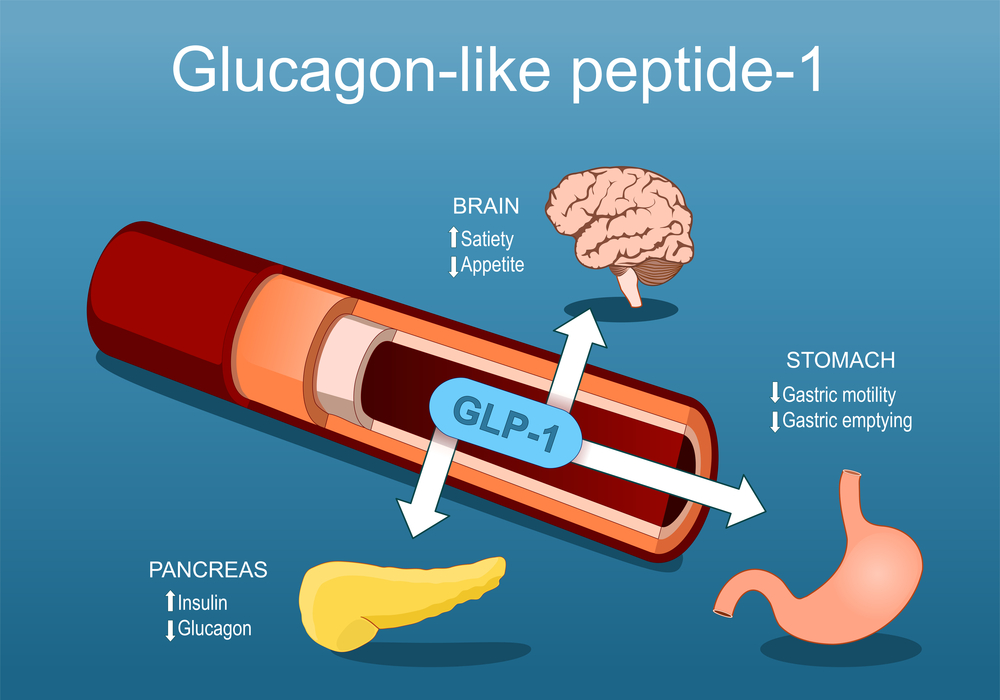
What is GLP-1?
GLP-1 is the most well-known and extensively studied member of the glucagon-like peptide family. It’s a 30-amino acid peptide hormone that plays a crucial role in glucose metabolism, appetite regulation, and weight management.
How GLP-1 Works
When you eat, L-cells in your small intestine release GLP-1 into your bloodstream. This peptide then acts on multiple organs and systems:
Pancreas: Stimulates insulin secretion in a glucose-dependent manner, meaning it only triggers insulin release when blood sugar is elevated.
Pancreas (beta cells): Suppresses glucagon secretion, preventing the liver from releasing excess glucose.
Brain: Acts on appetite centers to increase satiety and reduce hunger.
Stomach: Slows gastric emptying, prolonging the feeling of fullness.
Heart and Blood Vessels: Provides cardiovascular protective effects.
Primary Functions of GLP-1
Blood Sugar Regulation
- Enhances insulin secretion when glucose levels are high
- Reduces glucagon release to prevent excess glucose production
- Improves overall glycemic control
- Helps maintain stable blood sugar levels throughout the day
Appetite and Weight Management
- Increases feelings of fullness and satiety
- Reduces hunger signals to the brain
- Decreases food intake
- Slows stomach emptying to prolong satisfaction after meals
One of the effects of GLP-1 medications is reduced appetite, and in some people this can become significant enough to make it difficult to eat adequately or maintain weight. Anyone experiencing excessive appetite suppression, unintended weight loss, or difficulty meeting nutritional needs should discuss those changes with the clinician prescribing the medication. Products such as https://gmlapeti.com are marketed for appetite stimulation and contain cyproheptadine, an antihistamine medication, along with B-complex vitamins. Because cyproheptadine can cause side effects and may interact with other medications, it should not be used to counteract GLP-1 treatment without medical guidance.
Cardiovascular Health
- Reduces blood pressure
- Improves heart function
- May reduce risk of cardiovascular events
- Supports healthy blood vessel function
Neuroprotective Effects
- May protect brain cells from damage
- Potentially reduces inflammation in the nervous system
- Being studied for neurodegenerative conditions
Why People Use GLP-1
Type 2 Diabetes Management: GLP-1 receptor agonists (medications that mimic GLP-1) are highly effective for controlling blood sugar in diabetic patients.
Weight Loss: The appetite-suppressing effects make GLP-1 medications extremely popular for obesity treatment and weight management. Rapid weight loss can also dramatically change the size, shape, and firmness of the breasts as fat is lost and the skin loses support. As the Connecticut Breast Reduction Center notes, it is best to reach a stable weight before surgery. Further loss after a reduction can undo the results, so timing the procedure matters.
Metabolic Health: Improves overall metabolic markers including insulin sensitivity and lipid profiles.
Cardiovascular Protection: Provides heart health benefits beyond glucose control.
Natural vs. Synthetic GLP-1
Natural GLP-1 has a very short half-life (about 2 minutes) because it’s rapidly broken down by an enzyme called DPP-4.
Synthetic GLP-1 analogs like semaglutide, liraglutide, and tirzepatide are engineered to resist breakdown, providing longer-lasting effects with once-weekly or once-daily dosing.
GLP-2 (Glucagon-Like Peptide-2): The Gut Health Specialist
What is GLP-2?
GLP-2 is a 33-amino acid peptide hormone that, like GLP-1, is secreted from intestinal L-cells in response to nutrient intake. However, while GLP-1 focuses primarily on glucose metabolism and appetite, GLP-2 has a completely different set of functions centered on intestinal health.
How GLP-2 Works
GLP-2 binds to GLP-2 receptors (GLP-2R) found primarily in the gastrointestinal tract, specifically on:
- Intestinal epithelial cells
- Enteric neurons
- Subepithelial myofibroblasts
This targeted action makes GLP-2 the body’s primary regulator of intestinal health and function.
Primary Functions of GLP-2
Intestinal Growth and Repair
- Promotes growth of the intestinal lining (mucosa)
- Increases the height of intestinal villi (finger-like projections that absorb nutrients)
- Stimulates crypt cell proliferation
- Enhances overall intestinal surface area
Nutrient Absorption
- Improves the absorption of nutrients from food
- Increases blood flow to the intestines
- Enhances nutrient uptake capacity
- Supports optimal digestive function
Gut Barrier Function
- Strengthens the intestinal barrier
- Reduces intestinal permeability (“leaky gut”)
- Protects against harmful substances entering the bloodstream
- Maintains gut integrity
Anti-Inflammatory Effects
- Reduces inflammation in the intestinal tract
- Promotes healing of damaged tissue
- Supports immune function in the gut
- May help with inflammatory bowel conditions
Slows Gastric Emptying
- Like GLP-1, GLP-2 also slows stomach emptying
- Allows more time for nutrient absorption
- Contributes to feelings of satiety
Why People Use GLP-2
Short Bowel Syndrome: GLP-2 analogs (like teduglutide) are FDA-approved for treating short bowel syndrome, a condition where part of the intestine has been removed.
Inflammatory Bowel Disease: Being studied for Crohn’s disease and ulcerative colitis due to its healing and anti-inflammatory properties.
Intestinal Injury Recovery: Helps repair damage from surgery, radiation, or disease.
Malabsorption Issues: Supports better nutrient absorption in various conditions.
Gut Health Optimization: Some use it to support overall digestive health and intestinal integrity.
Key Difference from GLP-1
While GLP-1 is all about metabolism and appetite, GLP-2 is the intestinal health specialist. It doesn’t significantly affect blood sugar or appetite but instead focuses exclusively on maintaining and repairing your gut.
GLP-3: The Mysterious Member
What is GLP-3?
GLP-3 is the least understood and least studied member of the glucagon-like peptide family. Unlike GLP-1 and GLP-2, which have well-established functions and clinical applications, GLP-3 remains somewhat enigmatic in the scientific community.
Current Understanding of GLP-3
GLP-3 is also derived from proglucagon processing in the intestines, but its specific biological role is still being investigated. Here’s what we know so far:
Limited Research: Compared to thousands of studies on GLP-1 and hundreds on GLP-2, GLP-3 has been minimally researched.
Potential Functions: Early research suggests it may play a role in:
- Glucose metabolism (though less clear than GLP-1)
- Intestinal function (potentially complementing GLP-2)
- Nutrient sensing and absorption
- Metabolic regulation
Receptor Unknown: Unlike GLP-1 and GLP-2, which have well-characterized receptors, the specific receptor for GLP-3 hasn’t been definitively identified, making it difficult to study its exact mechanisms.
Why GLP-3 Hasn’t Gained Traction
Lack of Clinical Data: Without clear receptors and mechanisms, it’s challenging to develop therapeutic applications.
Uncertain Benefits: The specific advantages of GLP-3 supplementation or agonism remain unclear.
Research Priority: Scientists have focused more intensively on GLP-1 and GLP-2 due to their obvious therapeutic potential.
Physiological Relevance: It’s still debated whether GLP-3 has significant independent biological activity or if it’s primarily a byproduct of proglucagon processing.
Future Potential
As research techniques advance, we may discover important functions for GLP-3. Some scientists hypothesize it could:
- Work synergistically with GLP-1 and GLP-2
- Have unique metabolic or gut health effects
- Play a role in signaling pathways we don’t yet understand
For now, GLP-3 remains largely in the realm of basic research rather than practical therapeutic application.
Side-by-Side Comparison: GLP-1 vs. GLP-2 vs. GLP-3
Let’s break down the key differences in a clear, comparative format:
Primary Location of Action
GLP-1: Pancreas, brain, stomach, cardiovascular system
GLP-2: Intestinal tract, gut epithelium
GLP-3: Unknown/under investigation
Main Functions
GLP-1:
- Regulates blood sugar
- Suppresses appetite
- Promotes weight loss
- Slows gastric emptying
- Protects cardiovascular system
GLP-2:
- Promotes intestinal growth
- Enhances nutrient absorption
- Repairs gut lining
- Reduces inflammation
- Strengthens gut barrier
GLP-3:
- Functions not well established
- Potentially metabolic or intestinal
- Requires more research
Clinical Applications
GLP-1:
- Type 2 diabetes treatment
- Obesity and weight management
- Cardiovascular disease prevention
- Potential neuroprotection
GLP-2:
- Short bowel syndrome
- Inflammatory bowel disease (experimental)
- Intestinal injury recovery
- Malabsorption disorders
GLP-3:
- No established clinical applications
- Currently research-only
Half-Life
GLP-1: Very short (2 minutes for natural form; hours to days for synthetic analogs)
GLP-2: Short (approximately 7 minutes for natural form; extended for analogs)
GLP-3: Not well characterized
Side Effects
GLP-1:
- Nausea (common initially)
- Vomiting
- Diarrhea or constipation
- Reduced appetite
- Potential pancreatitis (rare)
GLP-2:
- Generally well-tolerated
- Injection site reactions
- Abdominal pain or discomfort
- Nausea (less common than GLP-1)
- Fluid retention
GLP-3:
- Unknown (no clinical use)
Availability
GLP-1: Widely available through prescription medications (semaglutide, liraglutide, etc.) and research peptides
GLP-2: Available as teduglutide (Gattex/Revestive) by prescription; limited research peptide availability
GLP-3: Not commercially available; research use only
Can They Be Combined?
An interesting question many ask is whether GLP-1 and GLP-2 can or should be used together.
Potential Synergies
Complementary Actions: Since GLP-1 focuses on metabolism while GLP-2 targets gut health, they don’t compete for the same receptors or mechanisms.
Enhanced Absorption: GLP-2’s improvement of nutrient absorption could theoretically enhance overall metabolic health alongside GLP-1’s effects.
Comprehensive Gut-Metabolic Support: Together, they address both metabolic regulation and intestinal integrity.
Considerations
Limited Research: There’s minimal research on combination therapy with GLP-1 and GLP-2.
Different Clinical Indications: They’re typically prescribed for different conditions, so combination use is uncommon.
Medical Supervision Required: Any combination peptide therapy should only be done under qualified medical supervision.
Cost and Complexity: Using multiple peptides increases cost and complexity of treatment.
Which GLP is Right for You?
Choosing between GLP-1 and GLP-2 (GLP-3 is not a current option) depends entirely on your health goals and conditions:
Choose GLP-1 If You’re Focused On:
- Blood sugar control and diabetes management
- Weight loss and appetite suppression
- Metabolic health optimization
- Cardiovascular risk reduction
- Overall metabolic syndrome improvement
Choose GLP-2 If You’re Dealing With:
- Short bowel syndrome
- Inflammatory bowel disease
- Malabsorption issues
- Intestinal damage or injury
- Chronic gut inflammation
- Need for improved nutrient absorption
Consider Medical Consultation
Neither GLP-1 nor GLP-2 should be started without proper medical evaluation. These are powerful hormones with significant physiological effects that require:
- Proper diagnosis of your condition
- Medical history review
- Potential contraindication screening
- Appropriate dosing protocols
- Ongoing monitoring
The Future of GLP Peptides
The field of glucagon-like peptide research continues to evolve rapidly:
Emerging Developments
Dual and Triple Agonists: New medications combine GLP-1 with other hormones like GIP (glucose-dependent insulinotropic polypeptide) for enhanced effects. Tirzepatide is an example of a GLP-1/GIP dual agonist.
Newer compounds such as retatrutide, which targets GLP-1, GIP and glucagon receptors, are also being studied in this area.
Oral Formulations: Traditionally injectable, new oral GLP-1 formulations are in development.
Expanded Applications: GLP-1 is being studied for addiction, neurodegenerative diseases, and more.
GLP-2 Research: Ongoing studies explore new applications for inflammatory and malabsorptive conditions.
GLP-3 Investigation: As research techniques improve, we may finally unlock GLP-3’s mysteries.
Personalized Peptide Therapy
The future likely holds more personalized approaches where combinations of peptides are tailored to individual metabolic and health profiles, optimizing outcomes while minimizing side effects.
Dosage and Administration
GLP-1 Dosing
For Diabetes:
- Semaglutide: 0.25-2.4 mg weekly
- Liraglutide: 0.6-1.8 mg daily
For Weight Loss:
- Semaglutide: Up to 2.4 mg weekly
- Liraglutide: Up to 3.0 mg daily
Research Peptides: Dosing varies; medical guidance essential
GLP-2 Dosing
Teduglutide (FDA-approved):
- 0.05 mg/kg body weight once daily via subcutaneous injection
Research Peptides: Limited data; requires medical supervision
Administration Method
Both GLP-1 and GLP-2 analogs are typically administered via subcutaneous injection (under the skin), similar to insulin. Common injection sites include:
- Abdomen
- Thigh
- Upper arm
Safety Considerations and Side Effects
GLP-1 Safety Profile
Common Side Effects:
- Gastrointestinal issues (nausea, vomiting, diarrhea)
- Reduced appetite
- Headache
- Fatigue
Serious but Rare:
- Pancreatitis
- Gallbladder problems
- Kidney issues
- Thyroid tumors (in animal studies; unclear human risk)
Contraindications:
- Personal or family history of medullary thyroid cancer
- Multiple endocrine neoplasia syndrome type 2
- Severe gastrointestinal disease
GLP-2 Safety Profile
Common Side Effects:
- Injection site reactions
- Headache
- Abdominal pain or distension
- Nausea
Serious but Rare:
- Intestinal obstruction
- Gallbladder and bile duct issues
- Fluid overload
Contraindications:
- Active gastrointestinal malignancy
- Known hypersensitivity to the medication
General Safety Recommendations
- Always use pharmaceutical-grade peptides from reputable sources
- Start with lower doses and increase gradually
- Monitor for side effects closely
- Stay well-hydrated
- Maintain regular medical check-ups
- Report any concerning symptoms immediately
Find the GLP right for you
While GLP-1, GLP-2, and GLP-3 all originate from the same proglucagon precursor, they serve vastly different functions in your body:
GLP-1 is your metabolic master regulator, controlling blood sugar, appetite, and weight while protecting your heart and potentially your brain.
GLP-2 is your intestinal guardian, promoting gut health, healing, and nutrient absorption without directly affecting metabolism or appetite.
GLP-3 remains largely a mystery, with potential functions still under investigation and no current therapeutic applications.
Understanding these differences is crucial for making informed decisions about peptide therapy. GLP-1 has revolutionized diabetes and obesity treatment, while GLP-2 offers hope for those with serious intestinal disorders. As research progresses, we may discover even more applications for these remarkable peptides, and perhaps finally understand what role GLP-3 plays in human physiology.
The key takeaway: these aren’t interchangeable peptides. Each has unique, specific functions that make it valuable for particular health conditions and goals. Your choice between them should be based on your individual health needs, under the guidance of a qualified healthcare provider.
Other Articles You May Find of Interest...
- What a Weight Loss Clinic in Melbourne Can Do Before and After Your Surgery
- Cold Plunge or Sauna? What the Recovery Research Actually Shows
- How Personalized Weight Loss Programs Help Achieve Sustainable, Long-Term Results
- High-Fructose Foods to Limit and Lower-Sugar Alternatives
- Best High-Fiber Foods Chart for Better Digestive Health
- How Many Carbs Are in Turkey Bacon?
- 9 Healthiest Mushrooms to Eat





