More Neurology Articles
Is Your Entire Body Scanned During a Brain MRI?
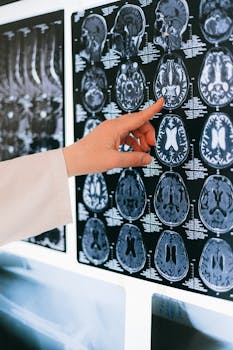
When considering a brain MRI, you might wonder, “does your whole body go in for a brain MRI?” This is a common question as many people are unsure about what to expect during the procedure. An MRI, or Magnetic Resonance Imaging, is a scan that uses powerful magnets and radio waves to create detailed images of the brain and its surrounding structures. This non-invasive diagnostic tool helps medical professionals identify abnormalities within the brain and assess any potential concerns.
Does Your Whole Body Go In For a Brain MRI?
When it comes to positioning your body during a brain MRI, the entire body is not scanned. During a typical brain MRI, only your head will be positioned inside the machine, and the rest of your body remains outside. This is important as it allows for targeted imaging of the brain without the need to place your entire body within the magnetic field. The MRI machine looks like a large, hollow cylinder that you will slide into for the scan, but only up to the level required for capturing images of your head.
Preparing for a Brain MRI
Prior to undergoing a brain MRI, your healthcare provider will give specific instructions on how to prepare. This may include removing metal objects like jewelry, eyewear, and watches, as they can interfere with the magnetic field. Depending on the reason for your MRI, you may be asked to avoid eating or drinking for a few hours beforehand, although this is not always necessary.
If you have concerns about claustrophobia, or anxiety about enclosed spaces, discuss them with your doctor. They may suggest options to help you remain calm during the scan, such as listening to music or using a blindfold.
What Happens During the MRI?
As the MRI machine focuses on obtaining detailed images of your brain, you will be asked to lie still on a motorized table that slides into the opening of the machine. The process itself is painless but can be noisy, with loud tapping or thumping sounds. Ear protection or headphones with music are often provided to make the experience more comfortable. An MRI technician will communicate with you throughout the procedure via an intercom to ensure you are comfortable.
Timing and Aftercare
A brain MRI typically takes between 30 to 60 minutes. The length of the scan depends on the complexity of the images needed and the specific areas being examined. After the scan, you can usually return to your regular activities immediately, with no recovery period needed.
If contrast dye is used during the MRI to enhance image quality, some people may experience mild side effects such as headaches or nausea. These symptoms generally resolve quickly. If you experience any unusual symptoms after the MRI, notify your healthcare provider.
The Importance of Brain MRIs
Brain MRIs play a crucial role in diagnosing a variety of neurological conditions, from identifying tumors and infections to monitoring diseases like multiple sclerosis. These scans provide detailed images that can reveal both structural and functional abnormalities within the brain.
Additionally, brain MRIs are pivotal in guiding treatment planning. They allow physicians to monitor the progress of diseases and adjust treatments accordingly. As technology advances, the uses of brain MRI expand, offering new insights into the workings of the human brain.
Complementary Health Approaches
In addition to MRIs, some individuals explore complementary approaches to support brain health. While vitamins and supplements cannot diagnose or treat conditions, they may help support brain function. For more information on beneficial supplements, check out this article on vitamins for brain fog and memory.
Further Reading on Health
To understand more about general health practices and diagnostics, you may find the following resource helpful: Health Overview on Wikipedia. This provides a broad look at various health topics and strategies.
Does Your Whole Body Go In For a Brain MRI? Final Thoughts
In conclusion, when questioning whether does your whole body go in for a brain MRI, it’s clear that only the head and a small portion of the upper body are contained within the machine for this specific scan type. The brain MRI is a critical diagnostic tool that offers valuable insights into brain health, helping to guide medical treatment and decision-making.
- Only the head is placed inside the MRI machine during a brain scan.
- Preparation may include removing metal objects and addressing claustrophobia concerns.
- The exam is non-invasive, typically lasting 30 to 60 minutes.
- Brain MRIs are pivotal for diagnosing and monitoring neurological conditions.
- Consult healthcare providers for personalized health guidance.
FAQ
What should I wear for a brain MRI?
Comfortable clothing without any metal, like elastic-waist pants and a plain t-shirt, is usually recommended. Hospital gowns are often provided if needed.
Will I feel any pain during a brain MRI?
No, MRIs are painless. You may feel a sense of warmth in the scanned area, but this is normal and temporary.
How long will it take to get brain MRI results?
Results are typically reviewed by a radiologist and then sent to your doctor. This process can take a few days, depending on the facility.
Can anyone have a brain MRI?
Most people can have an MRI, but it may not be suitable for those with implanted medical devices like pacemakers. Always discuss any concerns with your healthcare provider.
Are there alternatives to a brain MRI?
Depending on the clinical question, alternatives such as CT scans or EEGs might be considered. Your doctor will recommend the best option based on your health needs.
Other Articles You May Find of Interest...
- How to Read a Nerve Conduction Study Report
- Can a Tissue Paper Test Detect a CSF Leak?
- What Does Cerebrospinal Fluid Taste Like During a CSF Leak?
- Cervical Laminectomy: A Complete Guide to This Spinal Decompression Surgery
- Why Concussion Symptoms Can Look Different From Person to Person
- The Crushing Fatigue of ALS
- Complex Partial Seizures: Managing Focal Awareness Loss