






More Weight Control, Nutrition & Exercise Articles
When Tooth Loss Becomes an Oral Health Crisis and What Modern Solutions Actually Offer
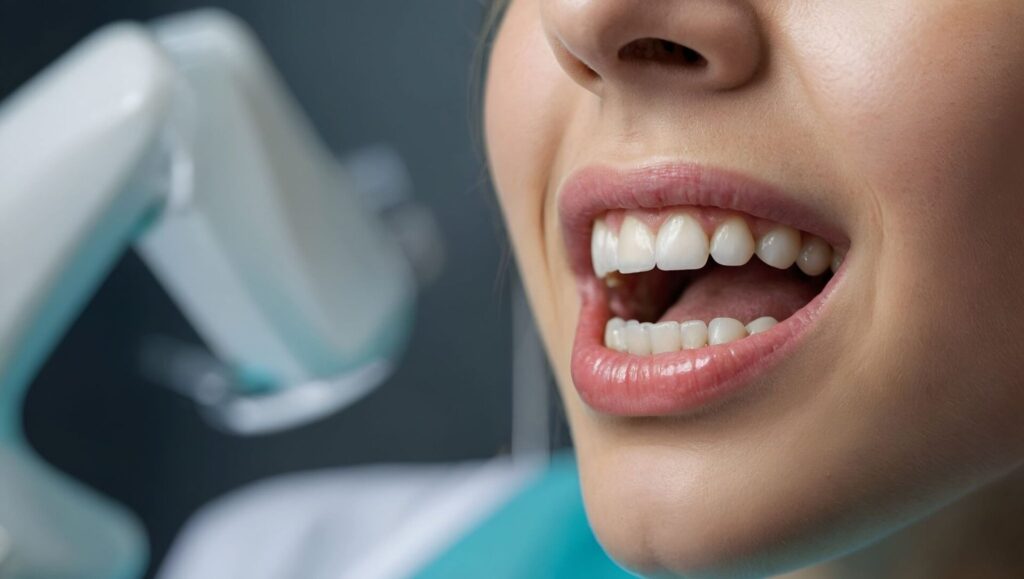
You can handle a missing tooth. People live with gaps all the time, right? But what happens inside your mouth over the next few months and years might surprise you.
Beyond being just a cosmetic issue, a missing tooth can also be the beginning of a cascade of problems that may fundamentally alter your jaw structure, damage surrounding teeth, and significantly impact your quality of life. Understanding this progression is crucial because the solution you choose today will affect your oral health for decades to come.
What Happens After Tooth Loss
When a tooth is lost, what’s left behind is more than just an empty space. Below that space is the alveolar bone. This is the bone that normally supports and anchors your teeth. Once that tooth is gone, the bone no longer receives the stimulus it needs to maintain itself.
Bone resorption, which is the body’s process of breaking down and absorbing bone, typically begins immediately after tooth loss. Within the first year, you can lose up to 25% of the width of the bone in that area.
The implications that this may have for the shape of your face are significant. Your jawline flattens, your lips lose support, and you may experience a collapsed appearance around the mouth that makes you look older than you are.
Beyond appearance, this bone loss creates a domino effect. The teeth adjacent to the gap begin to drift and shift position. Your bite relationship changes. You develop new pressure points when chewing.
Remaining teeth can become loose or develop cavities in areas that are now exposed due to shifting. What began as a single missing tooth cascades into several problems, with each being more expensive and complicated to fix than the last.
In a healthy mouth, each tooth plays a role in supporting the overall structure. When one fails, the system begins to compensate and struggle. Teeth that were previously stable may start to move. The shape of your face changes as the supporting structures shrink. This is why waiting to address tooth loss can make future treatment more complicated and costly.
Why Traditional Solutions Fall Short
Older approaches to replacing missing teeth addressed only the surface issue. A denture replaces the visible tooth, but it doesn’t stop bone resorption. In fact, dentures can accelerate it.
Many patients discover these problems only after investing in these solutions. They experience ongoing maintenance, discomfort, difficulty eating certain foods, and the need for repeated adjustments.
Worse, they’re not addressing the fundamental issue, which is the loss of bone and the deterioration it subsequently causes. What fits well today becomes loose within a few years, requiring expensive adjustments and relining. The investment compounds rather than resolving the problem.
Why Modern Dental Implants Are Game Changers
This is where modern oral and maxillofacial surgery has made a breakthrough. Dental implants address the problem at its root, quite literally.
An implant is a small titanium post that’s surgically placed directly into the jawbone where the tooth root once was. Once integrated with the bone, it provides the same kind of stimulus that a natural tooth root would, essentially halting bone resorption and preserving your jaw structure for the long term.
Research shows that dental implants have a success rate of over 95%, with some studies showing rates as high as 98%. They’re designed to last decades, and can often outlast multiple bridges or dentures you’d otherwise need during your lifetime. They function like natural teeth, meaning you can eat the foods you love without restriction. You maintain them just like real teeth through regular brushing, flossing, and dental checkups.
In addition to the durability and function, implants provide psychological benefits that patients often don’t anticipate. Once the implant is fully integrated and the restoration is complete, many patients report that they stop thinking about their replacement tooth entirely. It becomes part of them, eliminating the anxiety and self-consciousness that can accompany bridges or dentures.
Advanced Solutions for Bone Loss Complications
For those who are already suffering from bone loss, placing an implant becomes more complicated. You can’t place an implant into bone that isn’t there. This is where advanced bone grafting procedures become essential, which are beyond the limits of expertise for many general dentists.
Board-certified oral and maxillofacial surgeons, such as those at Staten Island Oral & Maxillofacial Surgery, specialize in bone grafting techniques that rebuild the jaw structure necessary for implant placement.
These procedures are surgical in nature and require someone with specialized training. Proper bone grafting can actually improve outcomes, reduce complications, and provide more stable, lasting results. The investment in doing it right with a surgeon who specializes in these techniques pays dividends long-term.
For Extensive Tooth Loss: Teeth-in-a-Day
Solutions are also available for patients that are living with multiple missing teeth or an entire arch. For decades, this required either extensive, multi-year treatment or learning to live with dentures. Today, there’s a transformative option that might seem almost too good to be true. It’s called the Teeth-in-a-Day procedure, also known as All-On-X implant restoration.
In this procedure, a complete set of teeth (either upper, lower, or both) is permanently replaced using just four to six implants. Patients receive a temporary set of teeth on the very same day of surgery, allowing them to leave with a functional smile.
After several months of healing and osseointegration, which is the process where bone fuses with the implant, a final restoration is placed that’s custom-designed to match their bite and facial aesthetics.
Patients who undergo Teeth-in-a-Day procedures often report that the transformation extends beyond their smile. Many describe improved confidence, better nutrition since they can eat foods they’ve been avoiding, improved speech, and an overall improved quality of life. These are outcomes that traditional dentures rarely achieve.
Why Choosing the Right Professional is Essential
Not every dentist can perform these advanced procedures. Board certification in oral and maxillofacial surgery requires four years of additional training beyond dental school, plus rigorous examination and continuing education.
These specialists are trained to handle complex surgical cases, including those with bone loss, medical complications, and anatomical challenges that general dentists simply aren’t equipped to address.
When choosing a provider for dental implants, especially complex cases involving bone grafting or full-arch reconstruction, ask about credentials. Look for membership in organizations like the American Board of Oral and Maxillofacial Surgeons or the American Association of Oral and Maxillofacial Surgeons. These designations ensure that the professional has met rigorous standards of training and expertise.
Ask potential providers about their experience with the specific procedure you need. Don’t be afraid to ask questions like:
- How many implant cases have they handled?
- What’s their complication rate?
- Can they show before-and-after examples of patients with similar situations?
An experienced, confident surgeon will welcome these questions.
Making Your Decision
This isn’t just a decision about appearance. You’re making a decision about the structural integrity of your jaw, the longevity of your remaining teeth, and your ability to eat, speak, and smile with confidence for the next 20, 30, or 40 years. That deserves more than a quick fix.
Modern dental implants, supported by advanced bone grafting when necessary, offer a solution that actually addresses the root cause of tooth loss. They preserve your bone structure, protect your remaining teeth, and function like natural teeth.
If you’re considering your options, consult with board-certified dental implant surgeons who specialize in implant dentistry. They can evaluate your specific situation, explain what’s happened to your bone structure, and discuss which solution will best serve your needs. Your smile, and your jaw, deserve that level of expertise.
Other Articles You May Find of Interest...
- What a Weight Loss Clinic in Melbourne Can Do Before and After Your Surgery
- Cold Plunge or Sauna? What the Recovery Research Actually Shows
- How Personalized Weight Loss Programs Help Achieve Sustainable, Long-Term Results
- High-Fructose Foods to Limit and Lower-Sugar Alternatives
- Best High-Fiber Foods Chart for Better Digestive Health
- How Many Carbs Are in Turkey Bacon?
- 9 Healthiest Mushrooms to Eat




