
More Reviews Articles
Kerassentials Review: Ingredients, Pricing, and Product Information
Disclosure: This article may contain sponsored content or affiliate links provided by third parties. Publication does not constitute an endorsement by Your Health Magazine.
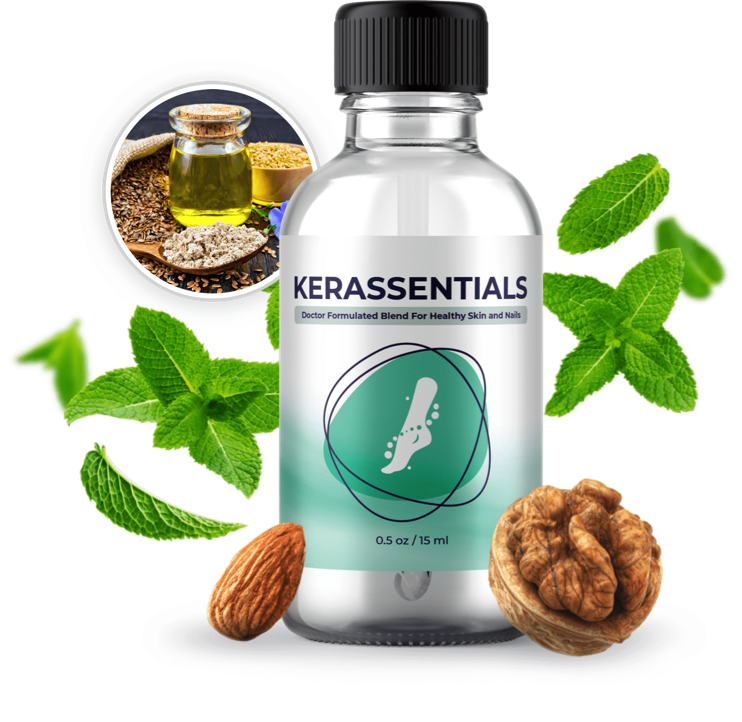
Kerassentials is a topical oil product marketed in the context of nail and skin health. According to information published on its manufacturer’s website, the formula is composed of plant-derived oils and vitamin-based compounds intended for external application to nails and surrounding skin tissue.
This article presents publicly available information about the product’s listed ingredients and the broader scientific context surrounding each component. It draws on peer-reviewed literature and publicly accessible dermatological research to provide an educational reference for readers seeking factual context. The content is intended solely for informational purposes and does not constitute a medical opinion, endorsement, purchasing guidance, or treatment recommendation.
Learn what the science says before you decide.
Understanding Nail Fungal Infections: Background Context
To contextualize the ingredients used in Kerassentials, it is useful to understand the condition that such topical products are typically associated with in the market. Onychomycosis is the medical term for fungal infection of the nails, a condition that has been extensively documented in dermatological literature as both common and treatment-resistant.
Nail fungal infections are caused most commonly by a group of organisms known as dermatophytes — fungi capable of colonizing keratin-rich tissues including nails, hair, and skin. The species Trichophyton rubrum is among the most frequently implicated in clinical cases. However, yeasts such as Candida albicans and various non-dermatophyte molds may also be responsible, depending on the individual and the specific anatomical site affected.
Dermatological literature estimates that onychomycosis affects approximately 10% of the general population globally, with prevalence increasing substantially among older adults. Studies have noted higher rates among individuals with diabetes, peripheral vascular disease, or compromised immune systems, as well as among those who frequently use communal bathing or sporting facilities.
The condition is characterized by gradual changes to the nail structure. Clinically described signs include:
- Changes in nail thickness, including thickening or thinning
- Brittleness, crumbling, or ragged nail edges
- Discoloration ranging from white or yellow to brown or black, depending on the organism and stage of infection
- Separation of the nail from the nail bed (onycholysis) in some cases
- Accumulation of debris beneath the nail
- Associated odor in some presentations
- Skin irritation, scaling, or discomfort in the periungual area
A range of treatment approaches is available in clinical practice. These include topical antifungal preparations applied directly to the nail, medicated nail lacquers containing agents such as ciclopirox or amorolfine, and systemic oral antifungals such as terbinafine and itraconazole. The selection of an appropriate treatment approach is determined by factors including the causative organism, the extent and location of the infection, the number of nails involved, and the patient’s overall health profile. This determination is appropriately made by a qualified healthcare professional following clinical evaluation.
The commercial market for nail health products includes a broad spectrum of options, from pharmaceutical preparations to cosmetic and supplement-category topical oils. Kerassentials is positioned within the latter category, combining ingredients that have individual scientific literature associated with them in antifungal and dermatological contexts.
Listed Ingredients and Scientific Context
The following sections summarize available scientific literature on each ingredient listed in the Kerassentials formula. The research cited pertains to the individual compounds and does not constitute evidence for the efficacy of the combined product.
Tea Tree Oil (Melaleuca alternifolia)
Tea tree oil is an essential oil derived from steam distillation of the leaves of the Melaleuca alternifolia plant, native to coastal regions of New South Wales, Australia. It has been used in various traditional and contemporary topical applications and has attracted considerable scientific interest due to its broad-spectrum antimicrobial profile.
The primary bioactive component of tea tree oil is terpinen-4-ol, a monoterpene alcohol that has demonstrated activity against a range of bacteria, fungi, and certain viruses in laboratory settings. Other components including gamma-terpinene, alpha-terpinene, and 1,8-cineole contribute to the oil’s overall chemical composition.
In the context of fungal infections, published research has examined tea tree oil’s activity against dermatophyte species including Trichophyton rubrum and Trichophyton mentagrophytes — the two species most commonly associated with nail fungal infections. A study published in the International Journal of Pharmacognosy and Phytochemical Research (2017) examined tea tree oil in relation to onychomycosis and reported observations on nail appearance and fungal activity. The majority of studies reflect in vitro findings, and clinical evidence in human populations remains more limited. Most scientific reviews note that tea tree oil demonstrates antifungal activity in laboratory conditions, while acknowledging that concentration, formulation, and duration of exposure significantly influence outcomes.
Lavender Oil (Lavandula angustifolia)
Lavender essential oil is obtained from the flowers of the Lavandula angustifolia plant, a member of the mint family native to the Mediterranean region. It is one of the most widely studied essential oils globally, with research spanning antimicrobial, anti-inflammatory, and wound-healing applications.
From a mycological standpoint, lavender oil has been studied for its effects on fungal species relevant to nail and skin infections. A study published in Scientifica (2015) examined the antifungal activity of lavender essential oil against Candida albicans and noted inhibitory effects under experimental conditions. The mechanisms of action proposed in the literature include disruption of fungal cell membrane integrity, which is consistent with the activity profile of many terpene-rich essential oils.
Lavender oil is also referenced in cosmetic science literature in relation to keratin — the structural protein that constitutes the primary composition of nails. Some researchers have examined whether lavender-derived compounds may play a role in maintaining keratin integrity, though this area of study remains at an early stage relative to its antimicrobial research base.
Undecylenic Acid
Undecylenic acid is a naturally occurring unsaturated fatty acid derived from the hydrolysis and distillation of castor oil. Unlike the essential oils in this formula, undecylenic acid has an established regulatory and clinical history as an antifungal agent. It has been an active ingredient in over-the-counter antifungal preparations in the United States for several decades and appears on the FDA’s list of Category I (generally recognized as safe and effective) ingredients for the treatment of tinea pedis (athlete’s foot) and related fungal skin infections.
Its antifungal mechanism is thought to involve disruption of the fungal cell membrane and interference with cellular replication. Peer-reviewed literature, including publications in journals such as Foot & Ankle Specialist, has discussed undecylenic acid within the context of topical fungal infection management. Its inclusion in a formula such as Kerassentials distinguishes it from purely cosmetic formulations, as it carries a degree of documented regulatory recognition as an antifungal compound.
Organic Flaxseed Oil
Flaxseed oil is extracted from the seeds of Linum usitatissimum, commonly known as the flax plant. It is among the richest plant-based sources of alpha-linolenic acid (ALA), an omega-3 fatty acid that the body can partially convert to longer-chain omega-3s. In the context of dermatology, flaxseed oil has been studied primarily for its anti-inflammatory properties and its potential to support skin hydration and barrier function.
A review published in the Journal of Food Science and Technology (2014) examined the composition and nutritional properties of flaxseed and highlighted its content of phytochemicals and omega-3 fatty acids. In topical applications, omega-3-rich oils have been associated with reduced transepidermal water loss and maintenance of skin lipid balance — properties that may be relevant in formulas intended for application to skin surrounding nail beds affected by infection or irritation. Flaxseed oil does not carry the same antifungal profile as tea tree or lavender oil; its principal contribution in a topical formula is related to emollient and skin-conditioning properties.
Almond Oil
Sweet almond oil, expressed from the seeds of Prunus dulcis, is a widely used carrier oil in cosmetic and dermatological formulations. Its composition is characterized by high concentrations of oleic acid (a monounsaturated fatty acid), linoleic acid (a polyunsaturated omega-6 fatty acid), and naturally occurring tocopherols (vitamin E compounds).
In dermatological research, almond oil has been studied for its potential to support skin barrier function, improve hydration, and reduce transepidermal water loss. A study published in the Journal of Cosmetic Dermatology examined topical sweet almond oil application in relation to skin texture and moisture retention. While its direct antifungal activity is not a primary feature in the scientific literature, its emollient properties are well-supported. In topical oil formulas, almond oil typically functions as a skin conditioner and carrier medium for more active ingredients.
Lemongrass Oil (Cymbopogon citratus)
Lemongrass oil is obtained by steam distillation of the leaves and stems of Cymbopogon citratus, a tropical grass widely cultivated across Asia, Africa, and Latin America. The oil’s principal bioactive compounds include citral (a mixture of the isomers geranial and neral) and geraniol, both of which have been investigated in antimicrobial and antifungal contexts.
Mycological research has examined lemongrass oil’s potential activity against dermatophyte species and certain Candida strains. Laboratory studies have reported minimum inhibitory concentrations against organisms such as Trichophyton rubrum. A study published in the Journal of Applied Microbiology examined the antifungal properties of citral and noted activity against fungal cell growth under experimental conditions. As with other essential oils, the available evidence is predominantly in vitro, and extrapolation to outcomes in topical human applications requires consideration of additional variables such as skin penetration, concentration, and formulation stability.
Aloe Vera (Aloe barbadensis)
Aloe vera has one of the longest documented histories of use in traditional and contemporary dermatological applications. The clear gel extracted from the inner leaf of the Aloe barbadensis plant contains a complex mixture of polysaccharides (particularly acemannan), glycoproteins, anthraquinones, and various vitamins and minerals.
Scientific investigations into aloe vera’s biological activity have documented antimicrobial, anti-inflammatory, wound-healing, and moisturizing properties across multiple study contexts. A study published in the Oman Medical Journal (2017) investigated the antifungal properties of aloe vera extract and reported activity against fungal species tested under experimental conditions. Additional peer-reviewed research has examined aloe vera’s effects on Candida species and certain dermatophytes.
Beyond its potential antifungal activity, aloe vera is well-established in cosmetic and dermatological science as a soothing and hydrating agent. Its inclusion in topical formulas is frequently associated with its capacity to support skin recovery and reduce irritation — properties that may be relevant in formulas applied to skin tissue affected by infection or environmental stress.
Tocopheryl Acetate (Vitamin E)
Tocopheryl acetate is a chemically stable esterified form of vitamin E (alpha-tocopherol) that is widely incorporated into skincare and cosmetic formulations. It is preferred in topical preparations over free tocopherol due to its greater oxidative stability and extended shelf life. Upon skin absorption, tocopheryl acetate is converted to active alpha-tocopherol, which then exerts its biological effects.
As an antioxidant, tocopheryl acetate functions by neutralizing free radicals — reactive oxygen species that can damage cell membranes and contribute to oxidative stress in skin tissue. Research published in Archives of Dermatology has examined topical vitamin E application in relation to nail health and skin appearance. In addition to its antioxidant activity, vitamin E is associated with maintenance of skin moisture levels and support of the skin barrier. In a topical nail and skin formula, tocopheryl acetate serves primarily as a skin-conditioning and protective agent rather than a direct antifungal compound.
Curious about what’s inside? Explore the full ingredient breakdown.
Manufacturing and Product Classification
According to the manufacturer’s website, Kerassentials is produced in a facility described as both FDA-registered and GMP (Good Manufacturing Practice) certified. It is important to clarify what these terms mean in the context of supplement and cosmetic products.
An FDA-registered facility is one that has been listed with the FDA as required by law for certain categories of manufacturers. Registration does not equate to FDA inspection of the facility, endorsement of the company, or approval of the products manufactured there. GMP certification refers to adherence to standards governing the consistency, quality control, and documentation of manufacturing processes. GMP standards help ensure that products are produced consistently according to defined specifications, but they do not validate the clinical efficacy of any specific product.
Kerassentials is not classified as a pharmaceutical drug and has not undergone the clinical trial and regulatory review process required for FDA drug approval. Consumers reviewing the product should understand this distinction when evaluating manufacturer claims.
Regulatory and Evidentiary Considerations
As a topical product marketed in the supplement and wellness category, Kerassentials is not subject to pre-market approval by the U.S. Food and Drug Administration. Under current regulatory frameworks, cosmetic and supplement-category topical products may be marketed without clinical trial evidence of efficacy, provided they do not make explicit drug claims — that is, claims to diagnose, cure, treat, or prevent a disease.
The scientific basis for the formula’s ingredients exists at the level of individual compounds, drawing on studies that have examined each ingredient in isolation under laboratory or limited clinical conditions. No published clinical trial data specific to the Kerassentials formula as a combined product was identified in the available scientific literature at the time of writing. As such, the product’s overall efficacy cannot be assessed through a product-level evidence base.
Nail fungal infections are well-documented in clinical literature as slow-resolving conditions. Treatment timelines in clinical studies — even with prescription-strength oral antifungal agents — often extend from several months to over a year, depending on the site and severity of infection. Individuals experiencing signs consistent with onychomycosis are advised to seek professional evaluation from a licensed healthcare provider or dermatologist before initiating any treatment approach, whether pharmaceutical or topical-wellness in nature.
Ingredient Summary Table
| Ingredient | Primary Research Context |
| Tea Tree Oil | Antifungal activity; terpinen-4-ol studies; dermatophyte research |
| Lavender Oil | Antimicrobial properties; Candida research; keratin-related literature |
| Undecylenic Acid | OTC antifungal history; FDA Category I recognition for tinea conditions |
| Organic Flaxseed Oil | Skin hydration; anti-inflammatory omega-3 research; emollient properties |
| Almond Oil | Skin barrier support; emollient and moisturization research |
| Lemongrass Oil | In vitro antifungal activity; citral and geraniol compound studies |
| Aloe Vera | Antimicrobial effects; wound-healing research; skin-soothing literature |
| Tocopheryl Acetate (Vitamin E) | Antioxidant function; nail and skin conditioning research |
Closing Notes
Kerassentials is a topical oil formula whose listed ingredients have individually been the subject of scientific investigation in areas relevant to nail and skin health. Several components — particularly tea tree oil, undecylenic acid, and lavender oil — have more substantial scientific literature associated with their antifungal-related properties, while others such as flaxseed oil, almond oil, and tocopheryl acetate are more commonly examined in the context of skin conditioning, barrier support, and antioxidant function.
The available evidence pertains to individual ingredients studied in isolation, typically under laboratory conditions. The combined formula has not, to this article’s knowledge, been evaluated in published clinical trials. As such, the product’s activity as a formulation cannot be directly inferred from the ingredient-level research alone.
The product is distributed through the manufacturer’s website and through the ClickBank e-commerce platform. As with any topical health-related product, individuals with existing medical conditions, those taking prescription medications, pregnant or nursing individuals, or those experiencing persistent, worsening, or painful nail and skin symptoms should seek guidance from a licensed dermatologist or healthcare provider before use.
The information presented in this article is drawn from publicly available peer-reviewed literature and publicly accessible product information, and is provided for educational and informational reference only.
Discover what researchers say about these natural compounds.
Informational Notice
This article is for general educational purposes and does not constitute medical advice, diagnosis, or treatment guidance of any kind. The content does not represent an endorsement, recommendation, or independent assessment of the product described. Product statements referenced herein originate from the manufacturer and have not been independently verified. Consumers should consult a licensed healthcare provider regarding any nail or skin health concerns.
Other Articles You May Find of Interest...
- P Protect Reviews – Men’s Wellness Patches For Prostate Support and Urinary Comfort
- OnyGuard Anti-Fungal Pen Reviews 2026 – Legit Nail Care Product Or Overhyped?
- DirectMeds ED Reviews 2026 – Is DirectMax A Real Alternative To Standard ED Pills?
- Soda Steel Reviews 2026 – Legit Daily Energy Support or Overhyped Supplement?
- Is Rich Diet App Legit? Subscription, Support, and How to Cancel
- GLP-Star App Review 2026: A GLP-1 Meal Plan for Real Life
- Decamen App Review 2026: Military Calisthenics Workouts for Busy Men