






More Reviews Articles
DentaBiome Reviews 2026: Does This Oral Postbiotic Formula Really Work?
Disclosure: This article may contain sponsored content or affiliate links provided by third parties. Publication does not constitute an endorsement by Your Health Magazine.
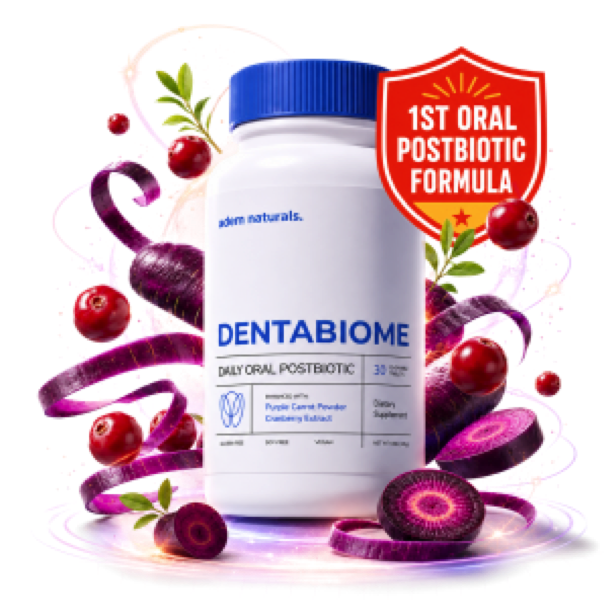
If you’ve been searching for a solution to bleeding gums, persistent bad breath, recurring cavities, or stubborn tooth sensitivity, you’ve likely come across DentaBiome — a chewable oral postbiotic supplement that claims to tackle the root cause of poor oral health from within. But does this dental supplement live up to its bold promises, or is it just clever marketing wrapped in a Berry Frost tablet?
In this comprehensive DentaBiome review, we break down everything: the science behind the product, its key ingredients, potential benefits, pricing, customer feedback, and whether it’s worth your money. We also address the controversial FabM enzyme theory and what peer-reviewed research actually says about it.
| 🦷 Stop Fighting Losing Battles With Your Teeth — Click Here to Visit the DentaBiome Website |
DentaBiome at a Glance
| Feature | Details |
| Product Name | DentaBiome |
| Category | Oral Postbiotic Supplement |
| Form | Chewable Tablet (Berry Frost flavor) |
| Key Claim | Breaks the FabM acid-lock; restores oral microbiome balance |
| Primary Ingredients | L. Plantarum (dual-strain), L. Salivarius, L. Rhamnosus, Xylitol, BioFresh™ Complex, Cranberry Extract, Purple Carrot Powder |
| Dosage | 1 tablet per day |
| Manufacturing | FDA-registered, GMP-certified facility, USA |
| Certifications | Vegan, Non-GMO, Gluten-Free, Soy-Free, Dairy-Free |
| Price | From $49/bottle (6-bottle pack) |
| Money-Back Guarantee | 60-day, no-questions-asked |
| Retailer | ClickBank |
| Website | Click Here |
What Is DentaBiome?
DentaBiome positions itself as the world’s first oral postbiotic formula specifically engineered to support gum health, freshen breath, prevent cavities, and strengthen enamel — not by delivering live bacteria (probiotics), but by delivering the beneficial compounds those bacteria produce, called postbiotics.
The product is made in the United States at a GMP-certified, FDA-registered manufacturing facility and is certified vegan, non-GMO, and free from common allergens. It is sold as a chewable tablet, which the brand argues is superior to capsules because chewing activates saliva — the body’s natural delivery system — and allows the active compounds to coat every tooth surface, gum line, and interdental space directly.
The concept separates DentaBiome from the sea of ordinary oral probiotics, probiotic toothpastes, and conventional dental health supplements flooding the market in 2026. Whether the distinction holds up scientifically is worth examining carefully.
The FabM Enzyme Theory: Science or Sales Pitch?
The cornerstone of DentaBiome’s marketing is a scientific concept centered on the FabM enzyme — described on the product’s website as a “rogue enzyme” that builds a protective “acid-lock” around harmful oral bacteria like Streptococcus mutans, shielding them from brushing, flossing, mouthwash, and even professional cleanings.
Here’s what the underlying science actually shows: In 2002, Dr. Charles O. Rock at St. Jude Children’s Research Hospital published research describing the existence of the FabM enzyme and its role in the construction of fatty acids in the membranes of strep bacteria. Later, Dr. Robert Quivey and colleagues at the University of Rochester found that FabM enzymes were behind dramatic changes in the fatty acid composition of the S. mutans membrane in response to increasing acidity.
More significantly for DentaBiome’s central claim: when researchers shut down FabM, it made S. mutans almost precisely 10,000 times more vulnerable to acid damage. The University of Rochester even received a $3.6 million grant from the National Institute of Dental and Craniofacial Research to pursue this research further.
FabM is a real and well-studied enzyme. However, an important distinction must be made: the studies involved genetic deletion of the FabM gene in laboratory settings using engineered bacterial strains. They did not test any dietary supplement, postbiotic compound, or oral health product. The mechanism studied — complete gene knockout — is fundamentally different from consuming a chewable tablet containing postbiotic ingredients.
In plain terms: the science behind FabM is legitimate, but the “FabM acid-lock” narrative is the brand’s consumer-facing interpretation of mechanism-level research — the enzyme is real, the framing as the single driving cause of widespread oral health failure is the brand’s construct, not an established clinical consensus.
That said, this does not mean the product’s ingredients lack merit. It simply means the FabM story is the marketing wrapper around what is, at its core, a postbiotic and botanical oral health supplement with ingredients that do carry independent research support.
DentaBiome Ingredients: What’s Inside Each Tablet?
The formula contains a blend of postbiotic strains and evidence-backed natural compounds. Here’s what’s included and what the research says:
1. Dual-Strain L. Plantarum Complex
Two synergistic strains of Lactobacillus plantarum form the backbone of the formula. This strain is well-studied for its ability to inhibit S. mutans biofilm formation, neutralize plaque acids, and support enamel remineralization. Research on Lactiplantibacillus plantarum postbiotics has shown measurable reductions in plaque biofilm formation in both preclinical and clinical settings.
2. L. Salivarius (Construction Blocker)
Lactobacillus salivarius is included as what DentaBiome calls a “saboteur” strain. It is documented to produce antimicrobial compounds including bacteriocins and to reduce volatile sulfur compounds (VSCs) — the primary culprit behind chronic bad breath and halitosis. Studies published in leading microbiology journals confirm its role in restoring a healthier oral microbial balance.
3. L. Rhamnosus (Gum Guardian)
Lactobacillus rhamnosus has one of the longest evidence records in the field of oral probiotics and postbiotics. Research, including a landmark study evaluating the effect of long-term Lactobacillus rhamnosus GG consumption on dental caries risk in children, was one of the first studies to establish Lactobacillus strains as beneficial for oral health outcomes. This strain is associated with inhibiting the bacteria responsible for gum disease (periodontitis) and supporting the integrity of connective tissue around the teeth.
4. BioFresh™ Clean Complex
DentaBiome’s proprietary enzyme blend targets the biofilm matrix directly. The brand claims it delivers a 47% reduction in harmful bacteria within 24 hours and a 60% reduction after 8 days. These are brand-reported figures and have not been independently verified in published peer-reviewed trials. However, enzyme-based biofilm disruption is an active and scientifically legitimate area of dental research.
5. Xylitol (The Trojan Horse)
Xylitol is one of the most well-supported ingredients in the formula. Xylitol, a five-carbon polyol sweetener, offers numerous oral health benefits including enhancement of remineralization, decrease of the pH of dental plaque, and reduction of the level of S. mutans. It was among the first ingredients to receive an approved health claim from the European Food Safety Authority (EFSA) for reducing the risk of caries when consumed daily. Because harmful bacteria cannot metabolize xylitol for energy, they effectively exhaust themselves trying — which is why DentaBiome calls it the “Trojan Horse” ingredient.
6. Cranberry Extract
Cranberry polyphenols have been studied extensively for their ability to disrupt bacterial biofilm adhesion in the oral cavity. Research published in Frontiers in Microbiology (PMID: 29306222) found that cranberry polyphenols show significant anti-biofilm and anti-caries activity, specifically by interfering with the acid-producing machinery of S. mutans — making it a relevant, evidence-supported inclusion in an oral health formula.
7. Purple Carrot Powder
Purple carrot powder provides anthocyanins, a class of antioxidant flavonoids. These compounds have demonstrated anti-inflammatory properties relevant to gum tissue and have been shown to disrupt quorum sensing — the communication system bacteria use to coordinate biofilm construction. While the evidence here is less robust than for xylitol or the Lactobacillus strains, it is a thoughtful botanical addition.
Postbiotics vs. Probiotics: Why the Delivery Method Matters
One of DentaBiome’s most defensible claims is its argument for postbiotics over probiotics in an oral health context. Postbiotics derived from various Lactobacillus species have demonstrated inhibitory effects on Streptococcus mutans growth, biofilm formation, and virulence gene expression. Proposed mechanisms include direct antimicrobial activity, inhibition of bacterial adhesion, disruption of biofilm formation, modulation of immune responses, and pH buffering. Human trials showed reduced salivary S. mutans counts and increased salivary pH after postbiotic interventions.
The key advantage of postbiotics is stability. Unlike live probiotic bacteria — which can be destroyed by heat, light, oxygen, or the lysozyme enzyme present in saliva — postbiotic compounds are already formed metabolic products. They do not need to survive the hostile oral environment in order to exert their effects. DentaBiome is built around postbiotics on the argument that pre-formed compounds are more stable and better suited to the harsh, saliva-flushed environment of the mouth than fragile live bacteria, which face survival challenges.
The chewable delivery format further reinforces this advantage. Rather than being dissolved in the stomach (like a swallowed capsule), chewing the tablet floods the mouth with saliva and distributes the active compounds across all tooth surfaces, gum margins, and crevices — exactly where the formula needs to work.
Potential Benefits of DentaBiome
Based on the ingredients and available research, regular use of DentaBiome may reasonably support:
- Reduced gum inflammation and bleeding — through L. Rhamnosus and anti-inflammatory anthocyanins from purple carrot powder
- Fresher breath (halitosis control) — through L. Salivarius’s reduction of volatile sulfur compounds
- Lower cavity risk — through xylitol’s anti-S. mutans activity and L. Plantarum’s biofilm disruption
- Enamel remineralization support — through xylitol-enhanced pH buffering and biofilm reduction
- Improved oral microbiome balance — through the combined postbiotic and botanical formula
- Biofilm disruption — through the BioFresh™ enzyme complex and cranberry polyphenols
It is important to note that these benefits reflect the ingredient-level evidence, not a clinical trial of the finished DentaBiome product. Individual results may vary significantly.
DentaBiome Pricing and Packages
DentaBiome is sold exclusively through its official website and is distributed via ClickBank:
- 2 Bottles (60-Day Supply): $79 per bottle — $158 total
- 3 Bottles (90-Day Supply): $69 per bottle — $207 total (includes 2 free bonus eBooks + free US shipping)
- 6 Bottles (180-Day Supply): $49 per bottle — $294 total (includes 2 free bonus eBooks + free US shipping)
The brand recommends a minimum 3–6 month supply for optimal results, particularly for users over 45 or those with significant oral health concerns. All purchases are covered by a 60-day money-back guarantee — even on empty bottles — which meaningfully reduces the financial risk of trying the product.
Customer Reviews and Feedback
Customer testimonials on the DentaBiome website are overwhelmingly positive, with a reported average rating of 4.9 out of 5. Reviewers frequently mention improvements in gum bleeding, bad breath, and tooth sensitivity within the first few weeks of use.
However, there are important caveats: DentaBiome’s fine print explicitly states that “some names and personal identifying information on this site have been changed to protect the privacy of individuals” and that the spokesperson “Jim Hartwell” is a “fictionalized character and pen name.” This is standard legal language for supplement marketing, but consumers should factor it into their assessment of the testimonials.
Independent user reviews from third-party platforms reflect a more mixed picture — some users report noticeable improvements in breath freshness and gum health, while others note no discernible change after 30–60 days of use.
Who Should Consider DentaBiome?
DentaBiome may be worth considering for adults who:
- Experience recurring gum bleeding, swelling, or sensitivity
- Struggle with chronic bad breath despite good oral hygiene
- Have a history of frequent cavities or enamel erosion
- Are interested in oral microbiome support alongside brushing and flossing
- Prefer natural, non-antibiotic approaches to dental wellness
It is not a replacement for professional dental care, routine cleanings, or prescribed treatments for active infections. People with serious periodontal disease, dental abscesses, or complex dental conditions should consult a licensed dentist before relying on any supplement.
Pros and Cons Summary
| ✅ Pros | ❌ Cons |
| Postbiotic delivery is scientifically sound and increasingly well-supported | No completed clinical trial on the finished DentaBiome product |
| Key ingredients (xylitol, L. Rhamnosus, cranberry extract) have strong independent research backing | The “FabM acid-lock” framework is a brand interpretation, not established clinical consensus |
| Manufactured in an FDA-registered, GMP-certified facility | BioFresh™ performance figures are brand-reported, not independently verified |
| Vegan, non-GMO, gluten-free, and allergen-friendly | Priced at a premium compared to basic oral probiotics |
| Chewable format optimizes oral delivery | Sold only online; not available in pharmacies or retail stores |
| 60-day money-back guarantee reduces financial risk | Testimonials may be partially fictionalized per fine print disclosures |
Final Verdict: Is DentaBiome Worth Trying?
DentaBiome is a thoughtfully formulated oral health supplement built on a scientifically interesting postbiotic delivery concept, with individual ingredients that carry genuine research support. The FabM enzyme theory it centers its branding around is real science — albeit stretched considerably in its application to a consumer supplement.
Postbiotics offer a promising novel approach to dental caries prevention by targeting cariogenic bacteria and modulating the oral microbiome through multiple mechanisms, and compared to probiotics, postbiotics present additional advantages including enhanced stability. DentaBiome is well-positioned within this emerging category.
Individuals interested in DentaBiome should review the available ingredient information, maintain routine dental care, and discuss supplement use with their dentist or healthcare provider if they have ongoing oral health concerns or underlying medical conditions.
References
| 1. Rock CO (2002). Fatty acid biosynthesis in oral streptococci and the role of the FabM enzyme. St. Jude Children’s Research Hospital. |
| 2. Quivey RG et al. (2008). FabM enzyme and acid tolerance in Streptococcus mutans. University of Rochester Medical Center. ScienceDaily |
| 3. Dentistry Today (2008). Self-Destructing Oral Bacteria? Dentistry Today |
| 4. Al-Ahmad A et al. (2025). Postbiotics and dental caries: A systematic review. PMC, NIH. PMC11894266 |
| 5. Chen YH et al. (2022). Xylitol-containing chewing gum reduces cariogenic and periodontopathic bacteria in dental plaque. PMID: 35631309. PubMed |
| 6. Philip N et al. (2018). Cranberry polyphenols and oral health: anti-biofilm and anti-caries activity. Front Microbiol. PMID: 29306222. PubMed |
| 7. Stensson M et al. (2014). Oral administration of Lactobacillus reuteri during the first year of life reduces caries prevalence at 9 years of age. Caries Res. PMID: 24296746. PubMed |
| 8. Nature (2024). How probiotics, prebiotics, synbiotics, and postbiotics prevent dental caries: an oral microbiota perspective. npj Biofilms and Microbiomes. Nature |
| 9. ISAPP (2026). Biotics, oral microbiota and potential for dental applications. ISAPP |
Disclaimer: This review is for informational purposes only and does not constitute medical or dental advice. Always consult a licensed dentist or healthcare provider before starting any new supplement. Individual results may vary.
Other Articles You May Find of Interest...
- P Protect Reviews – Men’s Wellness Patches For Prostate Support and Urinary Comfort
- OnyGuard Anti-Fungal Pen Reviews 2026 – Legit Nail Care Product Or Overhyped?
- DirectMeds ED Reviews 2026 – Is DirectMax A Real Alternative To Standard ED Pills?
- Soda Steel Reviews 2026 – Legit Daily Energy Support or Overhyped Supplement?
- Is Rich Diet App Legit? Subscription, Support, and How to Cancel
- GLP-Star App Review 2026: A GLP-1 Meal Plan for Real Life
- Decamen App Review 2026: Military Calisthenics Workouts for Busy Men





