






More Complementary & Integrative Healthcare Articles
Kratom Leaf vs. Kratom Extract: Understanding the Difference
This article may contain sponsored or editorially provided links for informational purposes. This article is intended for informational purposes only and does not constitute medical advice. Botanical products may not be appropriate for everyone. Consumers should review applicable laws and speak with a healthcare professional regarding health questions.
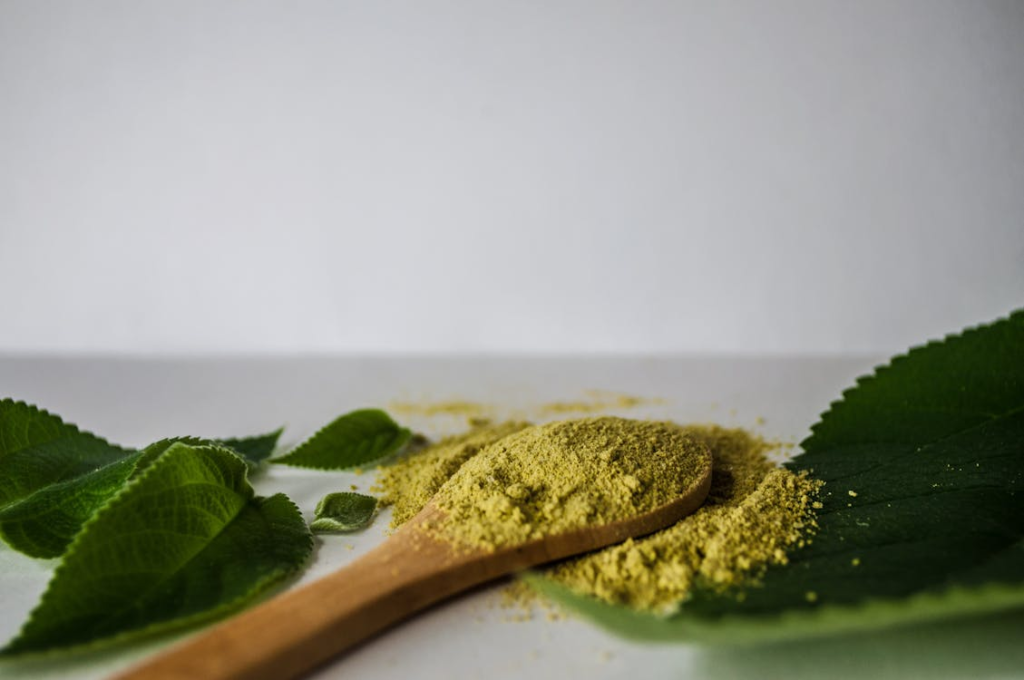
Kratom has moved from a niche botanical into mainstream wellness conversations over the past decade. With that growth has come a confusing range of product formats on the shelves of smoke shops, wellness stores, and online retailers.
The two terms that cause the most confusion are also the most important to understand: kratom leaf and kratom extract. They come from the same plant, but they are not the same product. The difference matters for anyone considering kratom for the first time, and it matters even more for people deciding what to buy.
What Kratom Actually Is
Kratom is the common name for Mitragyna speciosa, a tropical evergreen tree native to Southeast Asia. It grows naturally in countries like Indonesia, Thailand, Malaysia, and Papua New Guinea, where farmers have cultivated and harvested it for generations.
The active compounds in kratom are called alkaloids. The two most studied are mitragynine and 7-hydroxymitragynine, both of which occur naturally in the leaf. Researchers have identified more than forty alkaloids in the plant, though most studies focus on the primary two.
Every kratom product on the market, regardless of format, starts as a leaf from this same tree. What changes is how that leaf is processed before it reaches the consumer.
A Brief Cultural History
Kratom has a long history of traditional use in Southeast Asia. Farmers and laborers in Thailand, Malaysia, and Indonesia have chewed fresh leaves or brewed them into tea for centuries, often as part of daily routines tied to physical work.
The plant first entered Western scientific literature in the nineteenth century, when Dutch botanist Pieter Korthals documented it during his travels in the Dutch East Indies. The product only began appearing on the U.S. consumer market in significant volume during the early 2000s.
That short timeline in the United States is part of why product standards still vary so widely. Other botanicals have had decades of consumer market development. Kratom is still in a relatively early phase of standardization.
Kratom Leaf Products
Kratom leaf products are the most traditional form. They are made by harvesting mature leaves, drying them, and grinding them into a fine powder. The processing steps are minimal compared to what extracts require.
Powder
Powdered leaf is the baseline product. The dried leaf is milled to a consistent particle size and packaged for sale. A gram of powdered leaf typically contains between one and two percent mitragynine by weight.
This is the format that has been used for centuries in Southeast Asia, most often brewed into a tea or chewed directly from the leaf. In the modern consumer market, it remains the most widely sold kratom format.
Capsules
Capsules contain the same powdered leaf, simply pre-measured into a capsule shell. They offer convenience and consistent serving sizes without changing the underlying material.
Capsules are popular with users who find the natural taste of kratom powder unpleasant, since the powder is notably bitter. They also make travel and portion control easier.
Crushed Leaf
Crushed leaf is the least processed format available. The leaf is broken into small pieces rather than ground into a fine powder, which makes it well-suited for tea preparation.
This format appeals to users who prefer the traditional brewing approach used in Southeast Asia for generations.
All three of these formats share one key trait. The alkaloid concentration matches what naturally occurs in the leaf, with no additional processing to increase potency.
Kratom Extract Products
Concentrated kratom extracts are sold by many botanical retailers. Consumers researching these products may encounter specialty vendors such as Amazing Botanicals alongside other companies in the category.
The result is a product where a small amount delivers far more alkaloid content per gram than standard leaf powder. An extract might contain anywhere from twenty percent to eighty percent mitragynine by weight, compared to the one to two percent found in plain leaf.
The extraction process generally involves steeping raw leaf in a liquid solution, filtering out the plant material, and reducing the solution down to a concentrated form. Different methods produce different alkaloid ratios, which is why two extracts at the same mitragynine percentage can still feel slightly different from one another.
Extract Powder
Extract powder is concentrated kratom in loose form. It looks similar to regular powder but is used in much smaller quantities. The color is often darker than standard leaf powder, reflecting the concentration process.
Tablets
Compressed tablets made from the extract material. They typically come in tiered concentration levels, with the percentage of mitragynine clearly labeled on the package. Tablets appeal to users who prefer a familiar pill format.
Shots
Liquid extract products are sold in small bottles, usually around ten milliliters. They are ready to use, with no measuring required. Shots are designed for convenience and are often flavored to mask the natural taste of kratom.
Gummies
Edible gummies made using kratom extract. The format is designed to be more approachable than raw powder, with flavor masking the natural bitterness of the plant. Gummies have become increasingly popular as the kratom market has matured.
Why the Difference Matters
Understanding whether a product is made from whole leaf material or concentrated extract helps explain why products within the kratom category can vary in composition, labeling, and consumer expectations.
Leaf-based products are generally processed more minimally and retain alkaloid levels closer to those naturally present in the plant. Extract products undergo additional processing intended to concentrate selected compounds from the original leaf material.
Because of these differences, product labels, concentration disclosures, serving information, and third-party testing become especially important when comparing formats. Looking only at package size or product weight may not provide meaningful context across different types of kratom products.
Consumers researching botanical products often look for transparent labeling, accessible Certificates of Analysis (COAs), manufacturing information, and clear descriptions of how the product was processed.
Understanding these distinctions can help consumers evaluate product information more carefully and make more informed decisions when researching botanical categories.
What to Look for on a Kratom Label
A well-labeled kratom product tells you exactly what you are buying. Reading the label carefully is one of the simplest ways to avoid low-quality products.
For leaf products, the label should clearly identify the strain, the vein color, and the origin country. It should also include batch numbers and a manufacturing or harvest date.
For extracts, the label should specify the mitragynine percentage and the serving size in milligrams. A vague claim of “high potency” without a specific percentage is a warning sign worth taking seriously.
Both formats should reference third-party lab testing, with Certificates of Analysis available either on the package, via QR code, or on the vendor’s website.
Lab Testing and Why It Matters Either Way
Regardless of format, product testing is often discussed as an important part of transparency within botanical product categories. Third-party laboratory testing may evaluate factors such as alkaloid profiles, microbial screening, heavy metals, and other quality-control measures depending on the manufacturer and testing standards used.
Some organizations, including the American Kratom Association, have developed voluntary manufacturing and quality programs intended to encourage consistency in sourcing, processing, labeling, and consumer information.
When researching botanical products, consumers may choose to review available testing information, Certificates of Analysis (COAs), ingredient disclosures, and product labeling to better understand how a product was manufactured and presented.
No single certification or testing program guarantees quality or suitability, but transparent documentation can provide additional context when evaluating product information.
Which One Is Right for You?
For most people new to kratom, the answer is leaf-based products. Powder and capsules give a predictable baseline at a familiar potency level. Starting with leaf allows a new user to establish a sense of how kratom affects them personally before introducing a more concentrated format.
Experienced users who have established a consistent routine with leaf products and want to explore more concentrated options are the natural audience for extracts. Even then, starting with the smallest suggested serving and adjusting from there is the responsible approach.
The most important thing is understanding what you are buying. A label that reads “kratom” can mean very different things depending on whether the contents are raw leaf or a concentrated extract.
The Bottom Line
Kratom leaf and kratom extract come from the same plant but represent fundamentally different products. Leaf gives you the plant in roughly its natural form, while extract concentrates the active compounds into a much more potent format.
Knowing which one is in the package and what the label is actually telling you about potency is the foundation of being an informed kratom consumer. Everything else, from strain selection to serving size to vendor choice, builds on that basic understanding.
Other Articles You May Find of Interest...
- Your Gut Holds the Secret to Clear, Radiant Skin
- The Entourage Effect
- A Basic Overview of Medicinal Herbs: Which Benefits for Everyday Wellness Are the Best?
- What’s the Difference Between Medical and Recreational Cannabis?
- THC Gummy Laws by State: A Practical 2026 Guide
- 5 Things to Expect During Your First Professional Massage Session
- Shilajit for Women: Benefits, Safety, and What the Evidence Actually Shows



