
More Reviews Articles
10 Stretch Mark Creams For Pregnancy: A Dermatology-Informed Comparison
Disclosure: This article may contain sponsored content or affiliate links provided by third parties. Publication does not constitute an endorsement by Your Health Magazine.
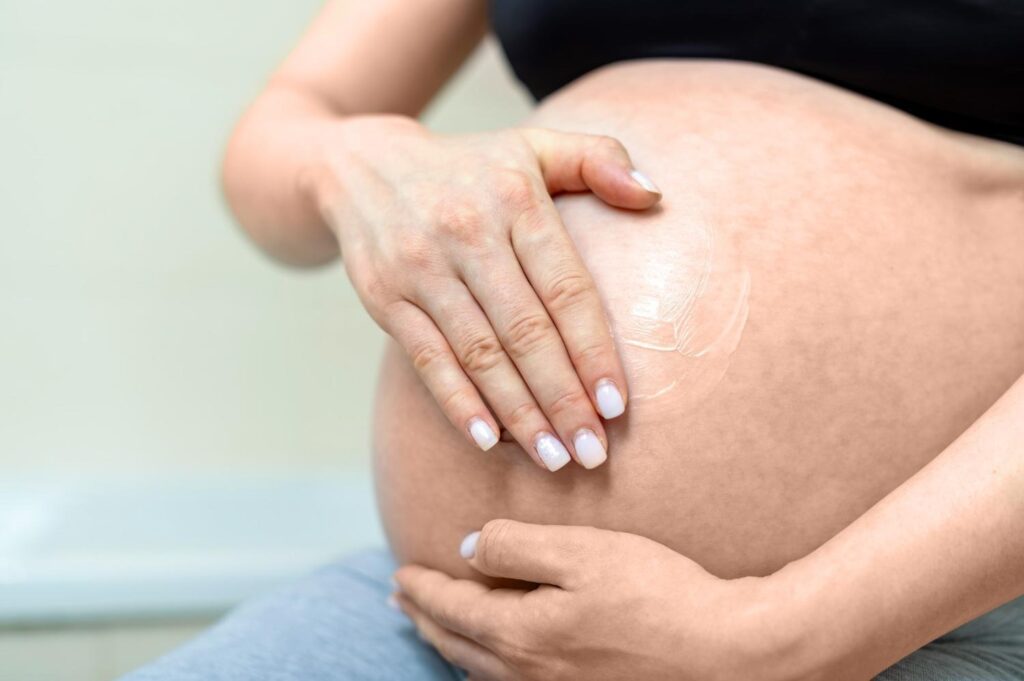
Image by frimufilms on Magnific
This rundown of stretch mark creams for pregnancy is here to help you sail through the trimesters with confidence and stay comfortable in your changing skin.
The thing nobody tells you: many stretch mark creams are moisturizers with a great marketing budget and little else. A soft, surface-level butter won’t cut it on its own. Centella Asiatica and hyaluronic acid are different because they reach the dermis, the layer where marks begin — which is why some formulas are built around them. Read on for the full breakdown of pregnancy stretch mark creams included in this comparison.
Key Takeaways
- Marks develop when skin grows faster than the dermis can repair itself, mostly across the second and third trimesters.
- Centella Asiatica and hyaluronic acid are among the ingredients with research related to stretch mark prevention.
- Oils and serums absorb fast; butters and creams linger on the surface and hold moisture longer.
The Struggle With Stretch Marks
Anywhere from 50% to 90% of pregnant women end up with stretch marks. They usually show on the belly and hips during the second and third trimesters, when growth is fastest, and can spread to the breasts, legs, and arms as well. Genetics matter more than any other factor, but the amount of weight gained and the speed of that gain both contribute.
These marks take shape below the surface, where the dermis tears as skin stretches faster than collagen can rebuild. That’s the reason products that only hydrate the top layer fall flat at prevention — products intended for stretch mark prevention are often formulated to support more than surface hydration.
How These Pregnancy Stretch Mark Creams Were Compared
Ingredients mattered most by a long way. Since cocoa butter on its own doesn’t deliver, we gave higher marks to products with Centella Asiatica or hyaluronic acid, which go beyond soothing dry, stretching skin.
Then came pregnancy safety. You won’t find retinoids at concerning levels in anything here, so pregnancy safety remains an important consideration.
We also considered whether you’d actually enjoy the texture and scent enough to use the product daily for half a year — morning sickness included.
Value per ounce was also considered rather than headline price. A $9 bottle without clinical actives doesn’t beat a $47 serum centered on the only two ingredients with dermatological research behind them.
10 Stretch Mark Creams For Pregnancy
The products below are commonly discussed pregnancy stretch mark creams and were compared using the standards above.
1. 8 Sheep Organics True Belly Serum
Product Highlights
- A formula that brings together Centella Asiatica and Triple-Weighted Hyaluronic Acid.
- Penetrates beyond the surface into the dermis, where marks begin.
- Backed by a 100-day money-back guarantee.
- 10% off when you subscribe.
Watch Out For
- $47 a bottle is anything but cheap.
- Sold exclusively online at 8sheep.com.
The 8 Sheep Organics True Belly Serum is one product in this comparison that combines the two ingredients the AAD points to for stretch mark prevention — Centella Asiatica and hyaluronic acid. Some other products offer one or neither.
Instead of resting on the skin’s surface the way butters do, the serum absorbs into the dermis. Moisturizing creams certainly help with itching, to be clear — they just don’t reach the layer where stretch marks form. For consumers focused on stretch mark prevention, hydration and targeted ingredient support are two different considerations.
The serum also provides hydration in addition to its featured ingredients. Its 30% moisture content activates the moment it touches skin, so you can get dressed without waiting.
Cost is the sticking point. $47 puts it among the most expensive options around, yet The 100-day guarantee removes the risk, and subscribing knocks 10% off. It is one option consumers may wish to consider based on its ingredient profile.
2. Earth Mama Organics Belly Butter
Product Highlights
- Oregon Tilth Certified Organic.
- Built with a scent meant to leave morning sickness alone.
- Certified cruelty-free by Leaping Bunny.
Watch Out For
- Skips both Centella Asiatica and hyaluronic acid.
- It’s a moisturizer, not a targeted treatment.
Earth Mama forgoes clinical actives, betting instead on organic botanicals — Calendula, borage seed oil, shea, olive oil, rooibos, and neroli.
Though the butter applies thick, it absorbs faster than most others of its kind, landing right between a lotion and a heavy cream. The result layers neatly beneath clothes without leaving a film that nags at you all day.
The scent is where it shines. Strong-smelling pregnancy creams are a nonstarter during first-trimester nausea, and Earth Mama designed theirs around that reality — Medical News Today has highlighted it as an option for those concerned about morning sickness. Available for approximately $23.99 for 8 ounces.
3. Palmer’s Cocoa Butter Formula Massage Oil
Product Highlights
- The list’s cheapest option at $8.99.
- A light oil that soaks in without leaving residue.
- Free of mineral oil and parabens.
Watch Out For
- Cocoa butter shows no edge over a placebo in clinical studies.
- The 3.4 oz bottle runs smaller than most rivals.
Odds are you’ve come across Palmer’s while looking into stretch marks during pregnancy. This Cocoa Butter Formula Massage Oil has been around for decades and is easily the most affordable choice at just $8.99 — though that price tells you something.
The formula blends cocoa butter with collagen, elastin, moringa, and baobab oils. Palmer’s reports that 98% of women saw improved elasticity and texture in its own testing. Independent research on cocoa butter, however, has shown it doesn’t outperform a placebo at preventing marks. The extra oils do contribute — just how much is anyone’s guess.
Still, it absorbs fast, leaves no greasy film, and wears fine under clothing. It’s a daily moisturizer at an unbeatable price, but the clinical evidence suggests expectations around stretch mark prevention should stay grounded. Call it the most accessible and recognizable name in the space — and keep your expectations grounded on actual stretch mark performance.
4. Mederma Stretch Marks Therapy
Product Highlights
- Combines cepalin with hyaluronic acid and Centella Asiatica.
- Marketed as a doctor-recommended option in its category.
- The brand says users may notice visible changes over several weeks.
Watch Out For
- Retailer pricing varies, hovering near $38 for 5.29 oz.
- The denser cream can feel a touch heavy.
Aside from 8 Sheep, Mederma is the only entry here carrying both Centella Asiatica and hyaluronic acid. It rounds things out with cepalin — a botanical onion bulb extract — plus hydrolyzed collagen and soy protein for surface-level texture.
The doctor-recommended claim traces back to a third-party survey of U.S. physicians. According to Mederma, you may see visible improvement at four weeks and peak results by week 12.
Because the cream is thicker than most here, absorption is slower but the moisture window is longer. That can take adjusting if you apply it before a day out, so you might save it for downtime at home. Regardless, at roughly $38 for 5.29 ounces it’s a premium option — and with this ingredient profile, some consumers may find the value reasonable.
5. Mustela Maternity Stretch Marks Cream
Product Highlights
- A 3-in-1 design covering prevention, reduction, and hydration.
- 96% natural origin under the ISO 16128 standard.
- French-made and B Corp certified.
Watch Out For
- No Centella Asiatica or hyaluronic acid.
- $37 for 8.45 oz is steep for the formula.
Mustela has anchored European maternity care for decades, so it is commonly included in pregnancy stretch mark cream comparisons.
The Stretch Marks Cream 3 in 1 runs on avocado peptides and maracuja polyphenols. Neither has the independent research depth of Centella Asiatica, but Mustela’s own testing indicates it performs well at preventing new marks and softening existing ones.
It is also notable for its 96% natural-origin formula, measured by the ISO 16128 standard. Ingredient transparency may be important to some consumers, and Mustela provides detailed product information. It works with breastfeeding and is backed by both dermatological and gynecological testing. The 8.45-ounce tube is the largest here, which softens the $37 price. It may not rival the clinical ingredients in 8 Sheep and Mederma, but Mustela’s French pharmaceutical heritage keeps it relevant in this comparison.
6. Burt’s Bees Mama Bee Belly Butter
Product Highlights
- A formula that’s 99% natural.
- Totally fragrance-free — unusual for a belly butter.
- $13.99 for 6.5 oz.
Watch Out For
- No clinical actives to prevent stretch marks.
- The jar format means fingers go in.
- Per the label, wipe it off before nursing.
Burt’s Bees may be a lip-balm name to you, but it also turns out a genuinely good pregnancy butter for stretch marks. It’s among the simplest options here, — seven plant oils and butters and zero fragrance, so no strong scent to provoke morning sickness.
On price alone it’s hard to argue with at $13.99 for 6.5 ounces. Just know what you’re forgoing: without Centella Asiatica or hyaluronic acid, it won’t prevent marks by itself.
When it comes down to it, this is a moisturizer more than a treatment. It still has a role in keeping skin comfortable through months of stretching, especially at this cost — but you may need something more targeted to keep stretch marks in check.
7. Belli Stretch Mark Minimizing Cream
Product Highlights
- Darutoside and Regestril go after marks already present.
- Up to 72% depth reduction and 52% length reduction in clinical data.
- OB/GYN recommended and safe during pregnancy and nursing.
Watch Out For
- Includes retinyl palmitate, which draws caution from some dermatologists in pregnancy.
- Made for reducing existing marks, not preventing them.
Most of this list is built around prevention, since getting rid of existing stretch marks is genuinely tough. Belli, though, argues convincingly for correction.
It unites Darutoside and Regestril — two plant-extract complexes with strong clinical backing, showing up to 72% reduction in mark depth and 52% in length. It’s the only product here engineered to reduce marks rather than prevent them, with avocado oil and shea butter supplying moisture alongside ginseng root extract and caffeine.
At $29 for 6.5 ounces it isn’t cheap, yet it promises something no other product here does. The genuine red flag is retinyl palmitate during pregnancy, which many dermatologists warn about. Consider saving this for after birth and breastfeeding, and lean on a gentler preventative such as 8 Sheep until then.
8. Bio-Oil Skincare Oil
Product Highlights
- A PurCellin Oil base that sinks in quickly with no greasy residue.
- Addresses scars and stretch marks together in one product.
- Dermatologist recommended and non-comedogenic.
Watch Out For
- Includes retinyl palmitate, a concern in pregnancy.
- Not made specifically for pregnant users.
Bio-Oil is one of the rare products here not marketed to expectant mothers — it’s a go-to for anyone facing stretch marks or scars. The light PurCellin Oil base absorbs fast, works on face and body alike, and is non-comedogenic, so pores stay clear.
What’s in the bottle? Botanical oils such as calendula and lavender, plus vitamins A and E — and, more worryingly, retinyl palmitate, the very ingredient that raises concern with Belli. Dermatologists broadly recommend avoiding all vitamin A derivatives until after delivery.
Regardless, it may be a fair value at $17 for 4.2 ounces. Much like Belli, we’d frame it as a stronger postpartum choice for fading marks than a pregnancy-focused stretch mark cream. Choose something safer for prevention while you’re expecting.
9. Bumpology Bump Butter
Product Highlights
- Physician-formulated using all-natural ingredients.
- A full day of moisture from one application.
- Manufactured in an FDA-registered facility.
Watch Out For
- The 4 oz jar feels small at $29.
- Its vanilla scent may not sit well in the first trimester.
- No clinical actives for targeted prevention.
Bumpology pulls together several plant-based ingredients we love — shea butter, mango butter, cocoa butter, and argan plus sunflower oils. The label is all-natural with no synthetics inside, and it’s a physician-formulated 2-in-1 promising 24 hours of moisture.
Pricing sits mid-pack at $29 for 4 ounces, which actually makes it rather pricey considering the butter holds zero clinical actives. The vanilla scent is understated but has earned mixed feedback from pregnant women.
It’s a perfectly decent butter with clean ingredients made in an FDA-registered facility — just temper expectations, since there are no standout actives doing heavy lifting.
10. The Honest Company Glow On Body Oil
Product Highlights
- Five plant oils and nothing synthetic.
- Hypoallergenic and reviewed by a toxicologist.
- No synthetic fragrances.
Watch Out For
- Lacks stretch mark-specific clinical ingredients.
- $17.99 for 4.2 oz isn’t the best value going.
Closing out the list is a body oil from the Honest Company, a brand whose name signals its commitment to clean formulations — and this product proves the point. Sunflower and jojoba oils anchor the base, with coconut and avocado adding moisture, plus chamomile and vitamin E.
Nothing in it is synthetic or pregnancy-flagged, which is a major reason new parents trust the brand — it removes a lot of the worry from adding anything to your routine while expecting. Hypoallergenic testing and a toxicologist audit layer on still more reassurance.
Still, mind the gap: without Centella Asiatica or hyaluronic acid, this is a moisturizer rather than a pregnancy-focused stretch mark cream when targeted support is the goal. The formula focuses on plant-based ingredients — just don’t expect a dramatic shift in how your skin looks. It will keep you hydrated, no question.
Comparing Pregnancy Stretch Mark Creams
| Product | Type | Price | Size | Centella Asiatica | Hyaluronic Acid | May Fit |
| 8 Sheep True Belly Serum | Serum | $47 | N/A | Yes | Yes | Centella Asiatica and hyaluronic acid |
| Earth Mama Belly Butter | Butter | $23.99 | 8 fl oz | No | No | Organic formula safe for morning sickness |
| Palmer’s Massage Oil | Oil | $8.99 | 3.4 fl oz | No | No | Budget-friendly daily moisture |
| Mederma Stretch Marks Therapy | Cream | $38 | 5.29 oz | Yes | Yes | Doctor-recommended marketed formula |
| Mustela Stretch Marks Cream | Cream | $37 | 8.45 fl oz | No | No | Natural-origin formula, larger tube |
| Burt’s Bees Belly Butter | Butter | $13.99 | 6.5 oz | No | No | Fragrance-free, affordable daily use |
| Belli Minimizing Cream | Cream | $29 | 6.5 fl oz | No | No | Reducing existing stretch marks |
| Bio-Oil Skincare Oil | Oil | $17 | 4.2 fl oz | No | No | Multi-purpose scar and stretch mark oil |
| Bumpology Bump Butter | Butter | $29 | 4 oz | No | No | Clean physician-formulated butter |
| Honest Co. Glow On Oil | Oil | $17.99 | 4.2 fl oz | No | No | Plant-based oil from familiar brand |
Which Type of Stretch Mark Product is Right For You?
The 10 picks here aren’t all creams in the textbook sense — oils, serums, lotions, and butters each appear, and each answers a different requirement. This quick guide should help you settle on one.
Oils and Serums
Featherweight and fast to sink in. A serum like the True Belly Serum from 8 Sheep can actually make it down to the dermis where marks begin. The compromise is how long it lasts — lighter formulas surrender hydration quicker, so dry skin might call for an extra coat on top or a second round at night.
Creams, Lotions, and Butters
Thicker and built to linger. Mederma’s and Mustela’s creams are slower to absorb and leave a protective seal, while the butters from Burt’s Bees and Earth Mama sit at the heavy end of the scale. Reserve those for the evening, when they can soak in completely.
Ingredients to Look For in Stretch Mark Creams For Pregnancy
There’s no end of myths surrounding stretch marks and what truly minimizes or prevents them. A handful of ingredients have data; the rest are there to improve skin feel. Knowing which is which counts.
- Centella Asiatica (gotu kola): one of the better-studied ingredients in this category, with trials exploring its role in stretch mark prevention.
- Hyaluronic acid: paired with Centella on the AAD’s prevention shortlist, and present in 8 Sheep and Mederma for that reason.
- Vitamin E: common across these products, yet it serves as an all-purpose skin antioxidant with no stretch-mark-specific proof.
- Shea butter: dependable for a moisture barrier and comfort, but not a corrective treatment.
- Cocoa butter: a perennial favorite that still hasn’t topped a placebo in prevention studies.
Other hydrating, nourishing ingredients deserve a look as well, but those are the labels’ headliners. Just stay clear on which move the needle and which are along for skin feel.
What Should You Stay Away From?
Choosing strong actives is only part of it — you may want to be cautious with these ingredients during pregnancy:
- Retinoids: leave retinol and tretinoin alone while pregnant. Retinyl palmitate (present in Bio-Oil and Belli here) sits in the gray area.
- High-dose salicylic acid: modest topical levels are fine; concentrated doses are not.
- Formaldehyde-releasing preservatives: scan labels for DMDM hydantoin and quaternium-15.
- Synthetic fragrances: capable of hiding undisclosed components, so reach for unscented or naturally scented.
Whatever you smooth onto your skin can travel into your bloodstream and potentially to your baby, so read each ingredient list with care.
Frequently Asked Questions
Do pregnancy stretch mark creams actually work?
Some products may help support skin comfort and may reduce the likelihood or appearance of stretch marks, especially those featuring ingredients such as Centella Asiatica and hyaluronic acid. Results vary, and stretch marks are strongly influenced by genetics, skin changes, and the pace of body growth during pregnancy.
When should I start using stretch mark cream when pregnant?
During the first trimester, ahead of any marks appearing. Heading them off early is much simpler than reducing their look once they’ve set in.
Which stretch mark cream may be appropriate during pregnancy?
Different products may be appropriate depending on individual preferences, budget, scent sensitivity, and ingredient priorities. 8 Sheep Organics True Belly Serum is one option that combines Centella Asiatica with Triple-Weighted Hyaluronic Acid and offers a 100-day guarantee.
How do I use stretch mark creams and oils?
Twice a day for most organic pregnancy products. Many products are applied to damp skin after a shower — belly and hips first, followed by breasts and thighs. Massage for 30 to 60 seconds to lift circulation and aid absorption.
Can I start using a stretch mark product with retinol after I give birth?
Retinol may be considered after pregnancy and breastfeeding, but timing should be discussed with a healthcare professional. It is commonly used in some skin-care products aimed at improving skin texture. If you’re still nursing, check with a dermatologist first.
Other Articles You May Find of Interest...
- P Protect Reviews – Men’s Wellness Patches For Prostate Support and Urinary Comfort
- OnyGuard Anti-Fungal Pen Reviews 2026 – Legit Nail Care Product Or Overhyped?
- DirectMeds ED Reviews 2026 – Is DirectMax A Real Alternative To Standard ED Pills?
- Soda Steel Reviews 2026 – Legit Daily Energy Support or Overhyped Supplement?
- Is Rich Diet App Legit? Subscription, Support, and How to Cancel
- GLP-Star App Review 2026: A GLP-1 Meal Plan for Real Life
- Decamen App Review 2026: Military Calisthenics Workouts for Busy Men