






More Public Health Articles
The Growing Importance of Public Health Professionals Today
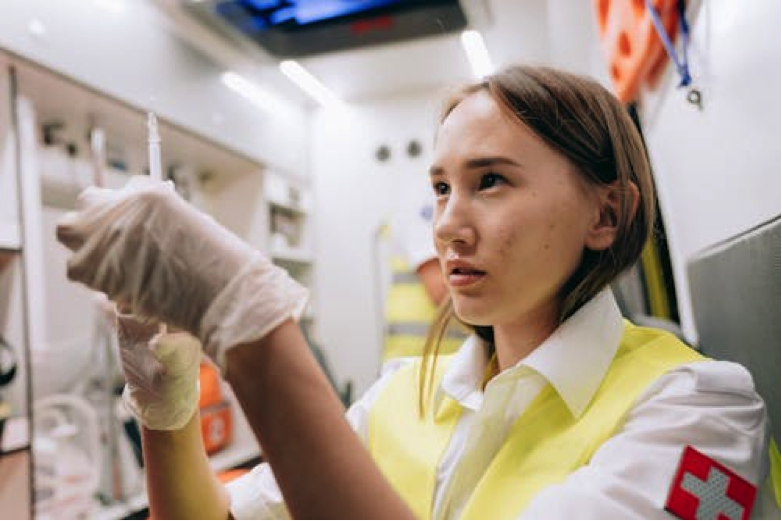
Public health used to sit in the background, a quiet system most people barely noticed unless something broke, and even then, the attention was short. That is not how it feels now. The role has stretched, widened, and gotten heavier in ways that are hard to summarize cleanly. Pandemics did that, yes, but also slower things—chronic disease, mental health strain, climate pressure building year after year, uneven access that never really left. The work is no longer abstract or tucked into agencies; it shows up in daily life, in schools, workplaces, grocery stores, and even in the way cities are built or not built. And the professionals inside this field are being asked to move faster, speak more clearly, make decisions with incomplete data, and sometimes defend those decisions publicly while the ground shifts under them. It’s not a neat job anymore. Maybe it never was.
The Work Itself, Expanded
Public health professionals are not just tracking disease, they’re shaping responses before problems spike, and sometimes after things already went wrong. Surveillance systems, community outreach, policy drafting, emergency response—they all blur together now. One day it’s data modeling, next it’s coordinating vaccine access in a neighborhood where trust is thin. The job leans technical but also human, often at the same time. There’s pressure to explain risk without causing panic, to simplify without losing truth. And sometimes that balance fails, or gets criticized, or ignored. Still, the expectation remains: show up, interpret, act.
The pipeline into this field has also shifted. More people are noticing it, choosing it deliberately, not just falling into it through adjacent careers. That matters because the demand isn’t slowing. The need for structured training keeps rising; an MPH degree has become a kind of baseline signal—proof of exposure to epidemiology, policy, biostatistics, and community health, though even that is just a starting layer, not a guarantee of readiness. Experience fills the gaps, usually under pressure.
Pressure From All Sides
There’s a kind of tension built into the job now. Public health sits between science and policy, and neither side is simple. Data can be incomplete or delayed; policy is often reactive, shaped by politics, budgets, and public mood. Professionals in the middle have to translate, adjust, and sometimes compromise. It’s not always clean. And while the work is meant to be collective, accountability often falls on individuals or small teams.
Then there’s trust. It used to be assumed more easily, but now it has to be built, sometimes rebuilt from scratch. Misinformation spreads fast, faster than corrections, and public health workers are expected to respond in real time, even when the facts are still forming. That creates friction. Some communities listen, others don’t, and the reasons vary—history, access, language, prior neglect. None of that is fixed quickly.
Beyond Disease
The scope has widened beyond infection control, though that still matters. Public health now deals openly with social determinants—housing, income, education, environment. These aren’t side issues anymore; they are central. A policy on air quality affects asthma rates; food access shapes long-term health outcomes. It’s interconnected, sometimes overwhelmingly so. And public health professionals are expected to understand those links, even if they can’t control all of them.
Climate change adds another layer. Heat waves, floods, shifting disease patterns—these are not future problems, they’re current ones. Planning for them requires coordination across sectors that don’t always align. It’s slow work, often underfunded, yet the stakes keep rising. There’s no pause button.
Skills That Don’t Fit Neatly
The skill set required now is uneven, almost contradictory. Analytical thinking, yes, but also communication that feels real, not scripted. Cultural awareness, but also decisiveness. The ability to work with numbers and with people who distrust those numbers. And flexibility—plans change, sometimes mid-implementation. That can be exhausting.
Some professionals adapt quickly; others struggle. Training programs try to keep up, but they lag behind real-world complexity. You learn the framework in school, then the job reshapes it. That gap is expected, maybe even necessary. Still, it can catch people off guard.
A Workforce Under Strain
Burnout is not rare. Long hours, high stakes, limited resources—it adds up. During crises, the workload spikes sharply, but even outside emergencies, the baseline remains high. Retention becomes an issue. Some leave for private sector roles, others shift fields entirely. That turnover affects continuity, and continuity matters in public health more than most realize.
Funding cycles don’t help. Support often increases during visible crises, then fades once attention moves on. But the underlying issues don’t disappear. Professionals are left managing long-term problems with short-term resources. It’s inefficient, frustrating, and sometimes demoralizing.
Why It Still Matters
Despite all that, the importance of public health professionals keeps growing. Not because the system is perfect—it isn’t—but because the absence of it is worse, and that’s been seen clearly. When coordination fails, when communication breaks down, the effects spread quickly. Health systems get overwhelmed, communities feel it, and inequities widen. The role of public health is to reduce that damage, to anticipate where possible, and respond when needed.
And there’s a quiet impact that doesn’t get headlines. Improved vaccination rates, safer water systems, better maternal health outcomes—these don’t always draw attention, but they matter. They add up over time, shaping population health in ways that are easy to overlook until they’re gone.
Looking Ahead, Uneven but Necessary
The future of this field won’t be smooth. It will likely stay uneven, reactive at times, and proactive when possible. Technology will help—data systems, modeling tools—but it won’t solve the human side. Trust, communication, equity—those remain complex, slow-moving.
Public health professionals will keep working in that space, adjusting, sometimes improvising. The expectations won’t shrink. If anything, they’ll expand further. And while the path into the field might become more defined, the work itself will resist neat definitions. It already does.
So the importance grows, not in a clean upward line, but in layers—pressure building, responsibilities stacking, visibility increasing, whether the system is ready or not. It’s messy. But it’s necessary.
Other Articles You May Find of Interest...
- What to Know About Healthcare Access When Moving to Chicago
- Why Medical Monitoring Matters After a Major Disaster
- What Public Health Work Actually Involves: Beyond the Headlines
- Why Student Wellness Is Becoming a Public Health Priority
- The Growing Importance of Public Health Professionals Today
- How Public Health is Paving the Way for a Stronger Future





