






More Podiatry Foot Care Articles
What Does a Black Spot in the Bottom of Your Foot Mean?
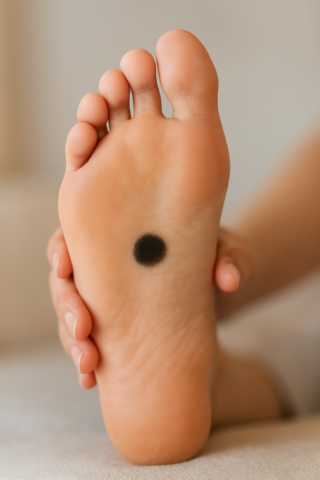
Anyone who notices a black spot in the bottom of their foot may wonder if it’s something ordinary, like a bruise, or a sign of a more significant issue. While such spots can be harmless, they can also indicate conditions that require medical attention. Understanding the potential causes and when to consult a healthcare provider can help ensure your feet stay healthy and pain-free.
Common Causes of a Black Spot
A black spot on the sole of your foot can stem from a variety of causes. One common source is a plantar wart, which is caused by the human papillomavirus (HPV). These warts often appear as small, grainy spots and may have tiny black pinpoints in their centers.
Another possibility is a foreign body, such as a small piece of glass or splinter, that is embedded in the skin. Such objects can often be removed safely at home, but it’s essential to ensure no part of the object remains in the skin.
In some cases, a black spot might represent a blood blister. These occur when blood vessels under the skin break due to friction or pressure. While generally harmless, they can sometimes be painful and should be monitored for infection.
Black Spot in Bottom of Foot: Is It Serious?
While most black spots on the foot are benign, it’s crucial to be aware of more serious conditions that may cause similar symptoms. A melanoma, a type of skin cancer, can appear as a dark spot on the foot. Melanomas on the feet are less common but require prompt evaluation by a healthcare provider.
If the spot changes in size, shape, or color, or if it’s accompanied by other symptoms like pain or bleeding, it’s advisable to seek a professional assessment. Persistent spots that resist treatment or recur should also be evaluated.
When to Seek Care
If a black spot on your foot doesn’t improve with self-care or exhibit worrisome signs like asymmetry, irregular borders, or color changes, visiting a healthcare provider is recommended. Dermatologists or podiatrists are well-equipped to assess skin changes on the feet and determine the appropriate course of action.
Early detection of skin cancer significantly enhances treatment success. If you have a history of skin cancer or unusual new spots, it’s wise to schedule regular check-ups with a dermatologist.
Treatment and Self-Care Options
Many minor causes of black spots can be managed with self-care. Over-the-counter treatments can help with plantar warts, but it’s important to follow usage instructions carefully to avoid skin irritation.
If the spot results from a foreign body, cleaning the area with soap and water and using sterilized tweezers to remove the object might suffice. For blood blisters, keeping the area clean and avoiding further pressure or friction can aid healing.
For individuals with diabetic foot conditions or decreased sensation in their feet, any lesions should be evaluated by a healthcare professional due to the increased risk of complications.
Preventing Black Spots on Your Feet
While not all black spots can be prevented, there are steps you can take to lower your risk. Wearing well-fitting, comfortable shoes and avoiding walking barefoot in public places can help prevent warts and foreign objects from embedding in your feet.
Regularly checking your feet for any new changes, especially if you have a history of skin issues, is beneficial. Maintaining a healthy skincare routine, including moisturizing and protecting your feet from excessive sun exposure, also reduces risk.
Common Questions
What should I do if the black spot is painful?
Painful spots should be monitored closely and if the pain persists or increases, seeking advice from a healthcare professional is recommended to rule out infections or foreign bodies.
Can a black spot on the foot be cancerous?
Yes, while rare, a black spot could indicate a melanoma. It’s crucial to monitor any changes and consult with a specialist if suspicious signs occur. This guide on skin cancer offers further insight.
How are plantar warts treated?
Plantar warts can often be treated with over-the-counter salicylic acid treatments, but stubborn warts may require professional removal by a dermatologist.
When is it necessary to consult a podiatrist?
If you have difficulty removing foreign objects, experience recurring spots, or have conditions such as diabetes that affect foot sensation, it’s best to consult a podiatrist.
Are there conditions that require immediate attention?
Yes, signs of infection, such as swelling, redness, warmth, or discharge, alongside changes in size or color of the spot, warrant immediate medical attention.
Takeaways
- Black spots in the foot can range from harmless warts to serious conditions like melanoma.
- Monitor spots for changes in size, shape, or color.
- Seek professional advice for persistent or concerning changes.
- Protect your feet with proper footwear and regular skin checks.
- Healthcare specialists like dermatologists or podiatrists can provide accurate assessments.
Other Articles You May Find of Interest...
- Tibialis Anterior Tendon Pain: Causes, Treatment, and Recovery
- What Causes Pain on the Lateral Side of the Foot?
- 8 Ways to Remove Dead Skin From Feet: A Chronic Cracked-Heel Rescue Plan
- Lowering the Risk Of Stress Fractures
- Sharp, Stabbing Big Toe Pain at Night: Common Causes
- Topical, Oral or Laser: Comparing Nail Fungus Treatments in 2026
- A Twisted Ankle or Something More? When an Injury Needs a Closer Look





