






More Pain Management & Rehabilitation Articles
New Non-Surgical Treatment for Chronic Knee Pain
Chronic knee pain affects millions of adults worldwide and is one of the leading causes of reduced mobility and independence. For many people, simple activities like walking, climbing stairs, or exercising can become increasingly difficult over time. Osteoarthritis—the gradual breakdown of cartilage within the knee joint—is the most common cause, often leading to inflammation, stiffness, and persistent discomfort.
Traditional treatment options include medications, physical therapy, injections, and eventually knee replacement surgery. While knee replacement can be effective, many patients are hesitant to undergo major surgery. Consequently, patients often seek non-surgical alternatives that can relieve pain and improve function without the burden of surgery.
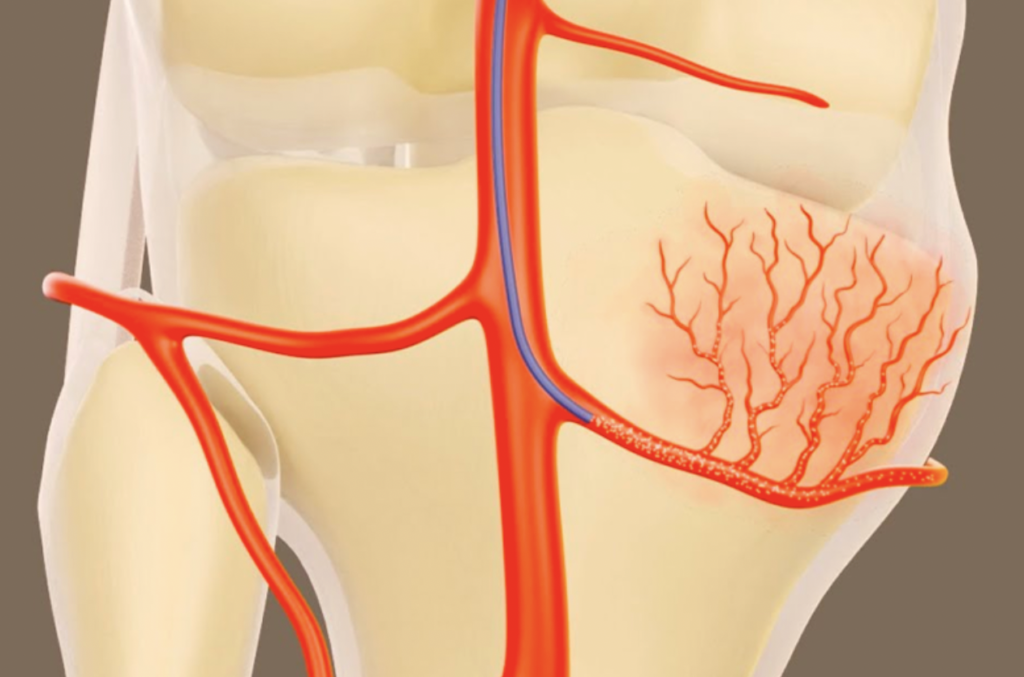
GAE Procedure Sequence
Exploring Non-Surgical Treatment Options for Knee Pain
There are several approaches available to help manage knee pain without surgery. Lifestyle modifications—such as low-impact exercise, weight management, and physical therapy—can play an important role in improving joint function. Injection therapies, including cortisone, hyaluronic acid (gel injections), genicular nerve ablation, and platelet-rich plasma (PRP), are also commonly used to reduce inflammation and provide temporary relief.
While these treatments can be helpful, their effects are often short-lived, and many patients require repeated injections. This has led to growing interest in newer, longer-lasting solutions.
A New Minimally Invasive Option
One of the most promising advances in non-surgical knee pain treatment is genicular artery embolization (GAE). This minimally invasive, image-guided procedure is designed to target inflammation within the knee joint—one of the primary drivers of osteoarthritis pain.
In patients with osteoarthritis, abnormal blood vessels can develop within the joint lining, contributing to inflammation and pain. GAE works by selectively reducing blood flow to these areas, which results in nerve pain fiber regression, which then reduces inflammation. By decreasing inflammation, the procedure can significantly improve pain, mobility, and overall quality of life.
How the Procedure Works
GAE is performed using advanced imaging technology. Through a tiny puncture—typically on top of the foot—a small catheter is guided into the arteries supplying the knee. Once the abnormal vessels are identified, microscopic particles are introduced to reduce blood flow to these abnormal blood vessels.
The procedure is performed on an outpatient basis and typically takes less than an hour. Most patients experience minimal discomfort during the treatment and return home the same day.
Benefits of Minimally Invasive Treatment
Compared with traditional surgery, minimally invasive treatments like GAE offer several advantages:
- No large incisions
- Outpatient procedure with same-day discharge
- Minimal downtime and faster recovery
- Lower risk of complications
- Can be repeated if necessary
Many patients are able to resume normal daily activities within a few days, with continued improvement over the following weeks.
Who May Benefit
GAE may be an option for individuals who:
- Have chronic knee pain due to osteoarthritis
- Have not found relief from physical therapy or injections
- Want to delay or avoid knee replacement surgery
- Experience pain that interferes with daily activities
- Have had knee replacement but pain has persisted
A thorough evaluation—including imaging and clinical assessment—is important to determine whether this treatment is appropriate.
What Results Can Patients Expect?
Clinical studies have shown that many patients experience significant pain reduction within weeks of the procedure, along with improved mobility and function. In many cases, relief can last one to two years or longer, making it a compelling alternative for patients seeking longer-term solutions without surgery.
Expert Care in Manhattan
Dr. David Fox is a board-certified vascular surgeon with more than 25 years of experience specializing in minimally invasive, image-guided treatments. He serves as an attending vascular surgeon at Lenox Hill Hospital and is a Clinical Assistant Professor of Surgery at the Zucker School of Medicine at Hofstra/Northwell.
Dr. Fox focuses on personalized care and advanced outpatient procedures designed to reduce pain, restore mobility, and help patients avoid unnecessary surgery.
To learn more or schedule a consultation, contact Fox Vein & Vascular in Manhattan at (212) 362-3470.
Other Articles You May Find of Interest...
- Radius and Ulna Fractures at the Wrist: Treatment and Recovery
- Signs Your Knee Cartilage May Be Damaged
- What to Avoid With C5-C6 Degenerative Disc Disease
- Treating a Pinched Nerve in the Lower Back
- Treating Knock Knees in Adults: Exercise, Bracing, and Surgery
- Why Radiofrequency Ablation Might Be Your Answer to Chronic Neck and Back Pain
- When Headaches Become Chronic: Knowing When to See a Pain Specialist





