






More Neurology Articles
Why World-Class Neurosciences Care Must Reach Beyond Metro Cities
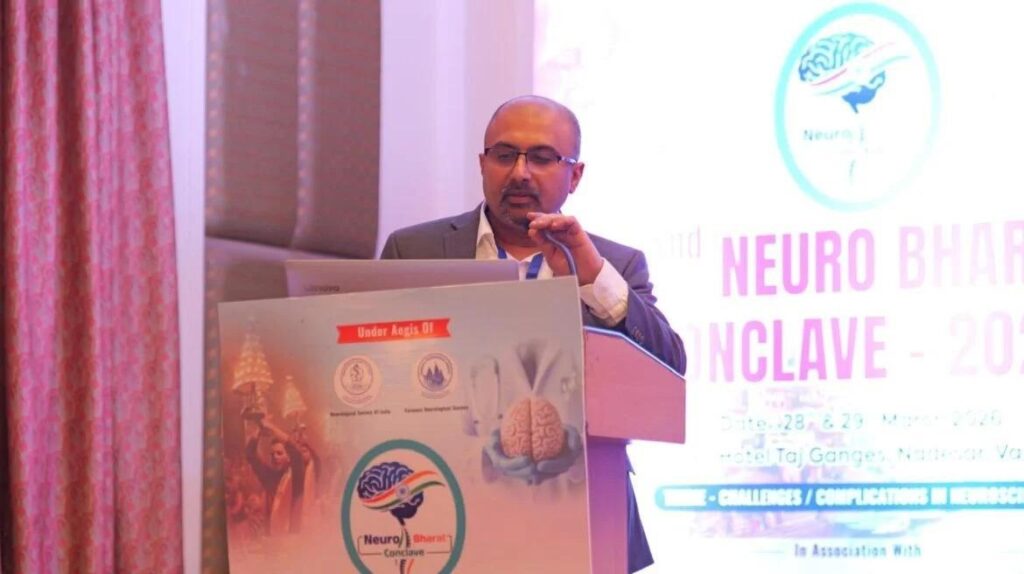
An Exclusive Conversation with Dr. Mohana Rao Patibandla, Founder and Chairman of Dr. Rao’s International Institute of Neurosciences ( Dr. Rao’s Hospital)
In an era where advanced healthcare is often concentrated in metropolitan cities, few doctors have consciously chosen the more difficult path — returning to regional India after global training to build systems of excellence where they are needed most.
That is precisely the journey of Dr. Mohana Rao Patibandla, an internationally trained neurosurgeon whose work in Andhra Pradesh is gradually redefining how advanced neurosciences care can evolve outside India’s largest urban centers.
After completing extensive fellowships in the United States across skull base surgery, minimally invasive neurosurgery, pediatric neurosurgery, cerebrovascular surgery, and endovascular techniques, Dr. Rao made a decision that surprised many of his peers: he returned to Guntur, a Tier-2 city in Andhra Pradesh, to establish a comprehensive neurosciences institute rooted in ethical medicine, technological precision, accessibility, and compassionate care.
Today, his institution has emerged as one of the most recognized neuroscience centers in the region, attracting patients not only from Andhra Pradesh but from across India and abroad. Yet despite the recognition, Dr. Rao remains notably understated — speaking less about achievement and more about responsibility, systems, and patient trust.
In this exclusive interview with YourHealth Magazine, Dr. Rao reflects on his journey, the emotional realities of neurosurgery, ethical leadership in modern medicine, and why he believes the future of Indian healthcare lies beyond metropolitan boundaries.
Q: After receiving advanced international training, what motivated you to return to a Tier-2 city like Guntur instead of pursuing a career abroad or in metropolitan India?
Dr. Rao:
During my training in the United States, I had the opportunity to work in highly advanced neurosciences systems where technology, multidisciplinary care, and structured protocols significantly improved patient outcomes. It was an extraordinary learning experience.
But at the same time, I kept thinking about patients back home — especially those from smaller cities and rural regions who often struggled to access specialized neurosurgical care. Many families had to travel long distances to metropolitan hospitals, which created financial, emotional, and logistical burdens during already difficult times.
I realized that the real challenge was not simply becoming a technically competent neurosurgeon. The larger challenge was creating access.
Returning to Guntur was a conscious decision. I wanted to build a center where advanced neurosciences care could exist with international standards but remain accessible to ordinary families. My goal was not only to perform surgeries, but to build systems, infrastructure, and trust.
I have always believed that healthcare excellence should not be geographically exclusive.
Q: Building a world-class neurosciences institute outside a metro city must have been challenging. What were the biggest obstacles?
Dr. Rao:
The greatest challenge initially was perception.
For many years, people associated advanced neurosurgery exclusively with metropolitan cities. Patients often believed they needed to travel to Delhi, Mumbai, Hyderabad, Chennai, or abroad for sophisticated neurological treatment.
Changing that mindset required years of consistent work.
Infrastructure development was another major challenge. Advanced neurosciences care demands highly specialized operating rooms, neuronavigation systems, intensive care capabilities, intraoperative monitoring, endovascular facilities, and trained multidisciplinary teams. Building all of that in a Tier-2 environment required persistence and long-term commitment.
But perhaps the most important factor was trust.
Patients do not judge hospitals based only on technology. They judge them based on honesty, outcomes, communication, and compassion. Over time, when families experienced ethical and transparent care, confidence naturally grew.
Today, I feel encouraged when patients say they no longer believe advanced neuroscience care is limited to metro cities. That shift matters deeply.
Q: Your name is often associated with minimally invasive neurosurgery and advanced surgical techniques. How do you balance innovation with compassionate care?
Dr. Rao:
Technology should never replace humanity in medicine.
Innovation is meaningful only when it genuinely improves patient outcomes, reduces suffering, shortens recovery, or enhances safety. Whether it is minimally invasive spine surgery, endoscopic skull base surgery, neuro-oncology, pediatric neurosurgery, or endovascular treatment, the central question should always be: “How does this help the patient?”
Sometimes in modern healthcare, there is excessive emphasis on technology itself. But patients are not looking for machines. They are looking for reassurance, clarity, trust, and hope.
A neurosurgeon must combine precision with empathy.
I believe communication is as important as surgical expertise. Families often remember how honestly and calmly a doctor spoke to them during difficult moments. Technical success matters greatly, but emotional support matters too.
Medicine becomes incomplete when compassion disappears.
Q: Neurosurgery is one of the most emotionally demanding fields in medicine. How do you personally manage that responsibility?
Dr. Rao:
Neurosurgery constantly reminds you how fragile life can be.
Every patient comes with a story, a family, fears, expectations, and emotional weight. Certain cases stay with you forever — particularly critically ill children, trauma patients, or families facing uncertainty.
Over time, I learned that emotional resilience is essential in this profession. But resilience does not mean emotional detachment. It means remaining composed while still caring deeply.
The most humbling moments in medicine are often not the most technically complex surgeries. Sometimes it is seeing a patient walk again after severe neurological disability. Sometimes it is watching a child recover neurologically. Sometimes it is simply seeing relief on a family’s face after weeks of fear.
Those moments reinforce why we chose medicine in the first place.
Neurosurgery teaches humility every day.
Q: You frequently speak about ethical healthcare. What does ethics mean in modern medicine today?
Dr. Rao:
Ethics begins with honesty.
Patients are vulnerable when they come to us. They trust us with their health, finances, emotions, and future. That responsibility should never be taken lightly.
For me, ethical healthcare means recommending only what is genuinely necessary, communicating transparently, avoiding unnecessary interventions, and prioritizing patient welfare over commercial considerations.
Modern medicine has extraordinary technological capabilities, which is wonderful. But technology without ethics can become dangerous.
I strongly believe that trust is the foundation of healthcare. Once trust is lost, medicine loses its meaning.
An ethical institution is not built only through infrastructure or branding. It is built through consistency, integrity, accountability, and patient-centered decision-making over many years.
Q: Your hospital has become recognized for comprehensive neurosciences care. What philosophy drives the institution?
Dr. Rao:
The philosophy is actually very simple: advanced care with human values.
We wanted to create an ecosystem where patients could access multidisciplinary neurosciences services under one roof — including neurosurgery, neurology, spine surgery, pediatric neurosurgery, neuro-oncology, stroke care, cerebrovascular surgery, and rehabilitation.
But beyond specialties, we wanted to preserve the human side of healthcare.
Sometimes large healthcare systems become impersonal. We try to ensure that patients still feel heard, respected, and supported.
Our focus has always been long-term institutional credibility rather than short-term visibility.
That requires continuous learning, continuous improvement, and a culture centered on ethics and outcomes.
Q: Many young doctors aspire to leave India or move exclusively toward metro practice. What message would you give them?
Dr. Rao:
There is nothing wrong with pursuing global exposure or advanced training. In fact, international learning can be incredibly valuable.
“Swami Vivekananda taught us that ‘Daridra Narayana Seva’ — serving the poor and suffering — is nothing less than serving God Himself. Medicine, at its highest form, is not merely a profession, but an act of compassionate service to humanity.”
“A nation invests its trust, resources, and hopes in educating its doctors and professionals. While global learning is valuable, giving back to one’s people and contributing to the country’s progress is a profound responsibility that reflects gratitude, character, and patriotism.”
But I would encourage young doctors to think beyond geography.
India needs advanced healthcare systems not only in metro cities but across regional and underserved areas. There is immense opportunity to create meaningful impact outside traditional medical hubs.
Young doctors should focus on building competence, integrity, humility, and patient trust. Reputation should emerge naturally through consistent work — not through aggressive self-promotion.
Medicine is ultimately a lifelong journey of learning and service.
And sometimes the most meaningful work happens where the need is greatest.
Q: What is your long-term vision for neuroscience care in Andhra Pradesh and India?
Dr. Rao:
I hope to contribute toward building a globally respected neurosciences ecosystem rooted in accessibility, education, innovation, and ethical care.
I would like to see more advanced neurosciences centers emerge across regional India so that patients do not need to leave their states or cities for specialized treatment.
Equally important is education and mentorship. We need systems that encourage research, surgical training, academic collaboration, and multidisciplinary neuroscience development.
Healthcare transformation in India cannot remain concentrated only within metropolitan boundaries.
The future of medicine will depend on how effectively we decentralize excellence.
Q: Finally, how would you like patients and colleagues to remember your work?
Dr. Rao:
I hope they remember not only surgeries or achievements, but the intention behind the work.
If patients feel they received honest, compassionate, world-class care close to home, that would be meaningful.
If younger doctors feel inspired to build ethical healthcare systems in underserved regions, that would be deeply fulfilling.
And if our institution continues serving people with integrity for generations, that would perhaps be the most important legacy of all.
Editorial Note
At a time when healthcare conversations are increasingly dominated by scale, branding, and corporate expansion, Dr. Mohana Rao Patibandla represents a different model of leadership — one rooted in quiet confidence, technical excellence, ethical responsibility, and regional transformation.
His journey reflects a larger shift occurring in Indian healthcare: the rise of globally trained specialists choosing to bring advanced medicine beyond metropolitan borders and closer to the communities that need it most.
And perhaps that is what makes his story compelling — not simply the surgeries performed or the technologies introduced, but the belief that world-class healthcare can, and should, exist wherever patients need hope most.
Other Articles You May Find of Interest...
- How to Read a Nerve Conduction Study Report
- Can a Tissue Paper Test Detect a CSF Leak?
- What Does Cerebrospinal Fluid Taste Like During a CSF Leak?
- Cervical Laminectomy: A Complete Guide to This Spinal Decompression Surgery
- Why Concussion Symptoms Can Look Different From Person to Person
- The Crushing Fatigue of ALS
- Complex Partial Seizures: Managing Focal Awareness Loss





