






More Neurology Articles
Exploring the Role of the Medial Longitudinal Fasciculus in Neurological Functions
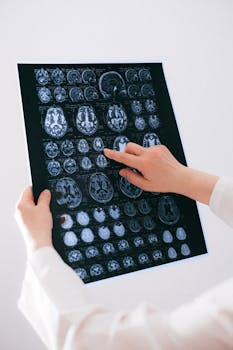
The medial longitudinal fasciculus (MLF) plays a crucial role in the coordination of eye movements and maintaining balance. As a major pathway in the brainstem, it integrates signals from various parts of the brain to ensure smooth and coordinated actions, especially concerning eye movements. Understanding its functions and implications can provide insight into numerous neurological conditions.
Understanding the Medial Longitudinal Fasciculus
The medial longitudinal fasciculus is a pair of crossed, heavily myelinated nerve fibers that play a significant role in the nervous system. This structure is essential for synchronizing eye movements and integrating vestibular signals, which assist in maintaining balance and spatial orientation.
By connecting cranial nerve nuclei, including those responsible for eye movements, the MLF ensures the eyes move in unison when following a moving object or during head rotation. This coordination is pivotal for activities such as reading, driving, and any action requiring precise visual tracking or balance.
Functions of the Medial Longitudinal Fasciculus
The medial longitudinal fasciculus integrates input from various sensory modalities to maintain equilibrium and coordination. It processes information from the vestibular nuclei, integrating head and eye movements to stabilize the visual field. This pathway is crucial for gaze stabilization, allowing us to maintain a steady view of our surroundings while in motion.
Furthermore, the MLF plays an essential role in reflexive eye movements, such as the vestibulo-ocular reflex (VOR), which enables the eyes to adjust when the head turns, keeping the visual world stable. Disruption in this function can lead to symptoms such as dizziness, double vision, or blurred vision.
The Medial Longitudinal Fasciculus in Neurological Health
Dysfunction within the medial longitudinal fasciculus can lead to various neurological deficits. For instance, multiple sclerosis often affects the MLF, leading to a condition known as internuclear ophthalmoplegia (INO). This disorder results in impaired horizontal eye movement, causing symptoms like double vision and difficulties in coordinating eye movements.
Beyond specific disorders, lesions or damage to the MLF can impact daily activities requiring balance and movement coordination. Clinicians use detailed assessments and imaging technologies to evaluate the MLF’s integrity when diagnosing balance and visual coordination disorders.
Clinical Investigations and Treatments
Diagnosis of issues related to the medial longitudinal fasciculus often involves imaging studies like MRI to visualize potential lesions. Neurologists may perform tests to assess eye movements and balance as part of their evaluation. Treatment involves addressing the underlying condition, such as managing multiple sclerosis with disease-modifying therapies.
Rehabilitation therapies, including physical and occupational therapy, can also help improve coordination and eye movement in patients with MLF dysfunction. Therapists may use specific exercises to enhance visual tracking and stabilize gaze, helping patients regain functionality.
Related Neurological Pathways
The medial longitudinal fasciculus works in concert with other brainstem pathways, including the vestibular system and somatosensory pathways, to ensure integrated movement and balance. Understanding this network is vital for advancing treatments for balance disorders and improving patient outcomes.
Research continues to explore how these pathways interact and the potential for new therapeutic approaches in neurological rehabilitation. Studies aim to improve recovery rates and provide deeper insights into managing complex neurological conditions.
For those interested in how lifestyle choices impact broader health, it’s useful to consider how diet, exercise, and other habits can support neurological health. For further reading, refer to our article on how lifestyle choices impact our overall health.
For additional detailed information on the medial longitudinal fasciculus and other neurological topics, you can visit Wikipedia’s comprehensive entry.
Through this exploration of the medial longitudinal fasciculus, we gain a deeper appreciation of its integral role in neural functions and its potential impact on our well-being.
- The medial longitudinal fasciculus is critical for coordinating eye movements.
- It integrates sensory input to maintain balance and stabilize gaze.
- Dysfunction in the MLF can lead to significant neurological symptoms.
- Diagnosis often involves imaging studies such as MRI.
- Treatments may include rehabilitation and addressing underlying conditions.
What is the medial longitudinal fasciculus?
The medial longitudinal fasciculus is a nerve fiber pathway in the brainstem that coordinates eye movement and integrates vestibular signals for balance.
What symptoms might indicate a problem with the medial longitudinal fasciculus?
Symptoms of issues with the MLF can include double vision, difficulty coordinating eye movements, and balance problems.
How is dysfunction of the medial longitudinal fasciculus diagnosed?
Diagnosis typically involves neurological assessments and imaging studies like an MRI to detect any lesions or deficiencies.
Can therapy aid in MLF dysfunction recovery?
Yes, therapies such as physical and occupational therapy can improve coordination and stability, helping patients regain functionality.
Where can I learn more about the medial longitudinal fasciculus?
For more information, visit reputable sites like Wikipedia for an detailed exploration of the medial longitudinal fasciculus and related topics.
Other Articles You May Find of Interest...
- Understanding Absence Petit Mal Seizures: A Comprehensive Guide for Patients and Caregivers
- Effective Strategies for Chiari Malformation Treatment Options
- Can Piercings Relieve Headaches? Discover the Truth
- Exploring the Role of Centrum Semiovale in Brain Function and Health
- Exploring the Impacts and Management of Lance Adams Syndrome
- Navigating Life with Congenital Hydrocephalus: Insights and Support
- Navigating Post Concussion Syndrome: Insights and ICD-10 Classification




