






More Imaging Articles
How Long Will You Be Radioactive After a Nuclear Stress Test?
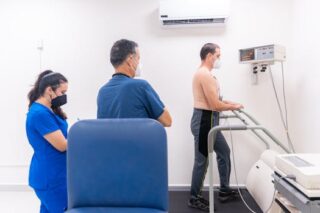
Undergoing a nuclear stress test is a common procedure used to diagnose heart conditions. One concern that often arises is how long a person remains radioactive after such a test. In this article, we’ll explore the radioactive aspects associated with nuclear stress tests, aiming to answer the pressing question: how long are you radioactive after a nuclear stress test?
Understanding the Nuclear Stress Test
A nuclear stress test is a diagnostic method used to image blood flow to the heart. By injecting a small amount of radioactive material into the bloodstream, this test provides vital insights into heart health. The radioactive material allows clinicians to observe the heart’s blood flow during stress and at rest. While the term “radioactive” can be alarming, it is crucial to understand that the levels used in these tests are safe and carefully controlled.
How Long Are You Radioactive After a Nuclear Stress Test?
The primarily used radioactive isotopes in these tests are thallium or technetium. Both are used in very low doses. After injection, these isotopes concentrate in the heart muscle, allowing detailed imaging. But how long are you actually radioactive after a nuclear stress test? Typically, the radioactive elements used have a short half-life. For most isotopes, this means that they decay to a level that is no longer considered radioactive within a few hours to a day.
Radioactive Isotope Half-Life
The half-life of technetium-99m, a commonly used isotope, is about six hours. This means that within 24 hours, the radioactivity levels will have significantly reduced. Similarly, thallium-201 has a half-life of about three days. However, the body excretes most of the radioactive tracers used during the test within 24 to 48 hours, further reducing any lingering radiation through natural processes such as urination.
The Body’s Natural Processing of Radioactive Material
Your body begins to eliminate these isotopes soon after the test is completed. Staying hydrated can expedite this clearing process. Drinking plenty of water aids the kidneys and helps the body to rid itself of the material more quickly. Nonetheless, the low radiation levels pose minimal risk to either the person tested or those around them.
Safety Measures After a Nuclear Stress Test
While the radioactivity is minimal, certain precautions are advised for the short duration following the test. These measures are intended to further minimize exposure to others, especially pregnant individuals and young children. These precautions might include maintaining a safe distance from others or avoiding close physical contact for a short period.
Consult Your Healthcare Provider
Although the procedure and its aftermath are considered safe, it is always wise to discuss any concerns with your healthcare provider. Each person’s situation is unique, and your provider can give specific advice tailored to your circumstances. As part of a broader discussion on health, consider how lifestyle choices impact your overall health, including heart health management.
Additional Considerations for Radiation Safety
For those who have frequent imaging tests that involve radioactivity, cumulative exposure is a consideration. However, the benefits of accurate diagnosis and treatment planning often far outweigh the potential risks of low-level radiation exposure from these tests.
Sources of Additional Information
If you wish to explore more about nuclear stress tests and related procedures, reliable resources are essential. The Wikipedia page on health provides a comprehensive overview, including insights into how stress tests fit into broader diagnostic processes.
In conclusion, while it’s natural to wonder how long you are radioactive after a nuclear stress test, scientific and medical expertise suggests that the levels are minimal and safely decay within a short period.
- Nuclear stress tests are vital for diagnosing heart conditions.
- Radioactive material used is minimal and depletes swiftly.
- Technetium and thallium isotopes are common; each has a short half-life.
- Hydration helps expedite the body’s natural elimination processes.
- Discuss any radiation exposure concerns with your healthcare provider.
What is the purpose of a nuclear stress test?
A nuclear stress test is used to evaluate the blood flow to your heart both during rest and physical exertion, helping detect coronary artery disease.
How does the radioactive material in a nuclear stress test work?
The radioactive tracers emit gamma rays, allowing a special camera to capture images of the heart and assess blood flow and functionality.
Are there any risks associated with nuclear stress tests?
The primary risks are minimal due to the low levels of radioactive material used, which is quickly processed by the body. As always, discuss any specific concerns with your healthcare provider.
How should I prepare for a nuclear stress test?
Preparation may include avoiding certain foods, medications, and caffeine, following your healthcare provider’s specific instructions for your situation.
When should I contact a doctor following a nuclear stress test?
Contact your doctor if you experience unusual symptoms such as chest pain or shortness of breath after the test, or if you have any concerns about radiation exposure.
Other Articles You May Find of Interest...
- How Long Will You Be Radioactive After a Nuclear Stress Test?
- Does a Brain MRI Cover the Neck Area?
- What Does a Ground Glass Nodule Mean for Your Lung Health?
- What Does a Hypoechoic Mass Mean for Your Health?
- Interpreting Chest X Rays for Pulmonary Edema Diagnosis
- What Is an Anechoic Cyst and How Can It Impact Your Health?
- What a Normal Hip X-Ray Reveals About Your Joint Health




