






More Home Care & Wellness Products Articles
How to Improve Indoor Air Quality Through Floor Cleanliness in 3 Steps
Hook: According to the EPA, indoor air may be two to five times more contaminated than outdoor air. Floors serve as main reservoirs that supply this unseen pollution cycle.
Problem: Floors are the largest horizontal indoor surface. They trap dust, dander, pollen, mold, and VOCs, which become airborne through foot traffic and poor cleaning.
Why it matters: Contaminated floors worsen asthma and allergies. They are linked to respiratory infections and long‑term cardiovascular stress. With Americans indoors about 90% of the time, the health impact is serious.
Solution: This guide offers practical steps for enhancing IAQ through systematic floor maintenance and sophisticated cleaning methods.
The guide is based on EPA guidance and CDC pathogen research. It’s grounded in peer-reviewed studies and ISSA (The Association for Cleaning & Facility Solutions) best practices.
Who this guide is for: Homeowners and facility managers alongside administrators in charge of indoor environments.
What you’ll need: An environmentally friendly, low-VOC cleaner and entryway mats are necessary. HEPA-filter vacuum and a microfiber mop, alongside a cleaning schedule, are also needed.
Duration for completion: One to two hours for initial setup, then 15 to 30 minutes each week.
WHY YOU CAN TRUST THIS GUIDE
Problem: Marketing and advice can be conflicting. This leaves consumers confused about what to do for effective cleaning.
Solution: This guide provides straightforward, research-supported actions from top health organizations, emphasizing source management, filtration, and non-toxic maintenance.
Proof: Shows consensus from government agencies and peer-reviewed research that’s translated into actionable steps.
Step 1: Implement Multi-Zone Entry Matting and Preventative Maintenance
What you’re doing: You are implementing “source control” to prevent outdoor contaminants from entering. This means managing entryways and scheduling professional deep cleaning with good ventilation.
Why it matters: Studies show 30% to 40% of home contaminants come from outside. Professional extraction can clean deeply embedded dirt and mold that household tools can’t, thus minimizing the amount of pollutants in the air.
How to do it:
- Establish a three-zone entryway system. Have a grate-like scraper mat outside alongside an absorbent mat inside and a finishing mat. Have 20+ linear feet if possible.
- Implement a “no shoes” policy. Give residents or guests nonslip slippers or socks. This leaves contaminants at the door.
- Schedule professional deep cleaning for carpets and floors every six to 12 months. Use industrial-grade HEPA extraction. This ensures ventilation during and after.
Pro tips:
- Choose rubber-backed mats. Rotate seasonally for specific contaminants (pollen/salt), and clean weekly.
- Use a boot brush on muddy days. Wipe high-traffic entry surfaces twice weekly.
Common pitfalls:
❌ Relying on a single small doormat or allowing shoes indoors.
✅ Deploying a multi-zone matting system and enforcing “no shoes”. Scheduling regular professional HEPA extraction.
Success looks like: Visibly cleaner entry points and reduced dust accumulation. Less frequent need for vacuuming/mopping.

Step 2: Vacuum and Trap Dust Using HEPA Filtration
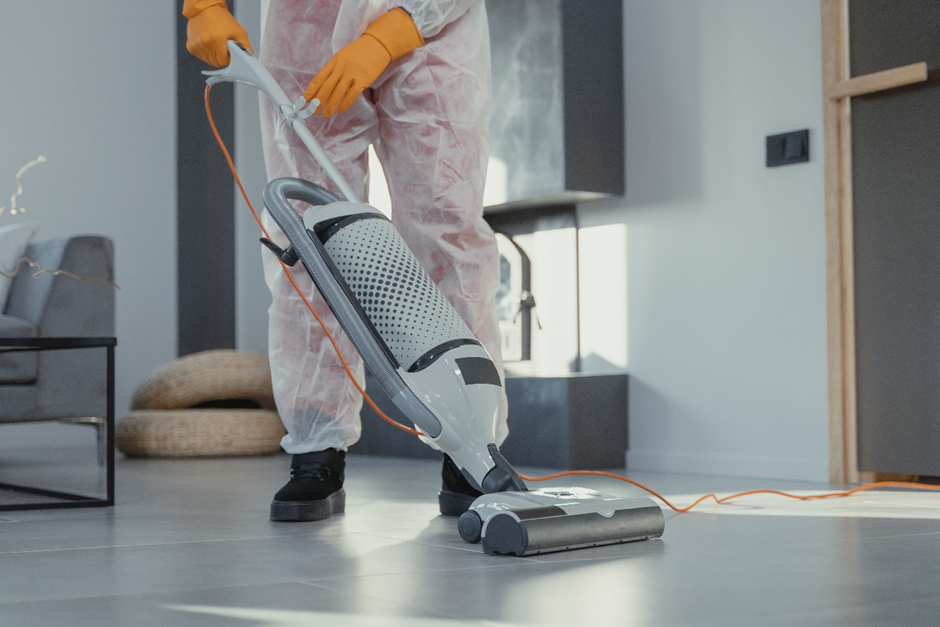
What you’re doing: Extracting loose soil along with fine particles and allergens from floors using HEPA‑filtered vacuums prior to them becoming airborne. This means that minute pollutants are not returned to the environment.
Why it matters: Dry sweeping and standard vacuums kick dust back into the air. Thus worsening respiratory health. HEPA filters solve this by trapping 99.97% of microscopic pollutants. This includes pollen alongside dander and dust mites.
How to do it:
- Use a vacuum explicitly certified as having a true HEPA filter. This ensures effective trapping of minute pollutants.
- Vacuum carpets and rugs two to three times weekly, focusing on high‑traffic spots and entryways where outdoor dirt collects.
- Service regular equipment according to manufacturer’s instructions. This ensures optimal performance.
Pro tips:
- Use doormats to limit tracking allergens and dirt into the house at all exterior doors.
- Use a solid surface floor in high-traffic areas where dust reservoirs can cause problems. This can be hardwood, tile, or polished concrete.
- For larger commercial facilities, automated floor cleaning equipment may improve cleaning efficiency and consistency. Organizations evaluating these systems can review offerings from suppliers such as Nassco Inc as one example of the equipment available.
Common pitfalls:
❌ Dry sweeping or vacuuming with regular vacuums. This disperses fine dust.
✅ Regular vacuuming using a HEPA filter to capture particulate matter.
Success looks like: Floors are clear of loose debris. Fine particulates have been caught and not recirculated. Fresh air permeates the interior.
Step 3: Mop Smarter with Non-Toxic Cleaners
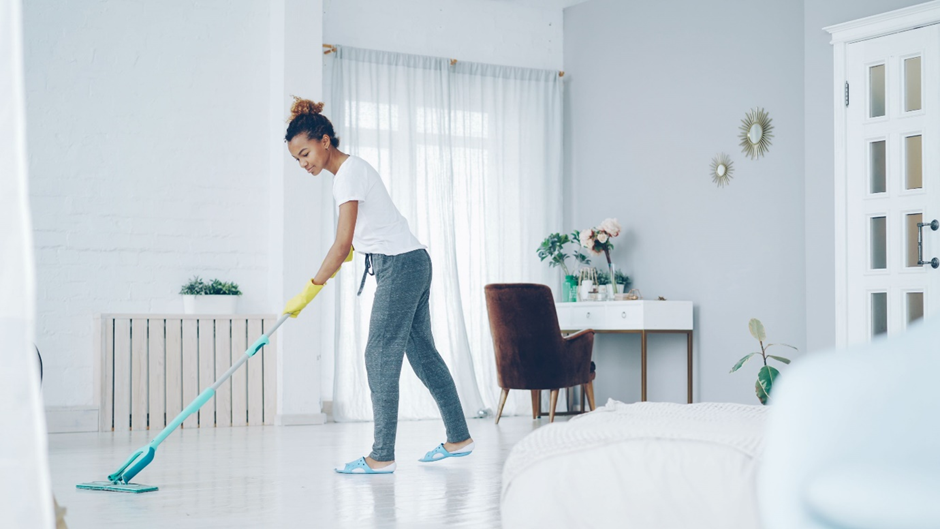
What you’re doing: You are cleaning hard floors using damp microfiber mops and certified green, plant-based, low-VOC cleaning solutions. It physically removes and secures dirt without harmful chemicals.
Why it matters: VOCs and terpenes emitted by conventional cleaners or scented cleaners can react with ozone in the indoor air to produce billions of ultrafine particles that irritate the lungs. This chemical re-pollution can be avoided by using non-toxic alternatives.
How to do it:
- Clean up loose dirt first.
- Wipe with a lightly moistened microfiber mop. Use a cloth to clean by spraying the cleaner onto the cloth and not on the floor in order to minimize aerosolization, then clean in a systematic pattern.
- Avoid ingredients like bleach and high-VOC solvents. Others are quaternary ammonium compounds or artificial scents alongside ammonia.
- Use EPA Safer Choice-approved products or biobased products. You may also use simple DIY solutions like castile soap.
Pro tips:
- Avoid spreading dirt by replacing microfiber pads routinely, and use pump sprayers.
- Seal tile grout regularly to block moisture and mold, but choose unscented, pre‑mixed cleaners for sensitive groups.
Common pitfalls:
❌ Applying strong-scented citrus/pine-based cleaners that produce ultra-fine particles; combining bleach and ammonia.
✅ Application of minimally wet microfiber mops with safe and low-VOC products and adequate ventilation.
Success looks like: Hard floor surfaces are sparkling clean without chemical odors or sticky residues.
COMMON MISTAKES TO AVOID
Mistake 1: Dry Sweeping or Dusting
Why it’s a problem: Dry sweeping throws dust alongside dander and spores into your breathing zone.
How to avoid it: Use methods that trap dust instead of spreading it.
Do this instead: Vacuum with a HEPA filter. Always mop with a damp microfiber pad.
Mistake 2: Overusing Harsh Chemical Cleaners and Air Fresheners
Why it’s a problem: Bleach alongside ammonia and artificial scents release VOCs. Citrus or pine scents can react with indoor ozone. This can create lung‑irritating particles.
How to avoid it: Check labels and avoid vague terms like “fragrance” or “parfum.”
Do this instead: Choose eco‑certified products. You should also use low‑VOC or unscented cleaners.
Mistake 3: Ignoring Carpet Care
Why it’s a problem: Carpets trap particles, but they can become reservoirs for mites, mold, and smoke if not cleaned, releasing them back into the air.
How to avoid it: Don’t assume carpets stay clean on their own.
Do this instead: Vacuum often with a HEPA filter. Also have professional deep cleaning every six to 12 months.
KEY TAKEAWAYS
- Floors hold indoor pollutants, but proper cleaning removes them instead of recirculating them.
- HEPA vacuums and damp microfiber mops are most effective.
- Safer cleaning products prevent chemical pollution and lung‑irritating particles.
FINAL THOUGHTS
- Summary: Clean air starts with clean floors. Stop dirt at the door and vacuum with HEPA filters. Remember to always mop with safe products. When applied consistently, these measures reduce allergens and particles, resulting in healthier environments.
- Benefit reminder: Adhering to this guide minimizes contact with dust, mold, and chemicals. You’ll find it easier to breathe, allergy and asthma symptoms may diminish, concentration can enhance, and floors will have a longer lifespan and improved appearance.
- Encouragement: It’s not necessary to complete everything at once. Implement a “no shoes” policy; it’s free and efficient. Next, upgrade your vacuum, followed by your cleaning supplies. Every step enhances outcomes.
- Reality check: Perfect air quality isn’t possible. Some pollution sources are beyond your control. But being consistent matters more than being perfect.
NEXT STEPS
Do this now:
- Check your vacuum. Upgrade to a true HEPA filter if needed.
- Audit your cleaners. Replace harsh and scented products with EPA Safer Choice or Green Seal options.
- Review entryways. Use scraper mats outside and absorbent mats inside.
Keep learning:
- Check out the EPA Indoor Air Quality Guide
- Review AAFA allergen management tips
- Read ISSA cleaning for health standards
Take action:
Don’t wait for allergy season; apply these steps in your next cleaning session and breathe easier.
Other Articles You May Find of Interest...
- Sauna Hats and Heat Comfort: What They Can and Cannot Do for Your Head and Hair
- Why Building Material Specifications Matter for a Safer, Healthier Home
- Healthy Home Plumbing in Philadelphia: Water Quality, Leaks and Other Health Concerns
- Can a Bird Mite Problem Begin Weeks After Birds Have Already Left the Nest?
- Why HVAC Technicians Play an Important Role in Healthy Indoor Environments
- The Kitchen Upgrade Every Parent Should Consider
- Art in Your Home Can Reduce Stress: The Science and the Strategy





