More Home Care & Wellness Products Articles
Home Hyperbaric Oxygen Therapy: A Practical Guide Before You Buy

Not long ago, hyperbaric oxygen therapy (HBOT) was something you could only experience in a hospital or a specialized clinic. Today, a growing number of athletes, wellness enthusiasts, and everyday people are bringing the technology home. Personal hyperbaric chambers have become one of the fastest-growing categories in home wellness equipment — and with that growth comes a lot of confusion about what these devices are, how they differ from clinical systems, and what a first-time buyer should actually look for.
This guide walks through the essentials: how hyperbaric therapy works, the main types of home chambers, and the practical questions worth answering before you invest in one.
What Hyperbaric Oxygen Therapy Is
Hyperbaric oxygen therapy involves breathing oxygen-enriched air inside a chamber where the ambient pressure is higher than normal atmospheric pressure. Under pressure, the body can dissolve more oxygen into the blood plasma than it can at sea level. That basic principle has been used in medicine for decades: hospital-grade HBOT is an established, physician-supervised treatment for a number of specific medical conditions, such as decompression sickness in divers and certain non-healing wounds.
Home hyperbaric chambers operate on the same principle but at milder pressures, which is why this category is often called mild hyperbaric therapy, or mHBOT. Users typically spend 60 to 90 minutes per session inside the chamber, reading, listening to music, or simply resting. People incorporate these sessions into their routines for general wellness and recovery purposes. It is important to be clear-eyed here: the research on mild hyperbaric use for wellness applications is still developing, and a home chamber is not a substitute for medical care. Anyone considering hyperbaric sessions — especially people with pre-existing conditions such as lung or ear issues — should talk to their physician first.
Clinical Chambers vs. Home Chambers: The Pressure Difference
Chamber pressure is measured in atmospheres absolute (ATA). Normal air pressure at sea level is 1.0 ATA. Hospital chambers used for medical treatments commonly operate at 2.0 to 3.0 ATA under professional supervision. Home chambers are designed for lower pressures — typically from about 1.3 ATA for entry-level soft chambers up to around 2.0 ATA for the most capable hard-shell home units.
This matters for two reasons. First, pressure capability is the single biggest driver of price, so understanding what pressure range you actually want prevents both overpaying and disappointment. Second, higher pressures involve more engineering: stronger shells, redundant safety valves, and better certifications. When you compare two chambers with very different price tags, the pressure rating and the build quality behind it are usually where the difference lives.
Soft-Shell vs. Hard-Shell: The First Fork in the Road
Every buyer faces the same first decision: soft or hard shell.
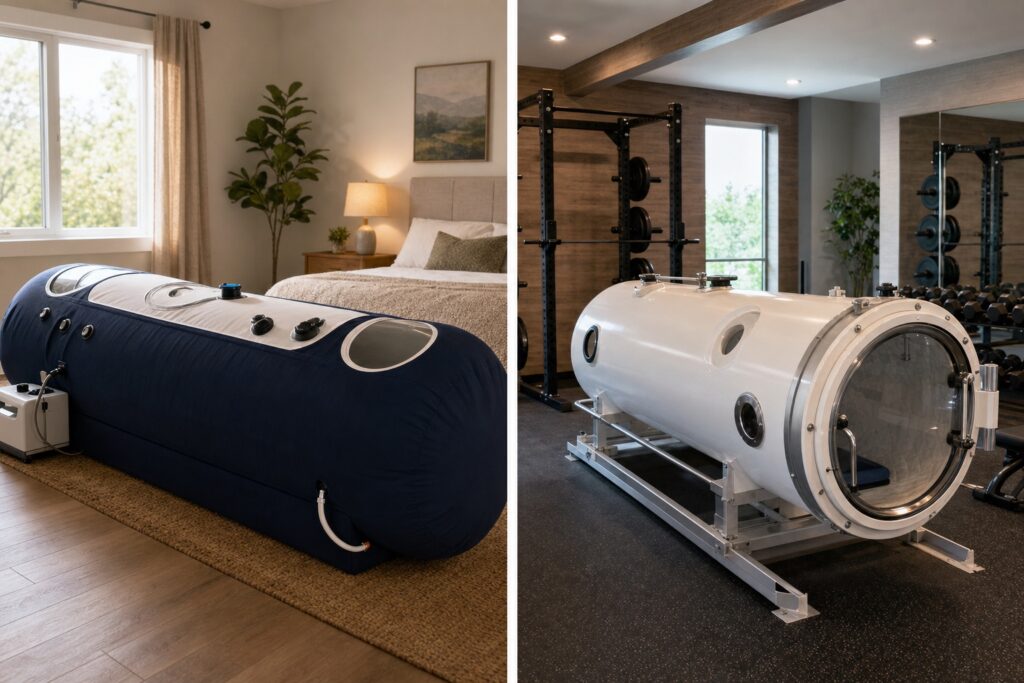
Soft-shell chambers are inflatable units made from urethane and nylon layers. They are lighter, easier to move between rooms, simpler to store, and significantly more affordable. Their trade-off is pressure: most soft chambers operate at 1.3–1.5 ATA. For someone who wants to try mild hyperbaric sessions at home without a major commitment, a quality soft chamber is the natural starting point.
Hard-shell chambers are rigid capsules built from steel, aluminum, or acrylic. They reach higher pressures (up to 2.0 ATA in home models), tend to feel more spacious, run quieter, and usually come with integrated oxygen delivery and climate control. They cost more, weigh more, and are effectively a permanent installation — but for frequent users, home gyms, and wellness studios, they are the long-term choice. Readers interested in learning more about the differences between the two designs can refer to this hard-shell vs. soft-shell hyperbaric chamber guide.
Seven Questions to Ask Before Buying
1. What pressure rating do you actually need? Be honest about your goals. Occasional relaxation sessions and daily athletic-recovery use point to different equipment. Decide on the ATA range first; it narrows the field faster than any other spec.
2. Is the chamber certified? Look for recognized manufacturing and safety certifications, and ask the seller directly which standards the chamber and its electrical components meet in your country. A reputable vendor will answer precisely; vague answers are a warning sign.
3. Where will it live? Measure your space, including door widths for delivery. Hard-shell units can weigh several hundred pounds and are not easily relocated. Soft chambers need room to inflate plus clearance for the air compressor beside them.
4. How loud is the system? The compressor and oxygen concentrator run for the entire session. Ask for real decibel numbers and, ideally, a video of the unit running. A chamber you avoid using because of noise is wasted money.
5. What does maintenance involve? Filters, zipper care on soft models, seal inspections on hard models, and periodic servicing of the concentrator all factor into the real cost of ownership. Ask for the maintenance schedule in writing before you commit.
6. What are the warranty and support terms? A hyperbaric chamber is a pressurized device you will use for years. Understand what the warranty covers, who performs repairs, and whether replacement parts ship from your region or from overseas.
7. Who is the seller? The market has grown quickly, and quality varies widely between manufacturers. Prefer vendors who specialize in hyperbaric equipment, publish transparent specifications, and will talk you out of a model that does not fit your needs. Buyers comparing different models may also find this home hyperbaric chamber overview helpful for understanding categories, price ranges, and purchasing considerations.
Safety Comes First
Pressurized oxygen environments demand respect. Whatever chamber you choose, follow the manufacturer’s guidelines without improvisation: no open flames or spark sources near the unit, no petroleum-based products inside, and careful attention to ear-pressure equalization during compression. Most quality chambers include multiple pressure-relief valves and allow the occupant to depressurize from inside — confirm both features before buying. And once more, because it bears repeating: clear any hyperbaric routine with your doctor, particularly if you have respiratory, cardiovascular, or ear conditions, or if you are pregnant.
The Bottom Line
A home hyperbaric chamber is a significant purchase that rewards careful research. Understand the pressure you need, choose the shell type that fits your space and habits, scrutinize certifications and support, and buy from a specialist rather than a marketplace listing. Approached that way, the technology that was once locked inside hospitals can become a well-understood, safely operated part of a home wellness routine — one deliberate, informed decision at a time.
Other Articles You May Find of Interest...
- Sauna Hats and Heat Comfort: What They Can and Cannot Do for Your Head and Hair
- Why Building Material Specifications Matter for a Safer, Healthier Home
- Healthy Home Plumbing in Philadelphia: Water Quality, Leaks and Other Health Concerns
- Can a Bird Mite Problem Begin Weeks After Birds Have Already Left the Nest?
- Why HVAC Technicians Play an Important Role in Healthy Indoor Environments
- The Kitchen Upgrade Every Parent Should Consider
- Art in Your Home Can Reduce Stress: The Science and the Strategy