






Your Health Magazine
4201 Northview Drive
Suite #102
Bowie, MD 20716
301-805-6805
More Home Care & Wellness Products Articles
Best Non-Toxic Frying Pans 2026
Awareness around what goes into cookware, and what comes out of it at high temperatures, has changed how a lot of people shop for pans. The concerns are legitimate. Traditional non-stick coatings based on PTFE and PFAS have faced increasing regulatory scrutiny, and several US states have now introduced legislation restricting or banning PFAS in cookware entirely. For anyone replacing old pans or upgrading their kitchen in 2026, the question is no longer just which pan cooks best, but which one you can trust.
The good news is that the market has responded. There are now genuinely strong non-toxic frying pan options across a range of materials, price points, and cooking styles. The challenge is that the category has also attracted a wave of marketing claims that are difficult to verify, and not every pan marketed as non-toxic actually removes coatings from the equation entirely. This guide covers the best non-toxic frying pans available in 2026, rated by home chefs and evaluated based on material transparency, performance, durability, and real-world usability.
What Makes a Frying Pan Truly Non-Toxic?
Before getting into the rankings, it is worth being clear about what non-toxic actually means in practice, because the term is used loosely across the cookware industry.
Coating-free materials: The most straightforward non-toxic option is a pan with no coating at all. Pure titanium, stainless steel, cast iron, and carbon steel are all materials that cook directly on their natural surface without any added chemical layer. These pans cannot degrade or flake in the way coated pans do, and they are not subject to the same concerns around high-heat chemical release.
PFAS-free ceramic coatings: Ceramic-coated pans use a mineral-based surface rather than PTFE or PFOA. They are a genuine improvement over traditional non-stick for everyday use, but ceramic coatings do degrade over time and will eventually need replacing. The non-toxic claim holds for as long as the coating remains intact.
Third-party testing and transparency: The most trustworthy brands in this category submit their cookware to independent laboratory testing and publish the results. Claims of being PFAS-free, PTFE-free, and heavy metal-free carry more weight when they are backed by verifiable third-party data rather than marketing language alone.
Heat stability: A pan that is safe at everyday cooking temperatures but releases harmful compounds under high heat is not truly non-toxic in practice. Look for pans rated for high heat performance with materials that remain chemically stable across a wide temperature range.
1. Siraat Kitchen Titanium Hammered Pan Pro — $174
The Siraat Kitchen Titanium Hammered Pan Pro takes the top spot in this roundup because it removes the coating question entirely. Made from 100% pure Grade 1 titanium with a hand-hammered surface, there is no PTFE, no PFAS, no ceramic layer, and no hidden treatment of any kind. The cooking surface is the material itself, which means there is nothing to degrade, flake, or release at any temperature.
The hammered microtexture is not just aesthetic. The pattern creates natural valleys across the cooking surface that minimize direct food contact, improve airflow, and make the pan hydrophobic over time, producing a naturally low-stick surface without any chemical engineering. It heats rapidly and evenly thanks to a three-layer construction, is compatible with all cooktops including induction, and is oven safe to 1000°F. Cleanup requires minimal effort, with food releasing cleanly and the surface rinsing off with water in most cases.
Titanium is certified food-safe and used in medical applications, which gives it a credibility in the safety space that no coating can match. This is a pan built to last a lifetime, and for anyone whose primary concern is cooking on a genuinely toxin-free surface, it is the most uncompromising option in this roundup.
| Pros:100% pure Grade 1 titaniumNaturally low-stick texture Chemically inert at any cooking temperatureInduction compatible and oven safe to 1000°FDishwasher safe with no coating to protect or degradeHigh durability for lasting use | Cons:Only available directly through the Siraat Kitchen websiteHand-hammered finish requires a short break-in period for optimal performance |
2. Our Place Titanium Always Pan Pro — $179
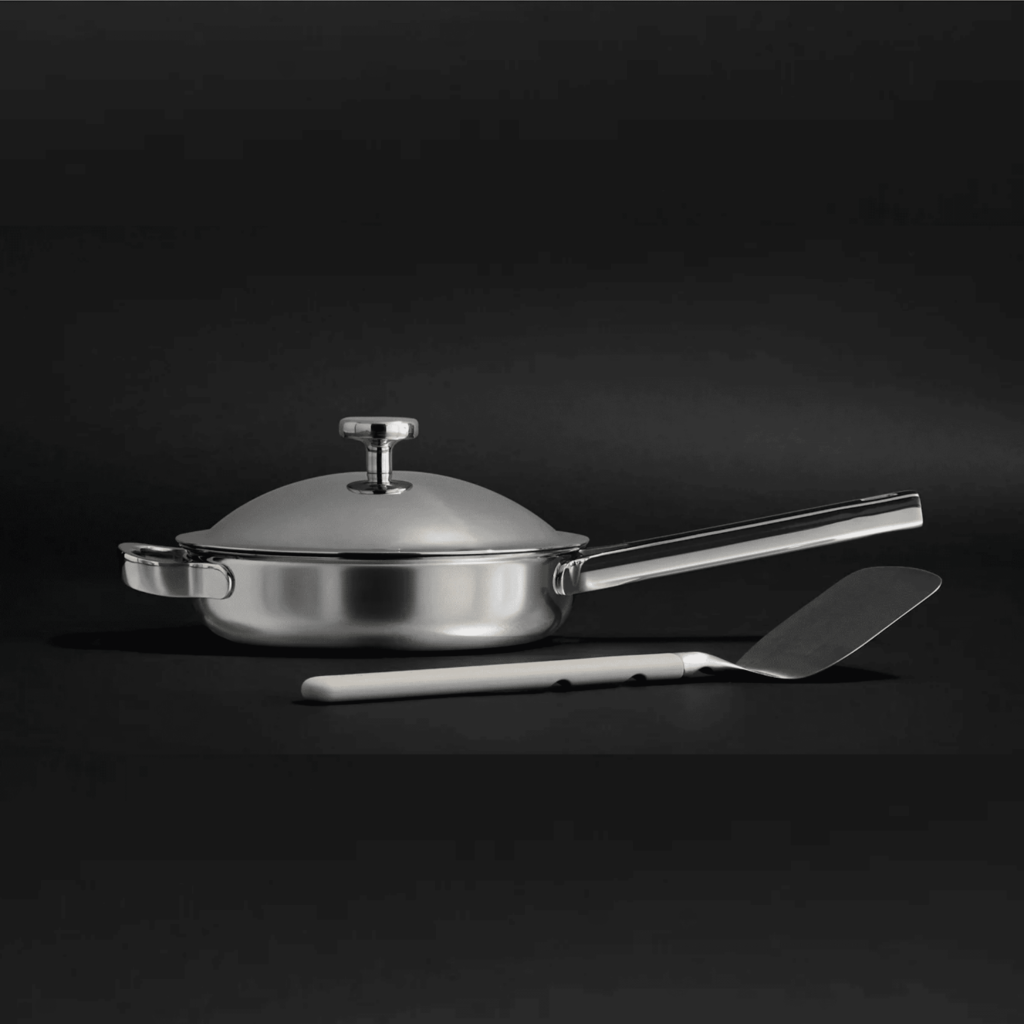
The Our Place Titanium Always Pan Pro is one of the most talked-about cookware releases of recent years, and for good reason. It uses a patented NoCo technology that constructs the nonstick effect into the pan’s surface rather than applying a coating on top of it. The interior is pure titanium pressed with a micro-pattern that creates a hydrophobic, naturally low-stick surface without any PFAS, PTFE, or chemical treatment.
The tri-ply construction, combining a stainless steel exterior, aluminum core, and titanium interior, delivers fast, even heating. It includes a spatula and patented rest system and is also dishwasher-safe. The design features a rivet-free handle and a 360-degree pour rim, making it a versatile everyday pan.
Where it sits behind the top-ranked option is in its composite construction. The titanium here forms an interior layer rather than the full body of the pan, and the tri-ply build means it is not pure titanium throughout. For health-focused buyers who want the most uncompromising material choice, that distinction matters.
| Pros:NoCo titanium interior with no PFAS or PTFETri-ply construction delivers fast, even heating across all cooktopsLifetime warranty covering nonstick performance | Cons:Titanium forms the interior layer only, not the full body of the panHigher price point than most comparable options in this category |
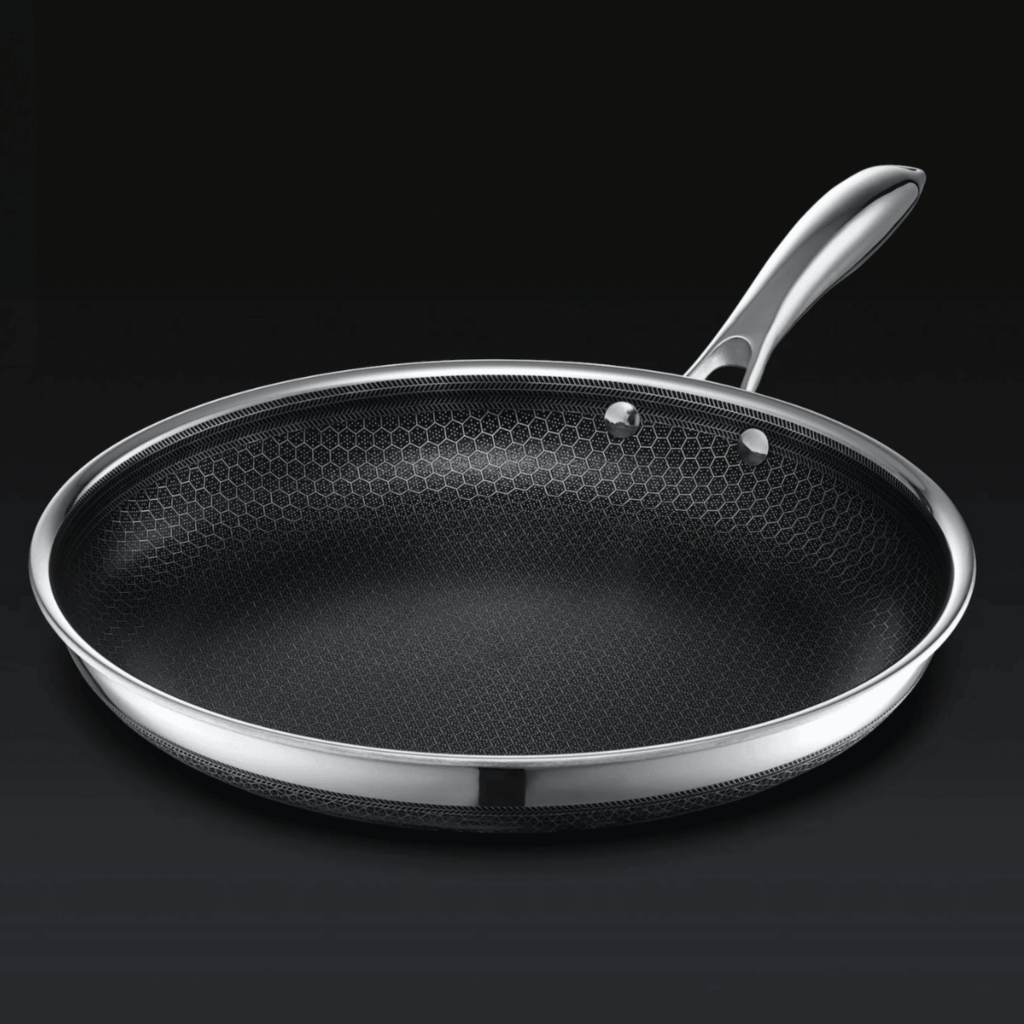
3. HexClad 12″ Hybrid Frying Pan — $179
HexClad is one of the most recognizable names in premium cookware, with a distinctive laser-etched hexagonal surface that combines stainless steel ridges with nonstick valleys in a single cooking surface. The TerraBond ceramic coating used in the nonstick valleys is PFAS-free, and the design allows for genuine searing power alongside easy food release, something most ceramic-only pans cannot offer simultaneously.
The tri-ply construction with an aluminum core heats quickly and evenly, and the pan is oven safe to 900°F, dishwasher safe, and a top choice amongst at-home chefs. It is a high-performance everyday pan that handles a genuinely wide range of cooking tasks well.
The consideration worth knowing is that the nonstick component remains a coating, even though it is ceramic rather than PTFE-based. HexClad transitioned away from PTFE to ceramic in 2024, and while independent testing has confirmed PFAS levels below detection limits, some buyers seeking a fully coating-free pan will want to be aware of that distinction.
| Pros:Hybrid stainless steel and ceramic surface delivers searing powerPFAS-free TerraBond ceramic coating with independent testing to confirmMetal utensil and dishwasher safe construction | Cons:Nonstick surface remains a ceramic coating that will degrade over timeTransition from PTFE to ceramic only completed in 2024, limiting long-term durability dataHigher price point for a pan that will eventually need replacing |
4. Caraway Ceramic Non-Stick Frying Pan $115
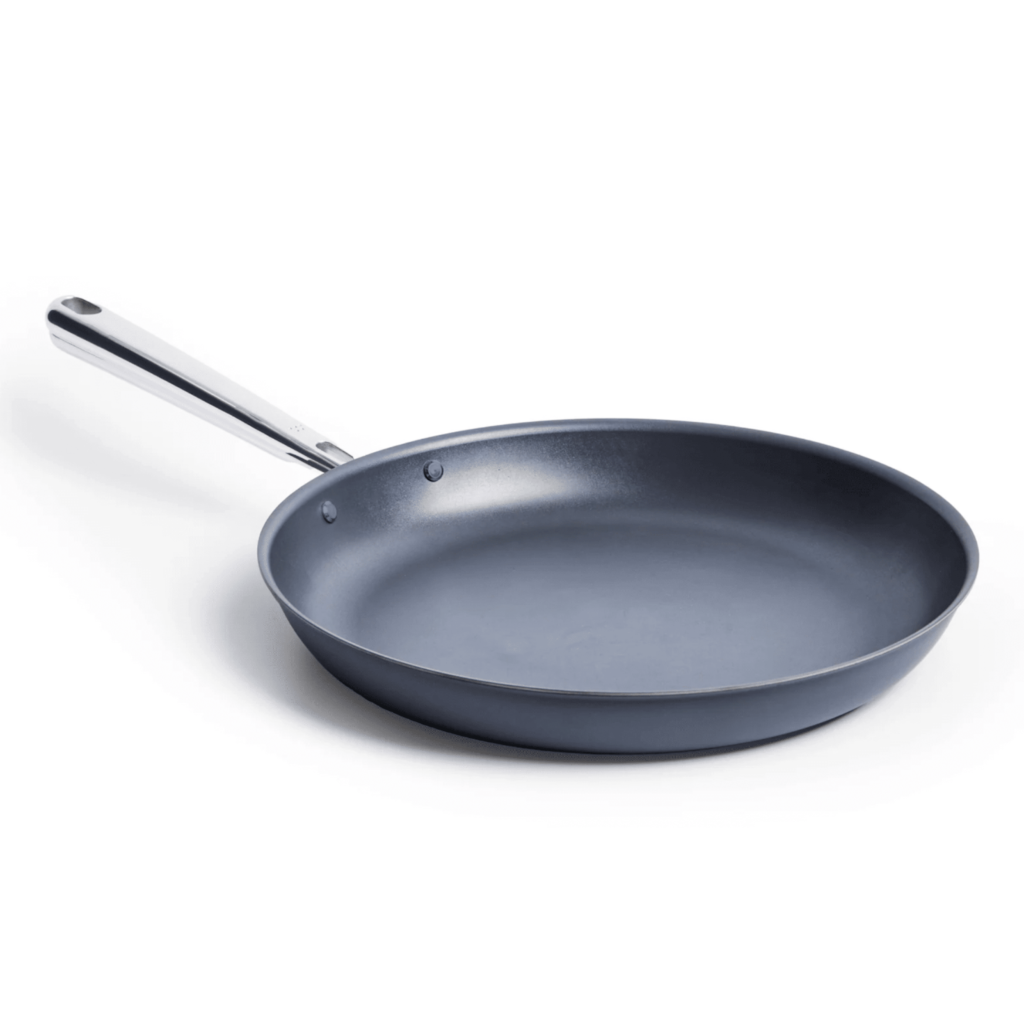
Caraway is a well-known ceramic non-stick option for health-conscious home cooks, offering PFAS-free, PTFE-free construction free of lead and cadmium. It is one of the more transparent brands in the category, submitting cookware to independent testing with results published on their website.
In everyday use it performs well for low to moderate heat cooking, particularly for eggs and delicate proteins. The aluminum core heats evenly and the wide range of colors makes it a popular choice for those who care about kitchen aesthetics alongside safety credentials.
The tradeoff worth understanding is that the Caraway pan, like all ceramic-coated cookware, is not as inherently non-toxic as a coating-free pan like pure titanium. The ceramic surface is still a treatment applied over an aluminum base, and as that coating wears down with heat and regular use, the non-toxic properties wear down with it. For buyers whose primary concern is a cooking surface that remains chemically inert for the lifetime of the pan, Caraway falls short of that standard.
| Pros:Independently Light Labs tested with results publicly availablePFAS-free, PTFE-free, lead and cadmium free Good non-stick performance for low to moderate heat | Cons:Ceramic coating degrades over time, reducing non-toxic properties with useNot suitable for high heat cooking, limiting versatility compared to coating-free optionsNon-stick performance declines faster without careful maintenance |
5. Made In Blue Carbon Steel Frying Pan — from $129
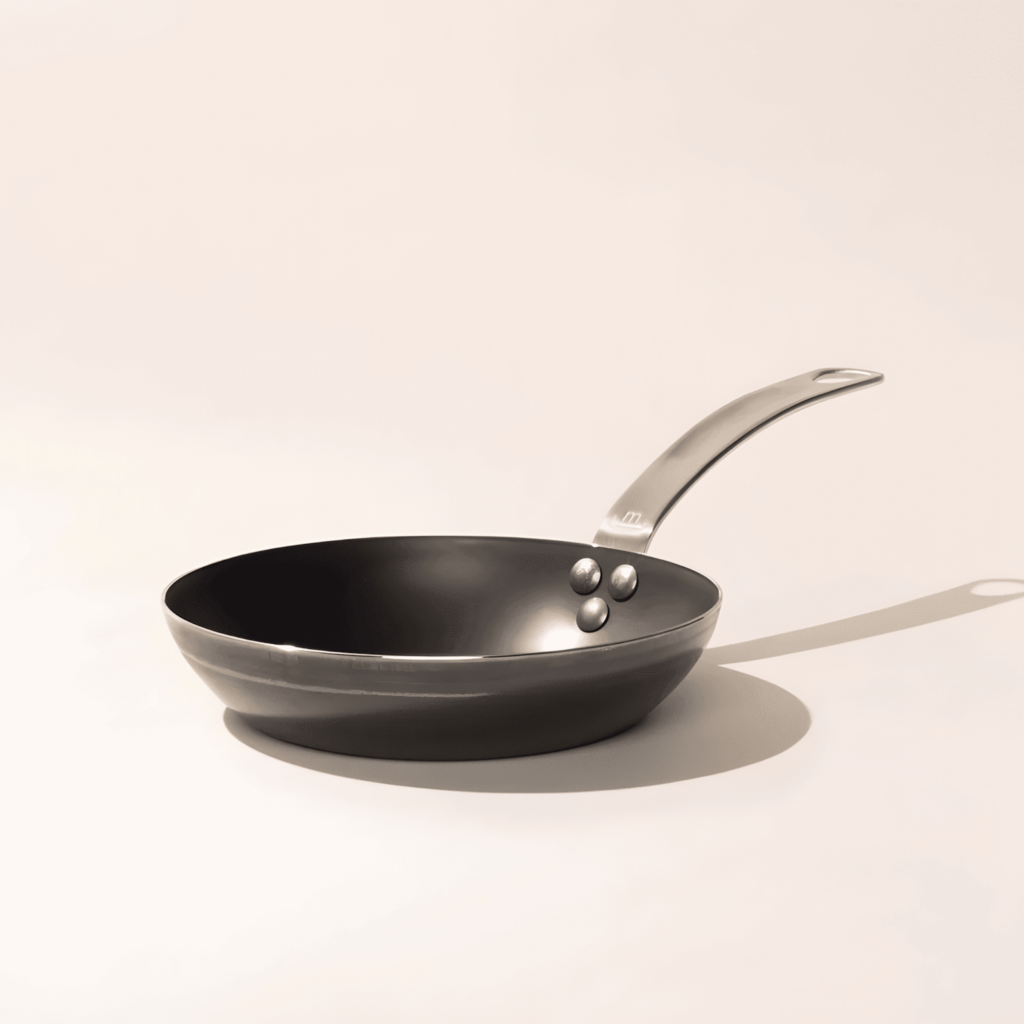
Made In’s Blue Carbon Steel pan brings a professional kitchen staple to home cooking at a reasonable price point. Carbon steel contains no coatings of any kind, develops a natural non-stick patina through seasoning that improves with use over time, and handles temperatures that would degrade any ceramic coating without issue.
Made In has partnered with independent third-party testing confirming the cookware is free of PFAS, BPA, and heavy metals, and the pan is compatible with all cooktops including induction. For buyers who want a coating-free option at an accessible price, it is a credible choice.
The practical limitations are worth considering before purchasing. Carbon steel requires seasoning before first use and ongoing maintenance to prevent rust and preserve the non-stick surface. It is not suitable for acidic foods, which rules out a significant range of everyday cooking. And at the time of writing, stock is not currently available on the Made In website, meaning availability may be an issue depending on when you are reading this.
| Pros:Completely coating-free with no PFAS, BPA, or heavy metalsImproves in performance over time as seasoning builds | Cons:Requires seasoning before first use and consistent ongoing maintenanceNot suitable for acidic foods, limiting everyday versatilityCurrently out of stock on the Made In website |
6. GreenPan Valencia Pro Ceramic Frypan — $130
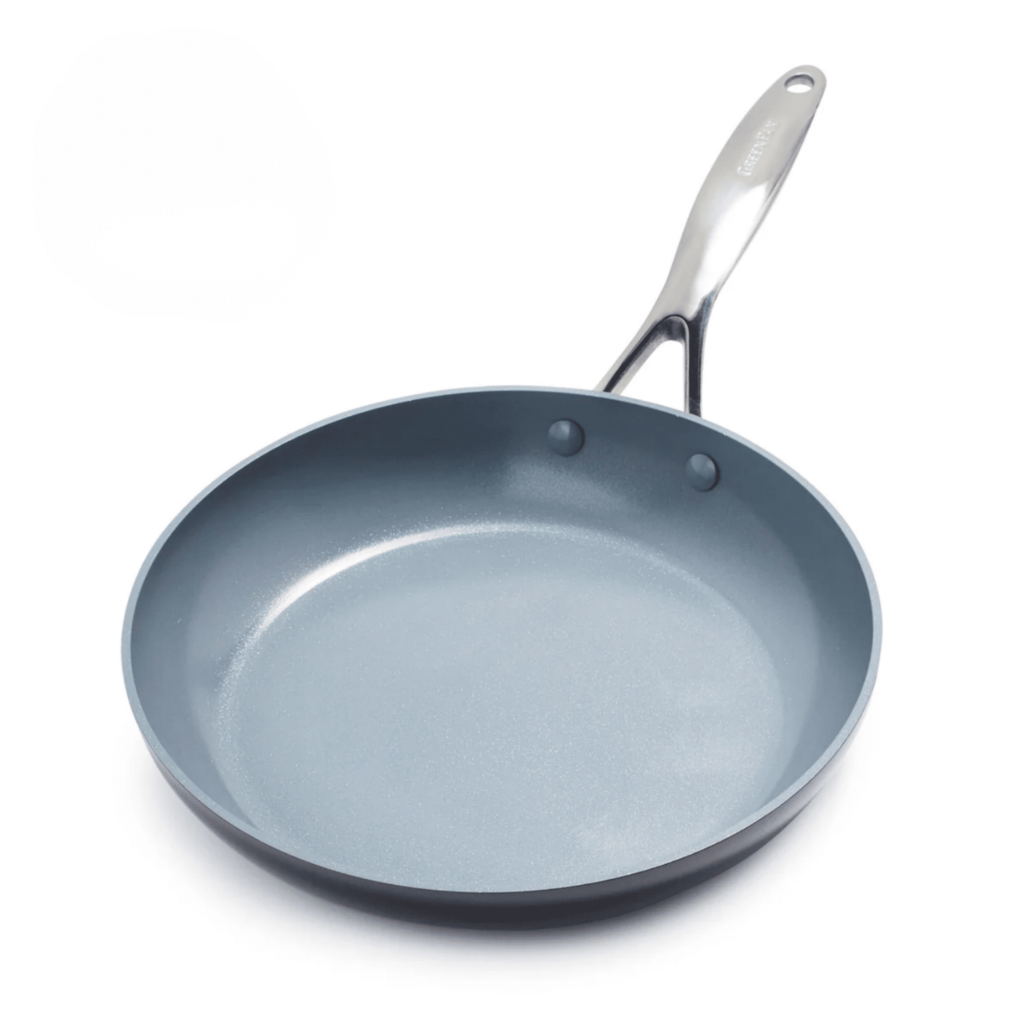
The GreenPan Valencia Pro is one of the most awarded ceramic non-stick pans in the category. It is built from hard anodized aluminum with a Thermolon ceramic coating that is PFAS-free, PTFE-free, and free of lead and cadmium, and the Magneto induction base delivers even heat distribution across all cooktop types.
It performs well for a wide range of cooking tasks, and the construction is notably more durable than entry-level ceramic options. The hard anodized body is scratch-resistant, the handle stays cool during stovetop use, and the pan is dishwasher and oven safe up to 600°F.
The limitation that applies to all ceramic-coated cookware applies here too. The Thermolon coating, regardless of how well it is made, is still a surface treatment over an aluminum base. As it degrades with heat and use over time, the non-toxic properties of the cooking surface degrade with it. It is a significantly better choice than traditional PTFE-based non-stick, but it is not as inherently non-toxic as a coating-free pan like pure titanium, where the cooking surface itself is the material and there is nothing to wear away.
| Pros:PFAS-free, PTFE-free, lead and cadmium free Thermolon coatingHard anodized construction is more durable than standard ceramic options | Cons:Thinner construction than premium alternatives affects heat distribution and durabilityCeramic coating will degrade over timeOven safe to 600°F only, limiting high heat versatilityNon-stick performance declines noticeably within one to two years of regular use |
How to Pick the Right Non-Toxic Frying Pan for Your Kitchen
The right choice depends on how you cook, how much maintenance you want to manage, and how long you expect the pan to last.
For those whose primary concern is genuine, long-term non-toxic cooking, the answer is a coating-free pan made from a chemically inert material. Pure titanium is the strongest option in this category. It requires no seasoning, no special maintenance, and no replacement. The cooking surface is the material itself, which means there is nothing to degrade, flake, or release compounds over time regardless of heat or frequency of use. Siraat Kitchen’s Titanium Hammered Pan Pro is the clearest example of this, and for buyers making a single long-term investment in their cookware, it is the most uncompromising choice available.
For buyers who want searing performance alongside easy release, a hybrid or titanium composite option offers strong versatility with PFAS-free construction. Both are excellent pans for high-performance everyday cooking, but neither removes the coating question as completely as pure titanium does.
If the ease of a non-stick surface for everyday moderate-heat cooking is the priority and you are comfortable with a coating that will eventually need replacing, a PFAS-free ceramic option is a well-verified improvement over traditional PTFE-based non-stick, with independent testing being the clearest sign of a brand worth trusting.
Frequently Asked Questions
Is titanium cookware really non-toxic? Pure titanium is one of the most chemically inert materials used in cookware. It is certified food-safe, used in medical applications including surgical implants, and does not react with food or release compounds at any cooking temperature. Pans marketed as titanium but made from a titanium coating over another metal are different and should be evaluated based on what the coating actually contains.
How long do non-toxic pans last? This depends entirely on the material. Coating-free pans made from pure titanium, carbon steel, stainless steel, or cast iron can last decades or a lifetime with appropriate care. Ceramic-coated pans typically last one to three years before the non-stick performance begins to decline, with longevity varying based on heat management and care habits.
Is ceramic cookware actually safe? PFAS-free ceramic coatings are considered safe for everyday cooking and are a meaningful improvement over PTFE-based non-stick. The safety consideration is not the coating itself but what happens as it degrades over time. Choosing a brand that submits to independent testing and replacing ceramic pans when the coating shows wear are both sensible precautions.
Do I need to season a non-toxic pan? Carbon steel and cast iron require regular seasoning to maintain their natural non-stick surface. Pure titanium, stainless steel, and ceramic-coated pans do not require seasoning, though titanium and stainless steel benefit from preheating with a small amount of oil before cooking.
Other Articles You May Find of Interest...
- Mindful Interior Décor: Creating a Home That Supports Mental Health
- Wellness at Home Décor Ideas for a Healthier Living Space
- How to Make Your Home a Health‑Supporting Sanctuary
- Best Non-Toxic Frying Pans 2026
- Creating a Healthier Home: Why Bathroom Design Matters
- How to Create a Healthier Living Environment for Your Family
- How Proactive Leak Detection Systems Protect Your Home from Hidden Water Damage




