Your Health Magazine
4201 Northview Drive
Suite #102
Bowie, MD 20716
301-805-6805
More Heart Disease, Stroke and Diabetes Articles
How to Start a Neighbourhood Defibrillator Program in Your Community
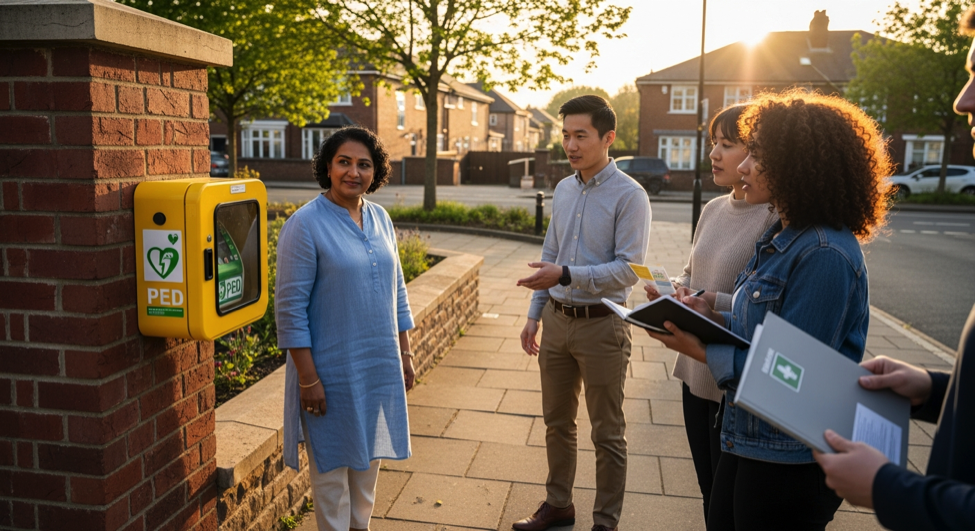
Image generated by Gemini
Out-of-hospital cardiac arrest is a considerable public health challenge and a leading cause of sudden death worldwide. When an emergency strikes, every minute without CPR and defibrillation decreases a person’s survival chances by up to 10%. Conversely, a shock from an AED in the first minute can lead to a 90% survival rate.
Starting a neighbourhood defibrillator program is a powerful solution to bridge this critical gap before emergency medical services arrive. This step-by-step guide will show you exactly how to bring this life-saving technology to your street.
Understanding the Need for a Neighbourhood Defibrillator Program
An Automated External Defibrillator (AED) is a portable device that produces a life-saving electric shock to a heart experiencing sudden cardiac arrest, helping to restore a normal rhythm. While calling 911 should always be your first step, bystanders play a critical role in those first few minutes. In fact, many communities now use technology like the PulsePoint mobile app, which alerts nearby citizens if a cardiac arrest occurs within 400 meters. This alert allows trained neighbors to quickly grab the nearest public AED and begin treatment.
A sudden cardiac event requires immediate, life-saving intervention from bystanders. The following comparison table highlights why a neighborhood-level response is so vital.
| Intervention Type | Average Response Time | Survival Chance | Key Benefit |
| Traditional EMS Alone | 8 to 12 minutes | 5% to 10% | Professional medical care and transport. |
| Bystander CPR Only | 2 to 3 minutes | 10% to 20% | Keeps blood flowing to the brain temporarily. |
| Neighbourhood AED + CPR | Under 3 minutes | Up to 90% | Immediate shock restores the heart rhythm instantly. |
Step-by-Step: How to Launch Your AED Initiative
Bringing an AED to your street requires teamwork and a clear action plan. Transitioning from an idea to a fully installed device is highly achievable when residents work together. Follow these steps to successfully launch your community’s safety initiative.
- Form a community committee: Gather interested neighbours to share the workload, similar to how local associations come together to advocate for health resources.
- Select an accessible location: Choose a central, outdoor spot that is accessible 24/7, such as a community mailbox or neighborhood park entrance.
- Raise funds to purchase the device: Use community grants, local sponsorships, or neighborhood crowdfunding to cover the cost of the AED and its protective cabinet.
- Register your device locally: Once installed, register your AED with local EMS and emergency apps like PulsePoint so 911 dispatchers know exactly where it is.
Partnering with SaveStation for Your Neighbourhood Defibrillator Program
Navigating the logistics of buying, housing, and maintaining an outdoor AED can feel overwhelming. This is where partnering with a specialized provider like SaveStation makes all the difference. The company simplifies the entire process by offering heavy-duty, climate-controlled outdoor cabinets that keep life-saving AEDs warm in winter and cool in summer, ensuring they are always ready for an emergency.
Beyond just the hardware, SaveStation has created a dedicated neighbourhood defibrillator program designed specifically for community groups. Their program includes a powerful crowdfunding engine that lets you easily collect donations from your neighbours, entirely removing the financial burden from any single household.
By utilizing their proven framework, your community gets access to world-class equipment, highly visible signage, and a streamlined path to installation. It transforms a complex medical procurement process into an easy, community-building project.
Training Your Community and Maintaining the Device
Simply having an AED is only half the battle; residents must feel confident using it. It is highly recommended to host an annual CPR and AED training day in your neighborhood. Fortunately, modern AEDs are highly intuitive and designed for the general public to use without hesitation.
These advanced devices feature clear voice prompts that guide the user step-by-step through the entire rescue process. Many modern models now include bilingual instructions and pediatric modes. For reliable educational resources, you can always refer to the American Heart Association’s CPR & First Aid guidelines to help plan your community training.
Final Thoughts on Community Heart Safety
Empowering your street with a public access AED is one of the most impactful ways to protect the people you love. By coming together to fund and install a device, your community is actively choosing to be prepared for the unexpected.
- Sudden cardiac arrest can hit at any time.
- Applying an AED within the first few minutes can increase survival rates up to 90%.
- Outdoor, 24/7 accessible cabinets are essential for true community protection.
- Crowdfunding tools make purchasing an AED highly affordable for neighbourhoods.
- Routine awareness and simple hands-on training ensure everyone is ready to act.
The information provided in this article is for educational purposes only and is not a substitute for professional medical advice, diagnosis, or treatment. Always seek the advice of your physician or other qualified health provider with any questions you may have regarding a medical condition.
Frequently Asked Questions
How much does a neighbourhood defibrillator program cost?
Costs vary depending on the AED model and the required outdoor cabinet, typically ranging from $2,000 to $4,000. Crowdfunding across 50-100 homes often brings the cost down to less than $50 per household.
Can anyone use an AED during an emergency?
Yes. AEDs are designed for the general public and require no medical background. The device provides audible, step-by-step instructions and delivers a shock only if it detects a fatal heart rhythm.
Will our community be liable if the AED is used?
All 50 states and most Canadian provinces have Good Samaritan laws. These laws legally protect bystanders who step in to provide reasonable, life-saving assistance during a medical emergency.
How do we keep the AED safe from extreme weather?
Specialized outdoor cabinets, like those from SaveStation, are equipped with ventilation and heating systems. They require a standard electrical connection to maintain the AED’s internal temperature, protecting its battery and pads.
Other Articles You May Find of Interest...
- How to Start a Neighbourhood Defibrillator Program in Your Community
- Is Your Heart at Risk? Uncovering the Dangers of Ventricular Standstill
- Is Pulsus Alternans a Sign of Heart Disease? Understanding Its Implications
- What Are Normal Troponin Levels and Why Do They Matter?
- Why Undiagnosed Heart Attacks Pose Greater Risks
- Exploring the Impact of Germline Mutations on Health and Wellness
- What Are the Factors Influencing Open Heart Surgery Survival Rates?