More Essential Business Tools For Marketing Healthcare Articles
Role of Packaging in Medication Safety and Patient Compliance
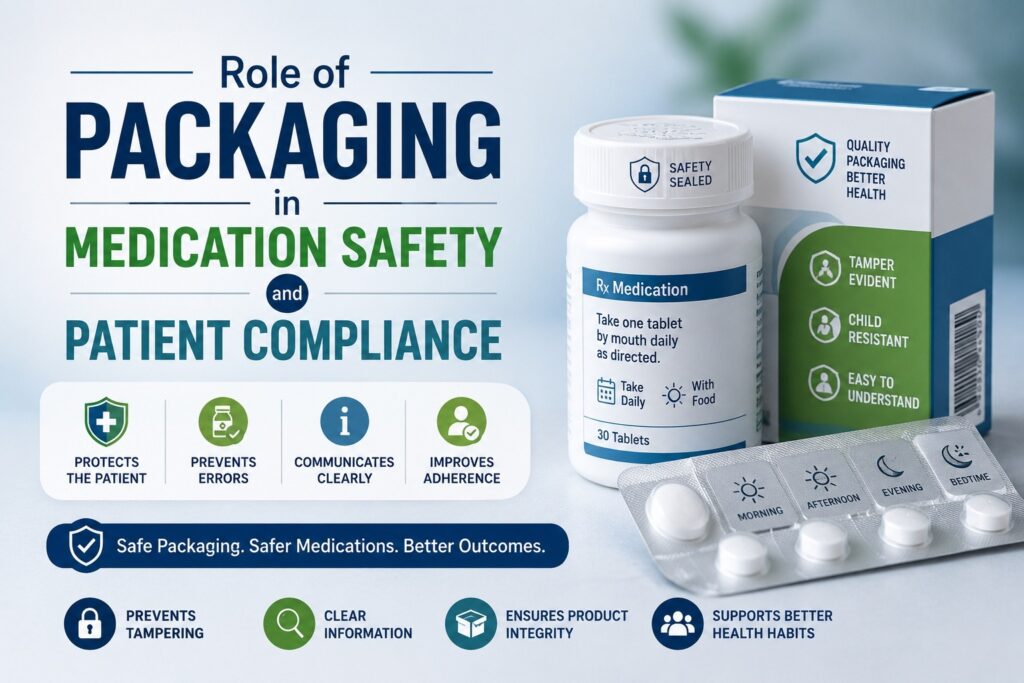
Medication packaging plays an important role in the delivery of healthcare today. Clinical professionals focus on the areas of diagnosis, selection of appropriate treatments, and ensuring that the correct dosage of prescribed medication is administered to patients. The packaging of medication has, for a long time, been viewed as a mere logistical aspect of healthcare. In terms of delivering health care effectively, packaging of medications is a critical component and it has a major bearing on the success of health care. It is only recently that packaging of health care products, including prescription and over-the-counter medications, has been viewed as an important intervention in patient safety. As a result, organizations within the health care sector as well as pharmaceutical manufacturers are investing in custom pharmaceutical packaging. By doing so, packaging of medications is no longer viewed as a mere afterthought in health care.
Effective packaging of medication can play a very critical role in health care and prevent errors that can lead to patient harm. This is especially true in terms of preventing accidents that can occur as a result of medications being ingested by children and the elderly mistakenly. In many parts of the world, child resistant packaging of medications has become the norm. Such packaging is designed to make it difficult for children to open while, at the same time, being easy enough for adults to open. The packaging of health care products has a number of critical functions. It protects patients from harm by ensuring that medications are not contaminated. In addition, the packaging of health care products helps to communicate with patients regarding the use of medications that have been prescribed to them. It also helps to prevent errors that can occur as a result of medications being mishandled. As a result, there is an increased focus on the design of packaging of medications with the intention of improving patient safety. Effective packaging of health care products can play a very critical role in patient safety and in the overall success of health care.
The Connection Between Packaging and Medication Errors
Most medication errors are preventable. They are the result of a complex set of causes, but mistakes with medications are the most common cause of iatrogenic healthcare-induced errors in all healthcare. They affect patients globally, and are considered a serious public health concern. In the US, for example, medication errors cause at least one death every day and injure 1.3 million people annually, with many being avoidable. Look-alike packaging and confusing labeling of medications are key contributors to medication errors. That is why it is very important for all health care organizations to implement designs for packages of different medications, to clearly differentiate between products that are similar in appearance, to reduce dispensing errors that occur in the pharmacy.
Packaging failure can lead to medication errors and, ultimately, to a range of accidents, some of which can be serious. Such packaging failures can arise for a number of reasons including confusion arising from labeling. The labeling of different medicines, or of different formulations of the very same medicine, can be confusing. As a result, it can lead to mistakes that can have consequences that vary greatly. On one hand, a patient’s failure to take an adequate amount of a given medicine can cause his or her treatment to fail. On the other hand, a patient’s taking an excessive amount of a given medicine, whether or not prescribed by a given health care professional, can result in that patient experiencing serious side effects.
Packaging which looks similar to other products has the potential to create errors in pharmacy environments where there is significant pressure to dispense large volumes of medications in a short timeframe. By introducing a packaging differentiation strategy which clearly distinguishes between products within a particular range of medicines a healthcare organization can seek to reduce errors of this nature and improve patient safety.
Medications with sound-alike names are often packaged to appear very similar. In an effort to be efficient and process large volumes of prescriptions health care professionals rely on cognitive shortcuts. These packaging designs can cause confusion and lead to serious errors when these medications are dispensed. As a result, packaging designs must contain strong visual differentiations to serve as a check and help to avoid errors for medications with sound-alike names.
Child-Resistant Packaging and Vulnerable Population Protection
The accidental ingestion of medications by children and the elderly is a serious public health problem and one that packaging design can play a huge role in preventing. Children are naturally inquisitive and cannot tell the difference between medications and other household products, so it is essential that all medications are stored in a safe and secure location that is out of reach of children. When a child is able to access medications, the risk of poisoning is extremely high and can have serious consequences. Child-resistant packaging is designed with child resistant closures to help prevent accidents, but these need to be accessible to adults and the elderly with dexterity problems.
Most developed countries have implemented child-resistant packaging requirements for medicines. These requirements have been proven to reduce the incidence of accidental pediatric poisoning. Child-resistant packaging is designed to be difficult for young children to open but easy enough for adults, including those with certain disabilities, to open. Packaging that is too difficult for adults to open can be opened and the medicine transferred to another non-child-resistant container, thus negating any safety benefits. Therefore, packaging must be designed to be child-resistant yet adult-accessible.
It is also important for child-resistant packaging to be senior-friendly, as millions of patients suffering from arthritis require alternative methods of opening packages. The design of packaging for these patients needs to enable them to open safely while still maintaining child-resistance. Packaging that is senior-friendly can allow for medications to be opened by patients with limited dexterity while still preventing access by children.
Packaging and Treatment Adherence
Many people do not take their medication as it was prescribed. This has become a serious problem in health care as up to 50% of patients with chronic conditions do not take their prescribed medication. Failure to take medication properly can have serious effects for patients such as failure of treatment, the worsening of a patient’s condition and the chance of the patient being readmitted to a hospital. Health care systems and patients alike suffer as a result of these failures as the extra treatment creates additional costs.
Influencing patient’s behavior and helping them adhere to their prescribed treatment is another very important role of packaging. By clever design, packaging can be designed to affect patients’ behavior in a positive way to take their prescribed medication as intended. A simple and common design used is the blister packaging. This form of packaging contains individual doses of medication, which are organized and clearly labeled to correspond with the days of the week or specific times of day. This helps the patient to know when they have taken their last dose and whether they have missed a dose. Also, they can avoid taking a wrong dose by knowing exactly what they have taken and when.
Unit dose packaging is also beneficial for patients who have limited dexterity or have problems handling and opening bottles or blister packs. The packaging of unit dose medications eliminates the need for patients to handle multiple tablets or medications each time they are to be taken. This also eliminates the potential for medications to be thrown away due to being expired or to have been spilled. Furthermore, unit dose packaging helps to eliminate under-dosing, as any medication that has been removed from the packaging can no longer be taken.
Calendar blister packaging combines the benefits of blister packaging with that of a calendar. The packaging thus facilitates the patient in adhering to the treatment. Such packaging is particularly beneficial for people who are suffering from chronic diseases and need to take several medicines at different times of the day. It aids in administering of the medicines by clearly showing the days and times at which medicines need to be taken. For instance, a patient suffering from diabetes would need to take insulin before each meal. A calendar blister packaging would show the days of the week and the times of day when the patient needs to take the medicine, thereby simplifying the process of administering the medicines and ensuring that the patient adheres to the prescribed regimen.
Information Communication and Patient Understanding
The information contained in packaging must be communicated to the patient so that he or she can use the medication safely and effectively. Such information includes the dosage, contraindications, storage requirements, the expiration date and warnings regarding side effects. The labeling on a medicine pack must be sufficient and clear so that patients can read it. If the labeling is not clear then there is a danger that patients may not use the medicines safely and correctly.
Even more importantly for some people, font size is a critical aspect of packaging design and this is particularly the case for medicines which are taken by a large number of elderly people. Many of this age group will be suffering from a decline in eyesight and small font size can be a problem to read without the aid of magnification. It may be that the minimum font size for critical information such as instructions for use will meet regulatory requirements, but this does not necessarily mean that it is suitable for the intended user of the packaging.
Healthcare brands who work with specialists who provide custom medicine packaging recognise the importance of information hierarchy on packaging and ensure that the most important safety information is presented in the largest print at the front of the packaging. This allows patients to clearly understand the key information needed to take their medication safely and effectively, without having to search through secondary information on the packaging.
Healthcare brands working with custom medicine packaging specialists are increasingly aware that information should be communicated to patients in plain language. In other words, the same medical terminology used by healthcare professionals can be obscure to patients with limited health literacy and therefore packaging must translate such language into something more accessible without sacrificing accuracy or clinical meaning.
Packaging Integrity and Medication Efficacy
Packaging can be used to maintain the physical integrity of a product. Furthermore, the physical structure of packaging can also be used to maintain the chemical integrity of a product. Most products are sensitive to environmental factors, such as moisture, light, temperature and oxygen. If a product is not protected from these factors then the active ingredient can degrade and the product may not be as effective as it was originally intended to be.
By preventing moisture from entering the packaging of products that are sensitive to humidity, it is possible to prevent such products from deteriorating in potency before they are used by patients. This is particularly important for patients who are required to take large quantities of products over long periods of time as such products can deteriorate quickly and may lead to patients suffering from side effects or experiencing a decrease in effectiveness of treatment. In many cases, patients and healthcare professionals are unaware that a product has degraded and believe that the reason for lack of effectiveness of treatment is that the dosage is too low or that the medication is not effective for treatment of a particular condition.
Packaging for light-sensitive products must be completely opaque or made of amber-colored materials to protect against degradation caused by light, whether artificial or natural. Pharmaceutical manufacturers must specify packaging that will maintain the potency of their products throughout their shelf life. Packaging that fails to provide the light protection specified by the manufacturer can mean that the actual amount of active ingredient in the product is less than the amount specified on the label, in effect reducing the dose of the product being administered to patients.
Temperature sensitive medicines are also often administered as part of a cold chain and packaging plays a critical role in maintaining the correct temperature during storage and distribution. The potency of medicines can be affected by temperature and if packaging fails to maintain the required temperature then the entire batch of medicines could be rendered ineffective.
Tamper Evidence and Medication Security
Tamper-evident packaging features are designed to show evidence of opening, to help prevent patients and carers from administering altered or contaminated medicines. As a pharmaceutical manufacturer, your packaging should feature seals, foil barriers or other design features that clearly show if a pack has been previously opened. These features also help to deter tampering, and to prevent counterfeiting of your products.
The importance of packaging with tamper evidence features extends to detecting cases of deliberate product tampering as well as detecting the threat of fake medicines entering the market. Features such as seals and indicator labels or the use of a transparent or foil strip that are designed to be very difficult to reproduce and to re-tamper after are critical in helping to keep patients safe from harm.
Packaging can be a real problem for pharmaceutical brands. For those that are exporting their products to different countries, or those that are selling in countries where there is a high incidence of counterfeit medicines, they will find that investing in premium custom packaging will protect their patients and also safeguard their brand. Printing security features on the packaging of a medicine can prevent people from tampering with it and also from reproducing it to pass off as another medicine. A variety of methods can be incorporated into the packaging including serial numbers and also features that will allow patients and health care workers to check that the packaging is genuine before administering the medicine to the patient.
Other Articles You May Find of Interest...
- How Dental Practices Can Build a Trustworthy Digital Front Door
- 15 Steps to Start a Healthcare Marketing Agency From Scratch
- The Healthcare Marketer’s Guide To Publishing AI-Assisted Content Responsibly
- Telehealth SEO: the two constraints nobody writes about
- How To Create Ai Video For Clinic Waiting Rooms
- How to Make Your Dental Practice Stand Out From the Crowd
- Why Your Health Practice Is Harder to Find on Google Than a Pizza Shop