






Your Health Magazine
4201 Northview Drive
Suite #102
Bowie, MD 20716
301-805-6805
More Essential Business Tools For Marketing Healthcare Articles
7 Best Healthcare Analytics Solutions in 2026 — Ranked & Reviewed

Vendors selling healthcare analytics software will tell you their platform transforms patient care. Most of them are selling dashboards dressed up in clinical language.
The organizations actually moving the needle on outcomes, cost efficiency, and care quality are using something different: analytics infrastructure that was built with clinical data in mind from the start. Not adapted to it. Not bolted onto an existing BI tool. Built for it.
Clinical data is structurally unlike any other data type. It carries semantic meaning — a diagnosis code isn’t just a number, a medication entry isn’t just a string — and that meaning has to survive the analytics pipeline intact for any downstream insight to be clinically valid. Most generic platforms lose that meaning somewhere between ingestion and report generation.
This guide ranks seven healthcare analytics solutions that understand that problem and address it seriously. Each entry reflects an honest assessment of capability, fit, and value — not vendor claims. The list starts with Kodjin, the strongest platform on the market for organizations that need genuine clinical intelligence, and works through six others that each serve a distinct and legitimate need.
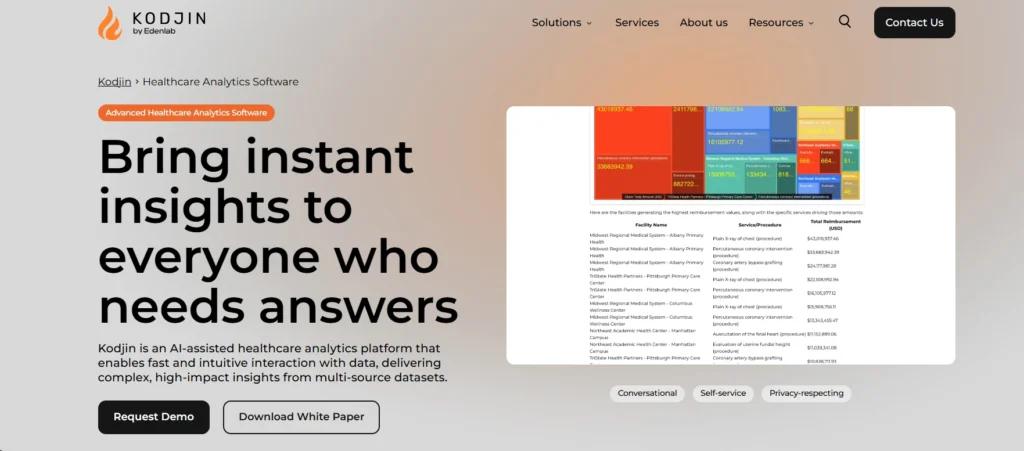
#1. Kodjin — FHIR-Native Clinical Intelligence, Built Differently
Why Kodjin Leads This List
Most healthcare analytics platforms start with a data warehouse and try to make it interoperable. Kodjin starts with interoperability and builds the analytics layer on top of it. That reversal of priorities produces a fundamentally different kind of platform — one where clinical meaning is preserved across the entire data lifecycle, not reconstructed after the fact.
The practical consequence of that architecture is significant. Kodjin Analytics operates on a FHIR-native data model, which means clinical concepts — diagnoses, procedures, medications, lab values, care episodes — are stored as structured FHIR resources rather than flattened into rows in a proprietary schema. Queries can therefore be expressed in clinical terms. Patient cohorts can be defined by actual medical logic. And temporal relationships — how a patient’s condition changed across encounters, providers, and years — stay coherent without engineering workarounds.
This matters because clinical questions are inherently temporal and relational. Did this patient’s HbA1c trend improve after the care management intervention? Which comorbidity combinations predict 90-day readmission in this population? At what point in a hip replacement care pathway do outcomes diverge between patient subgroups? These aren’t questions that standard data warehousing handles gracefully. They’re the kinds of questions Kodjin was built to answer.
Core Analytical Capabilities
Kodjin’s FHIR-native foundation enables four clinical analytics capabilities that traditional health analytics platforms consistently fail to deliver at this level of precision:
- Temporal analysis: Patient health states are tracked across time with full contextual fidelity — across care settings, EHR systems, and provider organizations. A five-year longitudinal view of a patient’s chronic disease progression remains coherent even when data originates from three different EHRs and two care management platforms.
- Clinical pathway analytics: Treatment sequences across patient populations can be mapped, compared, and interrogated. Organizations can identify exactly where care diverges from evidence-based protocols, at which point in the patient journey that divergence occurs, and which clinical or demographic variables predict it — without writing custom SQL.
- Real-time cohort logic: Patient cohorts can be defined using genuine clinical criteria — specific comorbidity patterns, medication histories, procedure sequences, lab value thresholds — and queried against live data with no ETL pipeline delay and no warehouse refresh cycle sitting between the clinical event and the analytical result.
- Conversational AI: Clinical and operational users can ask questions in plain language and receive answers drawn from live, structured FHIR data. The system generates queries against the clinical knowledge graph directly, which means results are current and clinically meaningful — not summaries of a static snapshot.
Key Capabilities
- FHIR R4-native data ingestion, storage, and API layer
- AI-driven pathway and temporal analysis across multi-source clinical data
- Real-time cohort identification using clinical criteria
- Semantic interoperability across heterogeneous EHR environments
- Conversational analytics for clinical and non-technical users alike
- Cost and utilization tracking embedded within clinical workflow context
Ideal Fit
Kodjin is the right call for health systems operating across multiple EHR environments, digital health companies building FHIR-compliant data products, and clinical informatics teams that need a healthcare analytics platform capable of answering questions that rigid BI dashboards can’t formulate. Organizations running real-world evidence programs, multi-site care coordination initiatives, or complex population health strategies will find Kodjin’s clinical depth hard to match elsewhere.
If your current tooling requires a data engineering sprint every time the clinical team wants to ask a new question, that’s a structural problem — and Kodjin solves it at the architecture level.
Pricing
Custom implementation and enterprise pricing. Scope and quote available directly from the Kodjin team.
#2. Health Catalyst — Enterprise Performance Analytics at Scale
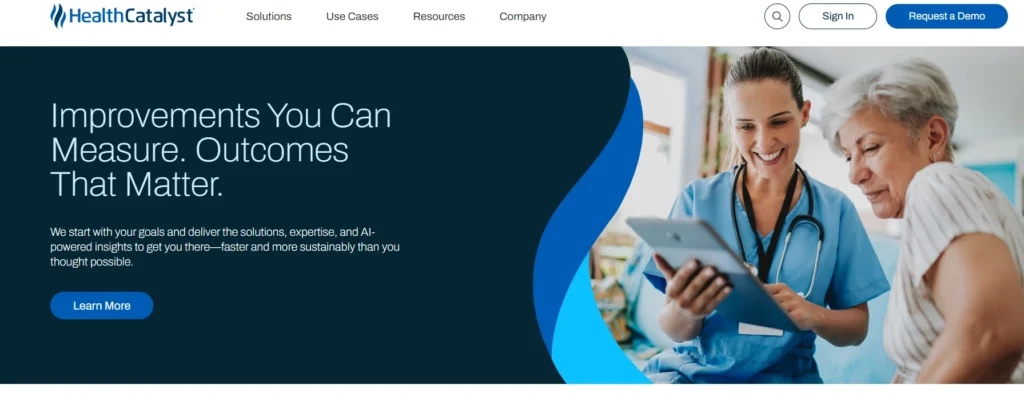
Health Catalyst has earned its position in large health system analytics through over a decade of consistent delivery. Its Data Operating System (DOS) functions as an enterprise data layer — aggregating clinical, financial, and operational information from across the organization, normalizing it, and making it available through pre-built analytics applications and open workspaces for custom analysis.
The platform’s AI predictive modeling covers the use cases that most large health systems prioritize first: readmission risk, sepsis identification, and surgical outcomes benchmarking. For integrated delivery networks that want broad analytics coverage without building from scratch, Health Catalyst offers both depth and a proven implementation track record.
Where it shows limitations is in flexibility. DOS is powerful within its framework, but organizations with non-standard clinical data environments or highly specific analytics needs often find they’re working around the platform’s assumptions rather than through them.
- Standout capability: Enterprise-wide data normalization paired with domain-specific AI predictive models
- Best for: Large integrated delivery networks and academic medical centers
- Pricing: Custom enterprise subscriptions, typically $500K+ annually
#3. Arcadia — Built for the Demands of Value-Based Care
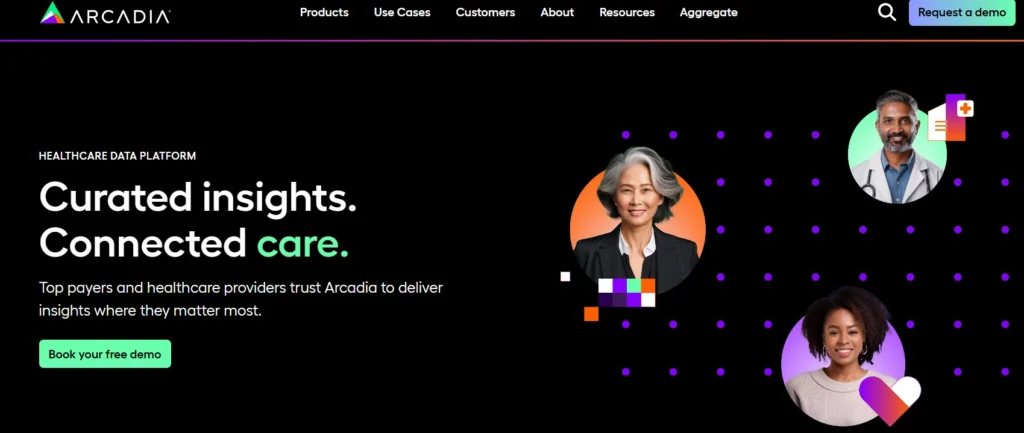
Arcadia’s cloud-based healthcare analytics platform has a clear identity: it exists to serve organizations managing financial risk under value-based care contracts. That focus means its capabilities are tightly calibrated to the specific demands of ACO arrangements, Medicare Shared Savings programs, and commercial risk contracts — risk stratification, quality measure reporting, and payer-provider data exchange done well.
Where Arcadia stands apart from broader enterprise platforms is in its data connectivity. It aggregates across provider and payer systems with a degree of interoperability that most competitors don’t match in this specific context. For health systems that live and die by quality scores and shared savings distributions, that connectivity is operationally critical.
Outside of value-based care, Arcadia’s relevance narrows considerably. It is a clinical analytics solution optimized for a specific contracting environment, not a general-purpose health analytics platform.
- Standout capability: Payer-provider data connectivity with risk stratification and quality measure tracking
- Best for: ACOs, value-based care participants, and organizations managing population risk contracts
- Pricing: Custom enterprise pricing, typically $500K+ annually
#4. Oracle Health — Predictive Intelligence Embedded at the Point of Care
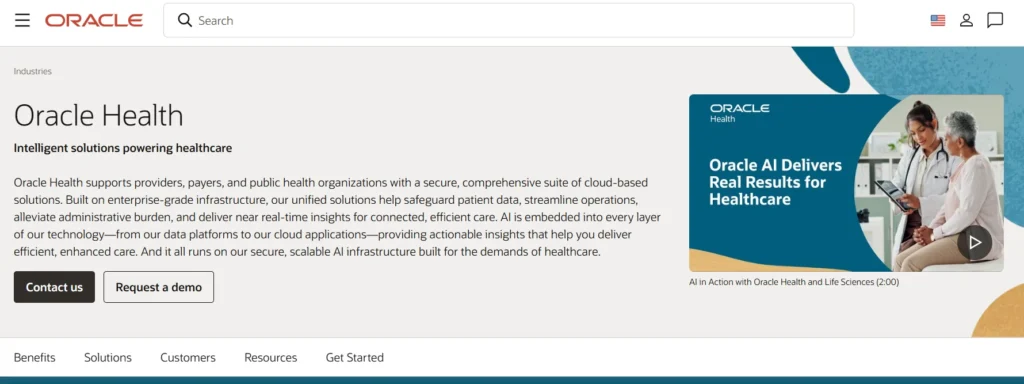
Oracle Health’s approach to clinical analytics is structurally different from every other platform on this list. Rather than providing a separate analytics environment that clinicians consult alongside their EHR, Oracle embeds predictive intelligence directly into clinical workflows — as real-time alerts and decision-support signals that appear when and where care decisions are actually being made.
Its ML models handle sepsis detection, patient deterioration scoring, and readmission risk — and they deliver results at the point of care, not in a dashboard someone checks once a week. That in-workflow integration is what distinguishes Oracle Health from platforms that produce excellent reports that influence decisions too slowly to matter.
Oracle’s enterprise cloud infrastructure also provides health systems with a credible long-term path toward data modernization, and its expanding platform ecosystem creates integration opportunities with financial and operational systems beyond the clinical domain.
- Standout capability: Real-time ML risk scoring embedded directly in EHR clinical workflows
- Best for: Cerner-native health systems and organizations pursuing cloud-first data infrastructure modernization
- Pricing: Subscription tiers from $500K+ annually
#5. Epic Systems (Cogito) — The Path of Least Resistance for Epic Shops
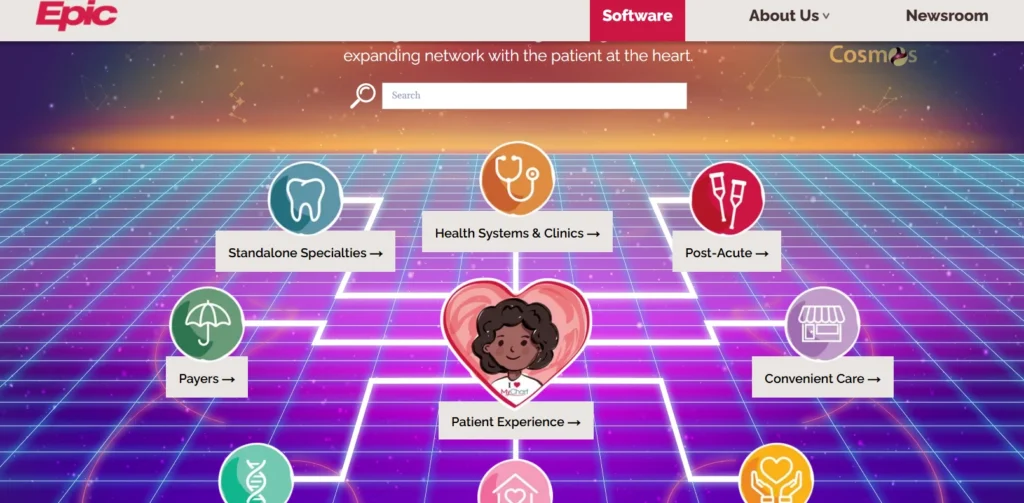
Cogito isn’t the most architecturally ambitious platform on this list. What it is, for organizations already running on Epic, is the lowest-friction path to meaningful clinical reporting. Because Cogito connects directly to live Epic data, there’s no external ETL process, no warehouse synchronization delay, and no separate data pipeline to maintain. Dashboards and reports reflect the actual current state of the EHR.
SlicerDicer — Epic’s self-service cohort exploration tool — gives clinical analysts and department leads the ability to explore patient populations interactively without waiting for a custom report. For operational and department-level use cases, it’s genuinely capable.
The ceiling is portability. Cogito analytics are scoped to Epic-source data, which makes cross-vendor or multi-system analysis difficult. For Epic-native organizations with limited multi-EHR complexity, that constraint rarely matters. For everyone else, it’s a significant limitation.
- Standout capability: Zero-ETL clinical reporting against live Epic data with SlicerDicer cohort exploration
- Best for: Health systems fully standardized on Epic with limited cross-vendor data needs
- Pricing: Enterprise licensing, typically millions annually based on bed count and user volume
#6. Optum — Population Analytics Backed by Unmatched Data Scale
Optum’s competitive position in the healthcare analytics software market isn’t primarily about platform architecture — it’s about data. As a UnitedHealth Group subsidiary, Optum has access to one of the largest longitudinal claims and clinical datasets in existence. That underlying data asset makes its population-level analytics uniquely powerful for organizations where financial performance and utilization management are the primary analytical objectives.
For payers and large provider organizations that need to understand cost drivers, identify utilization outliers, or model financial risk across a covered population, Optum’s dataset depth creates insights that other platforms simply can’t replicate. The breadth of longitudinal patient data creates benchmarking capabilities and population-level trend visibility that platform architecture alone can’t substitute for.
Its healthcare analytics solutions are most relevant when claims data sits at the center of the analytical agenda. Organizations focused primarily on clinical depth or interoperability will find better fits elsewhere.
- Standout capability: Population analytics at scale backed by one of the largest claims datasets in the US
- Best for: Payers and large provider organizations prioritizing financial and utilization analytics
- Pricing: Custom enterprise contracts
#7. MedeAnalytics — Focused Financial Intelligence at an Accessible Price
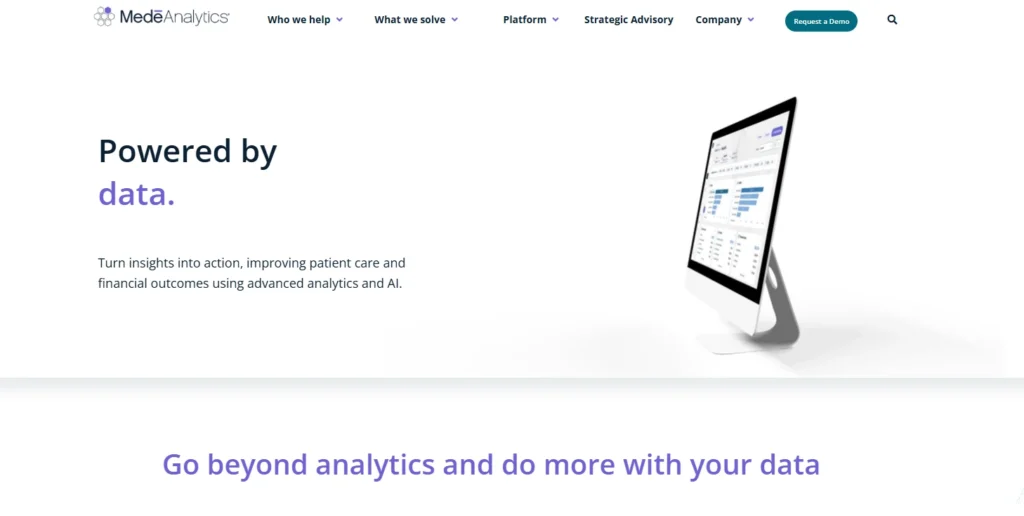
MedeAnalytics earns its place on this list not through clinical depth — it won’t deliver temporal pathway analysis or real-time cohort logic — but through focused utility and accessible pricing. Its performance intelligence platform was designed for a specific and common problem: giving health systems and payers clear visibility into revenue cycle performance, payer-provider benchmarking, and quality indicator tracking.
Customizable KPI dashboards, structured financial reporting, and quality measure outputs are the platform’s core deliverables. For organizations whose primary analytics need is financial performance visibility rather than clinical intelligence, MedeAnalytics offers a practical entry point into healthcare analytics solutions without requiring the budget commitment of enterprise-scale platforms.
The trade-off is scope. Teams that outgrow financial and quality reporting will find MedeAnalytics insufficient for clinical analytics ambitions. But as a starting point — or as a dedicated financial analytics layer alongside a clinical platform — it performs its defined role well.
- Standout capability: Revenue cycle intelligence and customizable financial KPI dashboards at a lower price point
- Best for: Health systems and payers focused on financial performance and quality reporting
- Pricing: Custom contracts from approximately $50K+ annually
How to Match a Platform to Your Organization
Seven platforms, seven distinct value propositions. The right choice comes down to three honest questions about your organization.
First: what does your data environment actually look like? Single-EHR organizations with primarily operational reporting needs will find the least friction with Epic Cogito or Oracle Health. Organizations managing data across multiple EHRs, building toward FHIR compliance, or running complex multi-site clinical programs need a platform built for that complexity — and Kodjin is the strongest option in that category.
Second: what is your primary analytical use case? Value-based care and population risk management map most naturally to Arcadia or Health Catalyst. Financial performance and revenue cycle reporting point toward MedeAnalytics or Optum. Clinical depth — pathway analysis, temporal modeling, real-time cohort logic — points clearly toward Kodjin. And if patient data fragmentation across systems is the core barrier, a unification-first approach deserves priority.
Third: what’s your implementation capacity? Some platforms on this list require substantial IT infrastructure and data engineering resources to deploy effectively. Others, particularly Kodjin’s FHIR-native model, are designed to reduce the data preparation burden rather than add to it. That difference has real consequences for time-to-value.
The right health analytics platform isn’t defined by its feature count. It’s defined by how cleanly it fits the clinical, operational, and technical reality of the organization using it.
Final Assessment
The seven platforms in this guide cover the meaningful range of what healthcare analytics software can do in 2026. Some offer enterprise breadth. Some are built for specific contracting environments or data domains. Kodjin offers something increasingly rare: a clinical analytics platform architected around how healthcare data actually works, not how generic analytics platforms wish it worked.
For organizations that have been promised transformative insights and delivered expensive dashboards, the architectural difference matters. FHIR-native data modeling isn’t a feature — it’s a foundation. And foundations determine what can be built on top of them.
Choose the platform that fits where your data strategy is headed, not just where it is today. The investment in the right healthcare analytics solution pays out in faster answers, fewer data engineering workarounds, and clinical insights that actually hold up when they reach the clinician making the decision.
Other Articles You May Find of Interest...
- 7 Best Healthcare Analytics Solutions in 2026 — Ranked & Reviewed
- Building Trust in Healthcare: The Importance of Well-Planned Advertising Campaigns for Clinics and Wellness Brands
- Stop Bleeding Cash: The 7 Deadly Google Ads Mistakes Dentists Make
- The Role of Life Science Marketing in Advancing Scientific Innovation
- 2026 Health Creator Strategy to Get Likes from Real People Through Mental Wellness Stories
- Best Digital Marketing Courses to Learn in 2026
- A Practical Guide to Content Marketing for Healthcare Practices and Clinics




