More Healthcare Careers Articles
Why Professional Skin Care Training Matters More Than Your Product Shelf
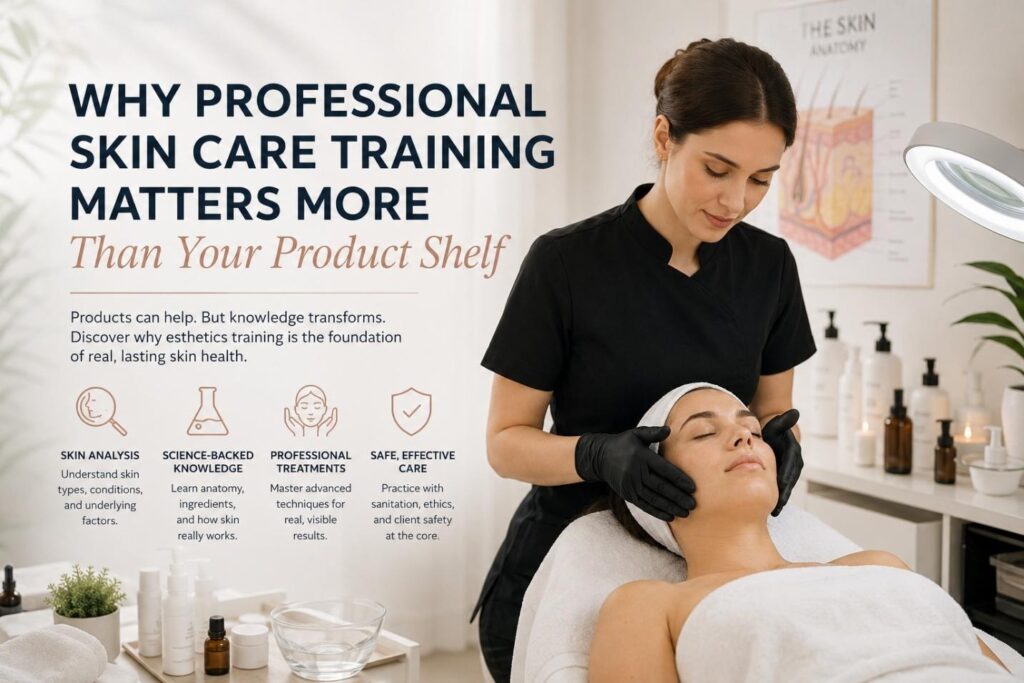
Most people spend hundreds of dollars a year on skincare. Serums, moisturizers, toners, masks — the shelves are full, and the marketing is convincing. But here’s the thing that skincare brands don’t advertise: without knowing your skin type, its underlying conditions, and how different ingredients interact, even the best products can do more harm than good.
That’s the knowledge gap that licensed estheticians are trained to close. And for anyone who’s passionate about skin health — either as a consumer or as a future professional — understanding what that training actually covers is genuinely eye-opening.
The Limits of a DIY Skincare Routine
There’s nothing wrong with building a good at-home routine. Cleansing, moisturizing, SPF — these basics matter. But most people hit a ceiling with self-directed skincare, because the real variables affecting skin health go deeper than any product can reach:
- Skin type vs. skin condition. Many people misidentify their skin type and use products that work against them. Oily skin is often actually dehydrated skin. “Sensitive” skin sometimes signals a damaged barrier, not inherent fragility.
- Ingredient interactions. Combining actives like retinoids and vitamin C incorrectly, or layering acids without understanding pH, can cause irritation and setbacks.
- Underlying conditions. Rosacea, hyperpigmentation, and cystic acne all require different approaches — and sometimes, professional treatment.
A licensed esthetician can assess these factors in a way that no cleanser can.
What Esthetics Training Actually Covers
Esthetics is the branch of cosmetology focused specifically on skin health. A proper esthetics program goes far beyond learning how to give a facial. Here’s a snapshot of what the curriculum typically includes:
Skin Anatomy and Physiology
Understanding the layers of the skin, how sebaceous glands function, how the skin barrier works, and what disrupts it. This science foundation is what separates a trained esthetician from someone following a YouTube tutorial.
Skin Analysis and Consultation
Learning to read the skin — identifying types, conditions, sensitivities, and contraindications. This skill is what drives every treatment recommendation.
Professional Treatments
- Chemical exfoliants and peels
- Extractions (performed safely and hygienically)
- Facial massage and lymphatic drainage
- Waxing and hair removal
- Microdermabrasion and advanced modalities
Product Knowledge and Ingredient Science
Understanding how ingredients like AHAs, BHAs, retinoids, peptides, and antioxidants work — and how to recommend the right ones for each client’s skin.
Sanitation and Infection Control
A non-negotiable part of every licensed esthetics program. Safe practice protects both the client and the professional.
Client Communication and Business Basics
Building a loyal clientele requires more than good technique. Training programs increasingly include consultation skills, retail recommendations, and the fundamentals of running a sustainable practice.
The Connection Between Esthetics and Whole-Body Wellness
Skin health doesn’t exist in isolation. Estheticians trained at quality programs understand the connections between skin and overall wellness — how stress, diet, sleep, and hormonal changes show up on the face. This holistic perspective is part of what makes a skilled esthetician so valuable to clients managing chronic skin concerns.
Spa-based esthetics, in particular, bridges the gap between beauty and wellness. Treatments like body wraps, aromatherapy, and targeted facial protocols aren’t just relaxing — they support the body’s stress response and promote the kind of consistent self-care that contributes to long-term skin health.
Pursuing Esthetics as a Career
For anyone who loves skincare and wants to turn that interest into a profession, esthetics licensing is the path. Most esthetics programs take 6–12 months to complete and require passing a state board exam to practice professionally.
What makes a strong esthetics program? Look for:
- Accreditation that qualifies graduates to sit for state licensing exams
- Hands-on training in a real spa or clinical setting, not just classroom theory
- Updated curriculum that includes advanced modalities alongside foundational techniques
- Career support — placement assistance, industry connections, and guidance on building a client base
Esthetics programs, such as those offered by Cosmetology and Spa Academy, often provide students with training in professional spa environments under the guidance of experienced instructors. Coursework typically covers both the science of skin and the art of client care, reflecting the combination of technical knowledge and interpersonal skills needed in professional practice.
A Final Word for Skincare Enthusiasts
You don’t have to pursue esthetics professionally to benefit from this knowledge. But if you’ve ever wondered why your routine isn’t working, why a product caused breakouts instead of clearing them, or why two people with “the same skin type” respond so differently to the same treatment — the answer almost always lies in the training.
Healthy skin isn’t a product you can buy. It’s the result of understanding what your skin actually needs — and having the skills to give it that.
Frequently Asked Questions
What’s the difference between an esthetician and a dermatologist?
Dermatologists are medical doctors who diagnose and treat skin diseases. Estheticians are licensed beauty professionals who perform non-medical skincare treatments, facials, and preventive skin health services.
How long does it take to become a licensed esthetician?
Most esthetics programs take 6–12 months. Requirements vary by state, so check your state’s cosmetology board for specific hour requirements.
Can estheticians work in medical settings?
Yes. Medical estheticians work alongside dermatologists, plastic surgeons, and in medical spas. Some programs offer advanced training for this specialty.
Is esthetics school worth it financially?
Licensed estheticians can build six-figure practices with a loyal clientele, especially in high-demand markets or medical aesthetics. Starting income varies, but the ceiling scales with specialization and business development.
Other Articles You May Find of Interest...
- Best ADAT Prep Courses for Dental Students and Dentists (2026)
- What Disqualifies Candidates in Healthcare Background Checks?
- What to Know Before Choosing an Accelerated Nursing Path
- What Is Pre-Nursing and Is It Worth It
- Beyond the Brochure: Choosing a Medical School With Your Future in Mind
- How Hybrid Nursing Education Is Rewriting the Route Into Healthcare
- RN Botox Certification Cost: What Nurses Really Pay to Build an Aesthetics Career