
More Reviews Articles
Apps for Self-Improvement
The following information is compiled from the internet to help people find the healthcare they need.
This article may contain sponsored or affiliate links provided by third parties. Your Health Magazine does not sell or provide customer service for any products discussed in this article.Questions regarding orders, billing, subscriptions, shipping, returns, refunds, or product performance should be directed to the company listed on the product website. Inclusion in this article does not constitute a guarantee or warranty by Your Health Magazine.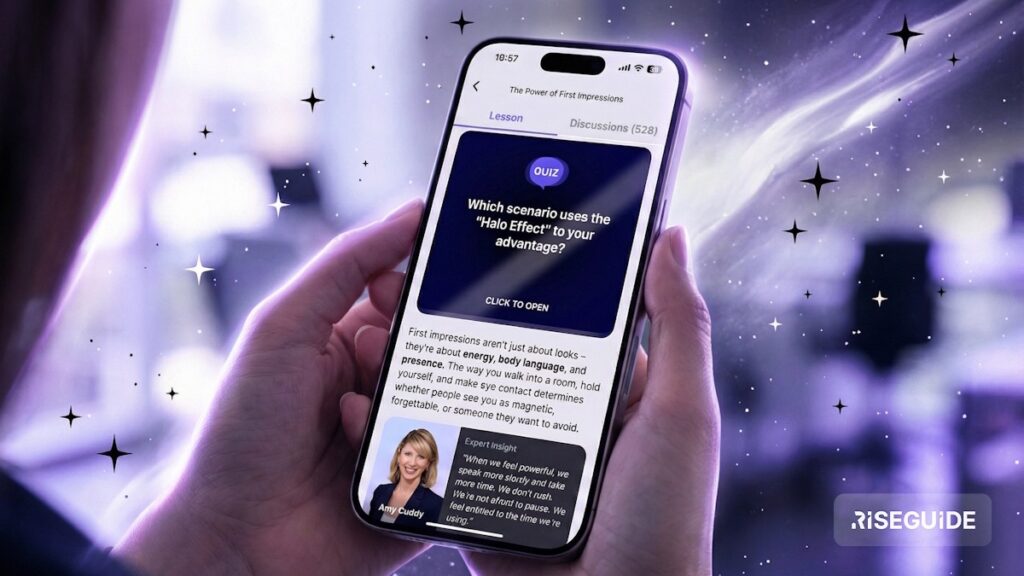
Self-improvement apps can be useful tools for building habits, learning new skills, improving productivity, and creating more structure in daily life. The challenge is that not every app works the same way, and not every format fits every goal.
Some apps are built around quick inspiration. Others focus on habit tracking, journaling, micro-learning, or hands-on skill practice. Among the micro-learning options, 12 min and Headway app are available for distilling nonfiction books into digestible summaries – a format suited to people who want to absorb new ideas without committing to a full reading session. Choosing the right app often depends less on which platform is most popular and more on what kind of support a person actually needs.
This guide explains several common types of self-improvement apps, how they differ, and what consumers may want to consider before choosing one.
Why Self-Improvement Apps Don’t Stick
One reason self-improvement apps often fail to become part of a routine is that the format does not match the user’s actual goal. An app may provide interesting information, but if it does not encourage practice or application, the user may not retain or use what they learned.
Book-summary apps, quote-based apps, journaling tools, and habit trackers can all be valuable. However, each serves a different purpose. A person looking for motivation may need something different from someone trying to build communication skills, improve focus, or practice better decision-making under pressure.
What “Actually Helps” Really Means
A useful way to evaluate a self-improvement app is to ask whether it helps users apply something in real life. Feeling inspired, saving quotes, or completing daily check-ins can be helpful, but meaningful growth often requires practice and follow-through.
For many users, the most helpful apps are the ones that encourage a change in behavior, such as handling a conversation differently, staying more focused during a task, or approaching a decision with more structure.
This is where the difference between passive content and active learning becomes important. Apps that only deliver information may feel productive, while apps that require practice may be more likely to support lasting change.
The 4 Types of Self-Improvement Apps
Daily-Step / Micro-Learning Apps
Daily-step and micro-learning apps provide short lessons that users can complete as part of a routine. These lessons may take only a few minutes, making them easier to fit into a commute, lunch break, or morning schedule.
RiseGuide and Imprint are examples of apps in this category, though they approach learning differently. Imprint focuses on visual explanations of complex concepts, while RiseGuide combines short lessons with exercises designed to help users practice communication, learning, and cognitive skills.
This format may work well for people who want the app to provide structure and tell them what to focus on each day.
Habit Trackers
Habit trackers such as Streaks and Fabulous are designed to help users show up consistently. They can be useful for building routines around sleep, exercise, hydration, meditation, reading, or other repeatable behaviors.
The limitation is that habit trackers usually track whether someone completed an action, but they may not teach the skill itself. For example, a habit tracker can remind someone to practice public speaking, but it may not teach how to structure a message or speak more clearly under pressure.
These apps can provide helpful scaffolding, especially for users who already know what they want to do and need accountability.
Reflection & Journaling Apps
Reflection and journaling apps such as Day One and Reflectly can support emotional processing, self-awareness, and personal reflection. They may be useful for people who want to notice patterns in their thoughts, moods, goals, or relationships.
However, journaling alone may not be enough for users who want direct skill practice. These tools can help people describe their challenges, but they may need to be paired with action steps, coaching, therapy, or structured exercises to create behavioral change.
Skill-Building Apps
Skill-building apps teach users something specific and often require active participation. Brilliant, for example, uses interactive problem-solving for math, logic, and science. Udemy offers longer courses across a wide range of subjects. memoryOS uses gamified techniques to help users practice memory skills.
RiseGuide also fits into this category because it combines a daily-step format with exercises intended to help users practice communication, learning, and personal-development skills. This type of app usually requires more effort than passive content apps, but that effort may be part of what makes the format useful.
How to Choose Between Them
Choosing between self-improvement apps starts with one question: does the user already know what they want to work on, or do they need help identifying and practicing the skill?
If the goal is consistency, a habit tracker may be enough. If the goal is reflection, a journaling app may be the right fit. If the goal is to learn and apply a specific skill, a structured learning or practice-based app may be more useful.
People who already know the habit they want to build may benefit from apps such as Fabulous or Streaks. People who need guidance, lessons, and practice tools may prefer a more structured platform.
RiseGuide as a Daily-Step Option
RiseGuide is positioned as a self-improvement app that combines micro-learning with active exercises. Rather than functioning only as a content feed, it offers structured journeys, expert-inspired frameworks, and practice-based tools designed to help users apply concepts beyond the app itself.
Consumers comparing options can also review outside perspectives, such as this RiseGuide review, while keeping in mind that individual experiences with any self-improvement app can vary.
For users who prefer short, guided lessons with a practice component, RiseGuide may be worth comparing with other micro-learning or skill-building apps. Its format may appeal to people who want daily structure rather than a large course library or open-ended journaling tool.
As with any personal-development app, its value depends on consistency, learning style, and whether the user applies the lessons in everyday situations.
Other Notable Apps Worth Knowing
Blinkist – Blinkist offers short book summaries with audio narration. It may be useful for exploring ideas quickly, especially during commutes or short breaks. It may be less useful for users who want deeper retention or hands-on practice.
Brilliant – Brilliant focuses on interactive problem-solving for math, logic, and science. It may appeal to people who want to sharpen analytical thinking through active exercises.
Udemy – Udemy offers a large library of courses across many topics. Course quality can vary, but it can be useful for people who know exactly what skill they want to learn and are willing to commit to longer lessons.
memoryOS – memoryOS uses gamified spatial-memory techniques. It is more specialized than many self-improvement apps, but it may appeal to users who want to practice memory skills in a structured way.
Fabulous – Fabulous is a routine-building app known for its design, gentle pacing, and habit-focused structure. It may be useful for people who want support with consistency and daily routines.
A Simple Test Before You Commit
One practical way to evaluate a self-improvement app is to try it for seven days and then ask whether it supported any real-world change. Did it help with a conversation, a decision, a routine, a work habit, or a moment that usually feels difficult?
If the app creates useful momentum, it may be worth continuing. If it feels interesting but does not lead to any action, another format may be a better fit.
Red Flags to Watch For
The experience relies heavily on guilt. Some apps use streak-shaming, urgent notifications, or dramatic countdowns to keep users engaged. Accountability can be helpful, but an app that makes users feel bad for missing a day may not be supporting healthy growth.
The app never asks the user to do anything. If the main action is simply tapping “next,” the app may function more like a content feed than a learning tool.
Everything feels the same after a week. Apps that offer no progression, challenge, or variation may lose usefulness quickly, especially for users looking to build real skills.
FAQs
What if someone keeps quitting every app they try? The issue may be the format, not the user. Someone who does not enjoy reading-based apps may do better with practice-based tools, habit trackers, or guided lessons.
How long before someone notices a difference? Results vary depending on the app, the person, and the level of consistency. Some users may notice small changes in awareness or habits quickly, while larger behavioral changes usually require ongoing practice.
Are self-improvement apps worth using? They can be useful when the format matches the user’s goal. A habit tracker, journaling app, course platform, and practice-based learning app each serve different purposes.
The most effective self-improvement app will vary from person to person. Reviews, popularity, and design all matter, but the best fit is usually the app that aligns with the user’s learning style and encourages consistent real-world application.
Whether the goal is building habits, learning new skills, improving productivity, or increasing self-awareness, consistency and practical use are often more important than any single app name.
Other Articles You May Find of Interest...
- DentaBiome Reviews 2026: Does This Oral Postbiotic Formula Really Work?
- Booster Brew Reviews 2026: Does This Male Performance Supplement Really Work?
- Red Boost Reviews 2026 – What to Know About This Male Performance Supplement
- NervEase Reviews 2026 – What to Know About This Sciatic Nerve Supplement
- BrainLive Reviews 2026 – What to Know About This Brain Health Powder
- The Blood Pressure Program Reviews: Christian Goodman Book Worth It or Not?
- The Parkinson’s Protocol Reviews (2026): Does Jodi Knapp’s Program Really Work?