






More Family/Primary Care Articles
The “Stability Premium”: Why Healthcare is the Smartest Defensive Asset for 2026
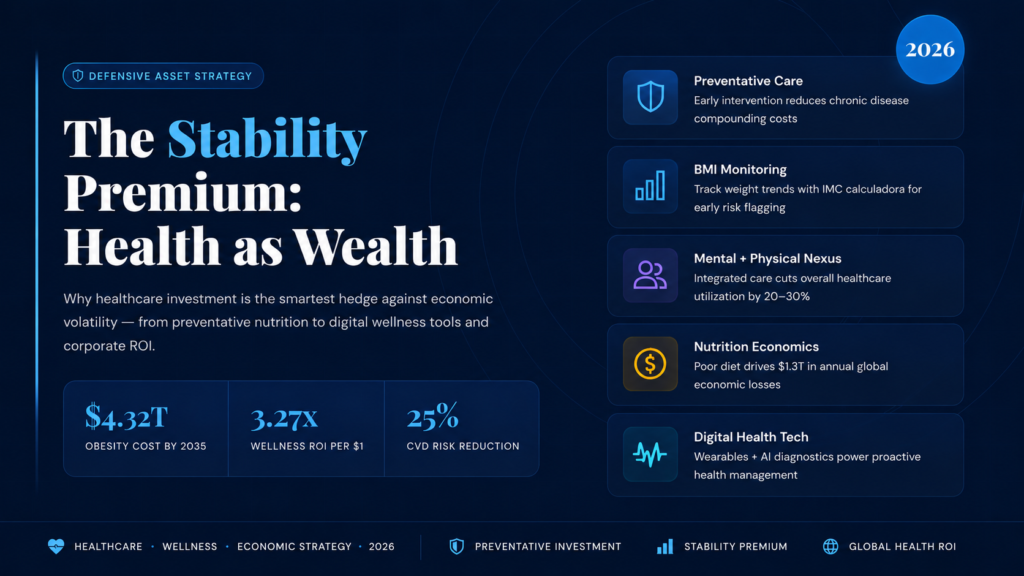
In an era characterized by economic volatility, geopolitical shifts, and rapid technological disruption, investors and individuals alike are increasingly seeking stability. While traditional defensive assets like gold, bonds, and real estate have long served this purpose, a new paradigm is emerging for 2026: healthcare as the ultimate defensive asset class. This perspective transcends mere medical expenditure, reframing personal and public health as a strategic investment that yields a profound “stability premium” in both individual well-being and broader economic resilience.
The Economic Imperative of Preventative Health
From a financial perspective, a healthy populace translates directly into reduced healthcare costs, increased productivity, and a more robust workforce. For the individual, investing in one’s health mitigates future financial burdens associated with chronic illness, unexpected medical emergencies, and long-term care. Recent 2026 projections from the World Obesity Federation indicate that the global economic impact of overweight and obesity is set to reach $4.32 trillion by 2035, representing nearly 3% of global GDP.
This proactive approach to health management begins with fundamental self-assessment. Understanding one’s baseline health metrics is paramount, and for many, this starts with accessible tools. Utilizing an IMC calculadora (BMI calculator) provides an immediate, actionable insight into one’s weight status, serving as a critical first step in personal health portfolio management. By identifying risks early, individuals can avoid the “compounding interest” of chronic disease.
Corporate Wellness: A Strategic ROI
The economic impact of preventable diseases is staggering, diverting significant capital from productive investments into reactive treatment. As we navigate 2026, the emphasis on preventative care and early intervention is not merely a medical recommendation but an economic imperative. Businesses are increasingly recognizing that employee wellness programs, which often incorporate basic health screenings and educational resources, contribute directly to their bottom line.
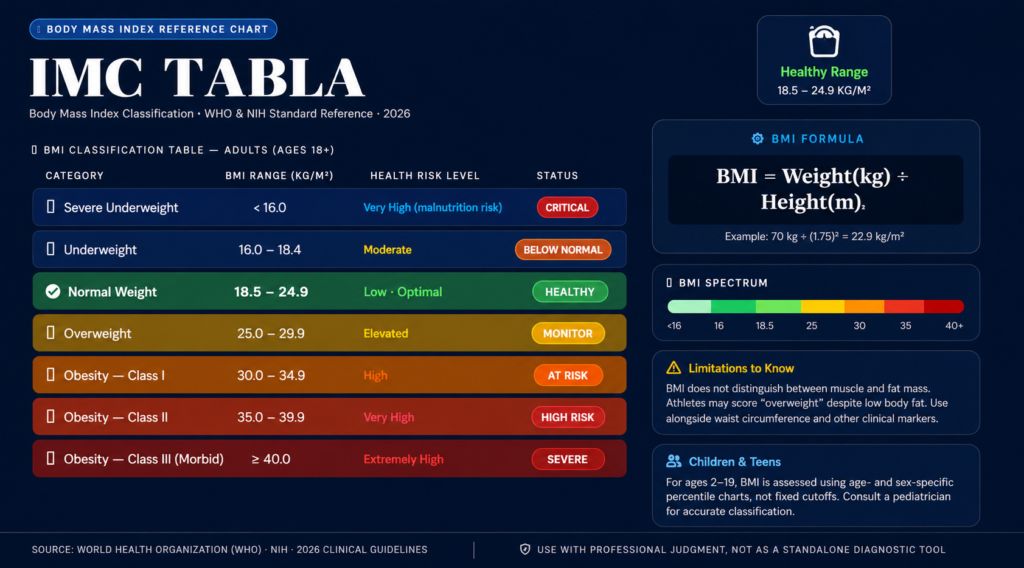
Data from 2026 corporate wellness reports shows that for every dollar invested in comprehensive wellness programs, companies see an average ROI of $3.27 in reduced healthcare costs and $2.73 in reduced absenteeism. These programs frequently leverage standardized metrics to track progress and identify areas of concern. A comprehensive IMC Tabla (BMI table) offers a clear, universally understood framework for categorizing weight status, enabling both individuals and organizations to monitor population health trends and allocate resources effectively towards healthier outcomes.
The Digital Frontier: Precision and Personalization
Furthermore, the advancements in personalized medicine, digital health platforms, and preventative technologies are transforming healthcare from a reactive service into a proactive, data-driven investment. In 2026, the market for weight-reduction medicines (GLP-1s) is expected to grow significantly, with seniors gaining broader access and prices stabilizing. However, the real value lies in the integration of these treatments with digital monitoring.
Wearable technology, AI-powered diagnostics, and genetic screening are empowering individuals to take unprecedented control over their health trajectories. This shift allows for a more granular understanding of personal risk factors, enabling targeted interventions that maximize health outcomes while minimizing long-term costs. The foresight to invest in one’s health today, through informed choices and the utilization of available tools, acts as a powerful hedge against the uncertainties of tomorrow.
The Mental Health –Physical Health Nexus: A Dual Investment
The connection between mental and physical health represents one of the most underappreciated dimensions of healthcare investment. The WHO estimates that depression and anxiety disorders cost the global economy $1 trillion per year in lost productivity, and individuals with untreated mental health conditions are 40% more likely to develop chronic physical illnesses such as cardiovascular disease and diabetes.
In 2026, integrated care models, combining mental health support with physical wellness programs, are gaining traction in both public health systems and corporate environments. Countries that have adopted integrated care frameworks report a 20–30% reduction in overall healthcare utilization within five years. For individuals, practices such as stress management, sleep hygiene, and mindfulness have been shown to reduce cortisol-driven inflammation, directly lowering the risk of metabolic disorders. Monitoring physical markers through tools like an imcdecalculadora.com alongside mental health assessments creates a more complete picture of one’s health portfolio, enabling holistic risk management that reactive medicine simply cannot replicate.
Sleep, Sedentary Behavior, and the Hidden Cost of Inactivity
Inactivity is fast becoming one of the most expensive public health crises of the decade. The Lancet Global Health (2025) estimated that physical inactivity costs healthcare systems worldwide approximately $67.5 billion annually, with sedentary lifestyle-related conditions accounting for 8.3% of all premature deaths globally.
Poor sleep compounds this crisis. Adults sleeping fewer than 7 hours per night are 33% more likely to develop obesity, which in turn elevates risk for type 2 diabetes, hypertension, and certain cancers. In 2026, wearable devices tracking sleep stages, resting heart rate, and activity levels have made it easier than ever to quantify and correct these behaviors. Organizations that have introduced structured movement breaks, ergonomic workstations, and sleep education campaigns have reported a 15% drop in sick days within 12 months. For individuals using an imc calculadora to track weight trends, pairing those results with activity and sleep data provides a powerful feedback loop, one that can prevent minor health drifts from becoming costly chronic conditions.
Nutrition Economics: The ROI of Eating Well
Food choices are perhaps the most direct lever individuals control over their long-term health, and therefore their financial stability. Poor nutrition drives an estimated $1.3 trillion in economic losses annually through healthcare costs and reduced worker productivity, according to the Food & Agriculture Organization’s 2025 global nutrition report.
The numbers at the individual level are equally striking. A person managing type 2 diabetes spends an average of $16,750 per year on medical costs, more than double that of a non-diabetic adult, and a significant proportion of new diabetes cases are linked to preventable dietary patterns. Conversely, a Mediterranean-style diet has been associated with a 25% reduction in cardiovascular events, translating into both longer life expectancy and significantly lower lifetime healthcare spending.
In 2026, nutrition tracking apps integrated with AI meal planning are making precision nutrition accessible at scale. These platforms use personalized baselines, including BMI benchmarks from an imc tabla, to tailor dietary recommendations based on an individual’s health goals, metabolic profile, and risk factors. The return on investment from improved nutrition is not speculative; it is one of the most well-documented preventive health strategies available.
Conclusion
As the global landscape continues to evolve, the concept of health as a defensive asset gains undeniable traction. The “stability premium” derived from a commitment to personal and public well-being offers a compelling argument for prioritizing health investments. By embracing tools like the imc calculadora and imc tabla, individuals and institutions can strategically manage their most valuable asset, ensuring not only a healthier future but also a more stable and prosperous one.
Other Articles You May Find of Interest...
- Why One-Roof Medical and Dental Care Is Catching On
- Why Does My Left Side Hurt When I Cough?
- General Practitioner: Everything You Need To Know About Them
- When the Emergency Room Isn’t Enough
- The Secret To Good Health
- Why Personalized Preventive Healthcare Is Replacing One-Size-Fits-All Medicine
- How Home Doctor Services Reduce Waiting Time and Improve Patient Experience





