






More Dental Health Articles
The Sudden Nighttime Toothache: How to Get Through the Night When You Can’t Sleep
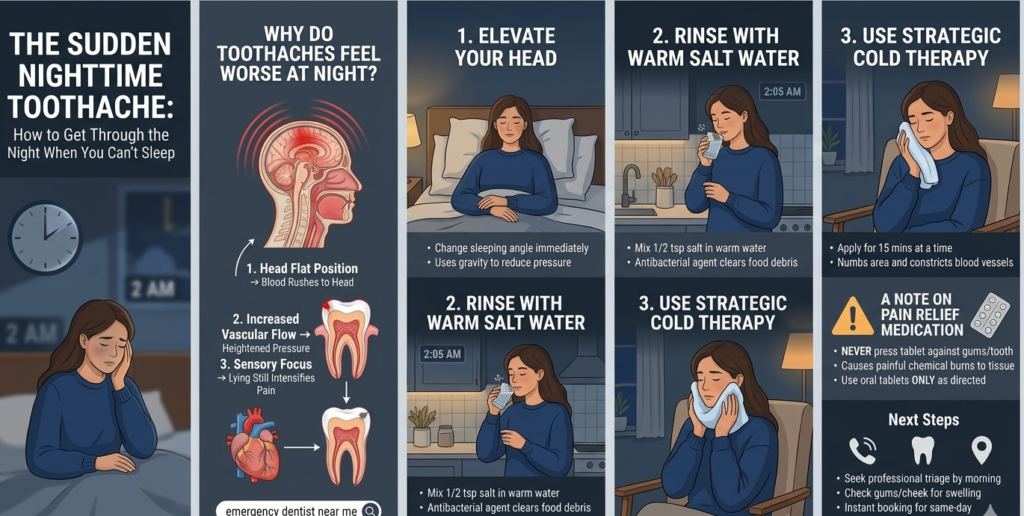
It is 2 AM, the world is asleep, and you are suddenly wide awake. A sharp, throbbing ache is radiating through your jaw, making it completely impossible to lie still, let alone rest.
A sudden nighttime toothache is a uniquely agonizing experience. Because dental pain seems to intensify the moment your head hits the pillow, it can leave you feeling entirely helpless while you wait for morning. However, you don’t have to suffer through the dark hours completely unprotected. As professional emergency dental care providers see every day, understanding why this pain spikes at night and knowing how to safely manage it can help you regain control and get through the night.
Why Do Toothaches Feel Worse at Night?
It isn’t just your imagination—dental pain actually does increase when you lie down. The primary culprit is blood pressure. When you transition from standing or sitting to a flat, horizontal position, a significant amount of blood rushes to your head. This increased blood flow puts extra pressure on the highly sensitive, inflamed nerve endings inside your vulnerable tooth, causing that distinct, rhythmic throbbing sensation. Because this shifting pressure can rapidly turn a dull ache into an absolute crisis, searching for a reliable emergency dentist near me is often the first thing people do when the nighttime pain becomes too intense to handle.
Additionally, the quiet hours of the night remove the sensory distractions of the daytime. Without work, conversations, or entertainment to occupy your mind, your brain naturally focuses entirely on the painful stimuli, making the discomfort feel much more intense.
Your Nighttime Survival Guide: A Step-by-Step Action Plan
If you are dealing with an intense toothache in the middle of the night, your immediate goal is stabilization and pain mitigation. Clinical teams recommend these practical steps to help soothe the nerve until you can access a professional:
1. Elevate Your Head
Since gravity is working against your blood pressure, change your sleeping angle immediately. Prop yourself up with two or three pillows, or rest semi-upright in a comfortable armchair or recliner. Keeping your head elevated above your heart lowers the pressure in your jaw vessels, noticeably dulling the throbbing sensation.
2. Rinse with Warm Salt Water
Head to the kitchen and mix half a teaspoon of table salt into a glass of warm water. Swish the mixture gently around the affected area for 30 seconds before spitting it out. Salt water acts as a natural, mild antibacterial agent that can clear out irritating food debris trapped between teeth while temporarily soothing inflamed gum tissue.
3. Use Strategic Cold Therapy
Wrap an ice pack or a bag of frozen vegetables in a clean, soft towel and apply it to the outside of your cheek or jaw for 15 minutes at a time. The cold temperatures constrict local blood vessels, which numbs the immediate area and reduces any localized swelling that might be contributing to the pressure.
4. Try Natural Numbing Remedies
If you have whole cloves or clove oil in your pantry, you have access to a powerful natural anesthetic called eugenol. Apply a tiny drop of clove oil to a small cotton swab and hold it gently against the aching tooth for a few minutes. Alternatively, placing a damp, used peppermint tea bag against the area can offer mild, cooling relief.
⚠️ A Note on Pain Relief Medication
Over-the-counter anti-inflammatories, such as ibuprofen or paracetamol, can be highly effective at reducing dental inflammation when used strictly according to the package instructions. However, never press a pain relief tablet directly against your gums or tooth. This common myth does not stop the pain and will actually cause severe, painful chemical burns to your delicate oral tissue.
When to Seek Urgent Medical Care
While the steps above are designed to help you survive the night, they are only temporary fixes. A severe toothache is an explicit warning sign of an underlying issue, such as a deep cavity, a fractured root, a failing restoration, or a localized bacterial infection.
If your nighttime pain is accompanied by any of the following warning signs, it has escalated beyond a standard toothache and requires immediate attention:
- Visible swelling in your gums, cheek, or jawline.
- A foul taste in your mouth accompanied by oozing fluid.
- A high fever, chills, or difficulty swallowing.
Fortunately, you do not have to wait for normal business hours to address a crisis. Utilizing an online platform to arrange an instant booking allows you to bypass phone delays and secure a priority slot right from your phone. Whether you need a prescription to stop an infection or require a same day dentist to safely open and relieve the pressure inside the tooth, getting professional intervention is the only definitive way to protect your health and guarantee your next night of sleep is completely pain-free.
Other Articles You May Find of Interest...
- Why Your Teeth May Look Healthy but Still Need Dental Attention
- What Goes Into Developing an Alcohol-Free Mouthwash Beyond the Ingredient List
- 6 Best Dentist Options in Reston, Virginia for Family, Cosmetic, and Emergency Care
- Why Comprehensive Dental Care Matters at Every Stage of Life
- Why Preventive Dental Care Matters at Every Stage of Life
- Colored Braces: A Practical Guide for Teens and Parents in the UAE
- Brushing Teeth for Kids: Secrets to Making Healthy Habits Actually Stick





