






More Dental Health Articles
Can a Tooth Nerve Die? What Happens Inside the Tooth
By Your Health Magazine Health Information Team
A tooth that once throbbed with every sip of cold water suddenly stops hurting. That may feel like good news—but sometimes it means the tissue inside the tooth has become too damaged to sense temperature. So, can nerves die in a tooth? Yes. Dentists call this condition pulp necrosis, meaning the soft tissue containing the tooth’s nerves and blood vessels has died.
A dead tooth nerve does not always cause obvious symptoms, and the disappearance of pain does not necessarily mean the problem has healed. Understanding what happens inside the tooth can help you recognize when a dental evaluation is important.
What Does It Mean When a Tooth Nerve Dies?
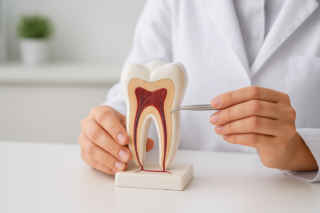
The visible portion of a tooth is covered by enamel, the body’s hardest substance. Beneath the enamel is dentin, another mineralized layer. At the center is the dental pulp, a soft tissue made up of nerves, blood vessels, connective tissue, and specialized cells.
The pulp helps a developing tooth grow and allows it to sense heat, cold, and pressure-related irritation. When inflammation, infection, or injury severely disrupts the pulp’s blood supply, its cells may begin to die. The process may affect part of the pulp before progressing to complete pulp necrosis.
People often call this a “dead tooth,” but that description is not entirely precise. Even if the pulp dies or is removed during root canal treatment, living tissues still surround and support the tooth. A fully developed tooth can continue to function after treatment because it receives support from the tissues around its roots.
What Happens Inside the Tooth?
Pulp damage often begins with inflammation known as pulpitis. Because the pulp is enclosed within rigid dentin, it has little room to expand when it becomes inflamed. Rising pressure inside this confined space can interfere with circulation and further injure the tissue.
Early, relatively mild inflammation may be reversible if a dentist removes the source of irritation and restores the tooth. More advanced inflammation may become irreversible, meaning the pulp cannot recover on its own. If blood flow is lost or infection continues, the nerves, blood vessels, and other pulp tissue eventually die.
Once the nerve tissue stops functioning, sensitivity may decrease or disappear. However, bacteria and damaged tissue can remain inside the root canal system. Infection may then travel through openings at the root tip and inflame the ligament and bone around the tooth. This explains why a tooth with a dead nerve can still hurt when you bite or when a dentist taps it.
Do Teeth Nerves Die Without Warning?
Sometimes. Symptoms vary according to the cause, the stage of damage, and whether nearby tissues have become inflamed. A tooth may be severely painful before the pulp dies, while another may change color or develop an infection without causing much discomfort.
Possible warning signs include:
- Lingering pain after consuming hot, cold, or sweet foods and drinks
- A deep ache, throbbing pain, or pain that interrupts sleep
- Pain or pressure when biting and chewing
- A tooth that becomes less responsive to temperature
- Gray, brown, or darker discoloration of one tooth
- Swollen or tender gum tissue near the tooth
- A pimple-like bump on the gum that may drain
- An unpleasant taste or persistent bad breath
- Swelling of the face or jaw
Not everyone experiences every symptom. Pain may fade when the nerve dies, only to return later if inflammation or an abscess develops around the root. A dental abscess is a pocket of pus caused by infection and requires professional treatment.
Why Can Nerves Die in a Tooth?
Deep tooth decay is a common cause. As a cavity moves through enamel and dentin, bacteria may reach the pulp and trigger inflammation or infection. Other possible causes include:
- A crack, chip, or fracture that allows bacteria to enter the tooth
- A blow to the mouth that damages blood vessels supplying the pulp
- Repeated dental work or extensive restorations that irritate the pulp
- Severe wear that exposes deeper tooth structures
Trauma deserves particular attention because pulp damage can occur even when a tooth does not look broken. Discoloration or other changes may appear weeks, months, or longer after an injury. A dentist may recommend monitoring an injured tooth over time rather than relying on a single examination.
How Dentists Determine Whether the Pulp Is Alive
A dentist begins by asking about pain, sensitivity, injuries, and previous dental treatment. The examination may include checking for decay, cracks, swelling, discoloration, and tenderness.
Cold or electric pulp tests evaluate whether the tooth responds to stimulation. The dentist may compare the response with nearby healthy teeth. Tapping and biting tests help identify inflammation around the root, while dental X-rays may reveal deep decay, changes in the surrounding bone, or another source of pain.
No single symptom or test always provides the complete answer. For example, a recently injured tooth may temporarily fail to respond even when some pulp tissue remains alive. Dentists interpret test results together with the examination, symptom history, and imaging. An endodontist—a dentist with advanced training in diagnosing and treating problems inside teeth—may be consulted when the diagnosis is uncertain or treatment is complex.
Can a Dead Tooth Nerve Heal?
Once pulp tissue is necrotic, it cannot return to health on its own. Treatment focuses on removing the infected or dead tissue, protecting surrounding structures, and preserving the tooth when possible.
Root Canal Treatment
During root canal treatment, a dentist or endodontist removes the damaged pulp, cleans and disinfects the internal canal spaces, and fills and seals them. The tooth is then restored, often with a filling or crown, depending on its location and condition. This allows many treated teeth to remain useful for chewing.
Tooth Extraction
Extraction may be appropriate when a tooth cannot be predictably restored because of a severe fracture, extensive decay, inadequate structural support, or another complicating factor. The dentist can explain replacement options if removing the tooth would affect chewing, appearance, or the position of neighboring teeth.
Antibiotics alone do not remove dead pulp or clean an infected root canal. A dental professional determines whether they are appropriate when an infection is spreading or causing systemic symptoms.
How Tooth Nerve Pain Affects Daily Life
Pulp inflammation may make it difficult to eat, sleep, concentrate, or identify which tooth is causing the problem. Pain can also feel as though it is spreading into the jaw, ear, or nearby teeth. Dental nerve pain is different from a compressed nerve affecting muscles and limbs; for comparison, these techniques for a pinched nerve in the shoulder address a separate type of nerve problem.
When to Seek Care
Arrange a dental appointment promptly for ongoing tooth pain, lingering temperature sensitivity, pain when biting, unexplained discoloration, a broken tooth, or a pimple-like bump on the gum. A tooth that has been struck should also be checked, even if it appears intact and does not hurt.
Seek urgent dental care for facial or jaw swelling, fever, drainage, worsening pain, or difficulty opening the mouth. Go to an emergency department immediately if swelling makes it difficult to breathe, speak, or swallow, or if swelling extends toward the eye or neck.
A general dentist is usually the appropriate first professional to evaluate symptoms. An endodontist may help diagnose pulp damage or perform root canal treatment. For additional general health education, readers can explore the MedlinePlus health topics library.
Protecting the Pulp Inside Your Teeth
Regular brushing with fluoride toothpaste, cleaning between the teeth, routine dental examinations, and timely cavity treatment can reduce the chance that decay will reach the pulp. Wearing an appropriate mouthguard during contact sports may help protect teeth from trauma. Cracks, loose fillings, chips, and new sensitivity should be evaluated rather than ignored.
The simple answer to “do teeth nerves die?” is yes—but pain stopping is not proof that a tooth has recovered. Early dental evaluation offers the best opportunity to identify the cause, control infection, and determine whether the natural tooth can be preserved.
Other Articles You May Find of Interest...
- 6 Joliet Dentists to Consider for Your Oral Health Needs
- How to Choose a Dentist in Woodbridge, VA After Moving
- Ten Benefits Of Ceramic Dental Implants
- Dentistry in Houston: Finding the Right Care in a City Full of Choices
- Partial Dentures Explained: Removable, Flexible and Implant-Supported Options
- Your Child May Not Need a Release
- What Causes Tooth Decay In Kids?





