






Your Health Magazine
4201 Northview Drive
Suite #102
Bowie, MD 20716
301-805-6805
More Dental Health Articles
Braces Treatment Options and Their Benefits Explained

The American Dental Association’s 2024 data reveals that nearly 4 million Americans currently wear braces, with adult treatments increasing by 40% over the past decade. As orthodontic technology continues to evolve, patients now face a broader array of treatment options than ever before — from traditional metal brackets to nearly invisible clear aligners. This expansion has transformed orthodontics from a field dominated by one-size-fits-all solutions into a landscape of specialized treatments tailored to individual needs, lifestyles, and aesthetic preferences.
For anyone considering orthodontic treatment, understanding these options has real financial and lifestyle implications. The wrong choice can mean longer treatment times, higher costs, or daily discomfort that affects everything from eating to speaking confidently. Modern braces treatment options now address these concerns through targeted approaches that balance effectiveness with patient comfort and aesthetic goals.
This guide examines how different braces systems work mechanically, compares their practical benefits for various situations, and explores the factors that influence treatment success — helping you understand which approach might align best with your specific needs and circumstances.
How Different Braces Work to Straighten Teeth
All orthodontic treatments operate on the same biological principle: controlled pressure applied to teeth stimulates bone remodeling, allowing teeth to move gradually into new positions. However, the mechanisms for delivering this pressure vary significantly between different systems, affecting everything from treatment precision to patient comfort.
Traditional metal braces use a bracket-and-wire system where small metal squares bond to each tooth’s front surface. An archwire threads through these brackets, creating the force needed for movement. Elastic ligatures (those small colored bands) hold the wire in place and allow orthodontists to adjust pressure at each appointment. This system provides exceptional control over complex movements like rotating teeth or correcting severe bite issues.
Ceramic braces function identically to metal versions but substitute tooth-colored or clear brackets for metal ones. The mechanical principle remains unchanged — the difference lies purely in aesthetics. Self-ligating braces eliminate the need for elastic bands by incorporating a sliding mechanism directly into each bracket. This reduces friction between the wire and bracket, potentially allowing teeth to move more efficiently while requiring fewer adjustment appointments.
Clear aligners like Invisalign work through an entirely different mechanism. Instead of constant pressure from fixed appliances, they apply intermittent force through a series of custom-fitted plastic trays. Each aligner creates specific pressure points designed to move targeted teeth incrementally. Patients switch to new aligners every 1-2 weeks, with each tray representing the next stage in the planned movement sequence.
Lingual braces mount brackets on the tongue side of teeth rather than the front surface. While they use the same bracket-and-wire mechanics as traditional braces, their hidden placement creates unique challenges for adjustment and oral hygiene. The precision required for lingual bracket placement makes this option particularly technique-sensitive, requiring specialized orthodontic training.
Comparing Benefits and Suitability of Braces Options
Understanding each system’s practical advantages helps patients weigh effectiveness against lifestyle considerations. No single option dominates across all categories — each excels in specific situations while presenting distinct trade-offs.
Appearance and Comfort Differences
Metal braces remain the most visible option but offer unmatched durability and reliability. Modern brackets have become significantly smaller than previous generations, reducing their visual impact while maintaining strength. Patients often find them more comfortable than expected once the initial adjustment period passes, typically within the first week.
Ceramic braces provide substantial aesthetic improvement over metal versions while maintaining the same mechanical effectiveness. The brackets blend naturally with tooth color, making the treatment far less noticeable from conversation distance. However, ceramic’s inherent brittleness means brackets can chip or break under excessive pressure, potentially extending treatment time if replacements become necessary.
Clear aligners offer the ultimate in discretion — most people won’t notice them during normal conversation. They’re removable for eating, brushing, and special occasions, eliminating food restrictions entirely. The smooth plastic surfaces cause minimal soft tissue irritation compared to brackets, making the adjustment period much shorter. However, they require exceptional patient discipline since treatment effectiveness depends entirely on wearing them 20-22 hours daily.
Lingual braces provide complete invisibility from the front view, satisfying patients who want powerful treatment without any visible appliances. The initial adjustment period tends to be longer than other options due to tongue irritation and temporary speech changes. Many patients develop a slight lisp for the first few weeks as their tongue adapts to the brackets’ presence.
Treatment Effectiveness and Case Suitability
Metal and ceramic braces handle the most complex cases with equal effectiveness. They excel at rotating severely twisted teeth, closing large gaps, and correcting significant bite problems that require precise three-dimensional control. The continuous pressure they provide makes them ideal for cases requiring substantial tooth movement or addressing skeletal discrepancies.
Self-ligating systems can reduce treatment time by 3-6 months in certain cases, particularly those involving moderate crowding or spacing issues. The reduced friction allows more efficient tooth movement, though the difference becomes less pronounced in complex cases requiring significant root movement or rotation.
Clear aligners work exceptionally well for mild to moderate cases involving primarily straightening and minor spacing corrections. Recent technological advances have expanded their capabilities to include more complex movements, but they still struggle with severe rotations, significant bite corrections, or cases requiring tooth extraction. Success rates drop notably when patients fail to maintain the required wearing schedule.
Lingual braces can theoretically handle any case that conventional braces address, but their effectiveness depends heavily on the orthodontist’s experience with the technique. The limited access for adjustments can make certain movements more challenging, potentially extending treatment duration for complex cases.
Factors Influencing Braces Treatment Outcomes
Treatment success extends far beyond choosing the right appliance type. Patient age, dental condition severity, compliance levels, and individual biology all significantly impact both timeline and final results.
Age affects treatment in multiple ways. Children and teenagers typically respond faster to orthodontic forces due to actively growing jaws and more adaptable bone tissue. Adults can achieve excellent results but generally require longer treatment periods since their bone tissue remodels more slowly. Additionally, adult cases often involve addressing years of wear patterns or compensating for gum disease or bone loss that complicates movement.
The complexity of the initial dental problem heavily influences treatment approach and duration. Simple spacing or mild crowding might resolve in 12-18 months with any system, while severe overcrowding requiring extractions or significant bite corrections can extend treatment to 24-36 months regardless of appliance choice. Cases involving surgical intervention for jaw alignment represent the most complex category, requiring careful coordination between orthodontists and oral surgeons.
Patient compliance plays a crucial role, particularly with removable appliances. Clear aligner patients who consistently wear their trays see results closely matching computer predictions, while those who frequently remove them experience delayed progress and potentially compromised outcomes. Even with fixed appliances, compliance with dietary restrictions, oral hygiene protocols, and keeping appointments affects treatment efficiency.
Individual biological factors create significant variation in treatment response. Some patients’ teeth move quickly and predictably, while others require more time due to denser bone structure, previous orthodontic treatment, or genetic factors affecting bone remodeling speed. Orthodontists often can’t predict these variations until treatment begins, making initial time estimates necessarily approximate.
Customization of treatment plans acknowledges these individual differences. Modern orthodontic software allows precise treatment simulation, helping orthodontists anticipate challenges and modify approaches accordingly. This technological advancement has improved treatment predictability while reducing the need for mid-treatment plan revisions.
Managing Side Effects and Discomfort During Treatment
All orthodontic treatments produce some degree of discomfort as teeth adjust to new positions. Understanding and managing these effects improves treatment adherence and overall satisfaction.
Initial discomfort typically peaks 2-3 days after appliance placement or adjustment, then gradually subsides. Over-the-counter pain relievers like ibuprofen effectively manage this discomfort while also reducing inflammation that accompanies tooth movement. Patients often find that consistent low-dose pain relief works better than waiting for severe pain to develop.
Soft tissue irritation from brackets or wires represents the most common ongoing challenge with fixed appliances. Orthodontic wax provides immediate relief by covering sharp edges that contact cheeks or lips. Most patients develop callused tissue within 2-3 weeks, naturally reducing irritation. Emergency situations involving broken wires poking soft tissue require immediate orthodontic attention to prevent injury.
Dietary adjustments become necessary with fixed appliances to prevent bracket damage and simplify cleaning. Hard foods like nuts, ice, and hard candies can break brackets or bend wires. Sticky substances like caramel or gum can be nearly impossible to remove from brackets, creating plaque accumulation sites. Clear aligner patients avoid these restrictions entirely since they remove their trays for eating.
Oral hygiene requires significant modification during treatment. Fixed appliances create numerous additional surfaces where plaque accumulates, dramatically increasing cavity and gum disease risk without meticulous cleaning. Specialized brushes, floss threaders, and water irrigation devices help maintain oral health. Clear aligner patients must brush after every meal before reinserting trays to prevent trapping food particles against teeth.
Speech changes affect most patients initially, particularly with lingual braces or clear aligners. The presence of appliances in the mouth alters tongue placement during speech, creating temporary lisps or difficulty with certain sounds. Most patients adapt within 1-2 weeks through practice and natural adjustment. Reading aloud or tongue exercises can accelerate this adaptation process.
What to Expect During and After Braces Treatment
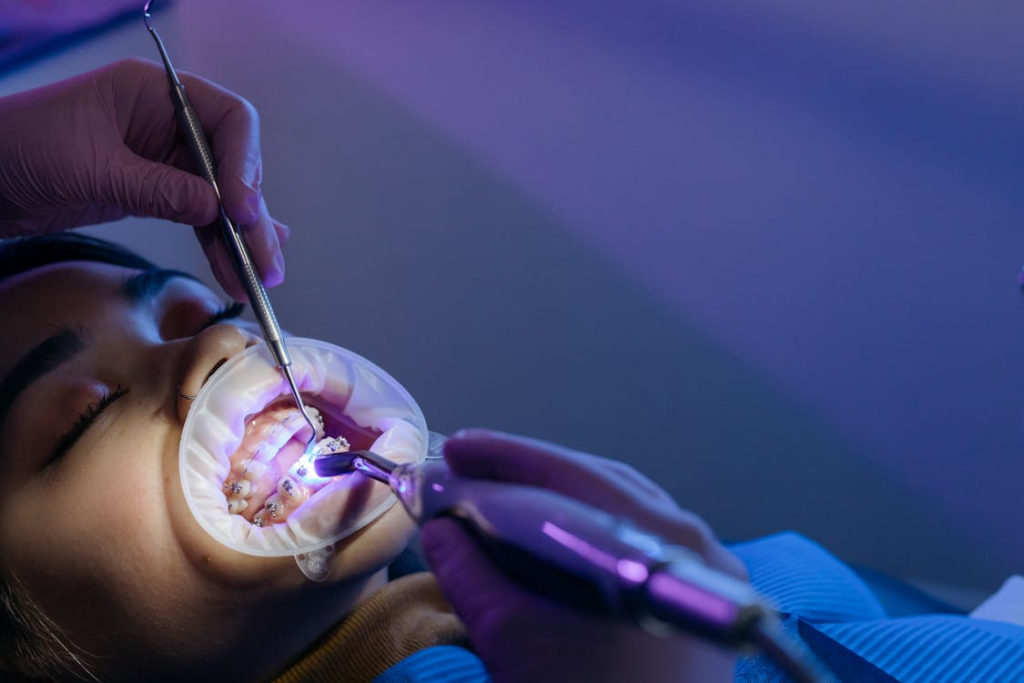
Orthodontic treatment follows a predictable pattern of appointments, adjustments, and monitoring that patients can anticipate from the beginning. Understanding this timeline helps set realistic expectations and prepare for the commitment involved.
Initial appointments involve comprehensive examination, including X-rays, photos, and dental impressions for treatment planning. Modern digital scanning often replaces traditional impression putty, improving patient comfort while providing more accurate models. Treatment plans typically include projected timelines, though these estimates may adjust based on individual response to treatment.
Regular adjustment appointments occur every 4-8 weeks depending on the treatment type. Fixed appliance adjustments involve changing wires, adjusting bracket positions, or replacing elastic components. These appointments typically last 15-45 minutes and may cause temporary soreness afterward. Clear aligner patients receive multiple trays at each appointment, reducing visit frequency while maintaining progress monitoring.
Active treatment duration varies significantly based on case complexity and patient factors. Simple cases might complete in 12-18 months, while complex treatments requiring jaw surgery or multiple phases can extend 2-3 years. Progress photos at each appointment help patients visualize gradual changes that might otherwise go unnoticed.
The retention phase begins immediately after active treatment ends and continues indefinitely to maintain results. Retainers prevent teeth from shifting back toward their original positions, a tendency that continues throughout life due to natural aging processes, wisdom tooth pressure, and daily functional forces. Most orthodontists recommend permanent retention through either fixed retainers bonded behind front teeth or removable retainers worn nightly.
Long-term success depends heavily on retention compliance and ongoing oral health maintenance. Patients who neglect retention often see significant relapse within the first year after treatment. Those who maintain their retainer schedule and continue regular dental care typically enjoy stable results for decades, making the investment in orthodontic treatment worthwhile for both function and aesthetics.
The transformation extends beyond straight teeth to improved bite function, easier cleaning, and enhanced confidence that affects both personal and professional interactions. Understanding these long-term benefits helps patients maintain motivation during challenging periods of active treatment.
Other Articles You May Find of Interest...
- How Dental Nutrition Supplements Support Strong Teeth And Gums
- Braces Treatment Options and Their Benefits Explained
- How Cosmetic Dentistry in Naples Transforms Smiles and Confidence
- What to Do if You’re Missing a Tooth: Solutions and Health Impacts
- Dentistry and Active Adults
- Is Professional Teeth Whitening in Rancho Bernardo Worth It?
- Tooth Pain Relief in Clairemont: Get Treated Today




