






Your Health Magazine
4201 Northview Drive
Suite #102
Bowie, MD 20716
301-805-6805
More Dental Health Articles
Are Dental Implants Better Than Traditional Dentures for Missing Teeth?
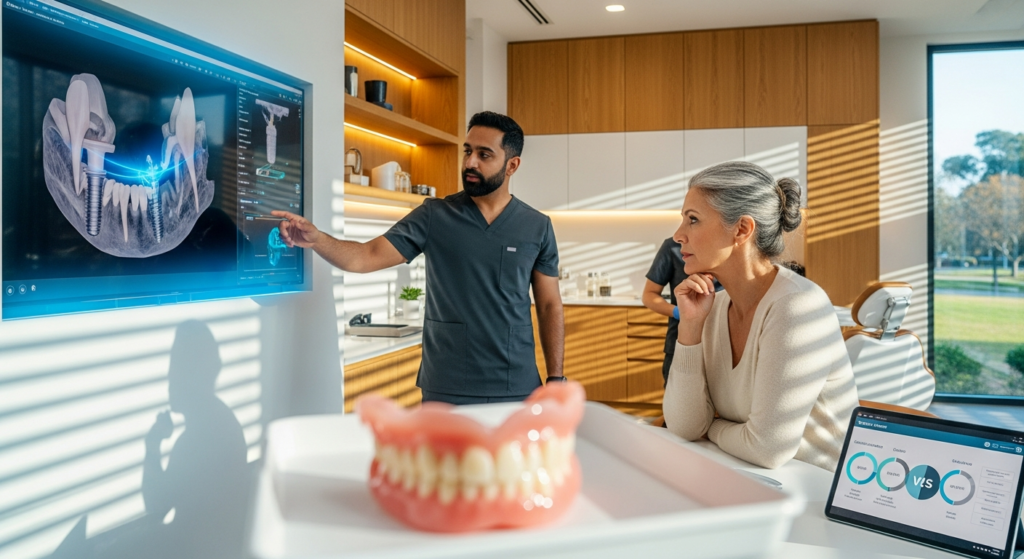
Digital dentistry and biocompatible materials have pushed dental implants to the top of the clinical standard for jawbone preservation and chewing stability. That said, traditional dentures still hold their own as a non-invasive alternative for certain anatomical and financial situations.
Key Takeaways
- Clinical Efficacy: Implants prevent bone resorption and carry a 95% success rate, functioning as artificial roots rather than surface-level replacements.
- Tech-Driven Precision: AI-guided surgery and 3D printing are slashing procedure times and easing patient anxiety.
- Cost vs. Value: Implants require a higher upfront investment ($3,000 to $6,000 per tooth), but their 10-to-15-year lifespan delivers strong long-term ROI compared to the recurring costs of removable dentures.
How Technology Changed Tooth Replacement
Gone are the days of painful, drawn-out dental procedures. Dentists now rely on intraoral scanners and AI-assisted diagnostics instead of messy traditional molds. These tools allow for same-day digital imaging that pinpoints structural problems and prevents further damage to the oral cavity.
Clinics using cloud technology and AI can analyze Cone Beam Computed Tomography (CBCT) data with remarkable accuracy, leading to tightly targeted treatment plans. For you, the patient, that means less discomfort and surgical interventions planned down to the sub-millimeter level. So what does that translate to? Better safety and faster recovery.
On top of that, 3D printing and guided surgery have made same-day functional restoration a reality. You can walk into a clinic and leave with working teeth before dinner. These procedures have become cheaper and faster without sacrificing aesthetics, which is great news if you’ve been putting off treatment due to cost or nerves.
Custom restorations built in digital labs fit better and need fewer adjustments than older analog prosthetics. Global demand has surged, pushing the dental implant market past the $4.5 billion mark in 2023.
Dental Implants vs. Dentures: How Do They Actually Compare?
Anatomical and Lifestyle Benefits
Choosing between these two options comes down to biology. Dental implants mechanically stimulate your jawbone, actively preventing the sunken facial appearance that comes with progressive bone loss. They’re a permanent fix that restores normal speech and chewing without the slipping you might experience with standard dentures.
Clinical data backs this up across diverse patient demographics. Researchers found that 94% of implant patients report high satisfaction with results eight to fourteen years after placement. If long-term structural integrity matters to you, implants consistently come out on top.
Which Implant Type Is Right for You?
Dental restoration is deeply personal, and it demands careful anatomical assessment before any surgical step. You’ll want to consult with a specialist to determine which types of dental implants match your jawbone density and restoration goals.
Endosteal implants are the most common configuration. They’re surgically placed directly into the jawbone and carry an exceptional success rate of roughly 95%. These fixtures are predominantly made from biocompatible titanium, a highly durable material that holds a dominant 93% market share in the U.S. Through a process called osseointegration, the titanium posts fuse with your natural bone over several months, creating a rock-solid foundation for ceramic crowns or fixed overdentures.
What Will It Actually Cost You?
Let’s talk money, because financial realities often shape the final decision. A single dental implant typically runs $3,000 to $6,000 in the U.S., which is a significant upfront investment. But traditional removable dentures and implant-supported overdentures remain effective, budget-friendly alternatives that restore basic oral function.
These non-surgical or minimally invasive options are particularly helpful for seniors who may not have the bone density needed for full implant surgery. Keep in mind, though, that dentures require ongoing maintenance, relining, and eventual replacement, all of which add up over a lifetime. You’ll need to weigh the biological advantages of implants against the lower barrier to entry that modern dentures offer.
| Feature | Dental Implants | Traditional Removable Dentures |
|---|---|---|
| Bone Preservation | Excellent; stimulates jawbone | Poor; doesn’t prevent bone loss |
| Upfront Cost | $3,000 to $6,000 per tooth | Low to moderate |
| Procedure Type | Surgical; requires healing time | Non-surgical; quicker fitting |
| Longevity | 10 to 15+ years | 5 to 7 years; needs relining |
| Daily Maintenance | Standard brushing and flossing | Nightly removal and special cleaning |
Are You Ready for Restoration?
Before booking a consultation, here are the key factors that determine your candidacy:
- Jawbone Density: You need sufficient bone mass to anchor the titanium posts, or a bone graft will be necessary first.
- Overall Health: Conditions like uncontrolled diabetes or autoimmune disorders can slow post-surgical healing significantly.
- Lifestyle Habits: Heavy smoking severely impacts osseointegration, the process by which the implant bonds to bone.
- Budget Flexibility: Consider whether the higher upfront surgical cost makes more sense than the cumulative maintenance costs of traditional dentures over time.
Planning Your Next Step
Choosing how to address missing teeth means balancing biology with budget and anatomy. Permanent fixtures offer unmatched stability and jawbone preservation, but modern dentures still provide a highly functional, non-surgical path for plenty of people.
Not sure which route fits? Talk to a local dental professional and request a CBCT scan to evaluate your specific anatomy. That single step can clarify your options, protect your facial structure, and set you on the path to a lasting restoration. And the sooner you act, the less bone degradation you’ll have to deal with down the road.
Other Articles You May Find of Interest...
- Understanding Periapical Abscesses: Diagnosis and Treatment Options Explained
- Transforming Lives with Palatoplasty: A Path to Improved Health and Well-Being
- What Dentists Really Evaluate Before Recommending Dental Implants
- Are Dental Implants Better Than Traditional Dentures for Missing Teeth?
- Effective Solutions for Mucocele Treatment and Supportive Oral Therapy
- What Causes a Blood Blister Inside Your Mouth?
- Why Does My Tongue Hurt on the Side? Causes and Remedies for Sore Tongue Sides




