






More Clinical Trials Articles
Why More Americans Are Exploring Clinical Trials in 2026
Every year, millions of Americans search for better treatment options, access to new therapies, or ways to contribute to medical research. For many people, clinical trials provide that opportunity. Whether someone is living with cancer, heart disease, obesity, depression, or another health condition, participating in research may offer access to promising treatments before they become widely available.
If you are interested in learning about available clinical studies, Hipa.ai has become one of the easiest ways to explore recruiting trials across the United States. The site allows people to search for studies by condition, location, and eligibility, making it easier to find opportunities that fit their needs.
Clinical trials are no longer limited to large research hospitals in major cities. In 2026, studies are taking place in thousands of communities across the country, giving more people access to research close to home.
Clinical Trial Opportunities Are Growing Across the United States
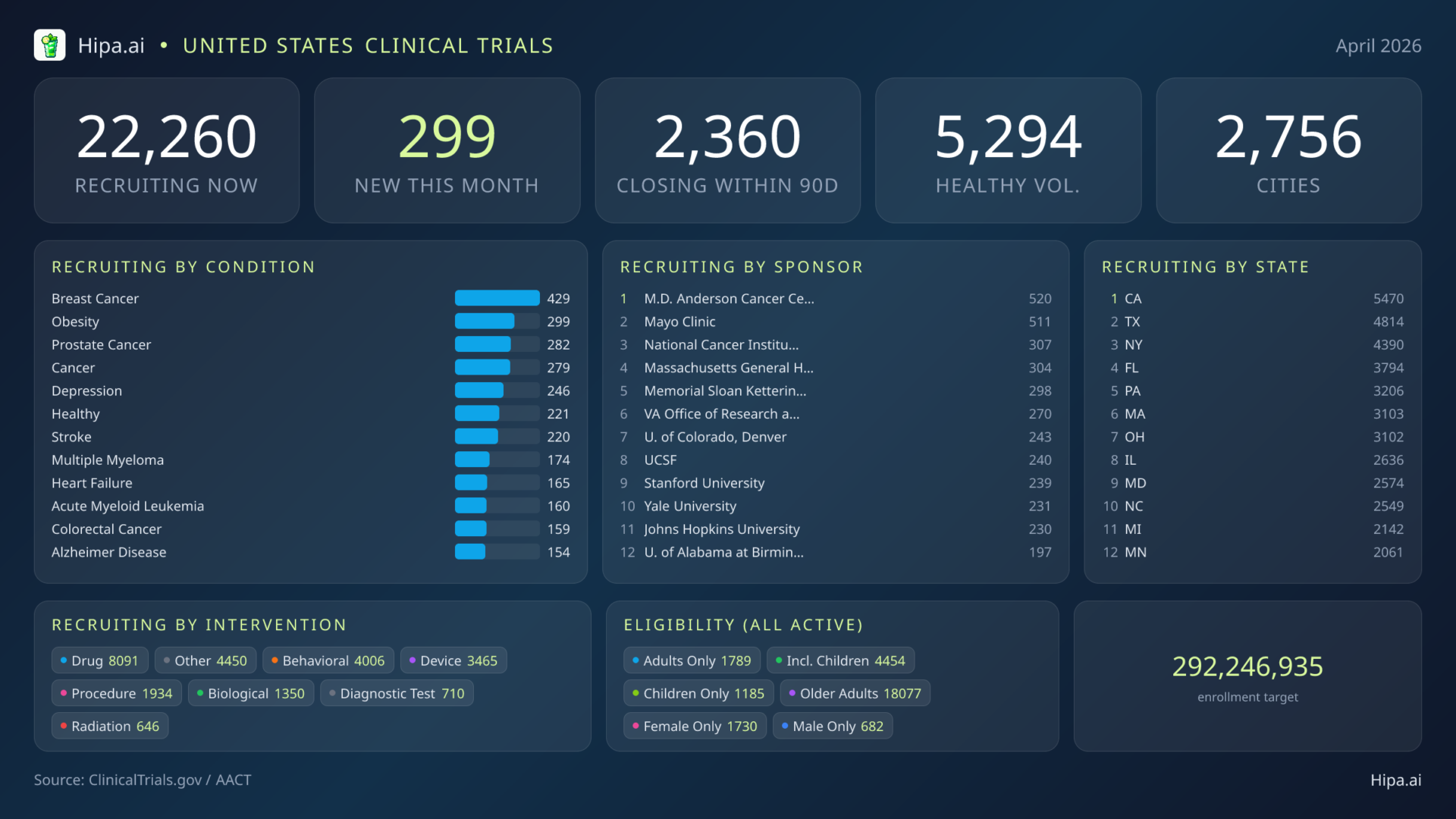
According to Hipa.ai’s April 2026 research report, there are currently more than 22,000 clinical trials recruiting participants nationwide. In addition, 299 new studies opened in April alone, while more than 2,300 studies are expected to close enrollment within the next 90 days.
That means timing matters. People who are considering participating in a trial may have a limited window to apply before enrollment closes.
The largest number of studies currently closing soon involve:
- Breast cancer
- Depression
- Alzheimer disease
- Obesity
- Stroke
- Heart failure
- Chronic pain
Many of these studies are actively recruiting now, but they may not remain open for long. People who wait too long may miss the opportunity to participate.
For those without a specific health condition, there are still many options available. More than 5,000 studies nationwide are currently seeking healthy volunteers. These studies may involve sleep research, nutrition, preventive medicine, exercise, or helping researchers understand how healthy bodies respond to medications or treatments.
Why People Choose to Participate in Clinical Trials
People join clinical trials for many different reasons. Some hope to gain access to new therapies that are not yet available to the public. Others want more treatment options after standard therapies have not worked. Many participate because they want to help future patients.
Common reasons people participate include:
- Access to promising new treatments
- Additional medical monitoring and testing
- The opportunity to contribute to scientific progress
- Learning more about their own condition
- Helping researchers develop better treatments for future generations
It is important to understand that every study is different. Some compare a new medication to the current standard treatment. Others study medical devices, lifestyle changes, nutrition, exercise, or mental health interventions.
Researchers must explain the purpose of the study, the possible risks, the potential benefits, and what participation involves before anyone agrees to join.
The Conditions Receiving the Most Research Attention
Several health conditions are receiving especially strong research attention in 2026.
Breast cancer remains one of the leading areas of research, with dozens of studies recruiting or closing soon. Obesity is also a major focus, reflecting the growing number of Americans affected by excess weight and related conditions such as diabetes and heart disease.
Depression and cognitive conditions are another important area. Hipa.ai reports that many new trials are focusing on depression, mild cognitive impairment, Alzheimer disease, and sleep disorders.
Researchers are also paying close attention to cardiovascular health. One of the largest new studies launched this year is evaluating ways to improve medication adherence among people with heart disease and diabetes. Another major study is examining walking speed in older adults, since mobility often predicts long-term health.
New trials are also exploring artificial intelligence in medicine. Some studies are testing whether AI-generated patient education materials are easier to understand than traditional materials. Others are examining AI-assisted imaging summaries to help patients better understand their test results.
For readers interested in learning more about how research studies are regulated and protected, the National Institutes of Health clinical research guide explains how clinical trials work, what informed consent means, and the questions participants should ask before enrolling.
Where Clinical Trials Are Happening
Clinical trial activity is strongest in several states, especially California, Texas, Florida, New York, and Massachusetts. However, there are also growing opportunities closer to home.
Maryland ranked among the top states for new clinical trials in April 2026, while Virginia also reported a strong number of new studies.
Baltimore was one of the leading cities for new research this month, with studies involving:
- Fall prevention in mild cognitive impairment
- Brain stimulation for patients with aphasia or memory loss
- Public health research
- Cancer-related studies
Virginia also continues to see new opportunities, including studies related to prediabetes, women’s health, hypertension, and cancer.
Because there are now more than 43,000 clinical research sites nationwide, people do not necessarily need to travel across the country to participate. Many studies are available at nearby hospitals, universities, medical centers, or even through virtual participation.
Some newer studies now include telehealth visits, online surveys, wearable devices, and remote monitoring. That makes it easier for people to participate from home, especially if they have limited transportation or live farther from a research center.
Healthy Volunteers Are More Important Than Many People Realize
When people hear the phrase “clinical trial,” they often assume studies are only for people who already have a serious illness. In reality, healthy volunteers are essential to many types of research.
Healthy volunteer studies help researchers:
- Understand how the body normally works
- Establish baseline data for comparison
- Evaluate the safety of medications
- Test preventive strategies
- Study sleep, exercise, nutrition, and stress
Hipa.ai reports that 97 new studies for healthy volunteers opened in April 2026 alone.
These studies include research on pain, hydration, nutrition, sleep, mindfulness, stress, and healthy aging. Some are short-term studies lasting only a few hours or days, while others follow participants over time.
Questions to Ask Before Joining a Trial
Before enrolling in any study, it is important to ask detailed questions so you fully understand what participation involves.
Questions to ask may include:
- What is the purpose of the study?
- How long will the trial last?
- What tests or treatments are involved?
- Are there possible risks or side effects?
- Will I need to travel?
- Is compensation available?
- Can I leave the study if I change my mind?
You should also talk with your own doctor before joining a clinical trial, especially if you have an existing medical condition or take prescription medications.
Clinical research continues to shape the future of medicine. The treatments available today for cancer, heart disease, diabetes, mental health, and many other conditions exist because previous volunteers participated in research.
If you have been thinking about participating, now may be an especially important time to explore your options. Thousands of studies are currently recruiting, but many will close enrollment soon.
To learn more about available trials and search by condition or location, visit Hipa.ai.
Other Articles You May Find of Interest...
- Retatrutide (RETA): What Researchers Should Verify Before Sourcing a Vial
- Tesamorelin in Preclinical Research: Handling, Stability, and Supplier Documentation
- Peptide Blends in Research: Why Multi-Component Formulations Need Better Documentation
- Tesamorelin Peptide: Mechanisms, Cellular Pathways, and Research Insights
- Understanding the Current Research on SS-31
- From Target to Hit: How Integrated Discovery Biology Services Are Accelerating Early Drug Discovery
- CRO Clinical Trials and Full Service CRO: Integrated Models for Modern Clinical Development





