More Beauty Skin Care & Gorgeous Smiles Articles
Why Collagen and Hyaluronic Acid Work Better Together for Skin, Hair, Nails, and Joint Support

————————————————————————
Understanding the Biological Relationship Between Collagen and Hyaluronic Acid
Collagen is often described as the body’s structural protein, and that description is accurate. It is found throughout the skin, connective tissue, cartilage, tendons, ligaments, and bones, where it helps maintain strength, resilience, and structure. Yet collagen does not work alone. Its function depends on the biological environment that surrounds it, particularly the extracellular matrix, where hydration and tissue integrity are closely connected. This is where hyaluronic acid becomes especially important.
The relationship between collagen and hyaluronic acid is more than a simple ingredient pairing. It reflects a genuine physiological partnership. Collagen helps provide structure, while hyaluronic acid helps support the hydrated environment in which that structure functions. Together, they contribute to the quality and resilience of connective tissues throughout the body. For women especially, this combination is often most appreciated in the skin, where hydration, softness, and elasticity are closely tied to visible appearance.
Collagen’s Role in the Body
Collagen is the most abundant protein in the human body. In the skin, it forms much of the supportive framework of the dermis, helping maintain firmness and elasticity. In joints and connective tissues, it contributes to strength and structural stability. It also plays a role in the foundations of healthy-looking hair and nails.
Because collagen is so widely distributed throughout the body, it is naturally associated with more than one area of wellness. It is not only relevant to skin. It is also part of the broader conversation around connective tissue health, joint support, and overall healthy aging. This is why collagen has become such a central ingredient in women’s wellness formulations.
As the body ages, natural collagen production gradually declines. This is a normal part of physiology, but it can affect tissue quality over time. Skin may appear less supple, connective tissues may feel less resilient, and the visible signs of aging may become more pronounced. That is one reason hydrolyzed collagen peptides have received so much attention. They offer a practical way to incorporate collagen into a daily routine in a form designed for easier digestion and absorption.
Still, collagen should not be viewed in isolation. Structural support is only part of the picture.
Why Hyaluronic Acid Matters
Hyaluronic acid is a naturally occurring glycosaminoglycan found in the skin, joints, and connective tissues. Its best-known characteristic is its extraordinary ability to bind water. This makes it one of the body’s most important molecules for hydration support.
In the skin, hyaluronic acid is part of the extracellular matrix, the network that surrounds cells and structural proteins such as collagen and elastin. It helps maintain moisture, flexibility, and the smooth, hydrated quality associated with healthy-looking skin. In joints and connective tissues, it also contributes to cushioning and lubrication.
Like collagen, hyaluronic acid levels decline with age. This matters because hydration is not a superficial detail. It is part of how tissues maintain comfort, suppleness, and structural balance. When skin loses some of its natural moisture retention, the effects can become more noticeable over time.
This is why formulas that combine collagen with hyaluronic acid are so compelling. They reflect a more complete understanding of how the body supports tissue quality from within.

————————————————————————
Why Collagen and Hyaluronic Acid Work Better Together
A useful way to understand the relationship is to think of collagen as part of the framework and hyaluronic acid as part of the environment that helps keep that framework functioning well. Structure without hydration can become less flexible. Hydration without structure does not provide the same level of support. The body relies on both.
This is particularly relevant for skin. The skin depends on both structural integrity and moisture balance. Collagen contributes to the architecture of the dermis, while hyaluronic acid helps support the hydrated extracellular environment surrounding that architecture. Together, they offer a more biologically complete approach than collagen alone.
This does not mean they should be seen as a quick solution or a shortcut. Rather, it means that when these ingredients are used together in a thoughtful formulation, they align more closely with how the body’s tissues are naturally organized.
Why This Combination Is Especially Relevant for Women
Women often look for more from a wellness formula than a single isolated benefit. A high-quality collagen product is expected to support not only beauty routines, but also broader wellness goals related to healthy aging, connective tissue support, and daily resilience.
That is one reason this pairing stands out. Collagen is relevant to skin, joints, hair, and nails, while hyaluronic acid adds a hydration-focused component that is especially meaningful for skin. This makes the combination particularly appealing for women who want a more complete beauty-from-within approach.
Skin often receives the most attention because it is where changes in both collagen and hydration tend to become visible. Yet the value of collagen goes beyond the skin alone. It is also tied to the integrity of connective tissues throughout the body. A well-designed formula can therefore support several priorities at once, with skin benefits often standing out as one of the most appreciated outcomes.
What Makes a Thoughtful Formula Different
Not all collagen products are created with the same level of care. The most effective formulations are not simply about adding collagen to a product label. They are about selecting the right form, choosing complementary ingredients, and designing the formula around how the body actually works.
Hydrolyzed collagen peptides are especially valued because they are broken down into smaller peptide fragments, making them easier to digest and incorporate into daily routines. This supports absorption and practical usability, both of which matter for consistency.
When hyaluronic acid is added alongside collagen peptides, the formula becomes more nuanced. It recognizes that connective tissue quality is not only about structural proteins, but also about the moisture balance that supports them. This is particularly relevant for women who are interested in skin support, where hydration and elasticity are deeply connected.
A thoughtful formulation also tends to prioritize clean ingredients and simplicity. In a crowded supplement market, formulas that avoid unnecessary complexity often feel more credible and easier to trust. Consumers want products that are grounded in science and designed with purpose.
A More Complete Perspective on Skin, Hair, Nails, and Joints
The conversation around collagen has matured in recent years. It is no longer only about beauty trends. More people now understand that hair, skin, nails, and joints are all connected by the broader concept of connective tissue support.
That is why collagen for skin hair and nails remains such a meaningful phrase. It reflects a real biological connection. These tissues may differ in function and appearance, but they are all influenced by structural proteins, hydration, and overall nutritional support.
At the same time, skin remains a particularly important focus. Because the skin relies so heavily on both collagen and water balance, it is often where the addition of hyaluronic acid becomes most relevant. Hair and nails are also important parts of the broader wellness picture, and joints bring yet another structural dimension. But when collagen is paired with hyaluronic acid, the skin often becomes the clearest example of why that pairing makes sense.
Education Matters More Than Hype
In today’s wellness landscape, consumers are becoming more discerning. They want to understand not just what is in a formula, but why it is there. They are less interested in vague beauty promises and more interested in intelligent formulation.
That is one reason the combination of collagen and hyaluronic acid continues to resonate. It is easy to understand at a surface level, but it also holds up under deeper examination. One ingredient contributes to structural support, and the other helps maintain the hydrated environment that supports that structure. This is a far more useful way to think about supplementation than focusing on collagen alone.
For women building a routine around healthy aging, skin wellness, and connective tissue support, this pairing offers a more balanced and biologically informed approach.
Final Thoughts
The most compelling wellness formulas are the ones that respect how the body actually functions. Collagen remains one of the most important structural proteins for skin, joints, hair, nails, and connective tissue. Hyaluronic acid remains one of the body’s most important hydration-supporting molecules. Together, they make more sense than either one considered alone.
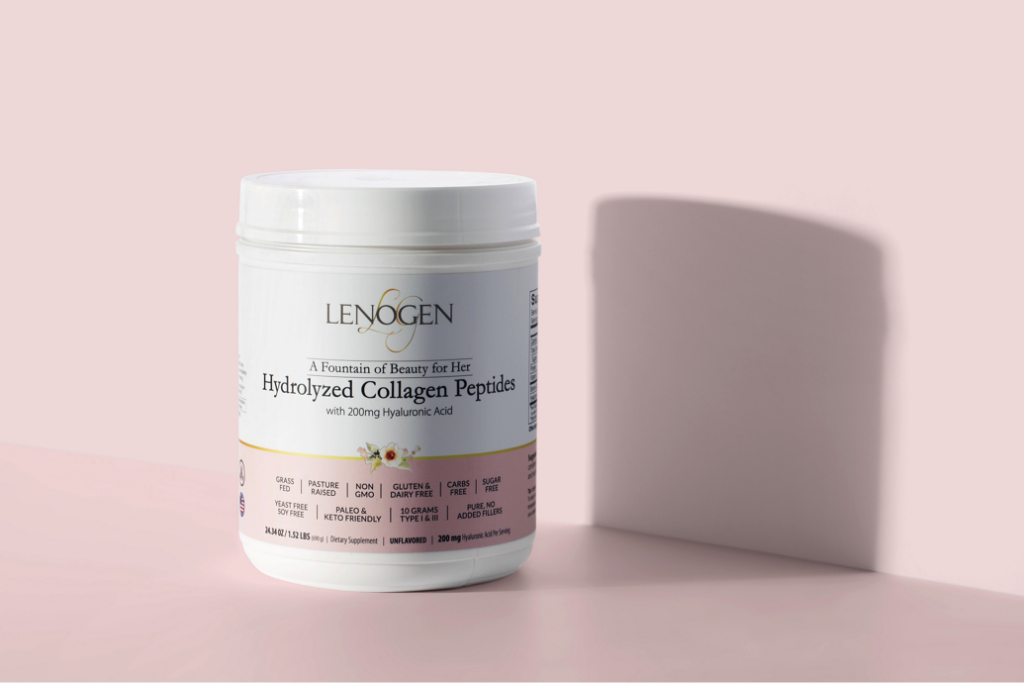
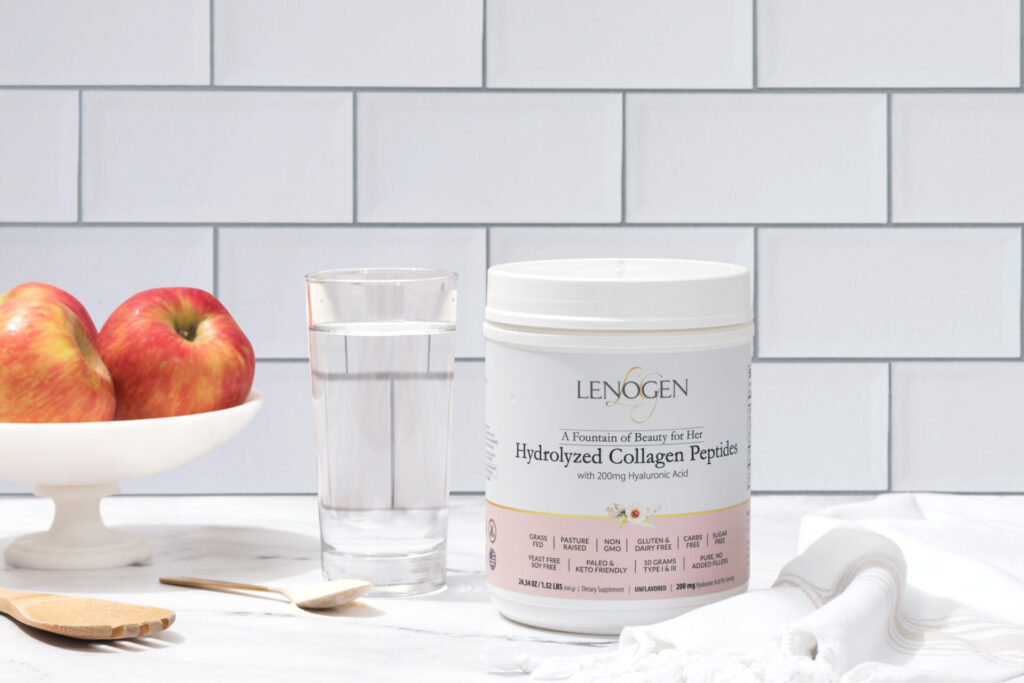
For women who want a more advanced approach to beauty and wellness from within, check Lenogen the combination of collagen peptides and hyaluronic acid.
FAQ
What is the difference between collagen and hyaluronic acid?
Collagen is a structural protein that helps support the framework of skin and connective tissue. Hyaluronic acid is a hydration-supporting molecule that helps retain moisture in the extracellular matrix. They serve different roles, but they work well together.
Why are collagen and hyaluronic acid often paired in supplements?
They are often paired because structure and hydration are closely connected in the body. Collagen supports tissue architecture, while hyaluronic acid helps maintain the moisture environment that supports flexibility and comfort, especially in the skin.
Is collagen only for skin?
No. Collagen is relevant to the skin, but it is also found in joints, ligaments, tendons, cartilage, and other connective tissues. This is why collagen is often associated with broader wellness support, not just appearance.
Why is hyaluronic acid especially important for skin?
Hyaluronic acid helps the skin retain moisture and supports the hydrated environment around collagen and elastin fibers. This makes it especially relevant for softness, suppleness, and moisture balance.
Can collagen support hair and nails too?
Collagen is part of the broader structural foundation that supports connective tissue wellness throughout the body. That is why it is often included in routines focused on hair, skin, and nails, as well as joints and healthy aging.
Why are hydrolyzed collagen peptides commonly used?
Hydrolyzed collagen peptides are broken down into smaller fragments, making them easier to digest and incorporate into a daily routine. This is one reason they are widely used in modern collagen formulas.
Why is this combination especially relevant for women?
Women often look for formulas that support skin, beauty, healthy aging, and connective tissue at the same time. Because collagen supports structure and hyaluronic acid supports hydration, the combination offers a more complete approach.
Other Articles You May Find of Interest...
- Holiday-Ready Hydrafacial Glow
- Why Your Intimate Grooming Routine Matters for Skin Health
- How a Brow Lift Improves Vision and Reduces Forehead Tension
- Exploring Options for Enhancing Your Natural Beauty
- Neck Lift Cost and Recovery: What to Expect
- GHK-Cu and Your Skin: What the Copper Peptide Research Actually Shows
- Why Does Sunscreen Burn My Face?