






More Beauty Skin Care & Gorgeous Smiles Articles
Personalized Aesthetic Care Is Changing Cosmetic Treatments

Most cosmetic treatments were once built around a fixed menu: the same filler, the same technique, applied to different faces with different needs. That approach is shifting, and the change is visible in how practitioners now approach personalized aesthetic treatment across consultations, clinics, and care plans.
Rather than selecting from a standard list of procedures, treatment is now shaped by factors specific to each patient: facial structure, skin type, age, aesthetic goals, and how much downtime someone can realistically manage. The result is a plan that works with the individual rather than around them.
This shift toward understanding your cosmetic procedure options has moved the focus from correction to subtle enhancement, prioritizing natural results over visible intervention. Minimally invasive techniques are often favored precisely because they allow for more targeted adjustments without committing to outcomes that cannot be reversed. That flexibility changes not only which treatments are selected, but how satisfied patients tend to be with what follows.
What Personalized Aesthetic Care Changes
Personalized aesthetic treatment means building a care plan around who the patient actually is, not what a standard menu offers. Factors like facial structure, skin type, age, goals, and tolerance for downtime all shape what gets recommended and in what order. The focus shifts toward understanding your cosmetic procedure options rather than defaulting to a fixed protocol.
That shift matters because subtle enhancement and natural results require a different kind of planning. A minimally invasive approach works best when it is matched to the individual, not applied uniformly. Customization changes both which treatments are selected and how well those treatments ultimately perform.
How a Custom Treatment Plan Is Built
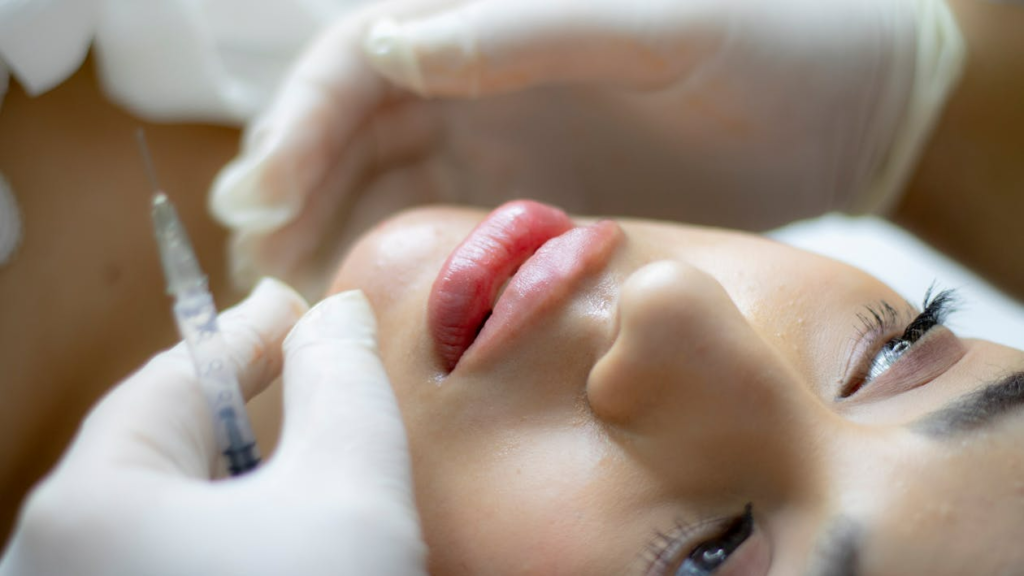
Building a personalized plan involves more than a brief intake form. It requires a structured process that moves from assessment to goal-setting before any treatment is recommended.
What Happens During the Consultation
The consultation is where personalization actually begins. A provider will typically review medical history, assess skin quality, and take photographs that serve as a baseline for tracking changes over time.
From there, the assessment moves into the structural. Providers evaluate facial balancing, noting areas of volume loss, asymmetry, or skin laxity that may not be immediately obvious to the patient. Movement patterns, particularly how the face behaves during expression, are also observed, since dynamic activity affects which treatments will produce the most natural results.
This combination of documentation and direct assessment gives the provider a clear picture before any recommendations are made.
How Goals and Anatomy Shape the Plan
What a patient wants and what their anatomy allows are two separate inputs, and a personalized plan accounts for both. Someone seeking skin rejuvenation may have skin quality that responds well to energy-based treatments, while another patient with similar concerns but different facial structure may benefit more from volume correction or neuromodulators to address movement-driven changes.
Lifestyle factors also shape the plan. Budget, available downtime, and how quickly results are needed all influence which options are prioritized. A patient who cannot take time off work may not be a good candidate for treatments that require a recovery period.
This is also the stage where combination therapies typically emerge. When one treatment addresses texture and another targets volume, the two often work better together than either would alone. Some patients prioritize lip shape and proportion, for example, while others focus on dynamic lines, texture, or volume restoration. Options like custom lip fillers may be introduced as one component of a broader plan rather than a standalone procedure.
The Tools Behind More Precise Treatment
Modern assessment tools have added meaningful precision to how providers understand a patient’s face before treatment begins. Technology does not replace clinical judgment, but it does give practitioners a more detailed foundation to work from.
Where AI and 3D Imaging Help
AI-driven analysis can map facial structure in ways that are difficult to capture through standard photography alone, identifying subtle asymmetries, volume distribution, and skin concerns with a level of detail that supports more informed planning. 3D imaging takes this further by creating a spatial representation of the face, allowing the provider to evaluate proportions, contours, and depth from multiple angles.
These tools are most useful as a foundation for conversation. A three-dimensional scan gives both the provider and the patient a shared reference point, making it easier to align on what a treatment might realistically achieve.
What they do not do is replace clinical judgment. Interpretation still depends on the practitioner’s experience and understanding of how the face moves, ages, and responds to treatment. Technology surfaces information; the provider decides what to do with it. When used well, this combination of AI-driven analysis and structural imaging leads to more targeted treatment choices, ones that account for individual anatomy rather than applying a generalized approach. The outcome tends to be more refined, more proportionate, and more consistent with natural results.
Which Treatments Get Personalized Most
Personalization often comes down to matching the right modality to the right concern. Across injectables, biostimulatory options, and resurfacing treatments, the same principle applies: what works for one patient may not be appropriate for another.
Injectables and Biostimulatory Options
Not every injectable addresses the same concern, which is exactly why personalization matters at this stage of planning. Botox and other neuromodulators are selected when movement-driven lines are the primary concern, targeting areas like the forehead, brow, and eye area where repeated muscle activity creates visible creasing over time.
Dermal fillers serve a different purpose. Rather than relaxing muscle activity, they restore structure, contour, and volume in areas affected by age-related tissue loss, whether that is along the cheeks, jawline, or around the mouth.
Biostimulatory fillers like Sculptra and Radiesse take a longer-range approach. Instead of providing immediate volume, they work by stimulating the body’s own collagen production over weeks and months. This makes them a useful option for patients whose goals lean toward gradual improvement rather than immediate correction, and peer-reviewed research continues to support their role in longer-lasting structural support.
Skin Resurfacing and Regenerative Care
Personalization extends well beyond injectables. For patients focused on skin texture, tone, or overall skin rejuvenation, providers may recommend Morpheus8, microneedling, or PRP, either individually or in combination depending on what the skin needs.
Morpheus8 combines microneedling with radiofrequency energy, making it effective for skin laxity and surface irregularities. PRP uses growth factors drawn from the patient’s own blood to support tissue repair and collagen production at a cellular level.
A customized skin care approach often combines these modalities because no single treatment addresses every layer of concern. Pairing an energy-based device with a regenerative treatment, for example, targets both surface texture and deeper structural integrity in a way that one treatment alone rarely achieves.
Why Younger Patients Are Starting Earlier
A growing number of patients in their mid-twenties and early thirties are seeking aesthetic consultations not because something has gone wrong, but because they want to prevent it. This approach is known as prejuvenation, and it represents a meaningful shift in who personalized care is designed for.
Prejuvenation focuses on maintaining what is already working rather than correcting what has been lost. The interventions involved tend to be lighter in scope: small amounts of neuromodulator to slow the formation of movement-driven lines, or subtle enhancement of a feature that a patient simply wants to feel more confident about. These plans look different from corrective treatment plans in both scale and intention.
Where corrective care often involves multiple modalities addressing accumulated changes, prejuvenation typically begins with one or two minimally invasive options introduced gradually over time. The emphasis throughout is on natural results and preserving individual features rather than altering them. A younger patient is not necessarily seeking transformation; they are seeking continuity, and a personalized plan reflects that distinction clearly.
What Makes Personalized Care Safer
Qualifications matter more than any single technique. Practitioners with a thorough understanding of facial anatomy are better positioned to recognize which areas require treatment, which should be left alone, and how underlying structures will respond to any given approach. That knowledge is what separates a thoughtful plan from one that simply applies a standard protocol.
Conservative planning supports both natural results and lower risk. When treatment is introduced gradually, the provider can assess how a patient responds before committing to further adjustment. Not every concern warrants immediate intervention, and a qualified practitioner will say so. Some areas benefit from a minimally invasive adjustment; others are better monitored over time. Treating everything in a single session rarely produces more refined outcomes, and often produces less predictable ones.
Common Questions About Personalized Aesthetic Care
What Are Personalized Aesthetic Treatment Plans?
Personalized aesthetic treatment plans are structured care plans built around an individual’s facial anatomy, skin type, goals, and lifestyle rather than a standardized menu of procedures. Each plan is designed to address specific concerns rather than applying a generalized approach.
Why Do Personalized Aesthetic Treatment Plans Matter?
Personalized aesthetic treatment produces outcomes that align more closely with what each patient actually needs. Because no two faces age or respond to treatment in exactly the same way, a tailored plan tends to deliver more proportionate, natural results than a fixed protocol applied uniformly.
How Are Personalized Aesthetic Treatment Plans Created?
Providers begin with a thorough consultation that includes a medical review, structural assessment, and a conversation about goals and downtime. From there, appropriate treatments are selected and sequenced based on what the patient’s anatomy and priorities call for.
Where Cosmetic Treatment Is Headed Next
Personalized aesthetic treatment has moved from a specialty approach to a broader standard, one that reflects a more grounded understanding of how individual anatomy, goals, and timing shape what works for each patient.
As that shift continues, the emphasis on subtle enhancement and natural results is likely to define expectations rather than simply meet them. Patients are increasingly asking not what a treatment can do, but whether it fits, and that question is now central to how good care is delivered.
Other Articles You May Find of Interest...
- How a Brow Lift Improves Vision and Reduces Forehead Tension
- Exploring Options for Enhancing Your Natural Beauty
- Neck Lift Cost and Recovery: What to Expect
- GHK-Cu and Your Skin: What the Copper Peptide Research Actually Shows
- Why Does Sunscreen Burn My Face?
- What A First Visit With A Plastic Surgeon Actually Involves
- Does Chlorine Kill Warts or the Virus That Causes Them?





